

Apeing memecoins? Or freshly created tokens?
Obviously this is insanely risky, but you can reduce your risk significantly with just five minutes of research.
Here are two tools that can stop you getting rugged 🧵
Obviously this is insanely risky, but you can reduce your risk significantly with just five minutes of research.
Here are two tools that can stop you getting rugged 🧵

I'm going to demonstrate these two tools on a newish memecoin.
This is a real example of a memecoin that I've seen on the timeline being promoted by people...
I'm not going to reveal the ticker because I don't want any association with it.
This is a real example of a memecoin that I've seen on the timeline being promoted by people...
I'm not going to reveal the ticker because I don't want any association with it.
1. @bubblemaps
This is one of the first places I head to if I'm looking at buying a new token.
You can simply input the token address in the search.
This is one of the first places I head to if I'm looking at buying a new token.
You can simply input the token address in the search.
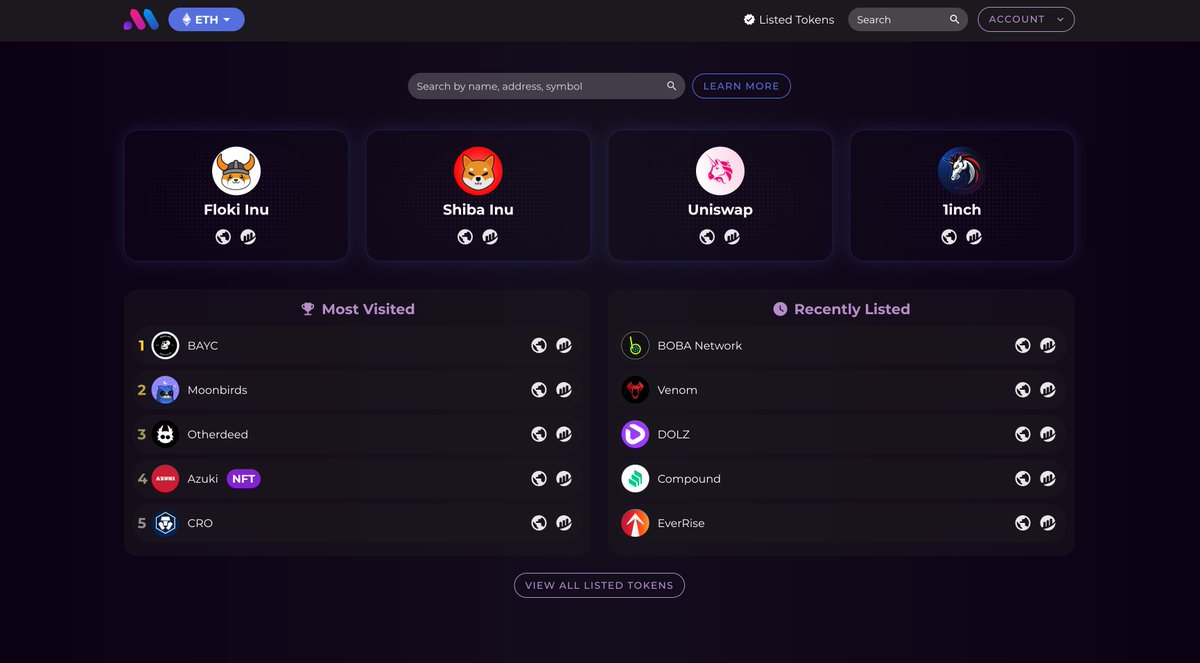
Bubblemaps is a very quick visual way of looking at the distribution of a token's supply.
It shows you connected wallets so you know how much of the supply is truly owned by the biggest whales.
You can cycle through wallet connections by ETH, USDT, UDSC and the project token.
It shows you connected wallets so you know how much of the supply is truly owned by the biggest whales.
You can cycle through wallet connections by ETH, USDT, UDSC and the project token.
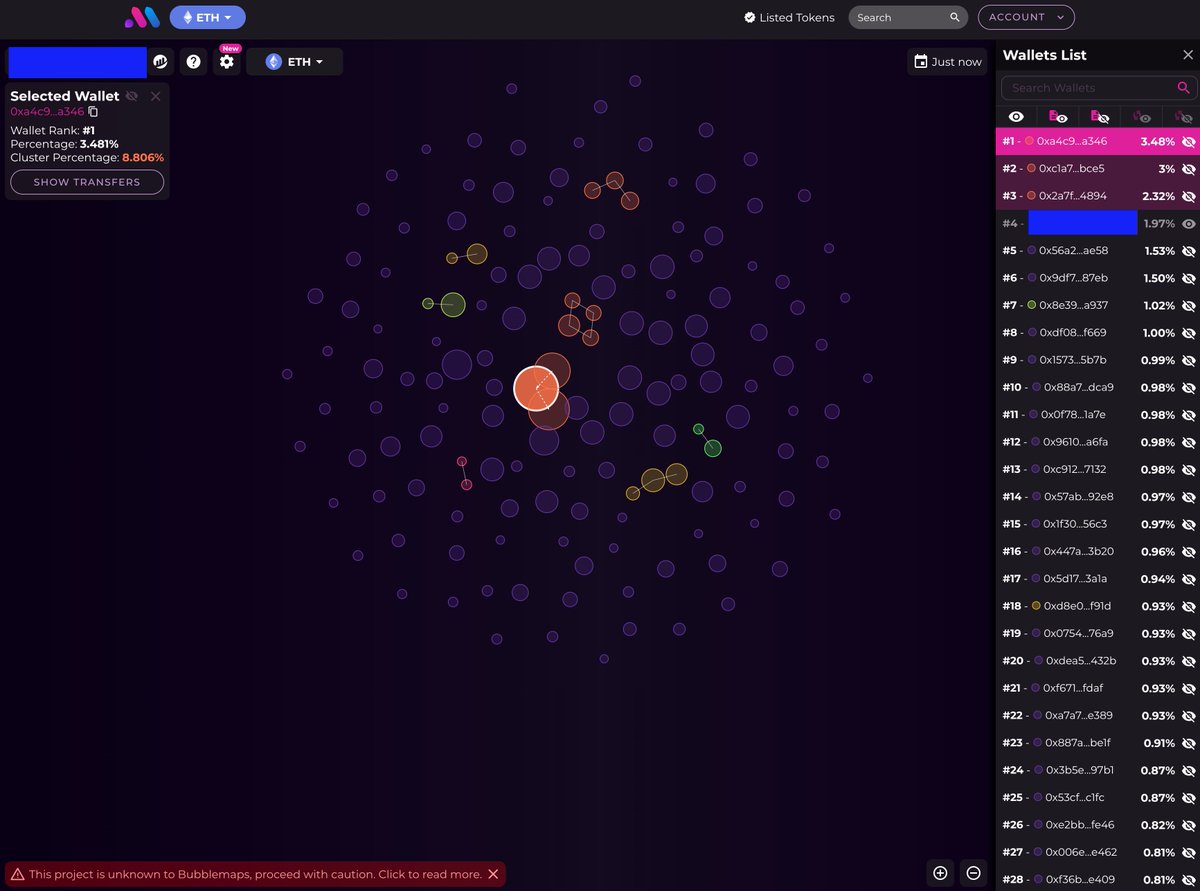
When looking at ETH transfers between wallets we can see that 8.8% of this new memecoin is potentially owned by the same entity.
Not great, but we've seen worse.
Not great, but we've seen worse.
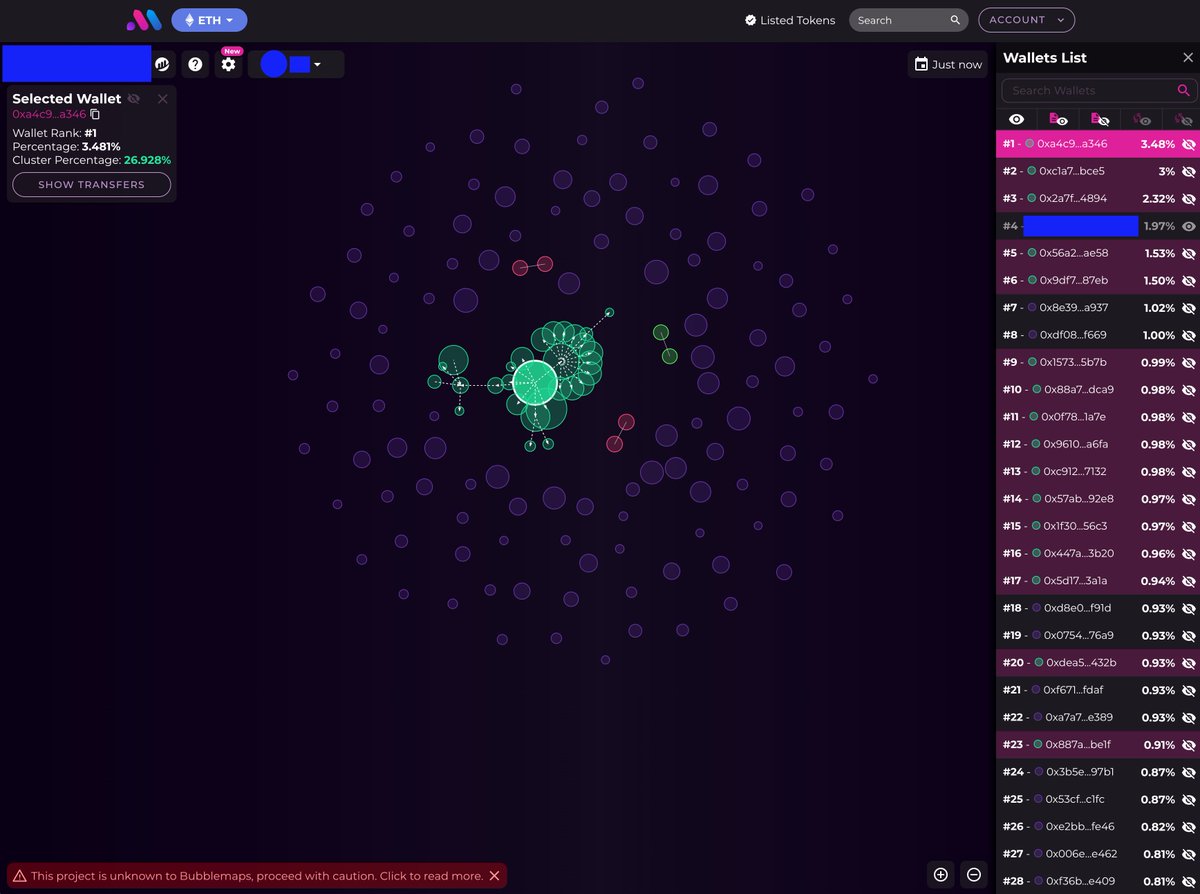
However, when we look at the memecoin transfers between wallets we can see that that same entity potentially owns nearly 27% of this token's supply.
Only looking at etherscan would show that the biggest whale owned 3.48%.
But Bubblemaps shows us these wallets are all connected.
Only looking at etherscan would show that the biggest whale owned 3.48%.
But Bubblemaps shows us these wallets are all connected.
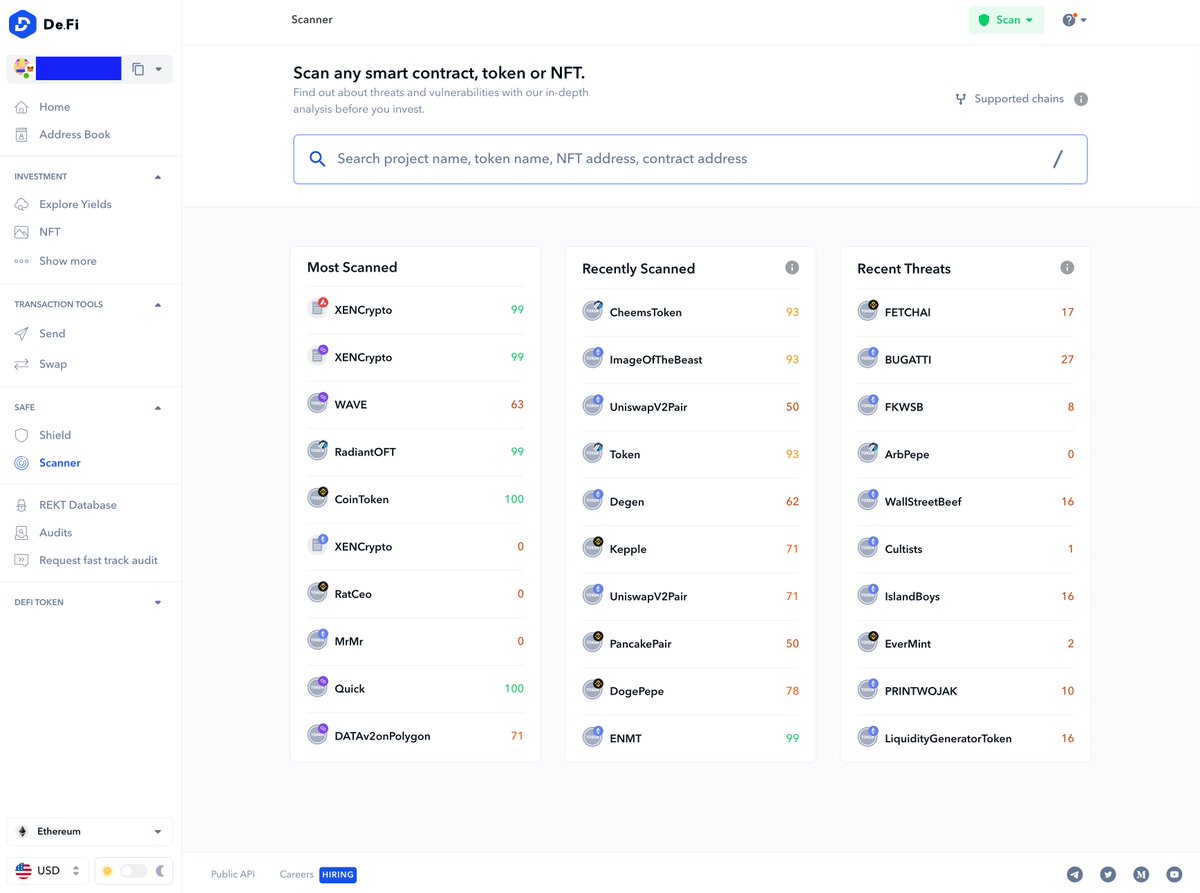

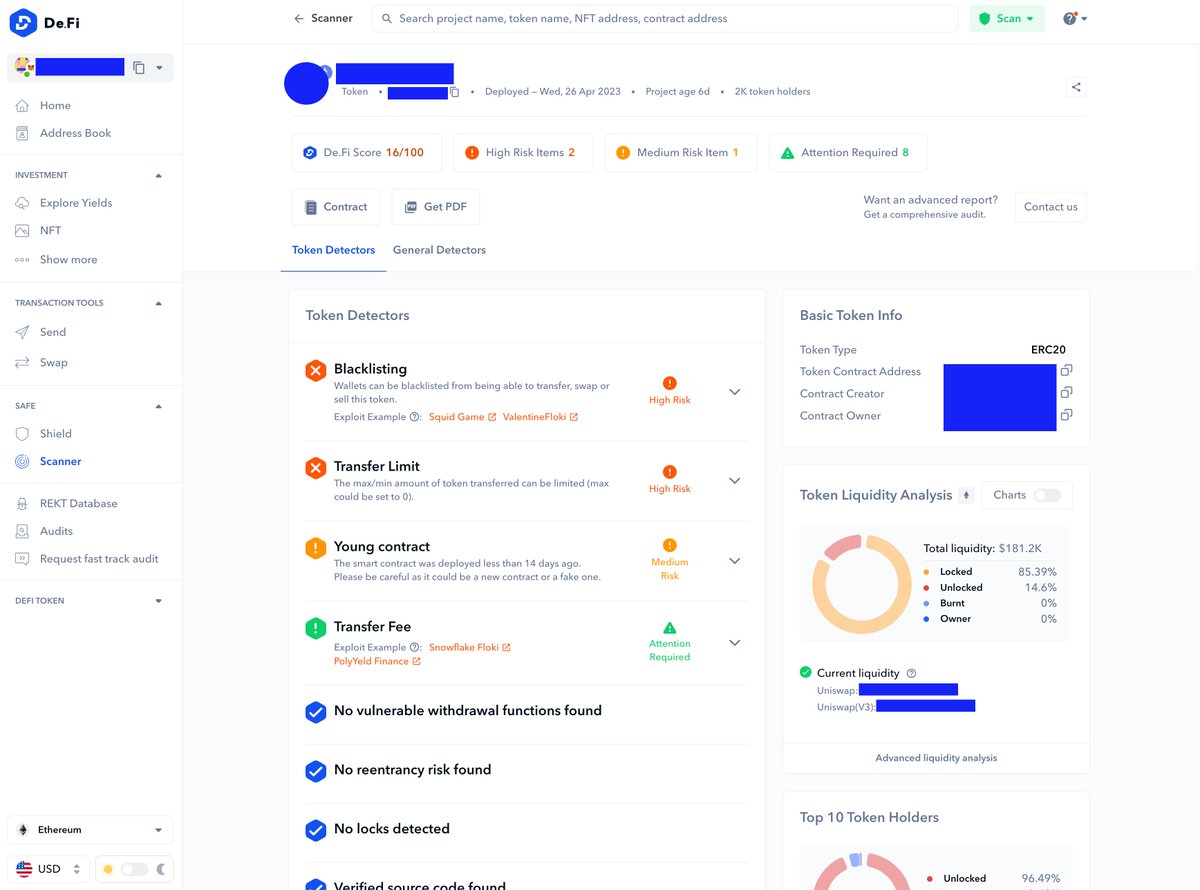
When we input this memecoin into the scanner we get a full breakdown of potential issues.
We can see a few high risk issues that are flagged and de.fi provides an overall score based on the scan.
16/100 is not a great score.
High risk of rug.
We can see a few high risk issues that are flagged and de.fi provides an overall score based on the scan.
16/100 is not a great score.
High risk of rug.
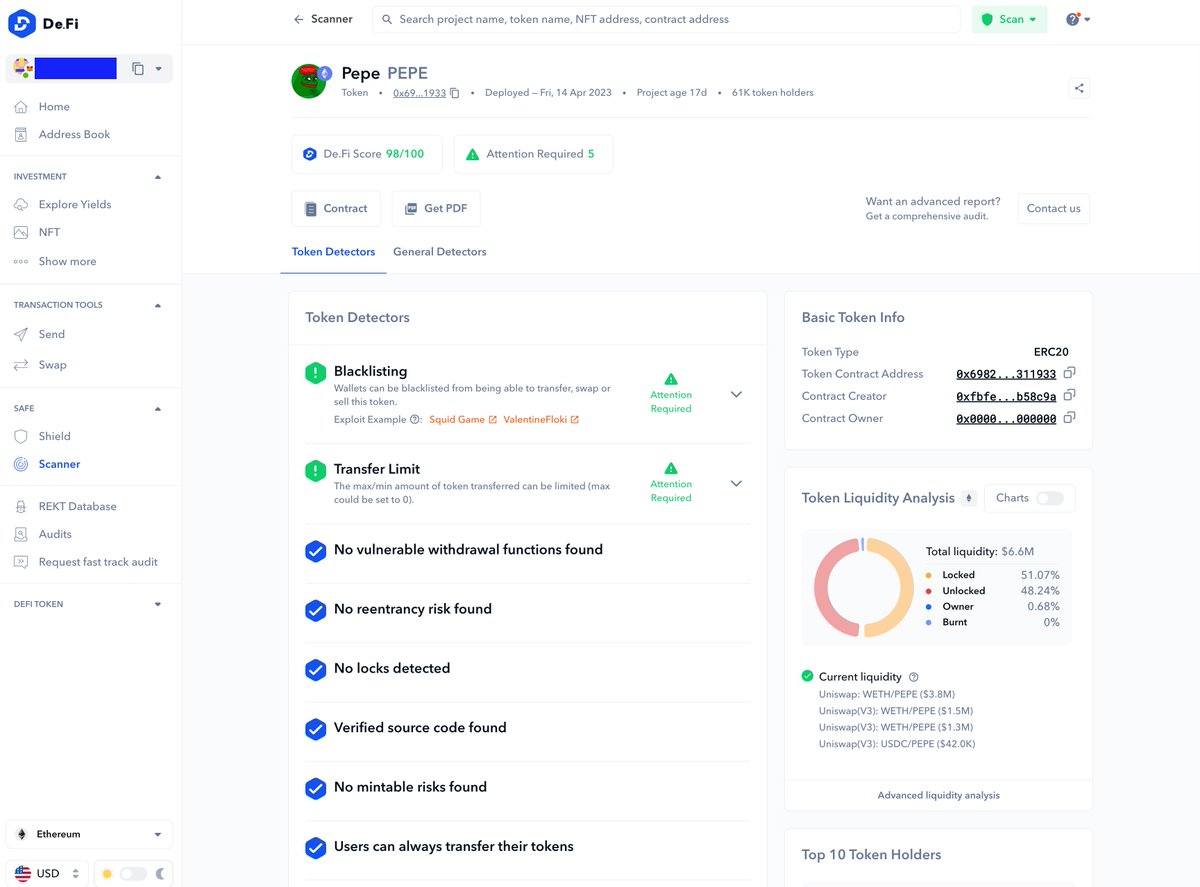
For contrast, when I run the $PEPE token through the scanner there are no major threats or vulnerabilities flagged, and it has a 98/100 score by de.fi.
So, next time you want to ape, you can spend five minutes of your time with these two tools and massively reduce the chances of you getting rugged.
Bear in mind, these tools won't stop the token organically going to zero.
Bear in mind, these tools won't stop the token organically going to zero.
Loading suggestions...