
Politics
Military
Geopolitics
International Relations
Military Strategy
War Analysis
Russian military tactics

Contrary to the many ‘Russian are stupid’ stereotypes that have developed throughout the war, they have demonstrated an ability in some areas to learn and adapt. This isn’t a statement of admiration. 1/25 🧵

2/ It is however necessary to understand Russian #adaptation. In understanding it, we can ensure Ukrainian forces understand tactical and operational risks, and that they are best prepared for the offensives ahead. mickryan.substack.com

3/ Several areas of Russian adaptation during this war bear closer examination stand out: strategic adaptation; operational adaptation; and tactical adaptation. In this thread I will explore some areas of tactical adaptation.
4/ Tactical adaptation is those actions that underpin learning and improvement on the battlefield, as well as the dissemination of those lessons to other battlefield elements as well as the training institutions that prepare reinforcements and new units.
5/ One area of adaptation has been how the Russians have conducted close combat. Early in the war, the Russians sought to conduct sweeping manoeuvres that coordinated airborne and airdrop operations with ground offensive operations.
6/ Unfortunately for the Russians, air-land integration as well as ground combined arms tactics were poorly conducted. This permitted the Ukrainians to attack Russian logistics and rear areas and unhinge of the Russian invading force.

7/ The disastrous crossing of the Severskii River was another exemplar of poor Russian tactical integration in their combat operations. It was indicative of an army that was still coming to grips with modern targeting, and complex tactical integration when crossing obstacles.
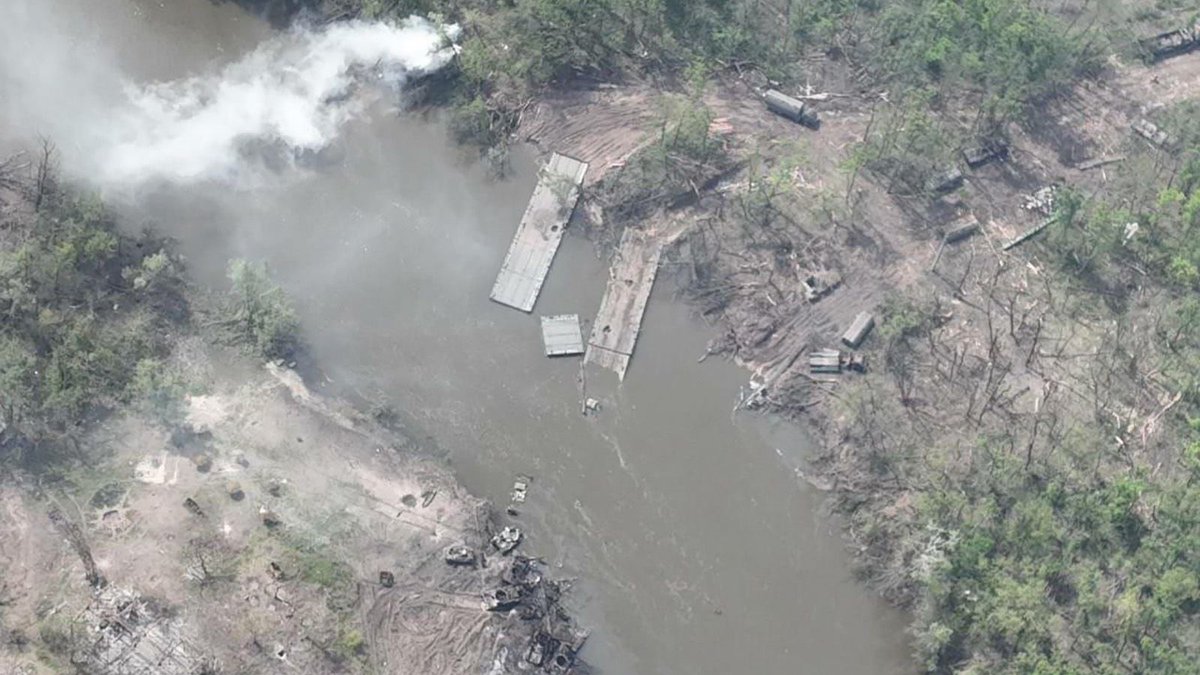
8/ However, after this, the Russians appeared to learn. Their conduct of the withdrawal from Kherson in October and November 2022 shows that they had adapted.
9/ Other more recent tactical adaptations bear mentioning. The first that emerged was the large-scale deployment of Wagner Group mercenaries in 2022, particularly in the Bakhmut area of eastern Ukraine.
10/ Their adaptation was a return to human wave attacks that have featured in conflicts such as the Iran-Iraq war. This was not just the simple application of human wave tactics, however.
11/ It is a more sophisticated adaptation to tactics where the initial human waves are just the first echelon of several, each successive echelon featuring more experienced and capable troops.
12/ Each successive wave would claw out small gains and eventually better trained and more experience Wagner Troops would exploit any gains that these human wave attacks achieved.
13/ Another recent tactical adaptation by Russian forces has included the formation of Shock Troops and the use of infiltration tactics to bypass Ukrainian strongpoints.
14/ Perhaps the best exploration of this topic has been provided in several posts by the @Tatarigami_UA twitter feed. I recommend following if you don’t already.
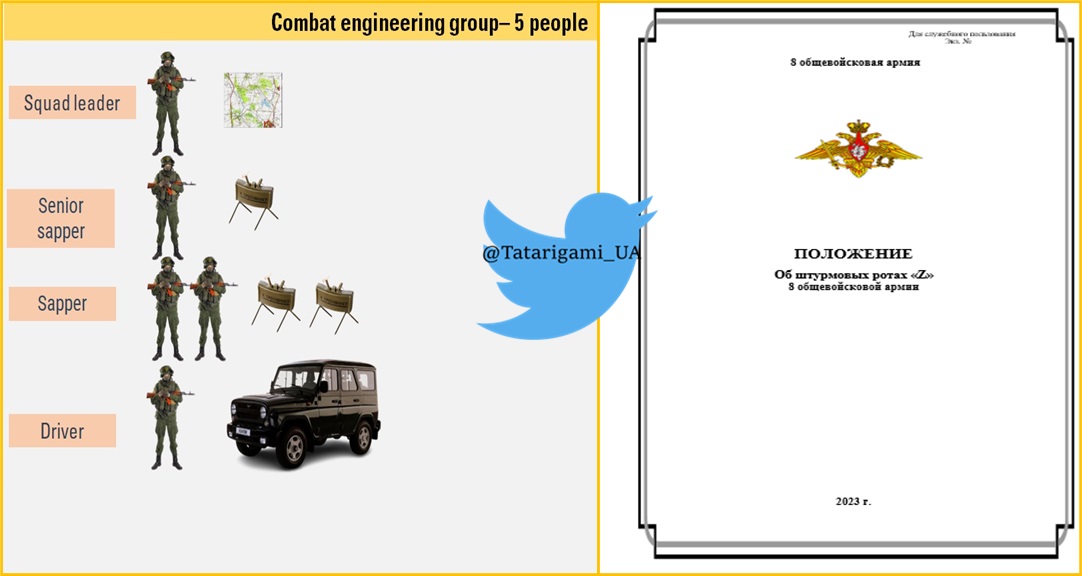
15/ The Russians have also evolved their conduct of air support to ground forces. In order to avoid the deadly Ukrainian air and missile defence network, the Russians have adapted their aerial tactics to employ longer range weapons.
16/ In March, it was revealed that the Russians have been using in combat for the first time their 1.5 ton UPAB-1500B glide bombs. Not only do these increase the survivability of the launch aircraft, but they are also very difficult to intercept.
17/ Concurrently, Russian forces have been quite busy adapting their defensive tactics and developing successive defensive zones in the east and the south. Back in November 2022, I examined the utility of tactical and operational obstacle belts and zones.
18/ Since then, the Russians have further developed these eastern and southern defensive belts. The twitter feed maintained by Brady Africk (@BradyAfr) is an excellent resource in following Russian construction of these obstacle belts and zones.
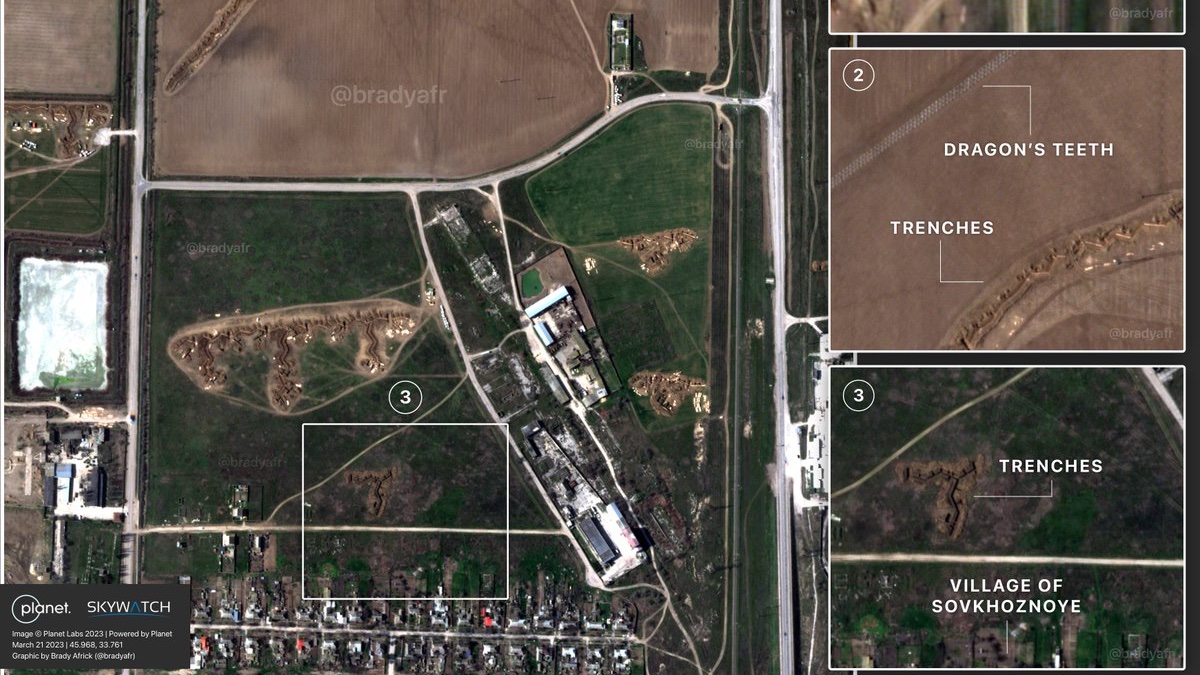
19/ There are several other tactical adaptations which I will cover in a subsequent post. These include Russian logistic systems, vehicle protection systems, and the use of drones and loitering munitions.
20/ Thus far, the Russians have demonstrated the ability to learn and to adapt at the tactical level. While this has been uneven, and many of the ideas are hardly new, it is undeniable that some learning and evolution has taken place.
21/ It is a military capability that will be central to Russia’s ongoing ability to conduct operations in Ukraine, and one that should be studied for weaknesses that can be exploited by the Ukrainian armed forces.
22/ Notwithstanding the Russian ability to learn and adapt in this war, it is also clear that the Ukrainians have also been quick studies in modern war. Part of this Ukrainian capacity for learning must focus on developing a better understanding of Russian learning systems.
23/ In doing so, Russian learning can be impeded or corrupted, and their tactical adaptation made less effective and less systemic.
24/ I look forward to sharing more on this topic in the near future in the hope of assisting the Ukrainian armed forces to develop a capacity for counter-adaptation against Russian forces. End
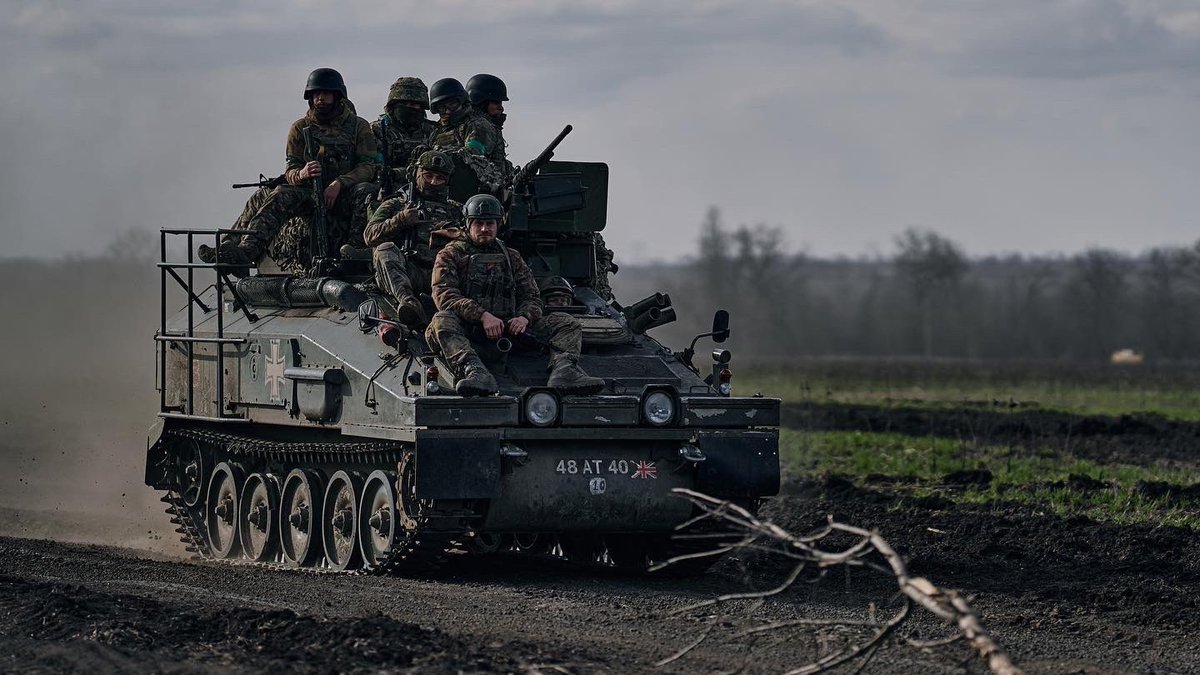
25/ Thank you to the following for the images and links used in this thread: @BradyAfr @Tatarigami_UA @MaryanKushnir @MadeleineTKelly @JapanTimes censor.net @CNN @Liberov
Loading suggestions...