

Sleep well to remain healthy & live longer
1. Sleep is one of the most important aspects of daily living that has direct impact on our health. Unhealthy sleep is linked to increased risk of several diseases & reduced longevity.
Read on to know more about normal sleeping habits
1. Sleep is one of the most important aspects of daily living that has direct impact on our health. Unhealthy sleep is linked to increased risk of several diseases & reduced longevity.
Read on to know more about normal sleeping habits
2. How much sleep is needed?
Sleep duration does vary between individuals, however, most adults need 7-9 hours of sleep per night. Newborns and children need more amount of sleep than adults. (Source: CDC)
#sleep
Sleep duration does vary between individuals, however, most adults need 7-9 hours of sleep per night. Newborns and children need more amount of sleep than adults. (Source: CDC)
#sleep
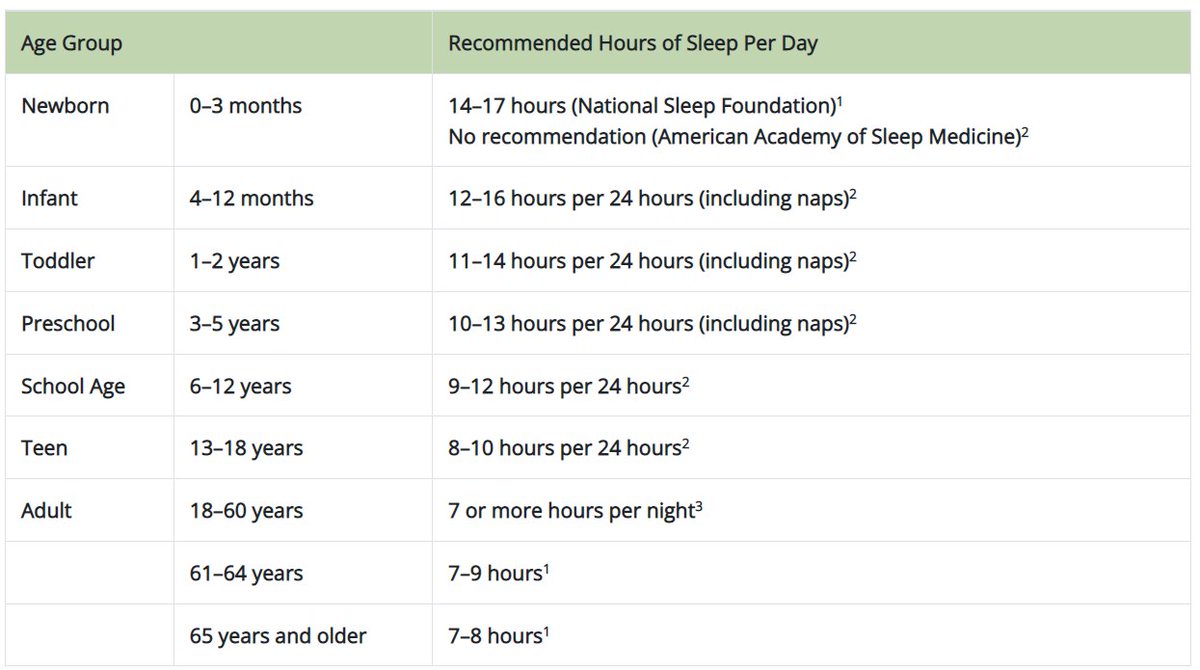
3. What are the cut off values for abnormal sleep duration?
*Short sleep duration (SSD) is defined as sleep duration of 6 hours or lesser.
*Long sleep duration (LSD) is defined as sleep duration of 9 hours or longer.
*Short sleep duration (SSD) is defined as sleep duration of 6 hours or lesser.
*Long sleep duration (LSD) is defined as sleep duration of 9 hours or longer.
4. What are the harms of short sleep duration (SSD)?
SSD is linked to higher prevalence of various diseases such as diabetes, high BP, obesity, heart attack, stroke & depression.
Short-term adverse effects of SSD are headache, poor attention span and increased risk of accidents.
SSD is linked to higher prevalence of various diseases such as diabetes, high BP, obesity, heart attack, stroke & depression.
Short-term adverse effects of SSD are headache, poor attention span and increased risk of accidents.
5. Short sleep duration is causally linked to myocardial infarction (heart attacks)
In 461347 UK Biobank participants, compared to sleeping 6-9 hours/night, short sleepers (<6 hours) had a 20% higher risk of myocardial infarction & long sleepers (>9 hours) had a 34% higher risk.
In 461347 UK Biobank participants, compared to sleeping 6-9 hours/night, short sleepers (<6 hours) had a 20% higher risk of myocardial infarction & long sleepers (>9 hours) had a 34% higher risk.
6. Short sleep duration and #stroke
Sleep ≤ 6 h/night resulted in 65% greater risk of incident stroke compared with sleep 6∼8 h/night. Risk of stroke was 62% higher for sleep < 7 h/day compared to 7∼9 h/day.
doi.org
#MedTwitter #neurotwitter
Sleep ≤ 6 h/night resulted in 65% greater risk of incident stroke compared with sleep 6∼8 h/night. Risk of stroke was 62% higher for sleep < 7 h/day compared to 7∼9 h/day.
doi.org
#MedTwitter #neurotwitter

7. People sleeping lesser than 5 hours per night have 47% higher risk of cardiovascular events and 50% higher risk of death
doi.org
doi.org

8. How about oversleeping?
Oversleeping (9 hours or longer) is associated with higher risk of death.
As compared to sleep <8 hours, sleeping 9, 10 or 11 hours was associated with 14%, 30% and 47% higher risk of all-cause death respectively.
doi.org
Oversleeping (9 hours or longer) is associated with higher risk of death.
As compared to sleep <8 hours, sleeping 9, 10 or 11 hours was associated with 14%, 30% and 47% higher risk of all-cause death respectively.
doi.org
9. Is there an optimum sleep duration?
In a large meta-analysis comprising 3.8 million participants, the rational sleep duration of 7.5 hours/night was found to be associated with a reduced risk of cardio-cerebrovascular disease for adults
doi.org
In a large meta-analysis comprising 3.8 million participants, the rational sleep duration of 7.5 hours/night was found to be associated with a reduced risk of cardio-cerebrovascular disease for adults
doi.org

10. Is daytime napping beneficial?
Daytime napping for <30 min may have beneficial effects on physical fitness among university students.
doi.org
Daytime napping for <30 min may have beneficial effects on physical fitness among university students.
doi.org

10a. Daytime napping is possibly beneficial for older adults.
doi.org
doi.org
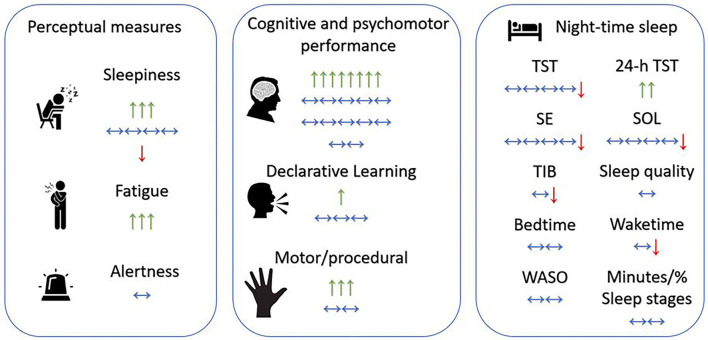

11. Take home messages
*Sleep for 7-9 h/night, optimum is 7.5 h
*Sleep duration <5 h or >9 h is associated with increased risk of serious diseases & death
*Daytime napping (<30 min) may be beneficial, especially for old.
*Have dinner 3-4 h prior to bedtime to reduce risk of GERD
*Sleep for 7-9 h/night, optimum is 7.5 h
*Sleep duration <5 h or >9 h is associated with increased risk of serious diseases & death
*Daytime napping (<30 min) may be beneficial, especially for old.
*Have dinner 3-4 h prior to bedtime to reduce risk of GERD
Do night shift duties pose any health-associated risks?
Loading suggestions...