

Why "centrist" is often used incorrectly:
Imagine that liberalism (in the classic sense: free speech, free markets, equality of opportunity, etc.) is a house. There are lots of people in that house, but let's simplify it to liberal progressives and liberal conservatives.
1/
Imagine that liberalism (in the classic sense: free speech, free markets, equality of opportunity, etc.) is a house. There are lots of people in that house, but let's simplify it to liberal progressives and liberal conservatives.
1/
In the US, the progressives and conservatives in the house are in heated arguments about a lot of things: abortion, immigration, taxes and spending, public education, gun laws, foreign policy, etc.
2/
2/
Some arguments are literally about whether to progress or conserve: progressives look for flaws in the house and try to fix them, conservatives focus on the house's strengths and try to prevent them from deteriorating.
3/
3/
But liberal progressives, liberal conservatives, and the liberal centrists between them all have one major thing in common: they think liberalism is good. They value the liberal house and want to protect and improve it. They just disagree about how to do so.
4/
4/
Outside the house are other movements with wrecking balls whose goal is to destroy the house and replace it with something else.
One of these movements is what I call Social Justice Fundamentalism and distinguish it from its opposite: Liberal Social Justice.
5/
One of these movements is what I call Social Justice Fundamentalism and distinguish it from its opposite: Liberal Social Justice.
5/
Liberal Social Justice is inside the house: It wants to overhaul illiberal norms, laws, and institutions in order to eradicate injustice and bring the country closer to its liberal promises. LSJ brought us women's suffrage, the civil rights movement, and gay marriage.
6/
6/
Social Justice Fundamentalism is premised on the Marxist idea that liberalism IS the problem—an inherently exploitative, rigged game that entrenches power imbalances. SJF sees the whole argument inside the house as beside the point—the house is rotten to its core.
7/
7/

You can see this in SJF's attitude towards liberal staples like free speech. LSJ sees free speech as a fundamental right and critical tool of the powerless. SJF believes free speech is at odds with safety—its opponents' ideas are not just wrong but harmful and dangerous.
8/
8/
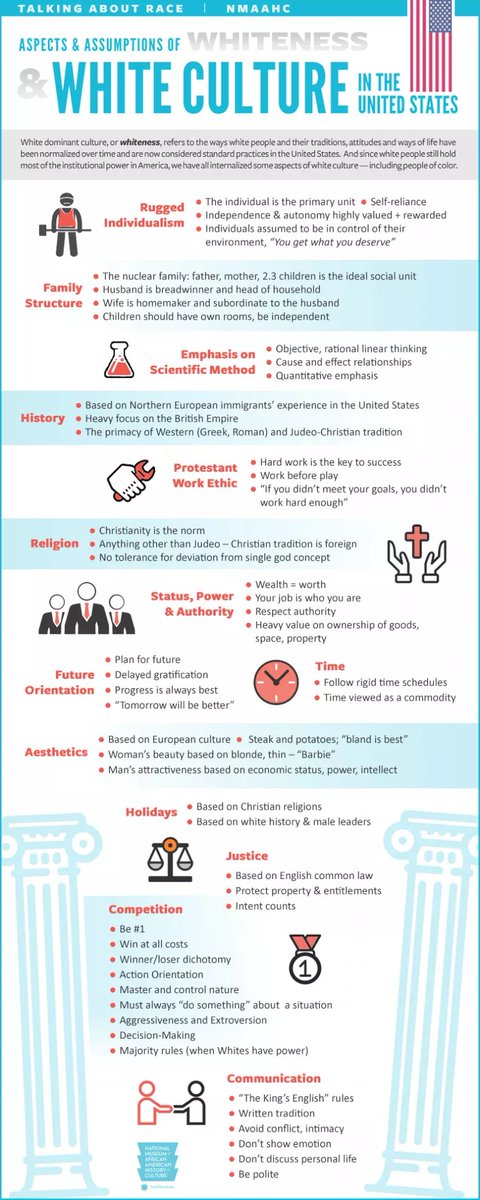
Or take this SJF chart from Smithsonian's guide to talking about race. The chart includes "emphasis on the scientific method" and "objective thinking" as aspects of "white culture." Again, this is an ideology that thinks the liberal house itself is bad and oppressive.
9/
9/
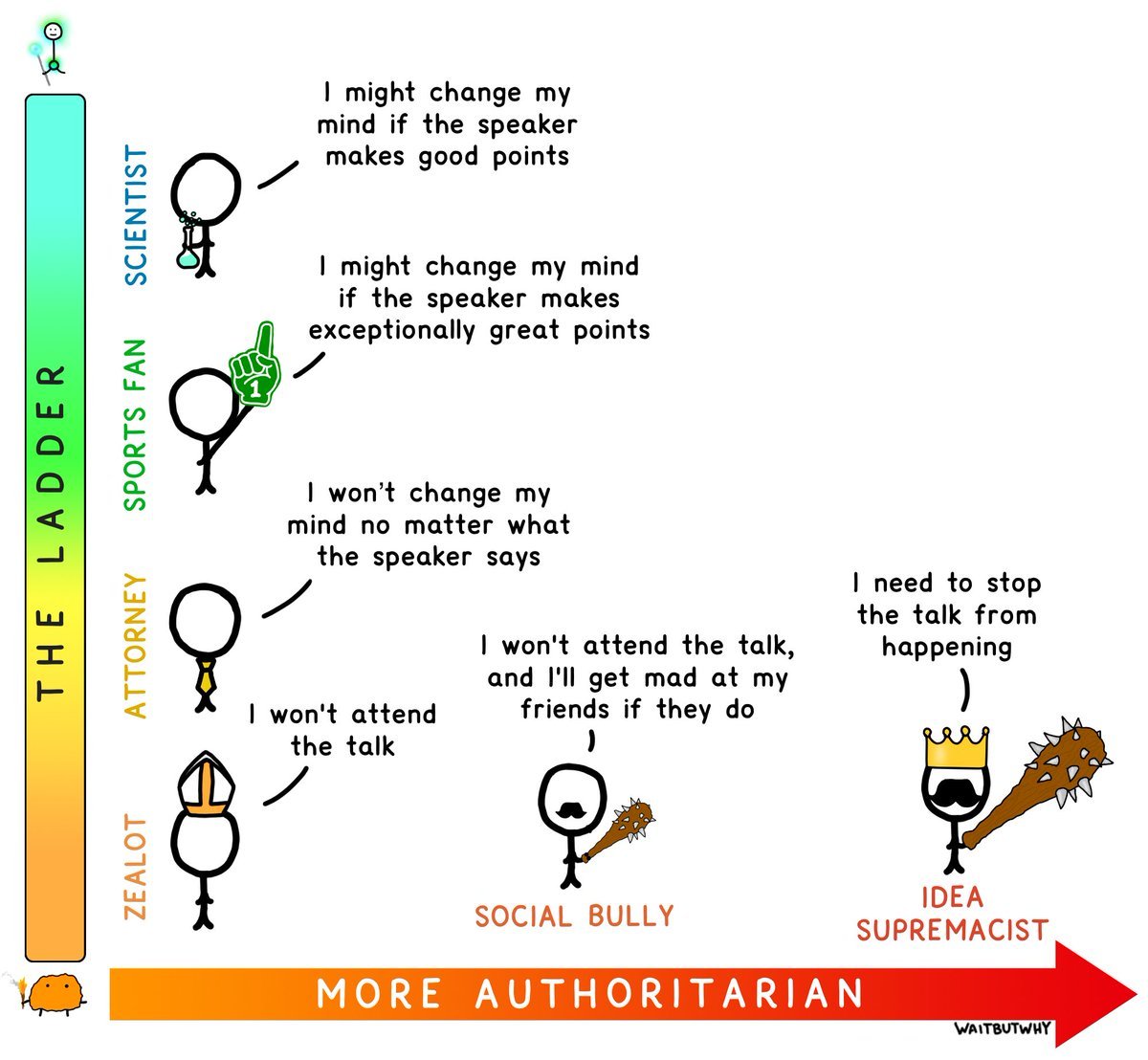
Inside the liberal house, movements make progress via persuasion. SJF opts instead for illiberal methods of coercion, trying to get opponents fired or get their talks canceled. SJF teaches its followers that it's good to be an idea supremacist.
10/
10/
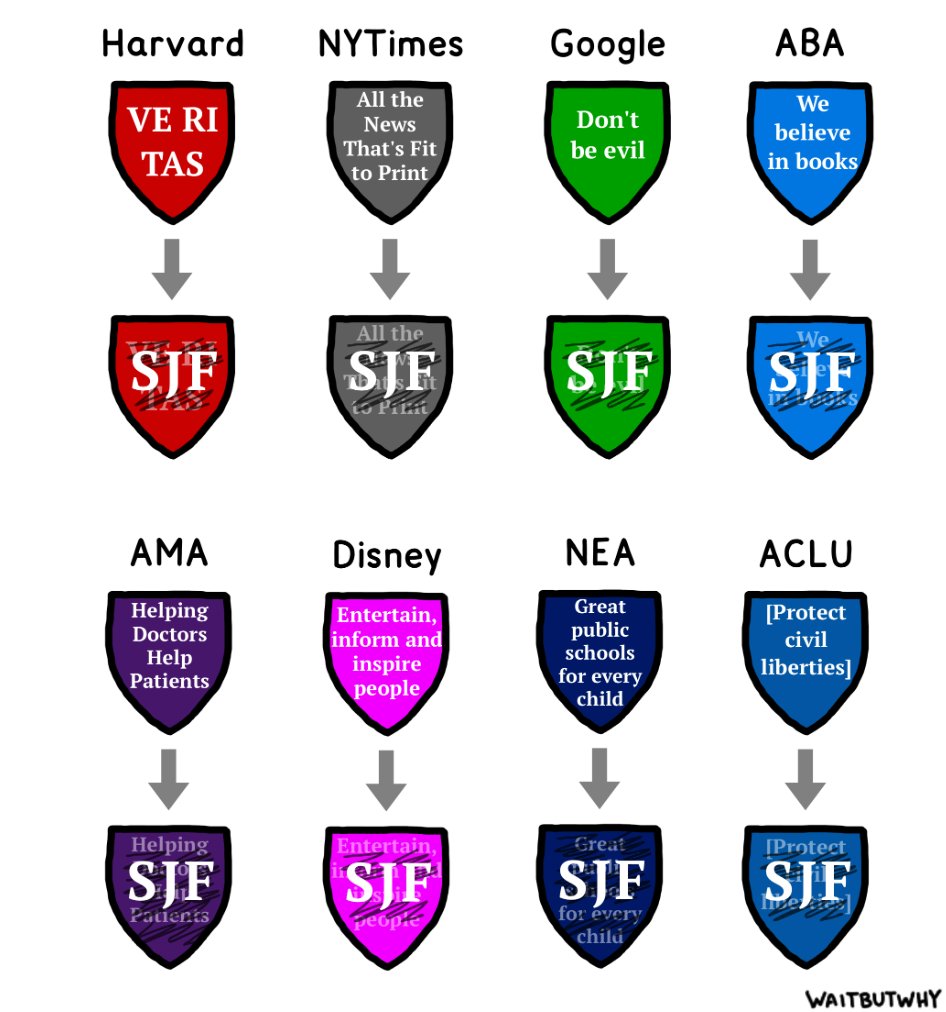
SJF is pretty open about its revolutionary goals to dismantle liberalism, but its activists use vague language that appeals to the liberal progressive inside the house, like "diversity" / "inclusion" / "anti-racism," and makes them think SJF is in line with their values.
11/
11/
But SJF is directly opposed to the goals of Liberal Social Justice. The nice-sounding words really represent deeply illiberal concepts.
Here are four examples of terms SJF activists use in academia that in practice mean something totally different.
12/
Here are four examples of terms SJF activists use in academia that in practice mean something totally different.
12/

If you're led to believe that SJF = liberal progressivism, it follows that anyone who opposes SJF must be a right-winger opposed to ALL social justice. But everyone in the liberal house should oppose SJF—because it is a movement outside the house with a wrecking ball.
13/
13/
This confusion is part of why SJF has managed to enter so many liberal institutions—from the New York Times to Google to Harvard to the ACLU to the American Medical Association—and alter their core values to make the institutions much less liberal.
14/
14/
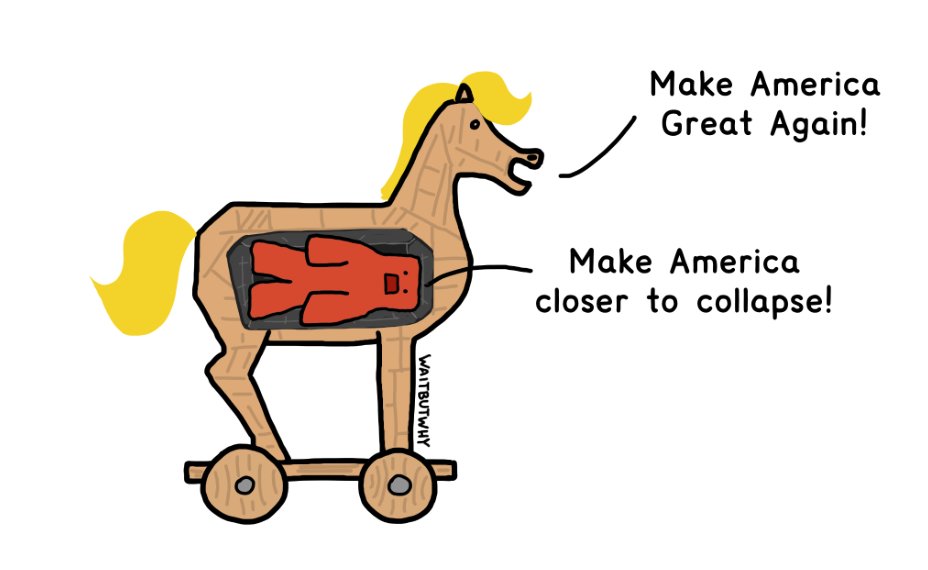
Another group that's outside the house with a wrecking ball wears red. From Jefferson to Obama, every previous president preached a reverence for the foundational liberal process of the peaceful transition of power. Trump and his supporters took the exact opposite stance.
15/
15/
Every claim by Trump's team about the election being stolen turned out to be false (e.g. see patreon.com).
It was a willingness to make a giant crack in the liberal house's foundation for a short-term gain.
16/
It was a willingness to make a giant crack in the liberal house's foundation for a short-term gain.
16/
But this didn't start with Trump. Thomas Jefferson once wrote about how alongside the official rules of senate were "unwritten rules, customs and courtesies" that were critical for the senate to function properly.
17/
17/
Republicans have increasingly been violating norms around routine procedures like the Supreme Court appointment process or debt ceiling increase approval in order to snag a short-term edge. Unlike SJF, they aren't openly ideologically anti-liberal, but their behavior is.
18/
18/
When people make these points, they get called a "centrist" or they get criticized for "bothsidesism." They get accused of caring about civility over actually taking a stance on anything.
But this is a very clear stance: pro-house, anti-wrecking-ball.
19/
But this is a very clear stance: pro-house, anti-wrecking-ball.
19/
Being anti-wrecking-ball says nothing about where you stand on the debates going on INSIDE the house. You can be left, center, or right and still be anti-wrecking-ball. There's nothing inherently "centrist" about being anti-wrecking-ball.
20/
20/
As for "bothsidesism," it is beside the point which wrecking ball is heavier or more threatening to the house at any given moment. Wrecking ball movements are on the rise across the political spectrum. That is a single giant problem for everyone who cares about the house.
21/
21/
The first question to ask yourself is how you feel about liberalism. Are you pro-house or anti-house? If you are pro-house—like so many social justice and conservative movements of the past—the first priority should be pushing back against wrecking balls.
22/
22/
The debates inside the house are critically important, but they should not be confused with the existential threat outside the house. If the wrecking ball movements are allowed to continue cracking the house's foundation, none of the debates inside the house will matter.
23/
23/
My book What's Our Problem? dives deep on the concept of the house and takes a magnifying glass to the biggest wrecking balls outside it.
waitbutwhy.com
/end
waitbutwhy.com
/end
Loading suggestions...