

Picture this:
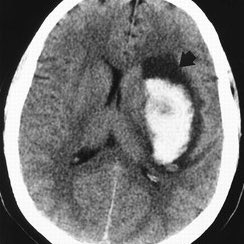
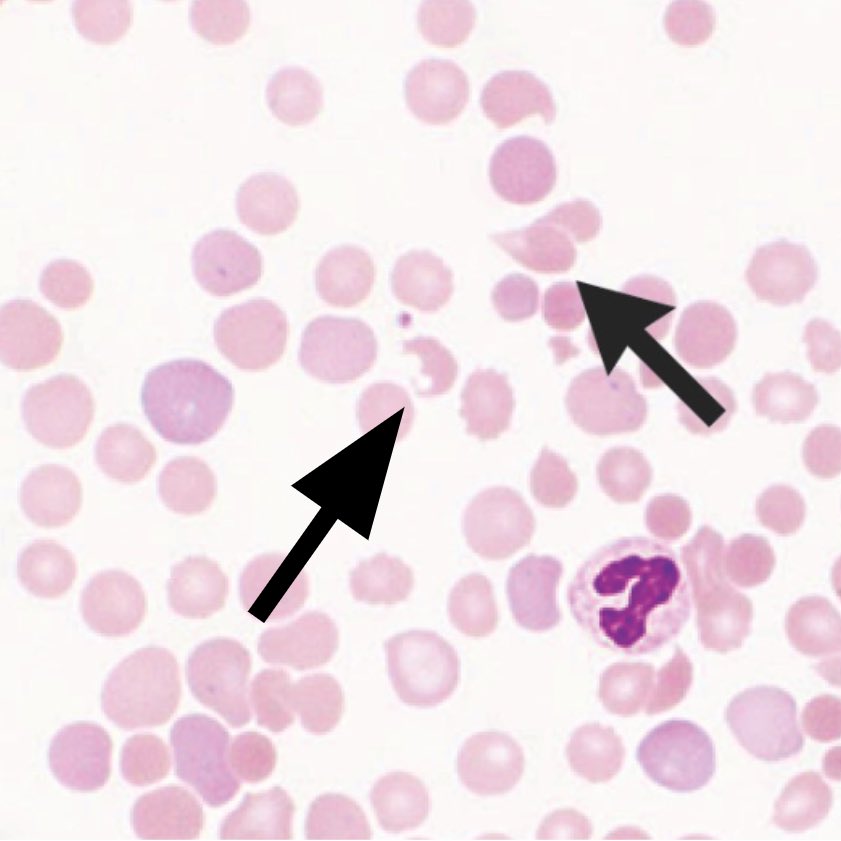
A patient with breast cancer is found unconscious at home, and you find this 👇 on your evaluation.
What’s going on? 🤔
🧵 1/6
A patient with breast cancer is found unconscious at home, and you find this 👇 on your evaluation.
What’s going on? 🤔
🧵 1/6
To guide our thoughts, let’s start with 3 thrombotic microangiopathy (TMA) facts-
1) TMA is a syndrome of RBC hemolysis via direct trauma from thrombi in small vessels
2) 🔑 Cancer-associated TMA has a one-month mortality of ~50% 🤯
🧵 2/6
1) TMA is a syndrome of RBC hemolysis via direct trauma from thrombi in small vessels
2) 🔑 Cancer-associated TMA has a one-month mortality of ~50% 🤯
🧵 2/6
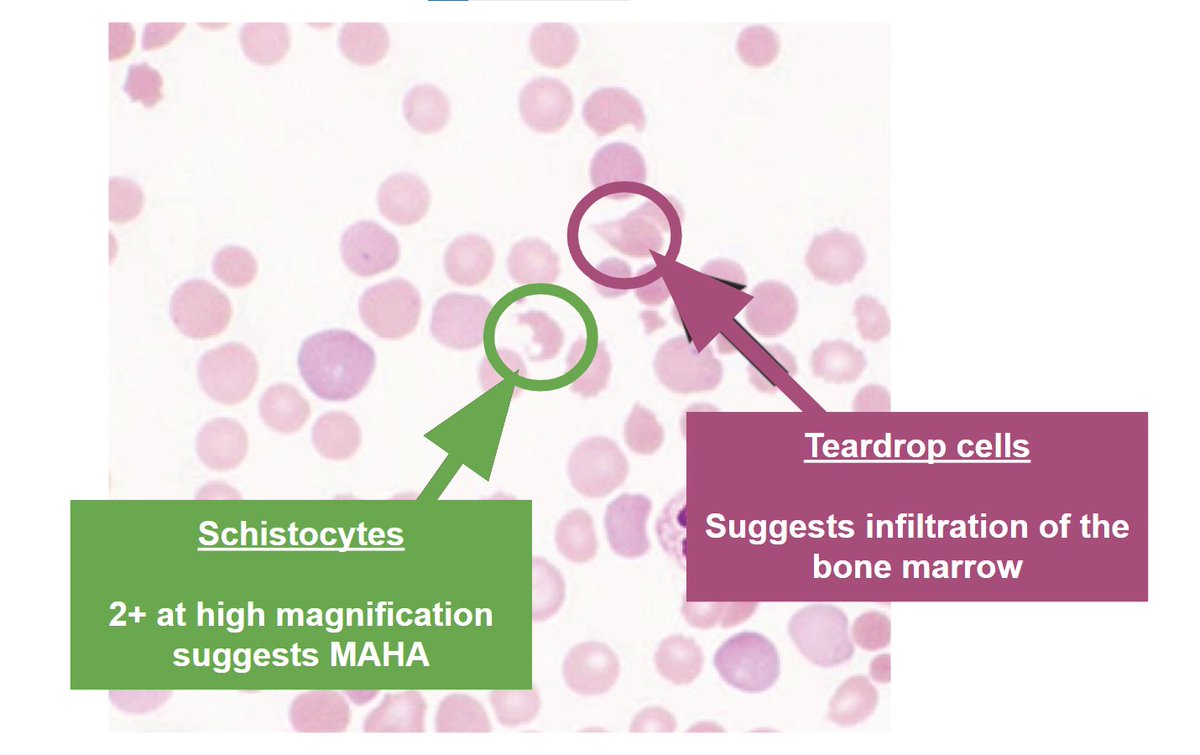
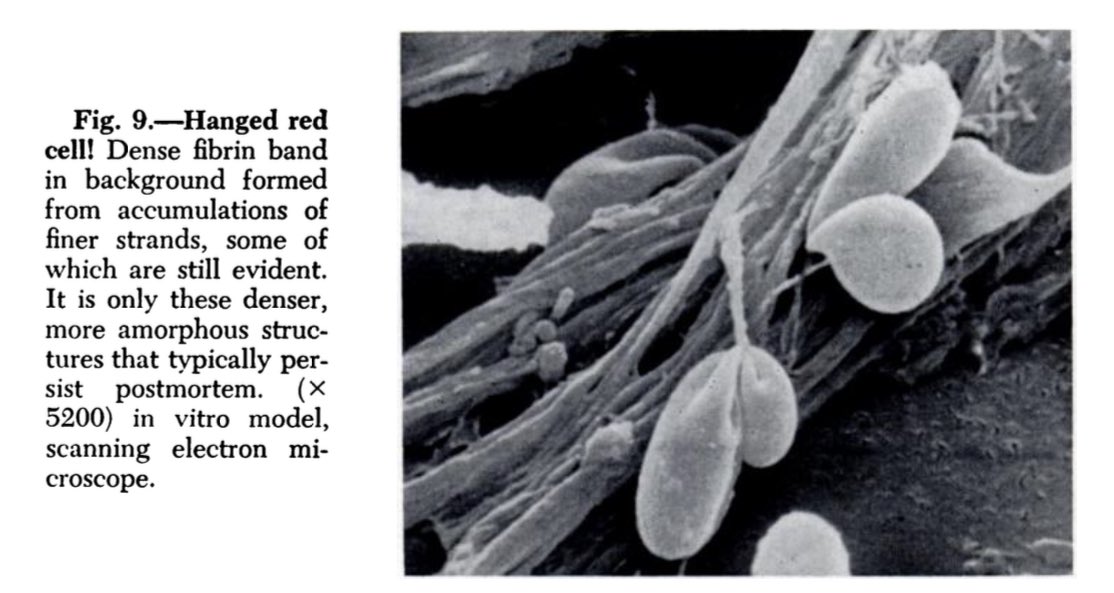
Cancer-associated TMA happens when cancer cells circulate in the blood and lead to…
1️⃣ fibrin deposition
and 2️⃣ small vessel occlusion
Imagine RBCs being sheared as they squeeze through these fibrin bands👇 🤯
🧵 3/6
1️⃣ fibrin deposition
and 2️⃣ small vessel occlusion
Imagine RBCs being sheared as they squeeze through these fibrin bands👇 🤯
🧵 3/6
With this high mortality in mind…
Which therapy ⬆️ overall survival for cancer-associated TMA? 🤔
🧵 4/6
Which therapy ⬆️ overall survival for cancer-associated TMA? 🤔
🧵 4/6
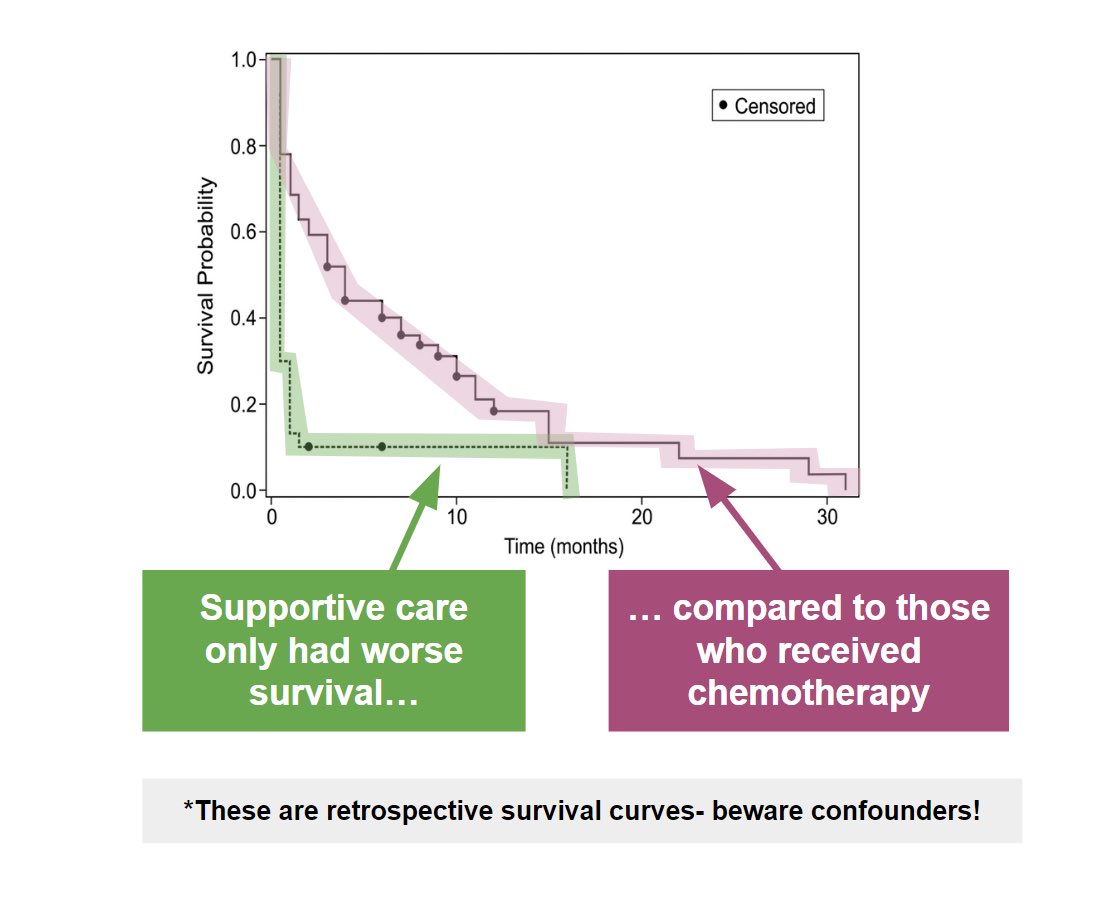
🆘 There is ⬇️ survival with plasma exchange or transfusion alone
because 1️⃣ the effect is transient
and 2️⃣ it doesn’t address the underlying driver
🔑 In this retrospective study👇 cancer-directed therapy increased survival
🧵 5/6
because 1️⃣ the effect is transient
and 2️⃣ it doesn’t address the underlying driver
🔑 In this retrospective study👇 cancer-directed therapy increased survival
🧵 5/6
Key takeaways:
🔑 Cancer can directly cause a thrombotic microangiopathy (TMA)
🤯 Cancer-associated TMA has a 1-month mortality of ~50%
🔑 Cancer-directed therapy ⬆️ overall survival
🧵 6/end
🔑 Cancer can directly cause a thrombotic microangiopathy (TMA)
🤯 Cancer-associated TMA has a 1-month mortality of ~50%
🔑 Cancer-directed therapy ⬆️ overall survival
🧵 6/end
Thanks for sticking around- I hope you learned something new!
Thank you @myelomatic for the review 🙏
Thank you @myelomatic for the review 🙏
For a deeper dive, full articles are below-
pubmed.ncbi.nlm.nih.gov
pubmed.ncbi.nlm.nih.gov
and images from (and adapted for this case)-
nejm.org
ahajournals.org
pubmed.ncbi.nlm.nih.gov
pubmed.ncbi.nlm.nih.gov
and images from (and adapted for this case)-
nejm.org
ahajournals.org
Loading suggestions...