

Gatorade was founded more than 50 years ago at the University of Florida.
They now do over $6 billion in annual revenue (4x more than their biggest competitor).
And the scientists that invented the drink signed a royalty deal that made them billions.
Here's the story 👇
They now do over $6 billion in annual revenue (4x more than their biggest competitor).
And the scientists that invented the drink signed a royalty deal that made them billions.
Here's the story 👇

1) The Gatorade story starts in 1965.
The University of Florida football team is losing games left and right & players are constantly complaining about the hot Florida sun.
Why?
Because back in the day, football players weren't allowed to drink water during practice or games.
The University of Florida football team is losing games left and right & players are constantly complaining about the hot Florida sun.
Why?
Because back in the day, football players weren't allowed to drink water during practice or games.
2) Coaches thought water made players slow and sluggish.
So outside of the occasional salt tablet and gulp of water, no hydration was allowed.
This caused severe dehydration — and it got so bad that Florida football coach Ray Graves went to the school's laboratory for answers.
So outside of the occasional salt tablet and gulp of water, no hydration was allowed.
This caused severe dehydration — and it got so bad that Florida football coach Ray Graves went to the school's laboratory for answers.
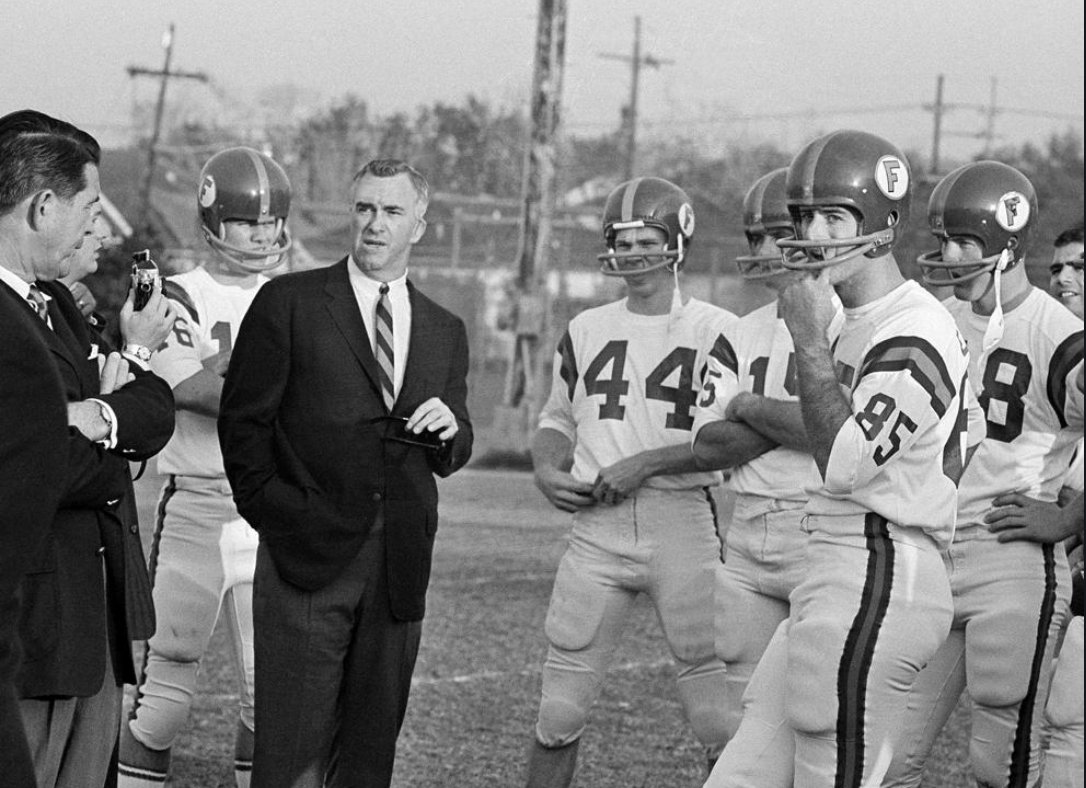
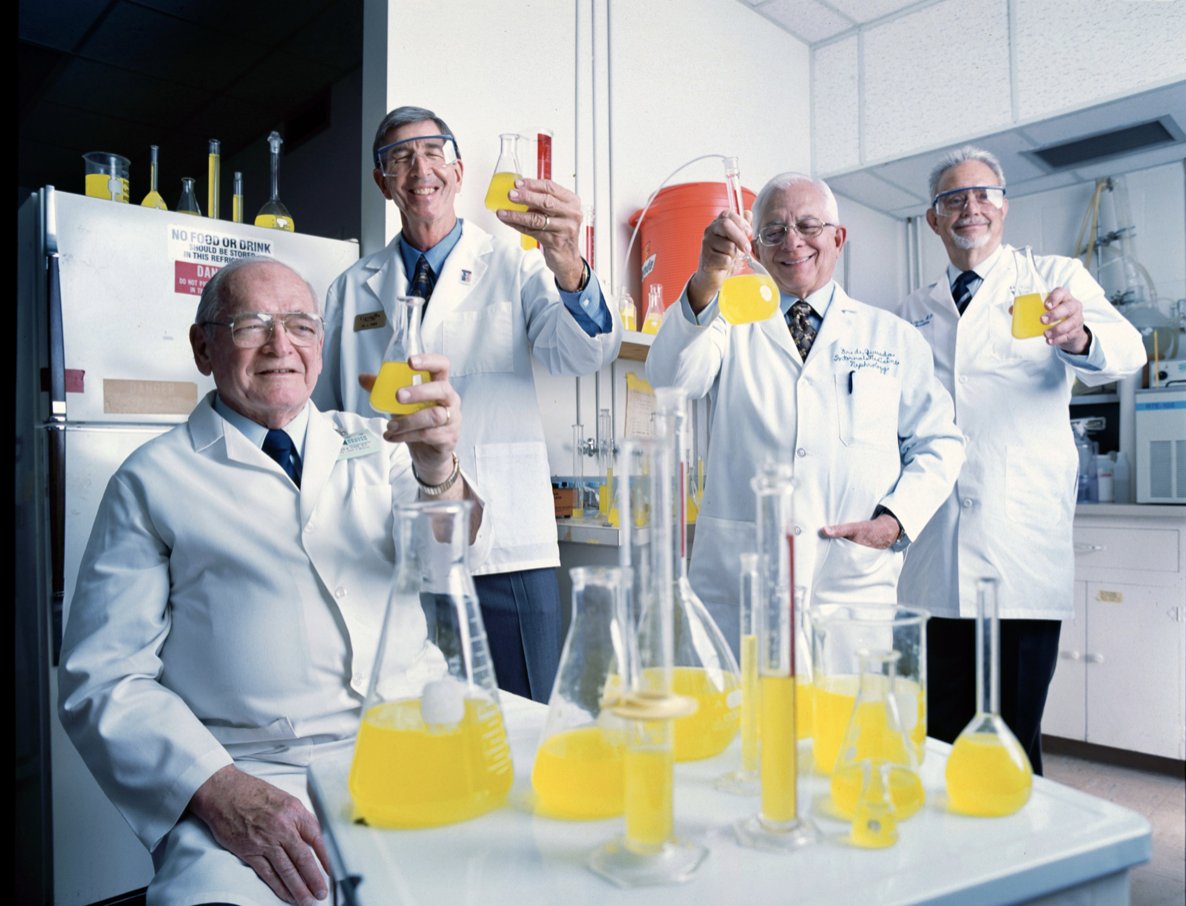
3) Coach Graves asked 4 scientists to help:
• Dr. James Robert Cade
• Dr. H. James Free
• Dr. Dana Shires
• Dr. Alejandro de Quesada
They started by taking blood and urine samples from the players to measure blood volume & salt/sugar levels.
And the results were shocking.
• Dr. James Robert Cade
• Dr. H. James Free
• Dr. Dana Shires
• Dr. Alejandro de Quesada
They started by taking blood and urine samples from the players to measure blood volume & salt/sugar levels.
And the results were shocking.

4) Players were losing 260 fluid ounces throughout a 2-hour practice — that's about 16 pounds of fluid.
Many players were also dangerously low on electrolytes like sodium and potassium.
So the four scientists got to work and tried to come up with a solution.
Many players were also dangerously low on electrolytes like sodium and potassium.
So the four scientists got to work and tried to come up with a solution.
5) The scientists created a drink that contained:
• Water
• Sodium
• Potassium
• Phosphate
But players described it as tasting like "urine or toilet bowl cleaner," so the doctors added lemon juice, orange, and sugar.
And the first version of Gatorade was born.
• Water
• Sodium
• Potassium
• Phosphate
But players described it as tasting like "urine or toilet bowl cleaner," so the doctors added lemon juice, orange, and sugar.
And the first version of Gatorade was born.
6) The results were immediately clear.
The freshman team beat the Varsity B team after drinking Gatorade at halftime of a scrimmage, and the entire University of Florida football team was drinking Gatorade within a matter of weeks.
But the real eye-opener came in 1966.
The freshman team beat the Varsity B team after drinking Gatorade at halftime of a scrimmage, and the entire University of Florida football team was drinking Gatorade within a matter of weeks.
But the real eye-opener came in 1966.
7) Florida became known as a “second-half team” that would outlast its opponents after drinking Gatorade at halftime.
They then beat Georgia Tech in the Orange Bowl, and GT coach Bobby Dodd blamed the loss on Gatorade.
“We didn't have Gatorade...That made the difference."
They then beat Georgia Tech in the Orange Bowl, and GT coach Bobby Dodd blamed the loss on Gatorade.
“We didn't have Gatorade...That made the difference."

8) The word about Gatorade spread from there, and schools nationwide wanted to place orders.
But the scientists didn't want to run a business, so they approached The University of Florida with an offer to buy Gatorade for $10,000 (about $100k today).
Still, the school declined.
But the scientists didn't want to run a business, so they approached The University of Florida with an offer to buy Gatorade for $10,000 (about $100k today).
Still, the school declined.
9) The scientists then met executives from a canned bean company called Stokely-Van Camp.
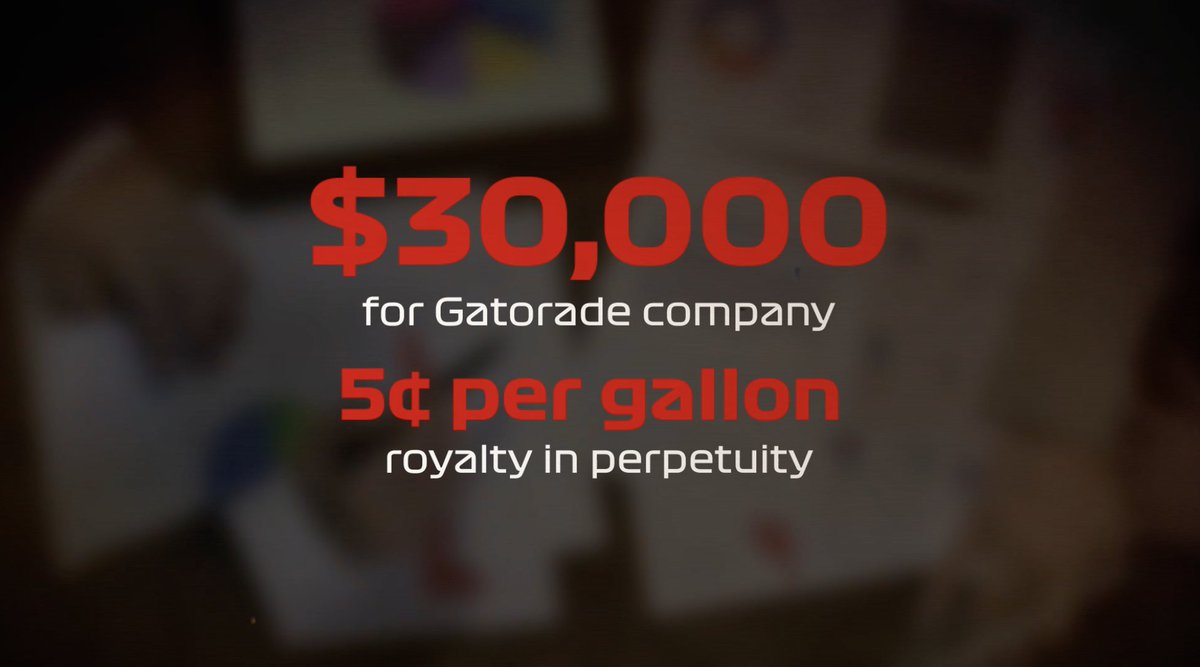
They were interested in the product & offered the scientists a royalty-based deal to buy Gatorade:
• $30,000 cash
• 5 cent per gallon royalty in perpetuity
And the scientists accepted.
They were interested in the product & offered the scientists a royalty-based deal to buy Gatorade:
• $30,000 cash
• 5 cent per gallon royalty in perpetuity
And the scientists accepted.
10) This is when Gatorade became a business.
Stokely-Van Camp put Gatorade in glass quart jars and called it the "beverage of champions."
Sales were increasing and profits were climbing, but then the University of Florida filed a lawsuit.
They said Gatorade belonged to them.
Stokely-Van Camp put Gatorade in glass quart jars and called it the "beverage of champions."
Sales were increasing and profits were climbing, but then the University of Florida filed a lawsuit.
They said Gatorade belonged to them.
11) The University of Florida said they were entitled to all Gatorade royalties because of one main reason:
The school's lab, football team, and even mascot were used in the formation of the product.
And while that was all true, the scientists had a good defense.
The school's lab, football team, and even mascot were used in the formation of the product.
And while that was all true, the scientists had a good defense.
12) The scientist's defense relied on two things:
1. They were funded by the National Department of Health Grants, not the University of Florida.
2. Dr. Cade somehow never signed the school’s standard invention agreement.
So the two parties eventually reached a settlement.
1. They were funded by the National Department of Health Grants, not the University of Florida.
2. Dr. Cade somehow never signed the school’s standard invention agreement.
So the two parties eventually reached a settlement.
13) Here's how the settlement worked:
The scientists (through the Gatorade Trust) agreed to give 20% of all Gatorade royalties to the University of Florida in perpetuity and kept 80% for themselves.
And with the lawsuit behind them, Gatorade focused on growth.
The scientists (through the Gatorade Trust) agreed to give 20% of all Gatorade royalties to the University of Florida in perpetuity and kept 80% for themselves.
And with the lawsuit behind them, Gatorade focused on growth.

14) Gatorade signed athletes like Michael Jordan, Lionel Messi, Tiger Woods, and Serena Williams.
They now sell their product in 80+ countries and own 75% of the US sports drink market alone.
And no one has benefitted more than the University of Florida and its four scientists.
They now sell their product in 80+ countries and own 75% of the US sports drink market alone.
And no one has benefitted more than the University of Florida and its four scientists.
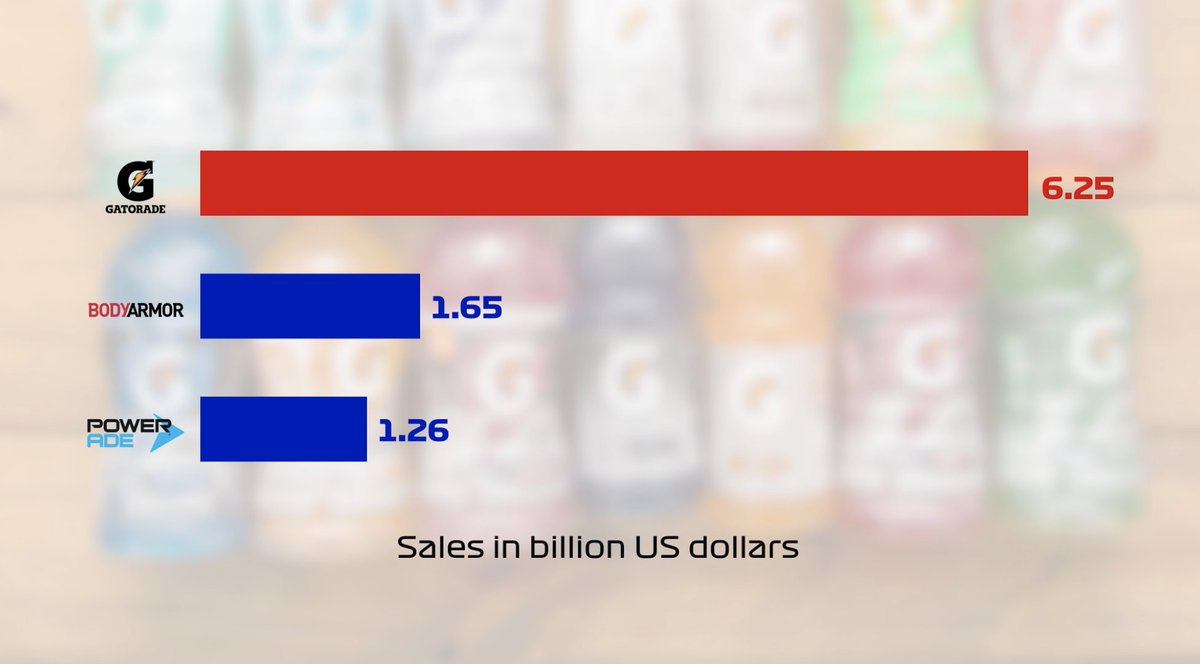
15) Brand acquisitions have caused Gatorade's royalty deal to change over time.
But the scientists have collected over $1.5 billion in royalties, and the University of Florida has made over $250 million themselves.
Now, that’s not bad for a product they never intended to sell.
But the scientists have collected over $1.5 billion in royalties, and the University of Florida has made over $250 million themselves.
Now, that’s not bad for a product they never intended to sell.
16) If you enjoyed this thread, you should follow me.
I tweet interesting stories like this all the time.
Ps. you'll also probably enjoy my free newsletter, where I break down the business and money behind sports.
Join 93,000+ others: huddleup.substack.com
I tweet interesting stories like this all the time.
Ps. you'll also probably enjoy my free newsletter, where I break down the business and money behind sports.
Join 93,000+ others: huddleup.substack.com

Loading suggestions...