

Bola Tinubu has just been declared Nigeria's President-elect. Here's my pick of academic readings for understanding who he is and what his record as former Governor of Lagos State might mean for Africa's biggest democracy:
[thread]
#NigerianElections #NigeriaDecides2023
[thread]
#NigerianElections #NigeriaDecides2023
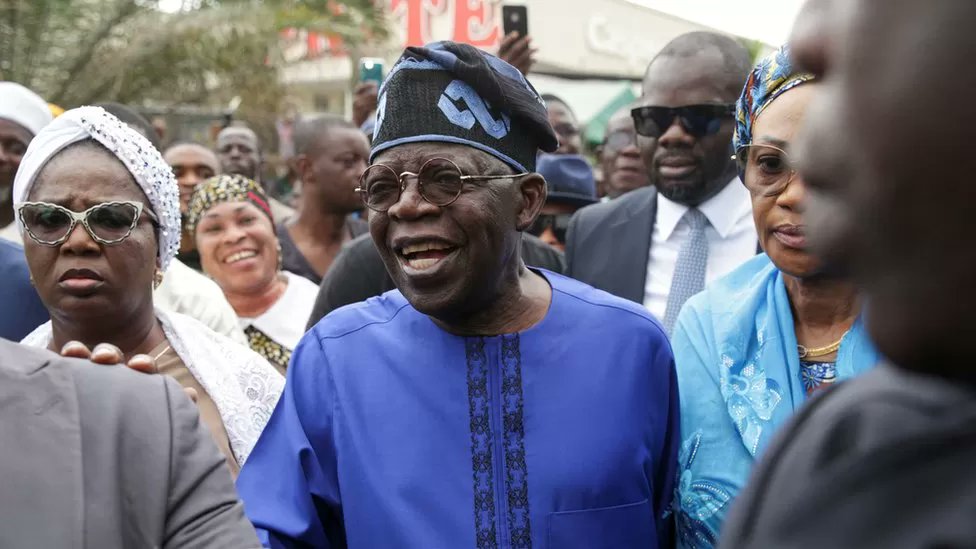
Tinubu ran on his record of 'transforming' Lagos whilst he was governor from 1999-2007. This agenda was continued by his protegé, Babatunde Fashola, who took over from 2007-2011.
Michael O. Filani describes this in his @CitiesAlliance report from 2012:
citiesalliance.org
Michael O. Filani describes this in his @CitiesAlliance report from 2012:
citiesalliance.org
Crucially, the literature on the 'Lagos Model' raises three key contradictions.
i) The tension between reformist, often technocratic policy making, and the use of state power to build new business and patronage networks.
hal-sciencespo.archives-ouvertes.fr
i) The tension between reformist, often technocratic policy making, and the use of state power to build new business and patronage networks.
hal-sciencespo.archives-ouvertes.fr
I say tension, but really these were mutually supporting: savvy/shady political maneuvering created the conditions for pockets of donor-friendly technocratic governance, and vice versa.
See also: academic.oup.com [paywalled]
See also: academic.oup.com [paywalled]

In my work I try to unpick this corruption vs. good governance binary. Indeed, a lot of Nigerian politics involves contestation between people with rival definitions of what good governance should look like:
cambridge.org
OA preprint here: eprints.lse.ac.uk
cambridge.org
OA preprint here: eprints.lse.ac.uk
eprints.lse.ac.uk/100250/1/Roelo…

cambridge.org/core/journals/…
Beyond programmatic versus patrimonial politics: contested conceptions of legitimate distribution in Nigeria | The Journal of Modern African Studies | Cambridge Core
Beyond programmatic versus patrimonial politics: contested conceptions of legitimate distribution in...
Here I think about what this means for ambivalent public perceptions of Tinubu, in terms of transparency and (mis)trust: onlinelibrary.wiley.com
@ndukaorjinmo 's profile of Tinubu sets out these issues well: bbc.co.uk
@ndukaorjinmo 's profile of Tinubu sets out these issues well: bbc.co.uk
onlinelibrary.wiley.com/doi/full/10.11…
Transparency and mistrust: Who or what should be made transparent?
It is increasingly recognized in public administration that the relationship between trust and trans...

bbc.co.uk/news/world-afr…
Bola Tinubu - the 'godfather' who is Nigeria's president-elect
After fighting military rule in the 1990s, Bola Tinubu, 70, feels entitled to become Nigeria's presi...
ii) The second tension is around inequality. Tinubu's crowning - and oft-repeated - achievement is the expansion of the tax base and thus internally generated revenue in Lagos. This is key to reducing reliance on oil revenues + improved public services.
carnegieendowment.org
carnegieendowment.org

Yet, the improvements in state capacity enabled Lagos to pursue what many see as an exclusive and exclusionary vision of the mega-city and urban development.
See @DanielAgbiboa's 2022 They eat our sweat
#v=onepage&q&f=false" target="_blank" rel="noopener" onclick="event.stopPropagation()">books.google.co.uk
See @DanielAgbiboa's 2022 They eat our sweat
#v=onepage&q&f=false" target="_blank" rel="noopener" onclick="event.stopPropagation()">books.google.co.uk

iii) The third tension is around the role of political ideology and regional politics.
Wale Adebanwi's 2014 "Yoruba Elites and Ethnic Politics in Nigeria" gives insights into the politics of Tinubu's home region, the southwest, since independence.
Wale Adebanwi's 2014 "Yoruba Elites and Ethnic Politics in Nigeria" gives insights into the politics of Tinubu's home region, the southwest, since independence.
Link:#v=onepage&q&f=false" target="_blank" rel="noopener" onclick="event.stopPropagation()">books.google.co.uk
The origins of the ruling APC can only be understood in the context Yoruba Progressivism and the sense of a shared political project in Lagos and neighbouring states, which seeks to 'follow in the footsteps' of Obafemi Awolowo.
The origins of the ruling APC can only be understood in the context Yoruba Progressivism and the sense of a shared political project in Lagos and neighbouring states, which seeks to 'follow in the footsteps' of Obafemi Awolowo.

For example, these ideas shaped the implementation of urban renewal policies in Ibadan in the southwest.
academic.oup.com
Contrary to conventional wisdom, as @SaeeduH shows, ideas and ideology do play a role in Nigerian politics.
ethos.bl.uk
academic.oup.com
Contrary to conventional wisdom, as @SaeeduH shows, ideas and ideology do play a role in Nigerian politics.
ethos.bl.uk
ethos.bl.uk/OrderDetails.d…
Beyond stomach infrastructure : party membership and political ideology in Nigeria’s Fourth Republic

academic.oup.com/afraf/article/…
Urban renewal in Ibadan, Nigeria: World class but essentially Yoruba
Abstract. Urban renewal is central to ‘world-class’ city aspirations on the African continent: demol...
That said, Adebanwi's book makes the point that Tinubu's position within the Yoruba progressive project is complicated. He's a pragmatist and his most decisive alliances have been w/ figures outside of the southwest (i.e. forming the APC with Buhari and the northern CPC in 2013).
What all this means for the next four years is unclear. A caveat is that most of this literature speaks to a specific moment in Nigeria's democratic history and stops around 2015. Would be great to hear from anyone doing more recent research that sheds light on the Buhari/APC era
Sorry - typo - Fashola was of course Governor for two terms 2007-2015.
جاري تحميل الاقتراحات...