

Content research: 9 effective tips to master it 🏆
Content research has a direct impact on engagement and traffic—and can help you create a more valuable + credible article.
Let's delve into these tips 💡
H/T: @ihimanshu_gupta
Content research has a direct impact on engagement and traffic—and can help you create a more valuable + credible article.
Let's delve into these tips 💡
H/T: @ihimanshu_gupta

1. Focus on the right topic
Before choosing a topic, decide on the goal of your article. It might be to:
- Drive organic traffic
- Boost brand visibility
- Get social shares
- Build product awareness
Before choosing a topic, decide on the goal of your article. It might be to:
- Drive organic traffic
- Boost brand visibility
- Get social shares
- Build product awareness
1. Focus on the right topic (cont'd)
If your goal is to drive organic traffic, start by finding keywords that your audience is searching for.
- Plug a broad, related term in Ahrefs' Keywords Explorer.
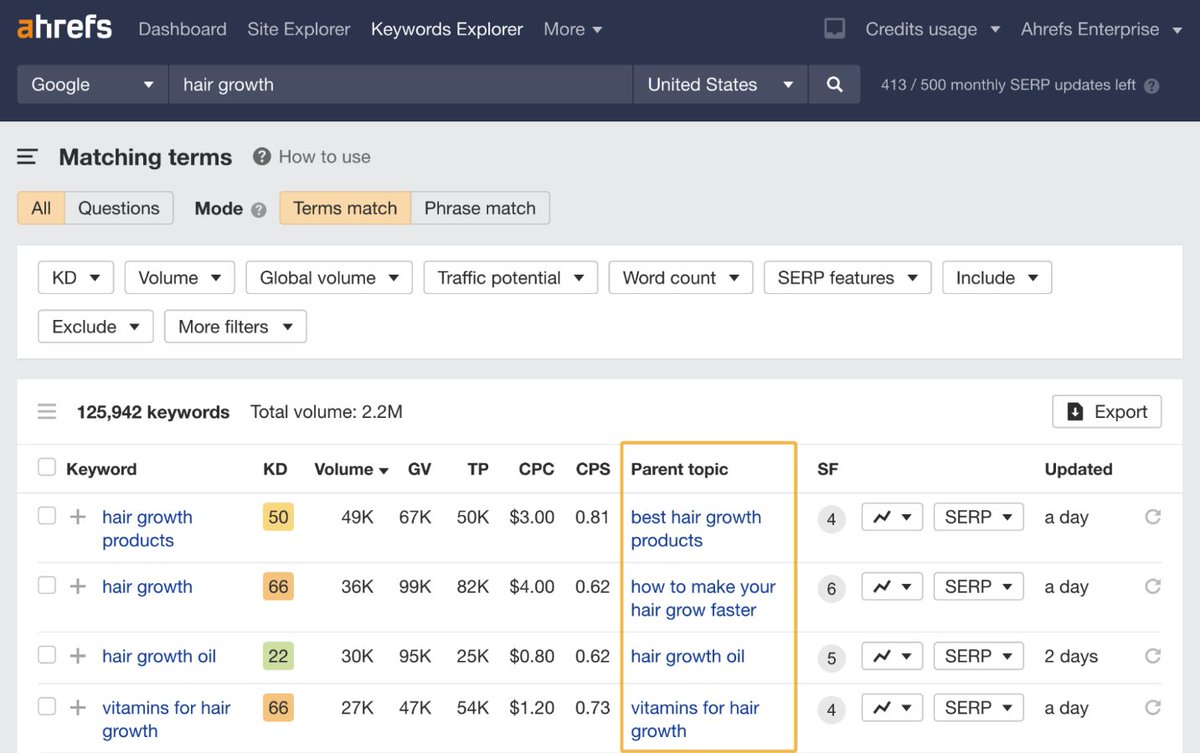
- Open the Matching terms report to view all relevant keywords:
If your goal is to drive organic traffic, start by finding keywords that your audience is searching for.
- Plug a broad, related term in Ahrefs' Keywords Explorer.
- Open the Matching terms report to view all relevant keywords:
1. Focus on the right topic (cont'd)
- Hone in on the Parent topic column (above): It shows you the main keyword that's driving traffic to a given page.
- You can also filter the keywords based on metrics like Keyword Difficulty, search volume or Traffic Potential.
- Hone in on the Parent topic column (above): It shows you the main keyword that's driving traffic to a given page.
- You can also filter the keywords based on metrics like Keyword Difficulty, search volume or Traffic Potential.
2. Analyze the search intent
Understanding the search intent behind your topic can help you identify:
- How your existing resources cover the topic
- The gaps/flaws in what’s already published
- The depth readers are expecting when searching about the topic
Understanding the search intent behind your topic can help you identify:
- How your existing resources cover the topic
- The gaps/flaws in what’s already published
- The depth readers are expecting when searching about the topic
2. Analyze the search intent (cont'd)
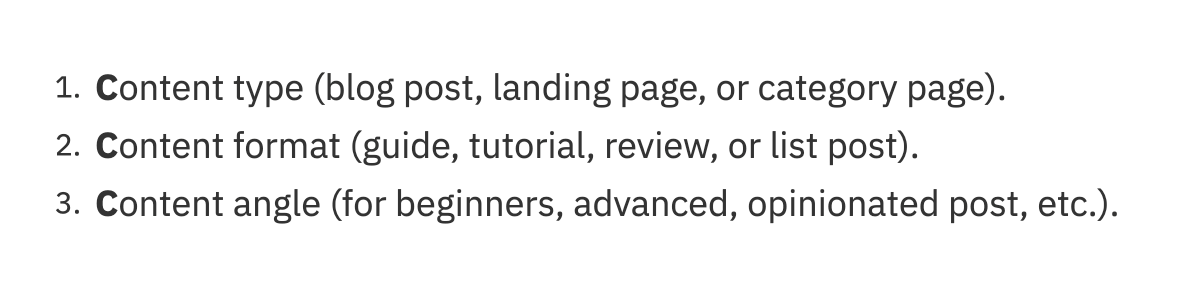
Use the three Cs of search intent to decide on the kind of content you should create. ⬇️
Going through the top-ranking SERPs for a keyword + reading competing content can also help you to sharpen and/or identify your content angle.
Use the three Cs of search intent to decide on the kind of content you should create. ⬇️
Going through the top-ranking SERPs for a keyword + reading competing content can also help you to sharpen and/or identify your content angle.
2. Analyze the search intent (cont'd)
Next, dive deeper with a competitor analysis.
When researching competitors' articles, consider the:
- Article structure
- Article depth
- Unique/interesting insights
- Use of infographics, charts, graphs, or other visuals
Next, dive deeper with a competitor analysis.
When researching competitors' articles, consider the:
- Article structure
- Article depth
- Unique/interesting insights
- Use of infographics, charts, graphs, or other visuals
2. Analyze the search intent (cont'd)
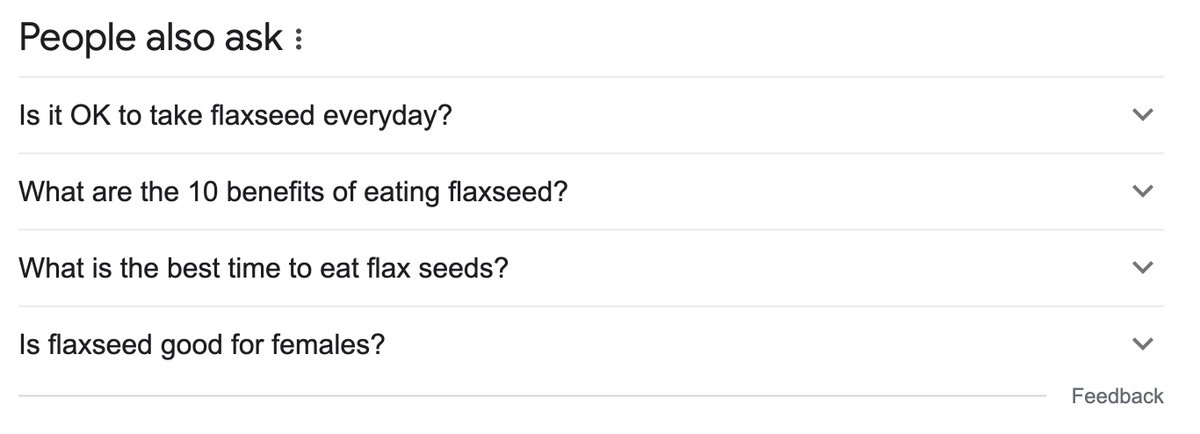
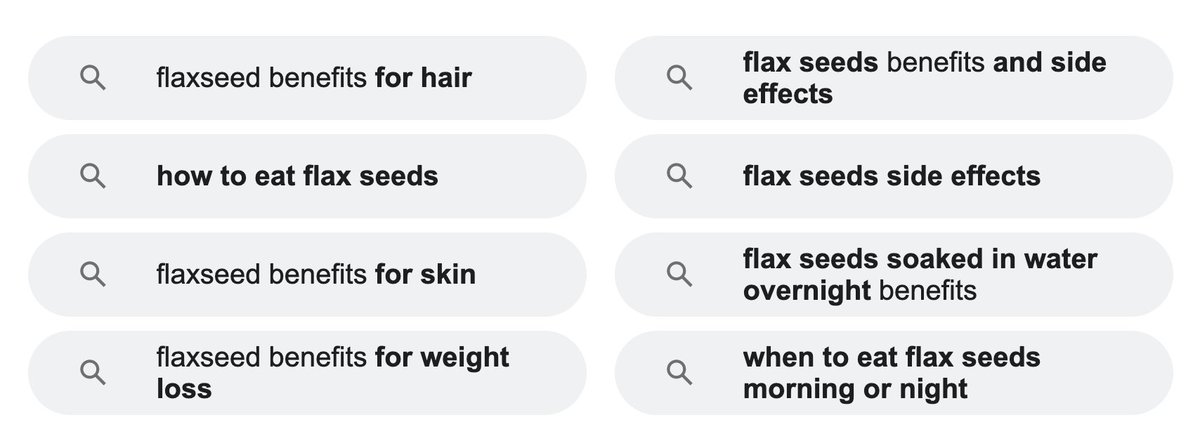
You should also look at the People Also Ask (PAA) box and related searches.
These are a good indicator of what questions readers tend to ask—so you should attempt to capture this in your own content too.
You should also look at the People Also Ask (PAA) box and related searches.
These are a good indicator of what questions readers tend to ask—so you should attempt to capture this in your own content too.
3. Ask yourself what additional value you can bring
Think about why certain pieces of content are more successful than others.
For your article to stand out, you might need to:
- Add case studies where relevant
- Challenge the status quo with your own perspectives
Think about why certain pieces of content are more successful than others.
For your article to stand out, you might need to:
- Add case studies where relevant
- Challenge the status quo with your own perspectives
3. Ask yourself what additional value you can bring (cont'd)
- Support your statements with research and/or quotes from subject matter experts (SMEs)
- Create checklists/infographics/flowcharts to make your content more interactive and impactful
TL;DR: Think bigger!
- Support your statements with research and/or quotes from subject matter experts (SMEs)
- Create checklists/infographics/flowcharts to make your content more interactive and impactful
TL;DR: Think bigger!
4. Talk to subject matter experts (SMEs)
SMEs can offer unique insights and add credibility to a piece.
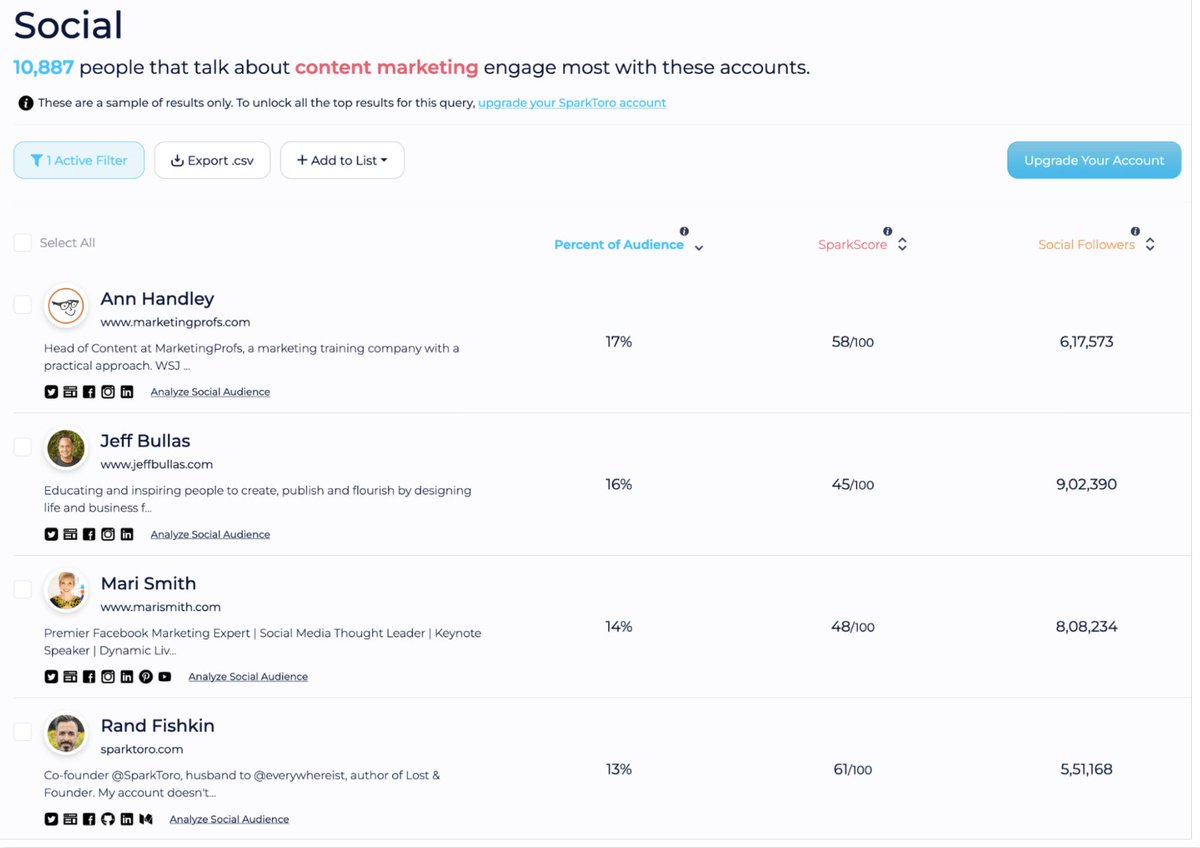
You can find them using @sparktoro—just enter a niche keyword to find relevant influencers.
Remember to set your account type to "individual" to filter out company accounts.
SMEs can offer unique insights and add credibility to a piece.
You can find them using @sparktoro—just enter a niche keyword to find relevant influencers.
Remember to set your account type to "individual" to filter out company accounts.
4. Talk to subject matter experts (cont'd)
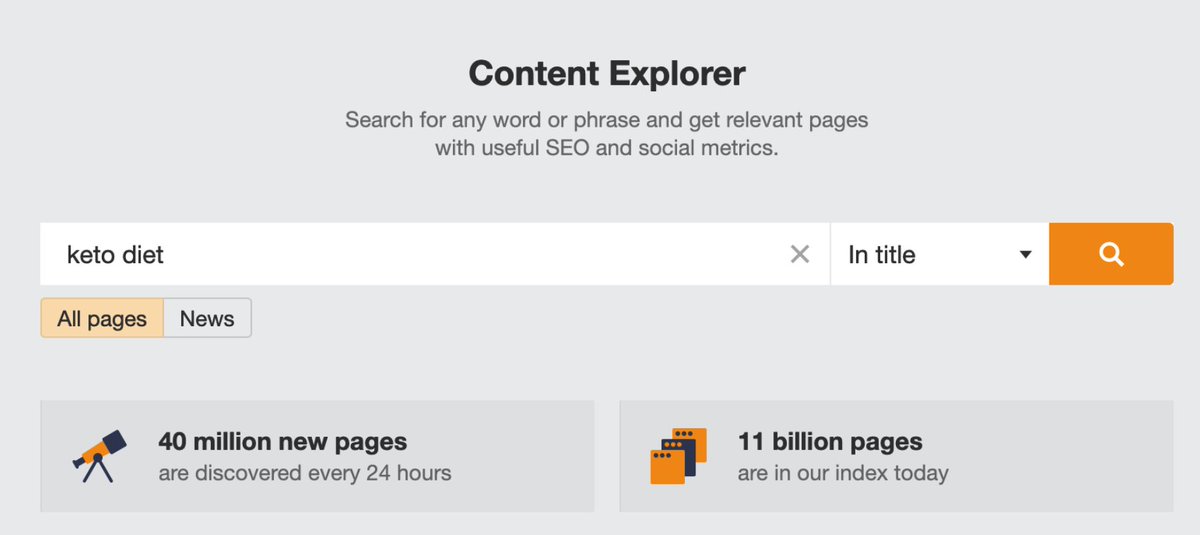
Alternatively, find SMEs with Ahrefs' Content Explorer.
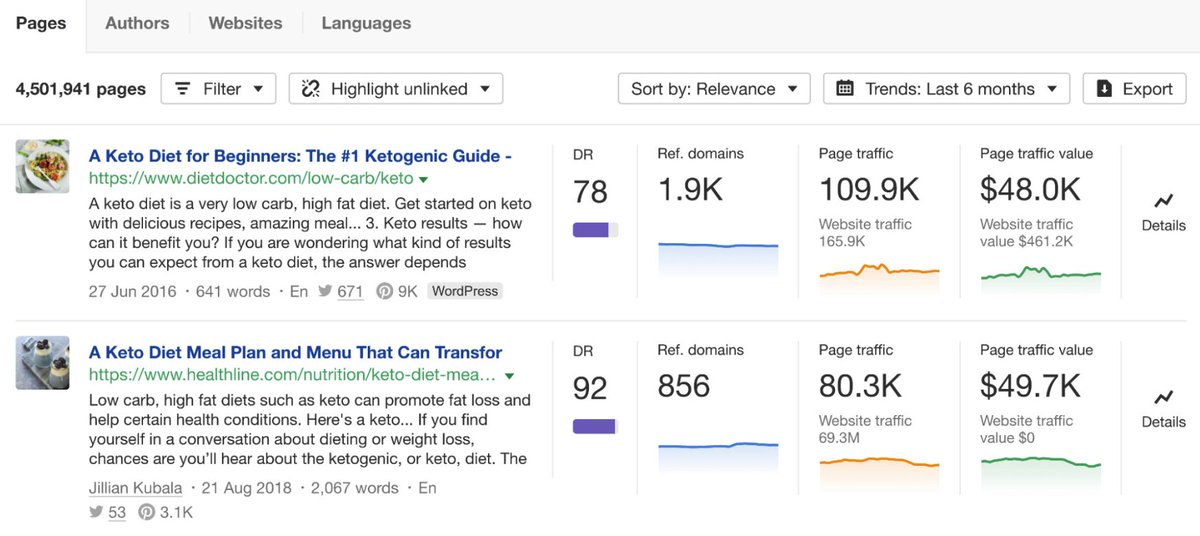
- Enter a topic (e.g. keto diet) and choose "In title" from the dropdown.
- View results or filter by platform/publish dates, page traffic, referring domains, and more:
Alternatively, find SMEs with Ahrefs' Content Explorer.
- Enter a topic (e.g. keto diet) and choose "In title" from the dropdown.
- View results or filter by platform/publish dates, page traffic, referring domains, and more:
4. Talk to subject matter experts (cont'd)
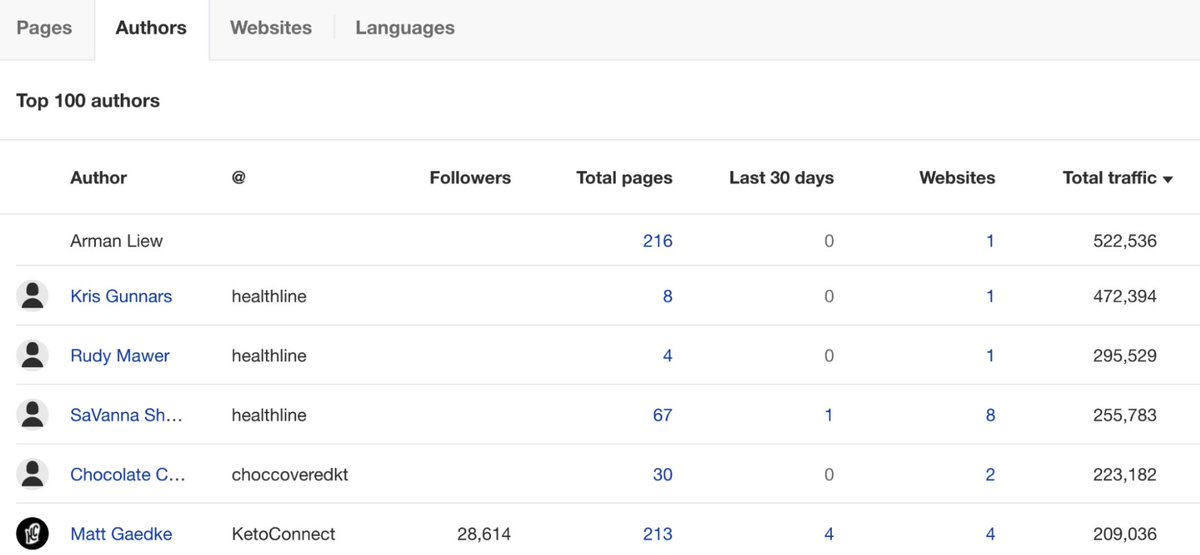
Next, go to the author's tab to find these topical experts—or manually review the articles to find top authors.
You can then reach out to these experts to share how they'd benefit from being featured in your article.
Next, go to the author's tab to find these topical experts—or manually review the articles to find top authors.
You can then reach out to these experts to share how they'd benefit from being featured in your article.
4. Talk to subject matter experts (cont'd)
A final tip? Keep the conversation succinct by drafting a questionnaire *before* reaching out.
Keep it short, and ask questions that can help you fill the gaps in your article.
A final tip? Keep the conversation succinct by drafting a questionnaire *before* reaching out.
Keep it short, and ask questions that can help you fill the gaps in your article.
5. Leverage social media
Social media is a powerful tool for content research.
Follow the right people and pages, and you'll learn plenty about your industry:
- Problems your audience is facing
- Industry trends
- Tactics that are working
Let's look at Twitter + Reddit:
Social media is a powerful tool for content research.
Follow the right people and pages, and you'll learn plenty about your industry:
- Problems your audience is facing
- Industry trends
- Tactics that are working
Let's look at Twitter + Reddit:
5. Leverage social media (cont'd)
Twitter📍Use its advanced search functionality to kick things off.
Include relevant keywords and hashtags > Filter the results by minimum engagement and date.
But remember: Real gems sometimes don't get much engagement and may be hard to find.
Twitter📍Use its advanced search functionality to kick things off.
Include relevant keywords and hashtags > Filter the results by minimum engagement and date.
But remember: Real gems sometimes don't get much engagement and may be hard to find.

5. Leverage social media (cont'd)
An additional tip for Twitter: Create a list of influencers and pages in your niche on Twitter.
This way, you can follow these folks closely since they might be hard to track in your regular feed.
An additional tip for Twitter: Create a list of influencers and pages in your niche on Twitter.
This way, you can follow these folks closely since they might be hard to track in your regular feed.
5. Leverage social media (cont'd)
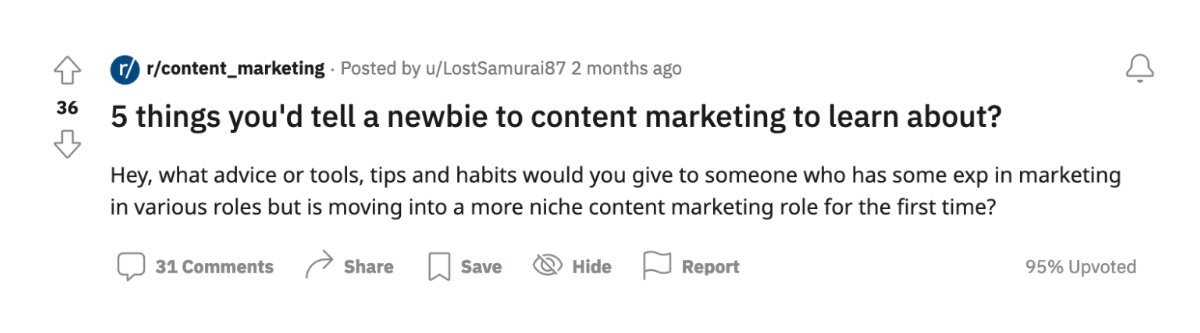
Reddit📍There's very likely a subreddit for your niche.
From here, read the conversations or start a discussion by putting out a post in a relevant subreddit. Like so:
Reddit📍There's very likely a subreddit for your niche.
From here, read the conversations or start a discussion by putting out a post in a relevant subreddit. Like so:
6. Engage in collaborative marketing
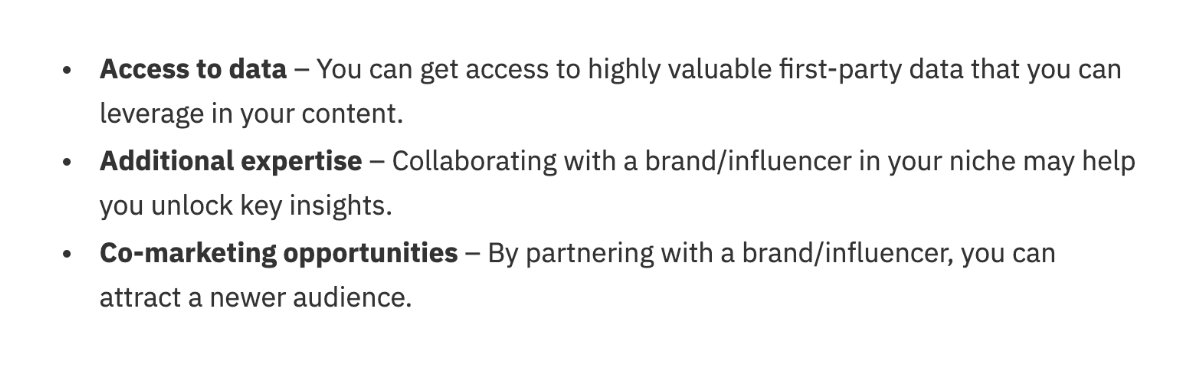
Benefits of collaborative marketing include:
- Access to data
- Additional expertise
- Co-marketing opportunities
These can also help boost the overall impact of your content.👇
Benefits of collaborative marketing include:
- Access to data
- Additional expertise
- Co-marketing opportunities
These can also help boost the overall impact of your content.👇
6. Engage in collaborative marketing (cont'd)
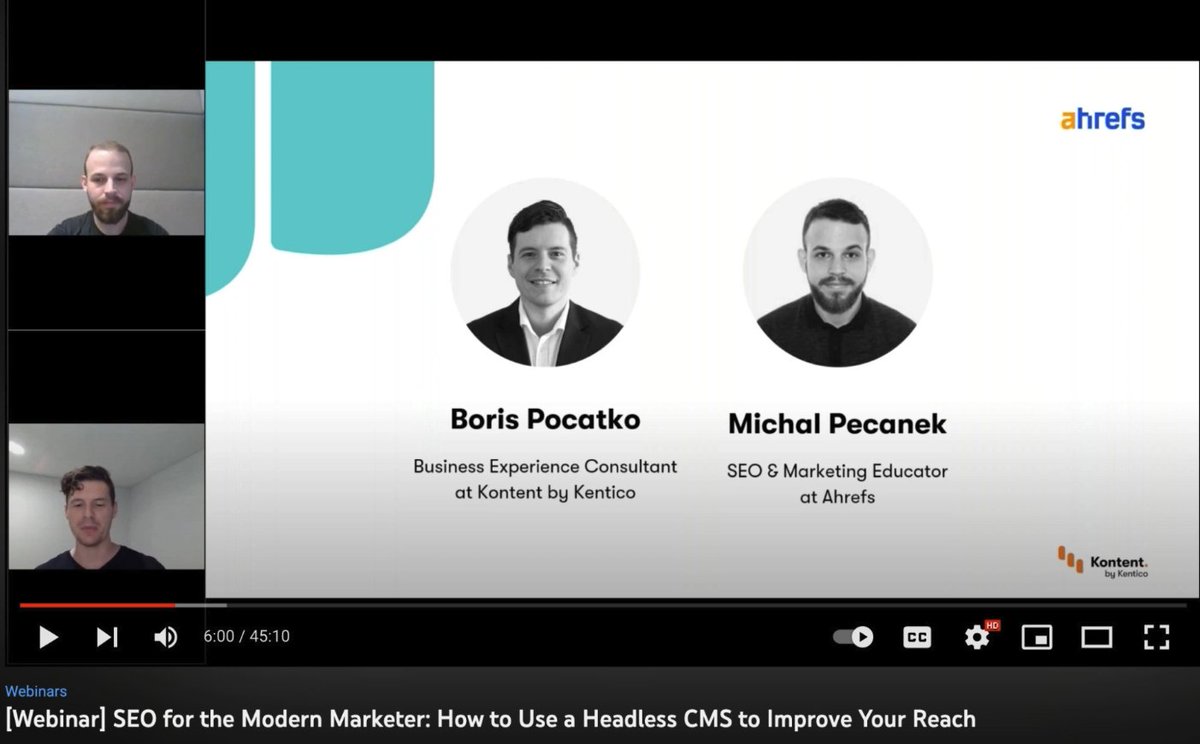
For instance, we collaborated with @Kontent_ai (a headless CMS) for an SEO-related webinar:
With Kontent's audience of potential enterprise-level leads for Ahrefs—and our authority in SEO—this was a win-win for both parties. 💥
For instance, we collaborated with @Kontent_ai (a headless CMS) for an SEO-related webinar:
With Kontent's audience of potential enterprise-level leads for Ahrefs—and our authority in SEO—this was a win-win for both parties. 💥
7. Run surveys
Getting first-party information is challenging but valuable.
One easy way is to run a poll on LinkedIn or Twitter, or in communities and newsletters.
Ahrefs' CMO @timsoulo leverages the format on Twitter frequently for research:
Getting first-party information is challenging but valuable.
One easy way is to run a poll on LinkedIn or Twitter, or in communities and newsletters.
Ahrefs' CMO @timsoulo leverages the format on Twitter frequently for research:
7. Run surveys
Or if you have the budget, leverage paid tools like @pollfish or @SurveyMonkey.
These tools are particularly useful if you're planning to create a data-backed report, white paper, or article.
Or if you have the budget, leverage paid tools like @pollfish or @SurveyMonkey.
These tools are particularly useful if you're planning to create a data-backed report, white paper, or article.
8. Go through reports and white papers
A little data can elevate your content and give it more credibility.
Reading white papers and reports in your niche can help you uncover insights and data.
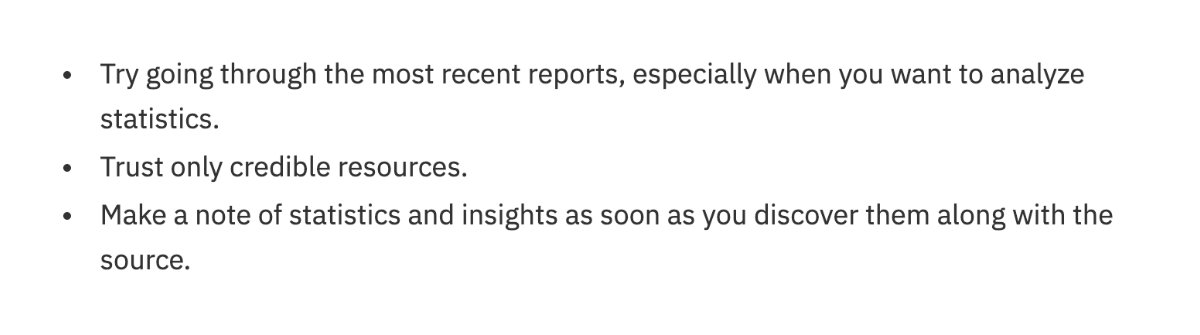
Some things to keep in mind:
A little data can elevate your content and give it more credibility.
Reading white papers and reports in your niche can help you uncover insights and data.
Some things to keep in mind:
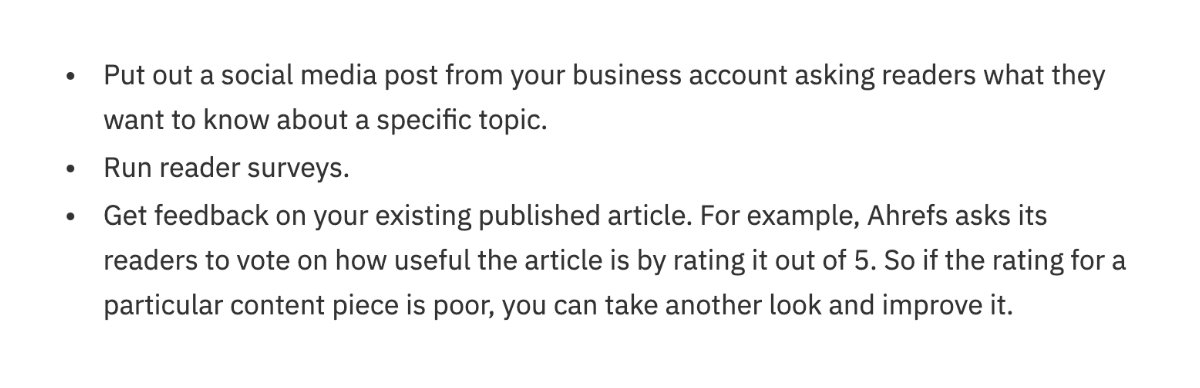
9. Talk to your readers
Understanding your readers' challenges, goals and aspirations can help you identify what to include in your content—and even new topics to write about.
Here are some ways to reach out to your readers 👇
Understanding your readers' challenges, goals and aspirations can help you identify what to include in your content—and even new topics to write about.
Here are some ways to reach out to your readers 👇
That wraps things up! Think we missed out on something? Leave a comment to let us know 👀
Loading suggestions...