

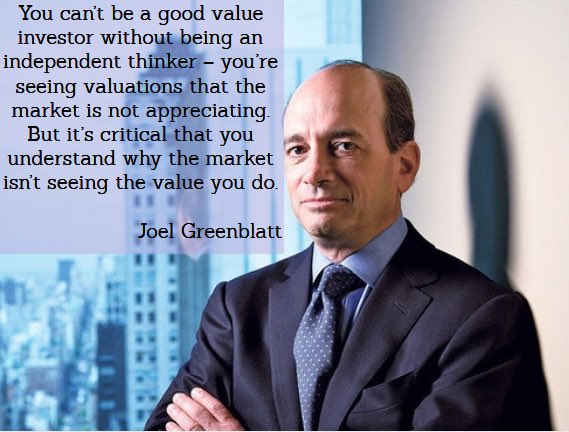
Joel Greenblatt is one of the best investors in the world.
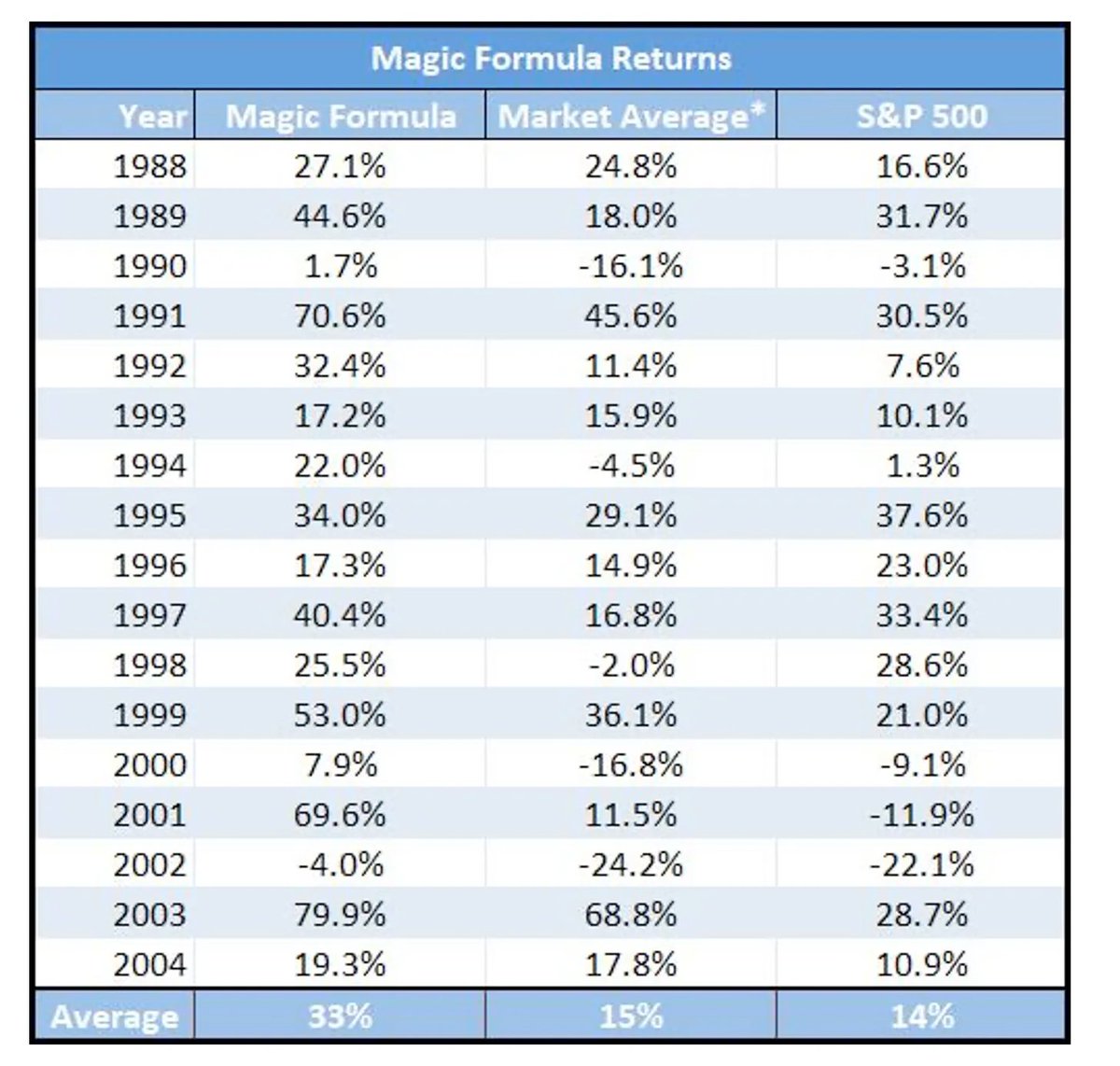
Between 1985 and 2005, his Magic Formula compounded on average with 33% (!) per year.
Learn everything you need to know about Joel Greenblatt here:
Between 1985 and 2005, his Magic Formula compounded on average with 33% (!) per year.
Learn everything you need to know about Joel Greenblatt here:

1️⃣ The Magic Formula
In 2006, Joel Greenblatt published his excellent book The Little Book That Beats The Market.
The goal of this book was to explain his investment philosophy in such a simple manner that even his children could understand it.
In 2006, Joel Greenblatt published his excellent book The Little Book That Beats The Market.
The goal of this book was to explain his investment philosophy in such a simple manner that even his children could understand it.
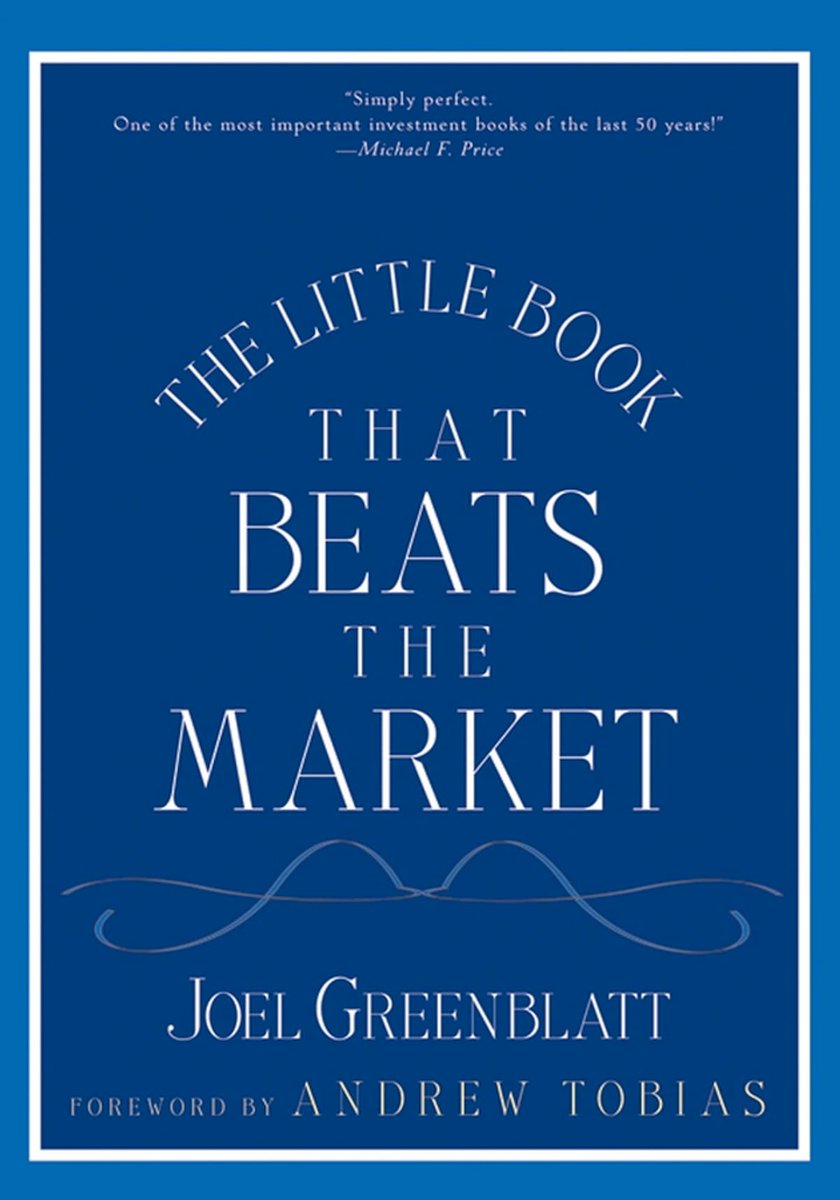
Greenblatt’s main strategy was very straightforward: buy good companies which are cheap.
With this book, The Magic Formula was born.
His strategy achieved an annual return of 33% between 1988 and 2004.
With this book, The Magic Formula was born.
His strategy achieved an annual return of 33% between 1988 and 2004.
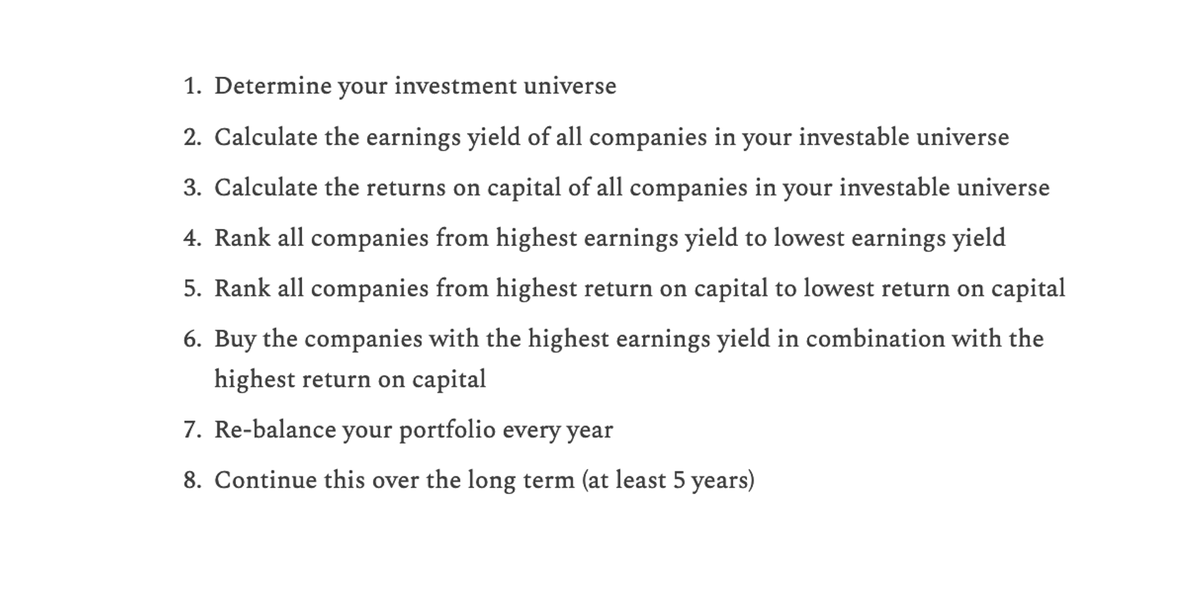
But how does The Magic Formula work?
The basic idea is very simple. You can do it in 8 easy steps:
The basic idea is very simple. You can do it in 8 easy steps:
You don’t want to do all calculations yourself?
Greenblatt does it for you on his website.
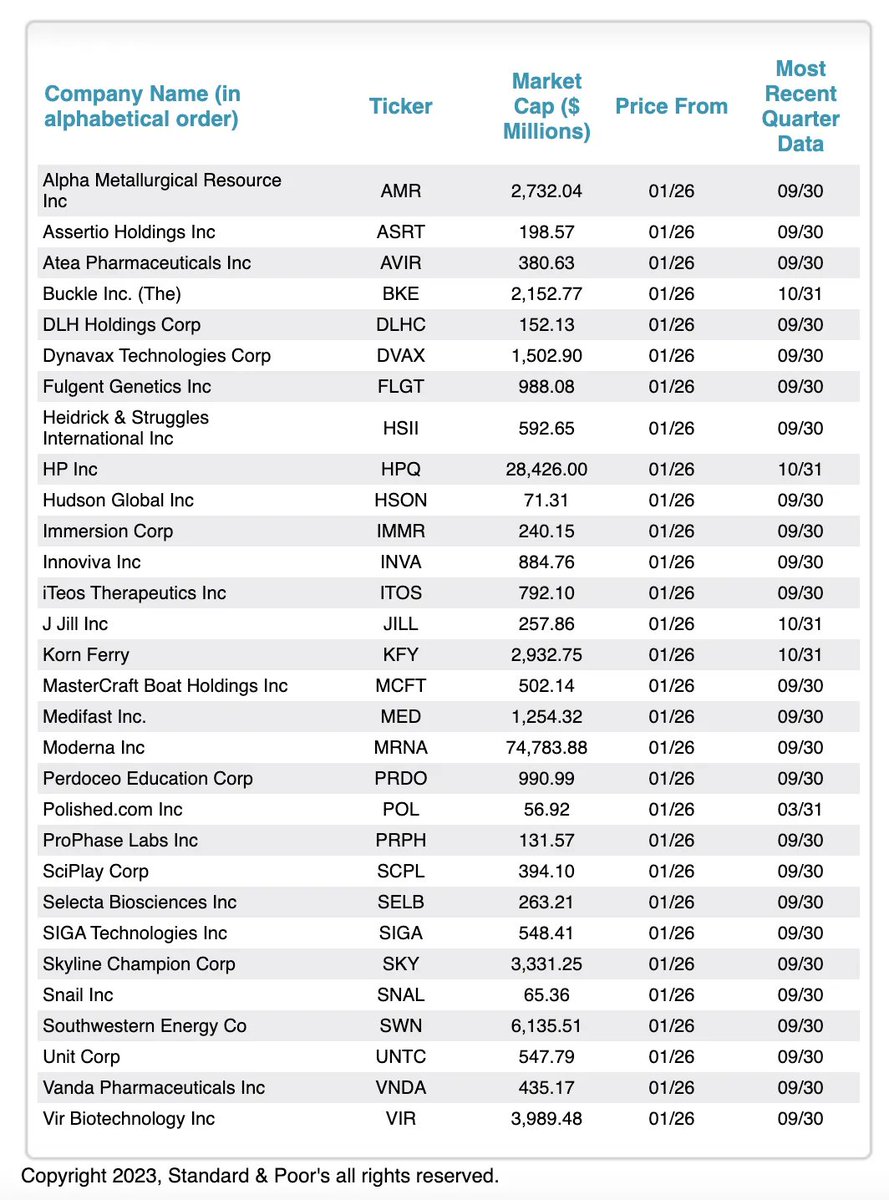
Here are the 30 most interesting US stocks according to Greenblatt’s strategy as of today:
Greenblatt does it for you on his website.
Here are the 30 most interesting US stocks according to Greenblatt’s strategy as of today:
But is it so simple? Can you outperform the market by using these simple formulas? The answer is yes.
But what’s the catch?
But what’s the catch?
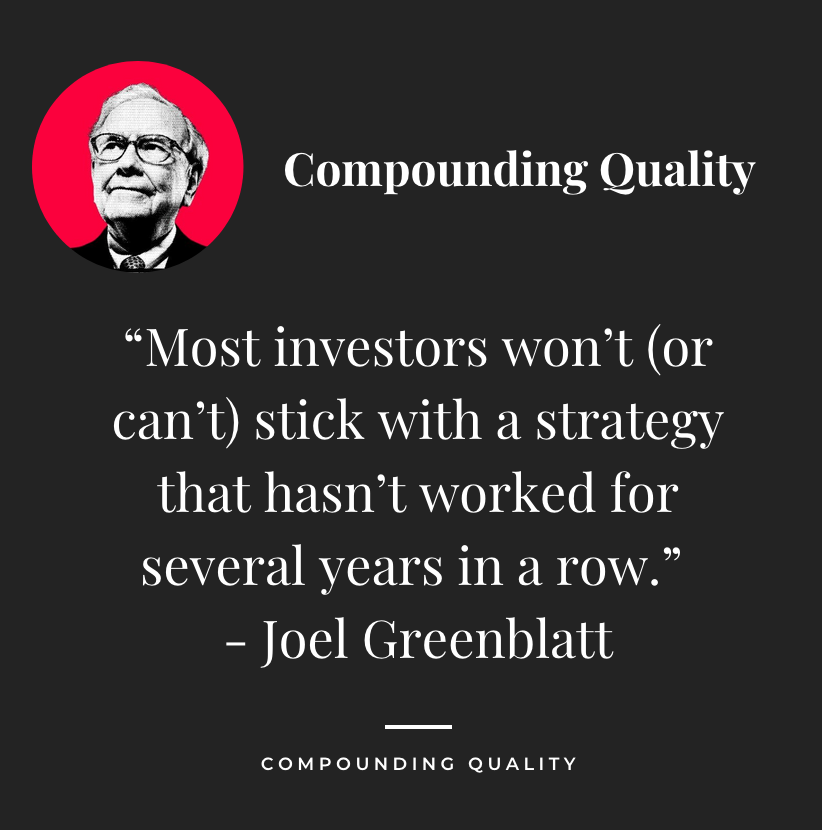
Never underestimate behavioral biases and investment psychology when you invest in these kind of strategies.
Let’s say that you started using The Magic Formula and you’re investing in small, unknown companies like Polished and Snail Inc...
Let’s say that you started using The Magic Formula and you’re investing in small, unknown companies like Polished and Snail Inc...
... After 2 years, your return is equal to -28% while the S&P500 returned +15%. Would you pursue?
Because that’s what needed to make this strategy a success.
Because that’s what needed to make this strategy a success.
For my own piece of mind, I’d rather underperform the market for a while owning companies like Mastercard, Adobe or S&P Global than Polished and Snail Inc.
It will allow me to pursue the strategy during though times.
It will allow me to pursue the strategy during though times.
2️⃣ 10 Essential principles
Now you know everything about Joel Greenblatt’s Magic Formula, let’s dig a bit deeper in his core investment philosophy.
Here are 10 of Joel Greenblatt’s essential investment principles.
Now you know everything about Joel Greenblatt’s Magic Formula, let’s dig a bit deeper in his core investment philosophy.
Here are 10 of Joel Greenblatt’s essential investment principles.
1. Don’t try to time the market
Timing the market is a fools game.
Market timing has nothing to do with being a successful investor.
Timing the market is a fools game.
Market timing has nothing to do with being a successful investor.
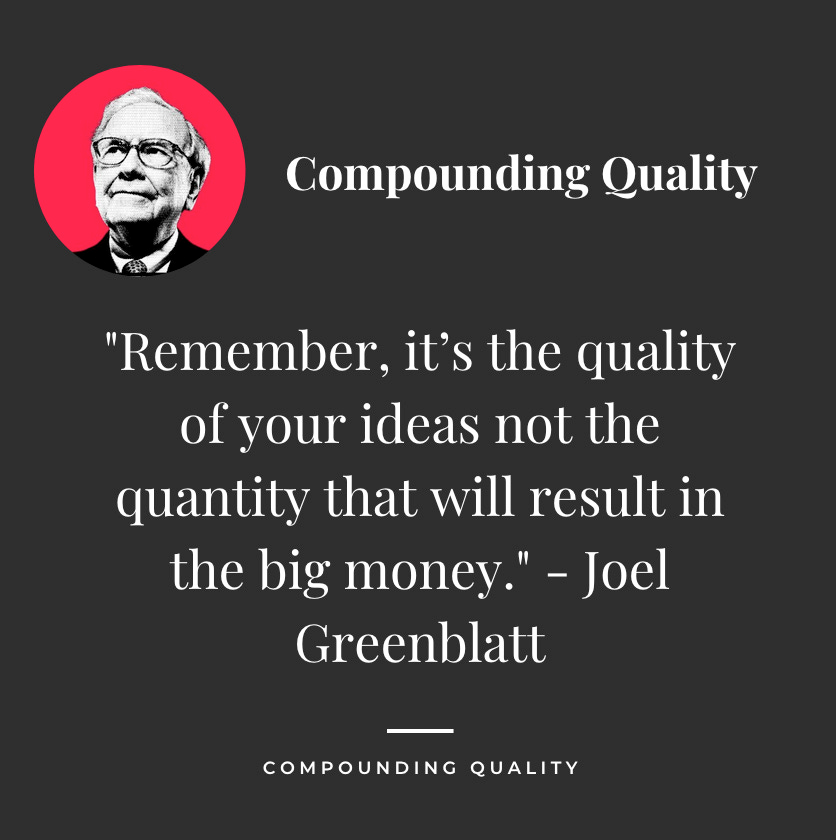
2. Buy good business at bargain prices
Buying a share of a good business is better than buying a share of a bad business.
You want to invest in companies which are able to reinvest their free cash flow at high rates of return.
Buying a share of a good business is better than buying a share of a bad business.
You want to invest in companies which are able to reinvest their free cash flow at high rates of return.
3. Know what you own
Investing is simple, but not easy.
Focus on easy companies in easy industries.
Always invest within your circle of competence.
Investing is simple, but not easy.
Focus on easy companies in easy industries.
Always invest within your circle of competence.
4. You will underperform
By definition, you will underperform the market from time to time.
Always focus on the big picture.
When you are using a strategy that has proven to work in the long term, you’ll end up fine.
By definition, you will underperform the market from time to time.
Always focus on the big picture.
When you are using a strategy that has proven to work in the long term, you’ll end up fine.
5. Every investor is unique
You can borrow someone’s idea, but you can’t borrow their conviction.
Every investor is unique and has its own objectives.
As an investor, you are always running your own marathon.
You can borrow someone’s idea, but you can’t borrow their conviction.
Every investor is unique and has its own objectives.
As an investor, you are always running your own marathon.
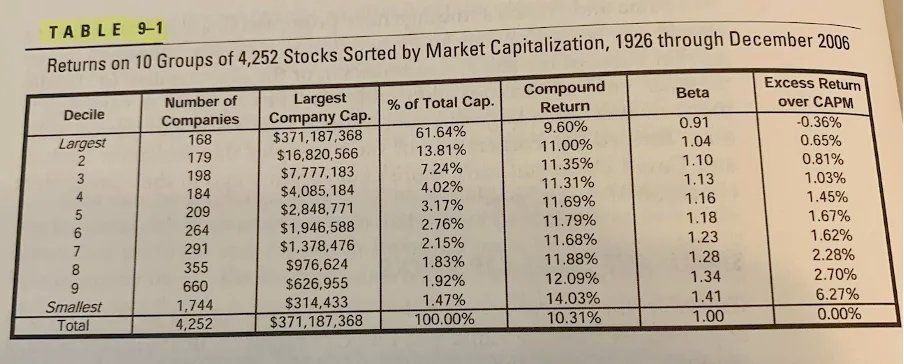
6. Focus on small caps
Small cap stocks are often less efficiently priced.
Why? Because big, professional investors aren’t interested in these companies.
If you want to gain a big advantage, you should focus on companies that aren’t followed by (many) analysts.
Small cap stocks are often less efficiently priced.
Why? Because big, professional investors aren’t interested in these companies.
If you want to gain a big advantage, you should focus on companies that aren’t followed by (many) analysts.
7. Determine your risk appetite
Howard Mark once said that there are old investors and there are bold investors, but they are no old bold investors.
Never make investments which will cause you to stay awake at night.
Howard Mark once said that there are old investors and there are bold investors, but they are no old bold investors.
Never make investments which will cause you to stay awake at night.
8. The market will eventually be right
If your investment case was correct, Mr. Market will eventually pay you.
In the short term (1-2 years), the market is inefficient.
But in the long-term, the market always gets it right.
If your investment case was correct, Mr. Market will eventually pay you.
In the short term (1-2 years), the market is inefficient.
But in the long-term, the market always gets it right.
9. Never underestimate incentives
Always look at management incentives.
How have they allocated capital in the past? Is their salary too high? Is there heavy insider buying or selling? What’s their track record?
Always look at management incentives.
How have they allocated capital in the past? Is their salary too high? Is there heavy insider buying or selling? What’s their track record?
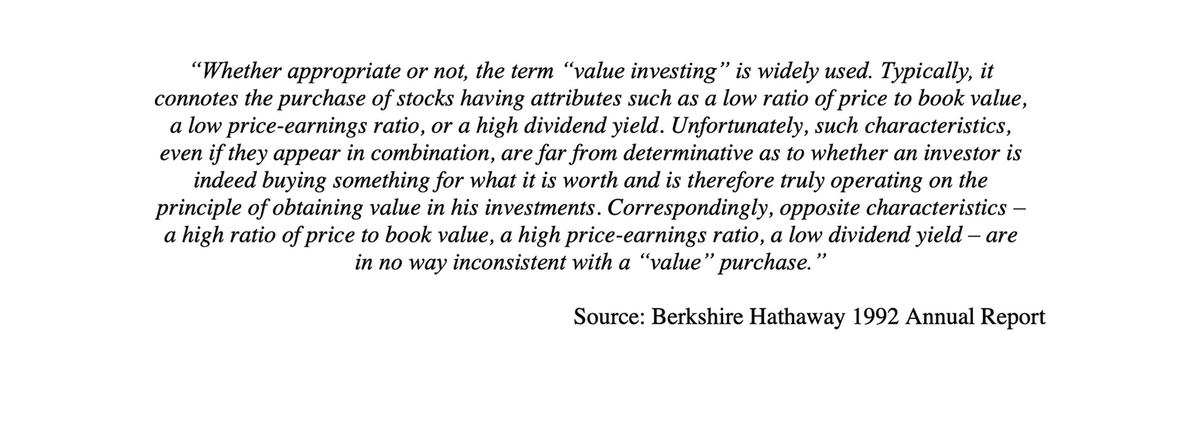
10. All intelligent investing is value investing
Every investor tries to do the same: buy a stock for less than what it’s worth.
Here’s what Warren Buffett has to say about the value versus growth debate:
Every investor tries to do the same: buy a stock for less than what it’s worth.
Here’s what Warren Buffett has to say about the value versus growth debate:
Do you want to learn more about Greenblatt?
His 2 books are a must read:
His 2 books are a must read:
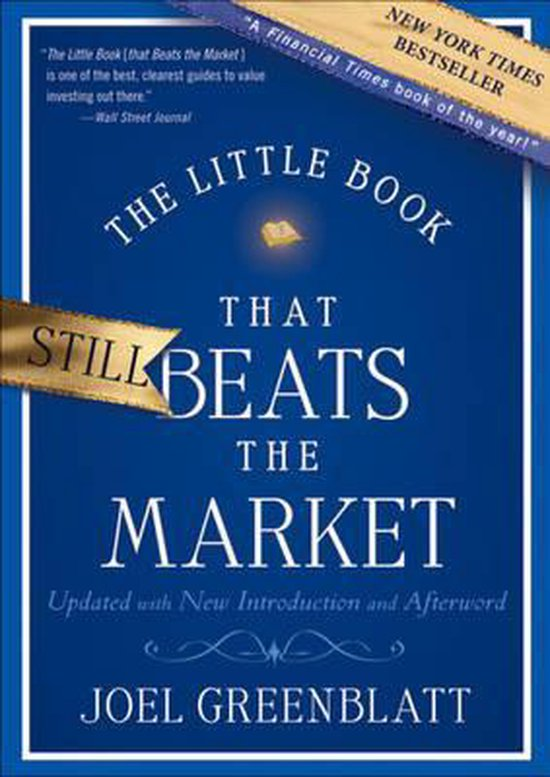
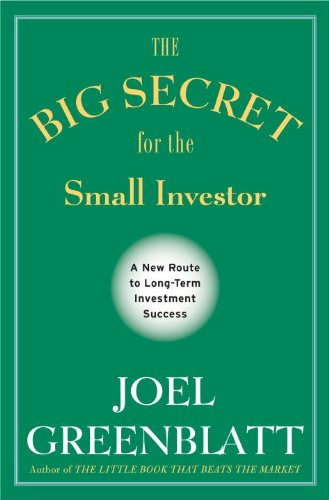
The end.
▪️ Each Tuesday we share 5 investment insights
▪️ Each Thursday we publish a deeper investment article
In this article we mapped all Greenblatt's class notes (> 300 pages) in 1 PDF for free:
qualitycompounding.substack.com
▪️ Each Tuesday we share 5 investment insights
▪️ Each Thursday we publish a deeper investment article
In this article we mapped all Greenblatt's class notes (> 300 pages) in 1 PDF for free:
qualitycompounding.substack.com
Loading suggestions...