

The industry that turns billionaires into millionaires🧵
In Feb 2020, Patrick Lecer was worried about what was soon going to happen. In 2003 when the SARS epidemic hit the world, many airplanes were grounded due to low air ticket demand.
This time it was something similar - coronavirus was just about to spread across the world.
Patrick’s Tarmac Aerosave is engaged in the business of providing storage facilities - any airline that wishes to park their unused airplanes can store them in the space provided by this company.
Over 40 airlines went bankrupt when the pandemic hit. Richard Branson, the CEO of Virgin Atlantic, has famously said-
“If you want to become a millionaire, start with a billion dollars and launch a new airline”
“If you want to become a millionaire, start with a billion dollars and launch a new airline”
His airline - Virgin Atlantic - filed for bankruptcy protection in August 2020.
In India, over 40 airlines (both regional and national) have shut down since the start of air travel.
In India, over 40 airlines (both regional and national) have shut down since the start of air travel.
The biggest surprises were the shutting down of the top 2 airlines - Jet Airways and Kingfisher. Both these companies had a high amount of debt and when uncertainty hit, both had to shut their shops.
One reason - starting an airline requires lots of money. One Airbus A320 airplane (most commonly used by airlines) costs over Rs 700 crore. Buying just 10 airplanes means an outflow of over Rs 7,000 crore!
To buy these, most airlines take heavy loans. The bet is that if the airline is successful, the loans will be repaid successfully. But the history of this industry shows that the bet has only rarely led to positive outcomes.
Estimating the costs and income of an airline is extremely difficult. Over 30% of an airline’s total expenses are incurred on aviation turbine fuel (ATF) - the fuel that is used to power aircrafts.
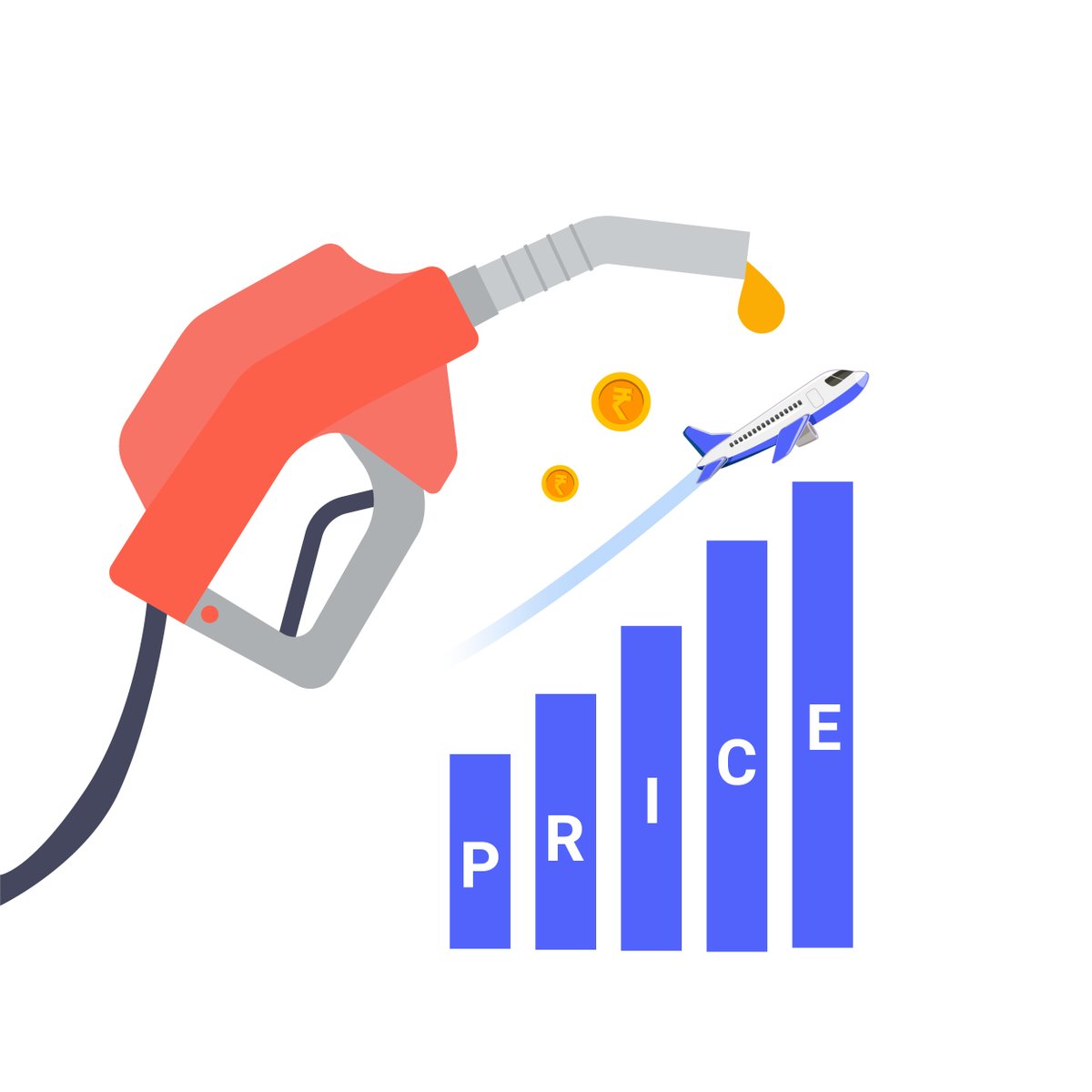
The price of this fuel keeps changing depending on the taxes imposed by the government. Change in currency exchange rate also affects the prices.
The 2nd biggest expense is money spent on aircraft maintenance. Making sure that airplanes are upgraded and safe is a costly affair. Around 12% of SpiceJet’s total expenses in 2021 were incurred on aircraft maintenance.
The only big expenses that can be estimated with accuracy in advance are lease payments (airlines take planes on lease from other companies) and employee costs (salaries + benefits).
On the other hand, the main revenue that an airline earns is on the number of tickets it sells - the demand varies depending on the season, peoples’ preferences, health of the economy, and other unexpected events (like the pandemic).
Most airlines are price-takers - they adapt to prices set by the market rather than being able to control their own pricing. Airlines have to keep their prices similar to what the other players are charging (even when it leads to incurring losses).
In this competitive space, some airlines wish to do it all in one go. They expand their fleet size, start serving new locations, and spend money on adding additional facilities like business class, premium class, free food, and in flight entertainment system.
Every airline expanding too fast thinks that they are different. The only problem is that if everyone thinks that they are different - isn’t everyone the same?
That’s the crux of why most of the flamboyant airlines have failed in the past. In an extremely uncertain environment, a conservative and patient approach has worked better in the past than a risky and aggressive approach.
The world’s most profitable and arguably the most successful airline has one primary feature - it is simple and perhaps even boring.
“Keep costs low and spirits high” - Herb Kelleher, co-founder of Southwest Airlines.
“Keep costs low and spirits high” - Herb Kelleher, co-founder of Southwest Airlines.
In all but 2 years of its 50 years of existence, US based Southwest airlines has recorded profits. Their secret? Make it boring.

The airline is one of the very few big ones that has just one type of airplanes - the Boeing 737 series. This means lower maintenance costs, higher adaption, and lower training costs since all employees are trained on the same type of aircraft.
If one aircraft has to be grounded for some reason, the other one can be used immediately. There are no special facilities in a Southwest plane - no free food or beverages. It offers primarily point to point flying - no layovers at any airport in the middle of the route.
This means the aircraft can be cleaned and reused quickly, reducing the “turn time” - the amount of time the plane spends on the ground between flights.
No extra facilities means the price per ticket is competitive as compared to other airlines. It doesn’t offer business class or premium class either.
If you are wondering that Southwest Airlines sounds very similar to arguably the most successful Indian airline, you are right. IndiGo has a market share of 60% in India - it is a low-cost carrier and offers only economy class, much similar to Southwest.
"Would you like to be on time or would you like to be three hours late and have the nicest champagne and caviar on board?" - IndiGo founder Rahul Bhatia.
Another similarity - IndiGo also uses just one type of aircraft - the world's best-selling single-aisle aircraft, Airbus A320.
It orders these aircrafts in bulk (100 aircraft orders in one go, which allows the airline to buy the aircrafts at a 30-40% discount as per some estimates)
IndiGo has also broken industry standards with turnaround time. It takes just 30 minutes for an IndiGo flight to take off after it lands. A report mentioned that IndiGo's aircraft spend more than 11 hours a day in the sky, compared to the industry average of eight or 10 hours.
Another feather to the company’s success has been its sale and leaseback model. IndiGo buys planes from Airbus at heavy discounts and sells them to leasing companies like BOC Aviation at a profit.
These leasing companies give these aircrafts on lease to other airlines in return for regular lease payments. IndiGo sells its aircrafts to these companies, and enters into lease agreements with the same company to operate the aircrafts.
This means IndiGo makes a quick profit once it sells its aircrafts and also gets to use the planes by paying lease to companies like BOC Aviation.
The lease period is usually for 5-6 years after which the company gets new airplanes - this means lower maintenance and depreciation costs.
According to some aviation experts, returning aircraft to leasing companies after 5-6 years helps. The D-Check (the most comprehensive check for a plane) approaches around that time. It is very expensive.
By returning planes before this test is due, IndiGo likely makes big savings.
On time performance, competitive flight rates, and sticking to a few routes in its initial years allowed IndiGo to consistently record profits. In Financial Year 2015, the airline posted a record net profit of Rs 1,304 cr.
As per some estimates, IndiGo remained consistently profitable for 10 straight years!
With the acquisition of Air India by the Tata Group, and the revival of Jet Airways, India’s airline space is changing constantly.
With the acquisition of Air India by the Tata Group, and the revival of Jet Airways, India’s airline space is changing constantly.
Rakesh Jhunjhunwala’s Akasa Airline is also expected to operate as a ultra low cost airline - offering fares even lower than IndiGo and SpiceJet.
Tata backed Air Vistara also recorded a profit in the December quarter for the first time ever since its inception. Vistara, compared to IndiGo, is a full service carrier offering free food, in-flight entertainment services, and business and premium classes.
At the same time, SpiceJet and GoFirst are facing financial difficulties and are hoping for a revival from the rise in air traffic India has witnessed after the pandemic.
Whether other airlines will be able to change the dynamics of this competitive industry or IndiGo will continue to maintain its dominance will be one of the most significant changes to be seen in the near future.
Loading suggestions...