

If you invest, you must know how to identify a moat.
Companies with a strong moat outperform the market.
Here is everything you need to know ⬇️⬇️
Companies with a strong moat outperform the market.
Here is everything you need to know ⬇️⬇️

1️⃣ What is a moat?
Morningstar describes a moat as a structural business characteristic that allows a firm to generate excess economic returns for an extended period of time.
A wide moat stock should be able to generate a ROIC > WACC for at least 20 years.
Morningstar describes a moat as a structural business characteristic that allows a firm to generate excess economic returns for an extended period of time.
A wide moat stock should be able to generate a ROIC > WACC for at least 20 years.

So in general, the Return On Invested Capital (ROIC) is truly essential to determine whether a company has a wide moat:

2️⃣ Different kind of moats
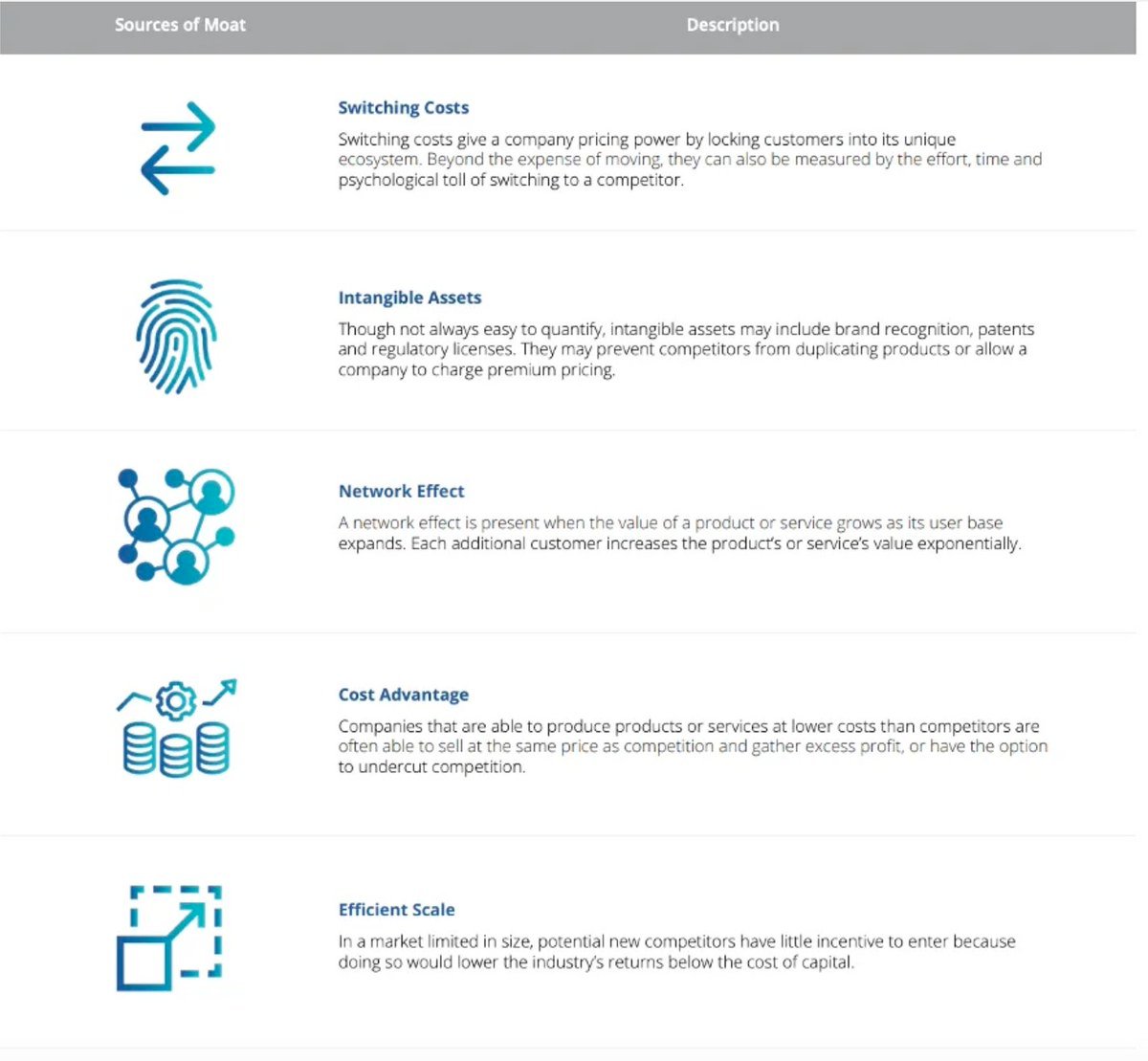
In general, there are 5 moat types:
1. Switching costs
2. Intangible assets
3. Network effects
4. Cost advantages
5. Efficient scale
In general, there are 5 moat types:
1. Switching costs
2. Intangible assets
3. Network effects
4. Cost advantages
5. Efficient scale
1. Switching costs
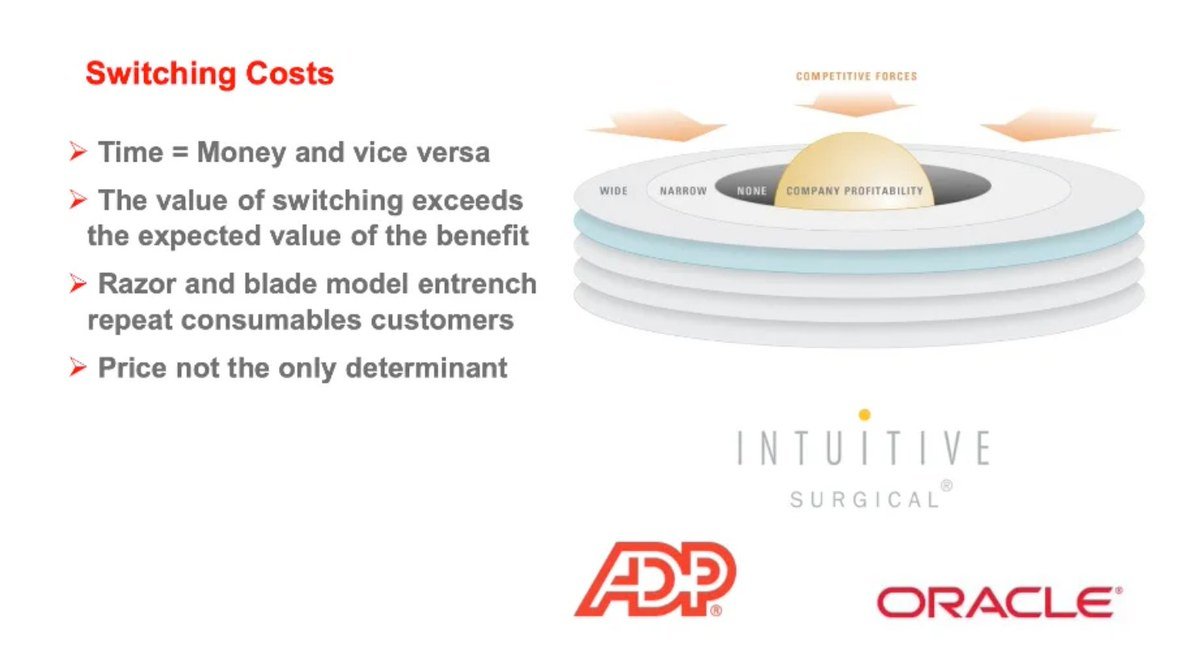
When the costs of switching exceeds the expected value of the benefit, switching costs are created.
Companies with switching costs often enjoy a lot of pricing power.
Stryker and Salesforce are great examples.
When the costs of switching exceeds the expected value of the benefit, switching costs are created.
Companies with switching costs often enjoy a lot of pricing power.
Stryker and Salesforce are great examples.
2. Intangible assets
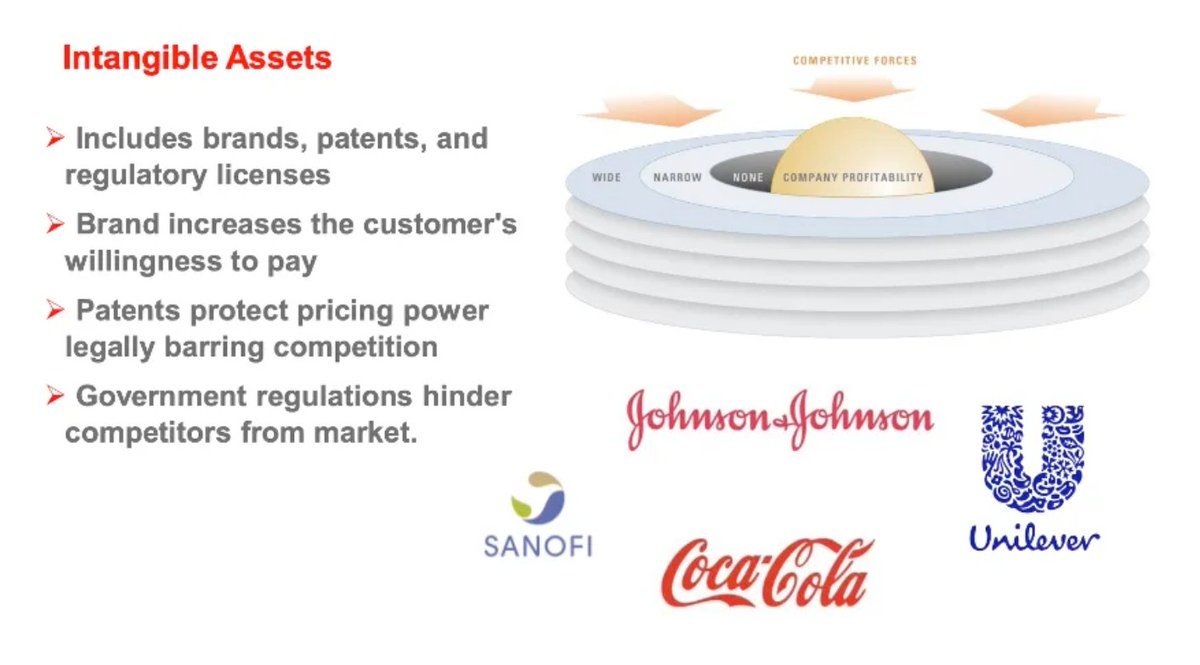
Intangible assets can provide companies with a wide moat.
Think about brands, patents, and regulatory licenses.
Intangible assets can prevent competitors to duplicate a company’s product.
Think about Coca Cola for example.
Intangible assets can provide companies with a wide moat.
Think about brands, patents, and regulatory licenses.
Intangible assets can prevent competitors to duplicate a company’s product.
Think about Coca Cola for example.
3. Network effects
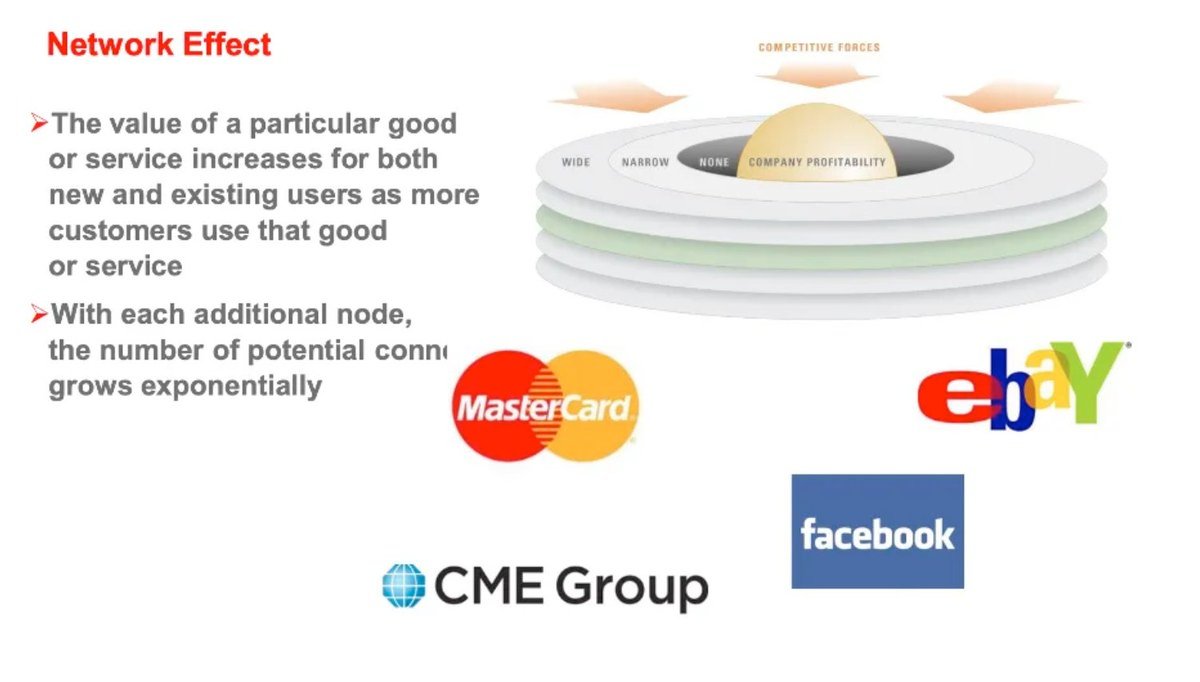
Network effects are one of the most preferred sources of an economic moat.
The more people use a certain product or service, the more valuable the network becomes.
Great examples are Visa/Mastercard and Alphabet.
Network effects are one of the most preferred sources of an economic moat.
The more people use a certain product or service, the more valuable the network becomes.
Great examples are Visa/Mastercard and Alphabet.
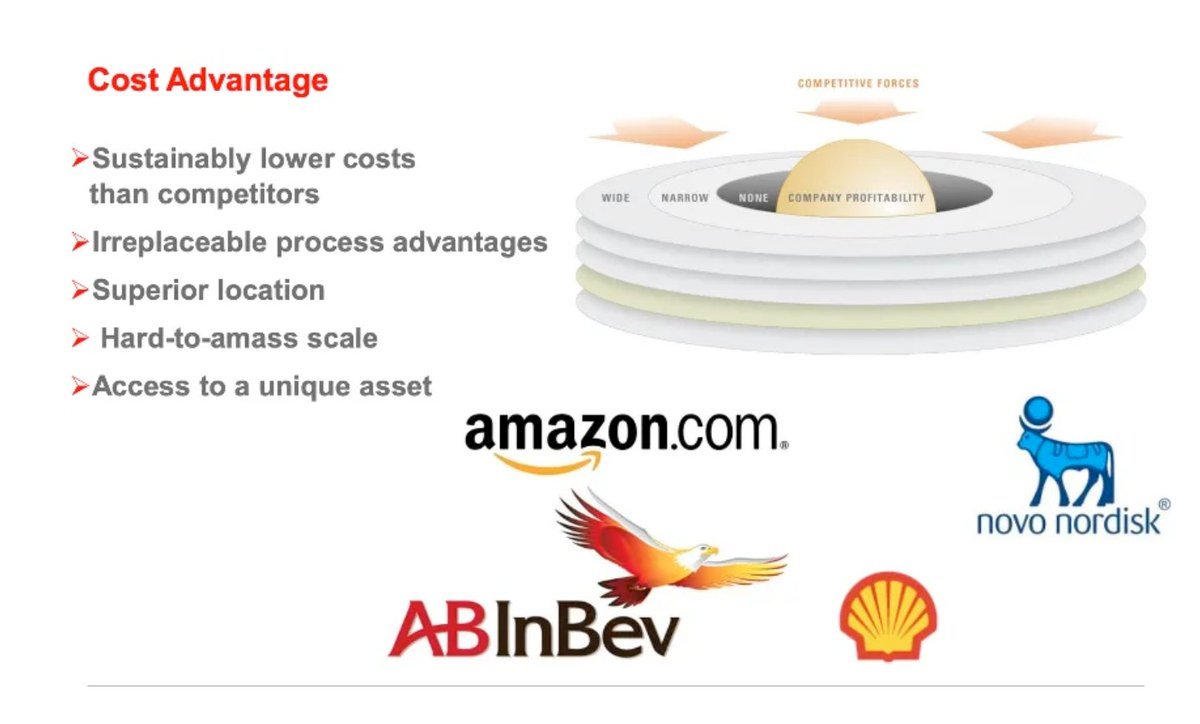
4. Cost advantages
When a company can operate at sustainable lower costs than competitors, cost advantages are created.
Ikea and Walmart are two companies with strong cost advantages.
When a company can operate at sustainable lower costs than competitors, cost advantages are created.
Ikea and Walmart are two companies with strong cost advantages.
5. Efficient scale
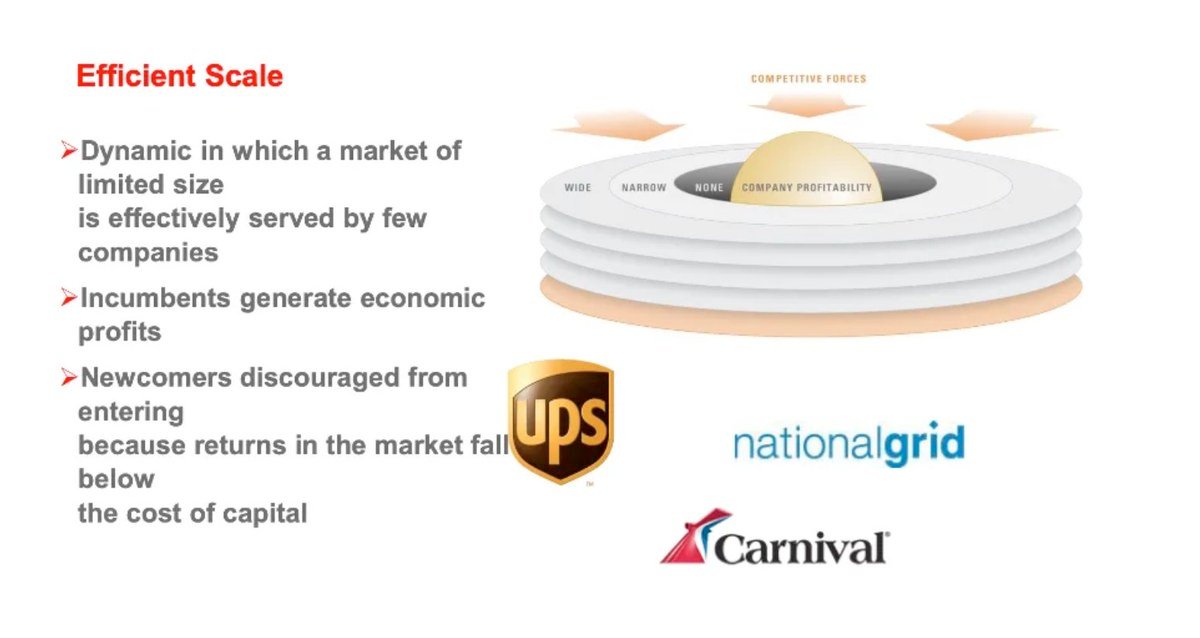
Oligopolistic markets are markets in which a market is effectively served by only a few companies.
Companies generate economic profits, but new entrants would cause returns for all players to fall to a level in line with or below the cost of capital.
Oligopolistic markets are markets in which a market is effectively served by only a few companies.
Companies generate economic profits, but new entrants would cause returns for all players to fall to a level in line with or below the cost of capital.
3️⃣ Stock market returns
Does it help to focus on wide moats? YES!
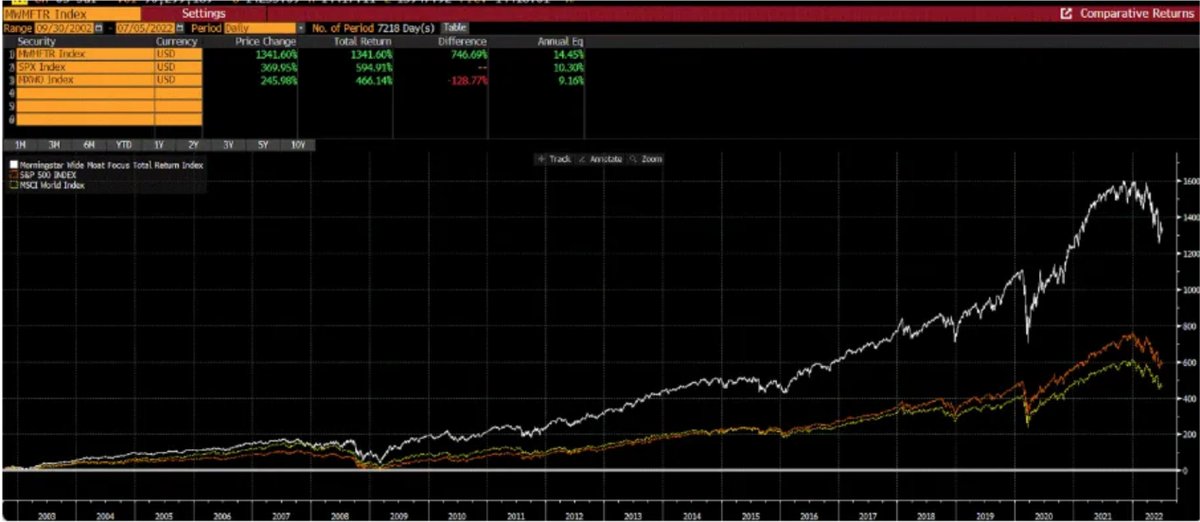
Since 2002, the Morningstar Wide Moat index returned 14.5% per year to shareholders.
This is annual outperformance of 4.2% per year compared to the S&P500!
Does it help to focus on wide moats? YES!
Since 2002, the Morningstar Wide Moat index returned 14.5% per year to shareholders.
This is annual outperformance of 4.2% per year compared to the S&P500!
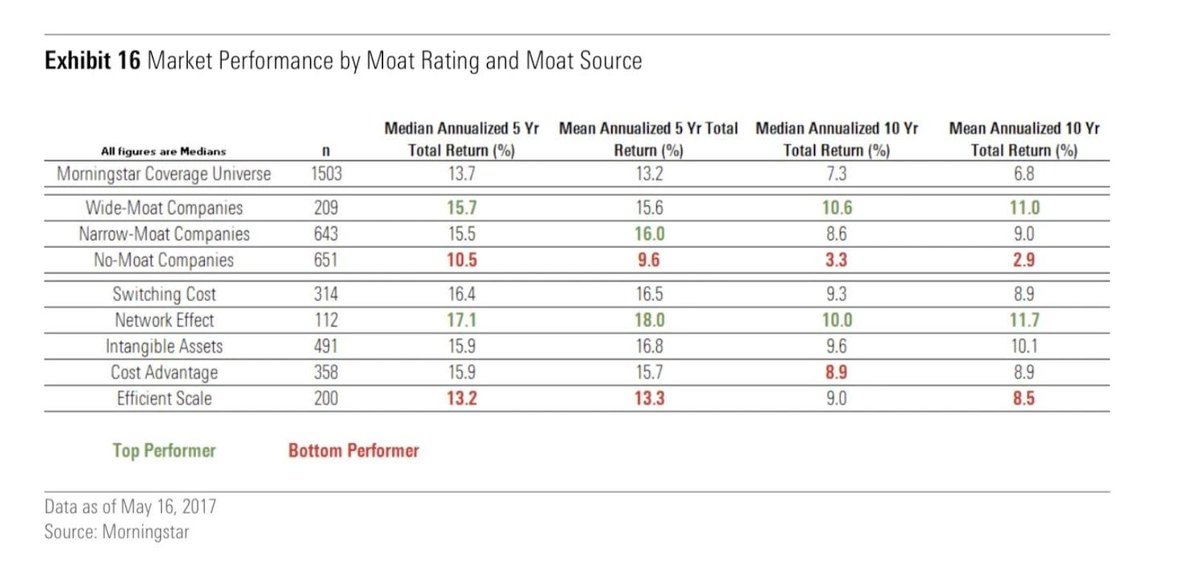
Over a period of 5 and 10 years, wide-moat stocks based on network effects seemed to report the best performance.
Cost advantages and efficient scale are the least preferred moat sources:
Cost advantages and efficient scale are the least preferred moat sources:
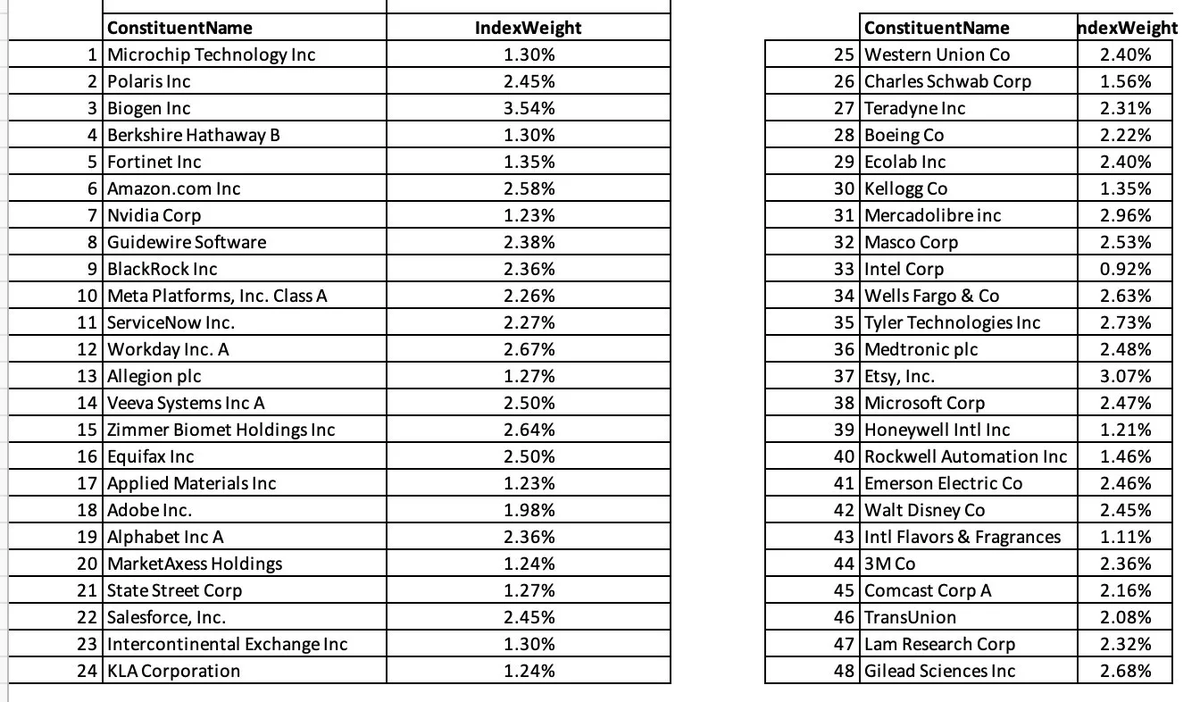
Currently, these are all companies within Morningstar Wide Moat Index:
If you liked this, you'll love our website.
▪️ Each Tuesday we share 5 investment insights
▪️ Each Thursday we publish a deeper investment article
Start your journey here:
qualitycompounding.substack.com
▪️ Each Tuesday we share 5 investment insights
▪️ Each Thursday we publish a deeper investment article
Start your journey here:
qualitycompounding.substack.com
Loading suggestions...