

Atheists today champion ideals of human rights, equality, and the protection of victims. They proudly reject religion, but fail to see how they're "Christian" through and through.
The philosopher René Girard shows us why.
The philosopher René Girard shows us why.

As a kid, I used to march around my religion classes thinking I was brilliant for rejecting Biblical ideas. I used to say things like, "Moses didn't really part the Red Sea" or "Cain and Abel weren't real historical figures." The “Man in the Sky” idea of God was comical to me.
For years, I dismissed religion. I refused to study it. Only after reading the work of René Girard did I see how we live in a Christian moral paradigm, even if we don't believe in God. The defining values of Western society are shaped by the Bible and the story of Christ.
I can’t believe I made it through 16 years of schooling without ever reading the Gospels. That thinking continues into adulthood, where we’ll binge-read biographies about some hot new tech CEO while skipping the one about the most influential figure in the West: Jesus Christ.
Even time is measured in reference to Christ. The year at the top of your calendar (and the bottom of this tweet) denotes the number of years since Christ's birth.
Studying René Girard was a turning point for me. He showed me how every Westerner bathes in the waters of Christianity. Even ideas like compassion, human rights, and a concern for the victim, which secular people champion today, are rooted in Christian ideology.
In the Christian moral paradigm, we glorify the victims over the victors. To appreciate how unique this is we must understand Pagan culture that came before it, which glorified victors over the victims.
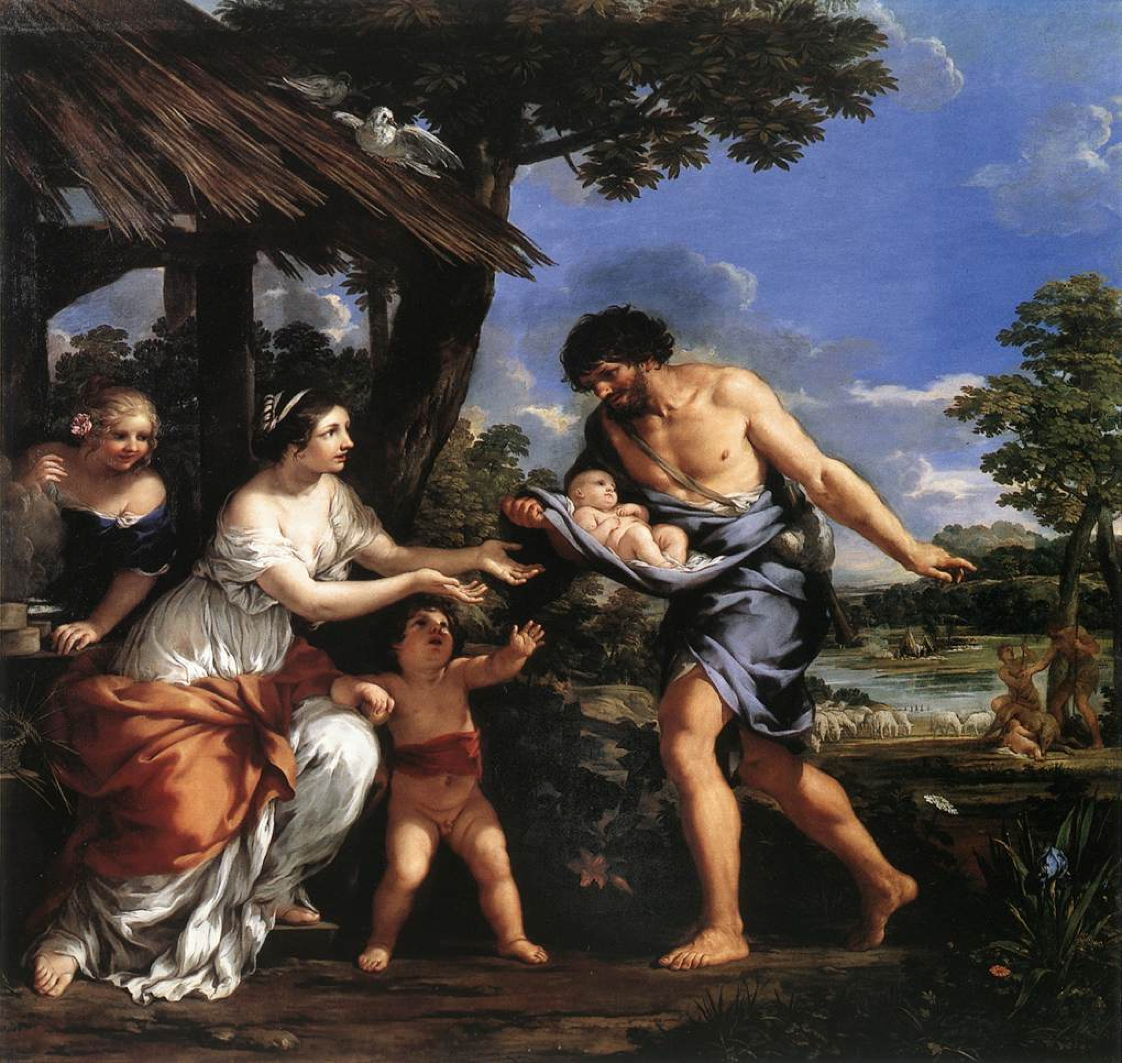
Pagan example #1: Take the founding story of Rome. In the story of Romulus and Remus, we side with Romulus who kills his brother Remus after he jumps over the barriers around the city. Romulus’ murder is regrettable, but justified because of Remus’ transgressions.
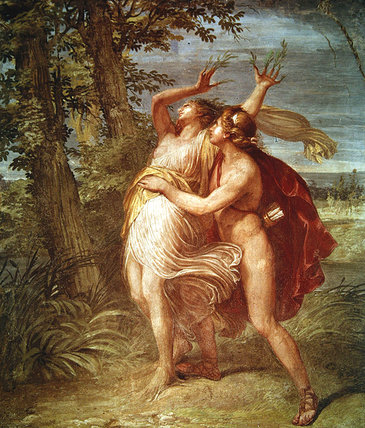
Pagan example #2: The Greeks. What did they believe? The first word of The Illiad is μῆνιν, which translates to rage. Fighting and warfare were respected. Even romantic relationships were portrayed as violent. Love was often depicted as a kind of rape too.
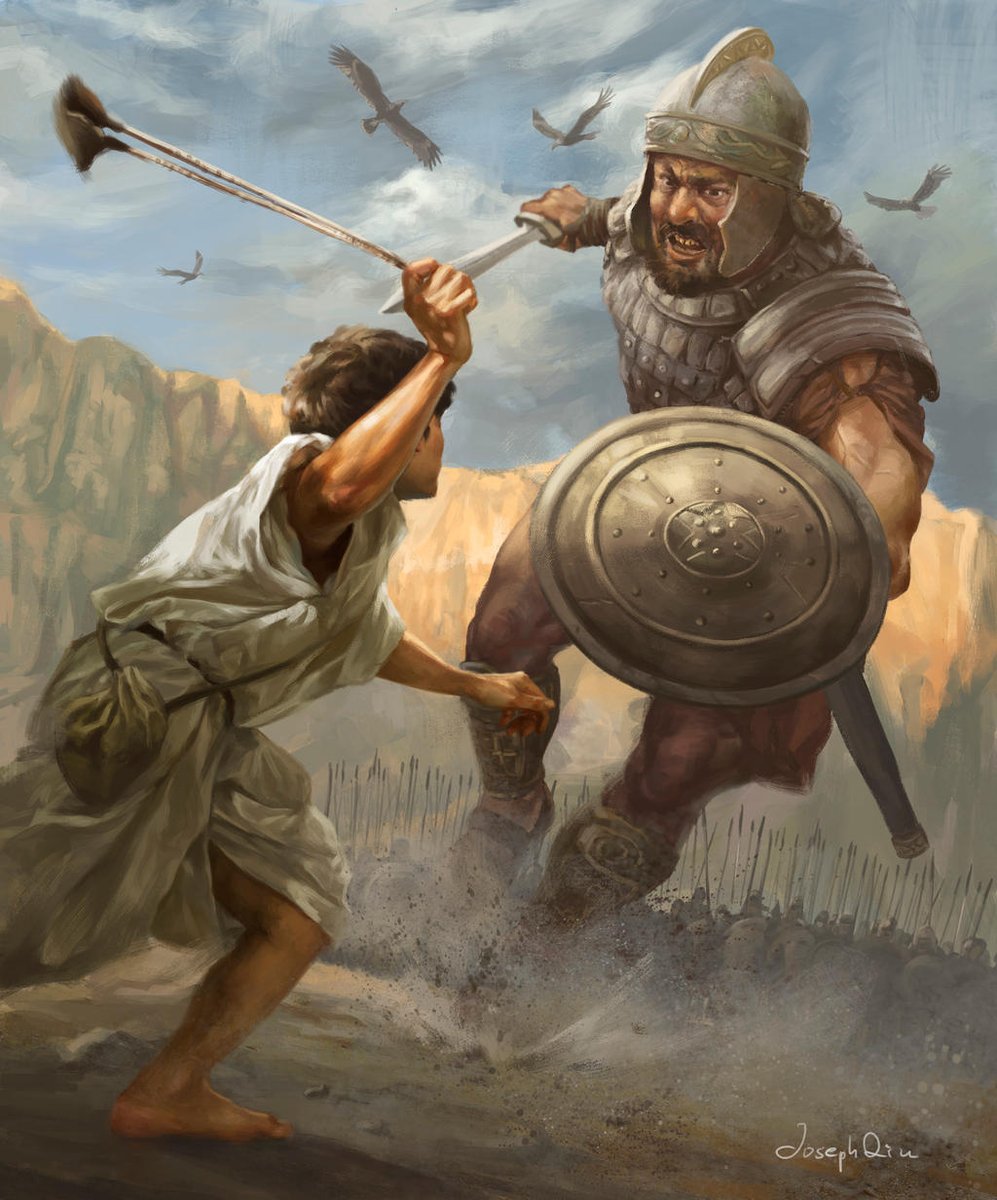
Now, here's a Christian example: David and Goliath. It's another example of the Bible's pro-victim tone. We root for David, the underdog boy. We root against Goliath, the powerful giant. Even today, we root for startups in the business world and underdogs in sports.
Where else do Christian values show up today?
Human rights. Almost everyone supports it. But most people don’t know it comes from the Bible. It’s supported by the idea of 𝘐𝘮𝘢𝘨𝘰 𝘋𝘦𝘪, which says that every person is intrinsically worthy because they're made in God's image.
Human rights. Almost everyone supports it. But most people don’t know it comes from the Bible. It’s supported by the idea of 𝘐𝘮𝘢𝘨𝘰 𝘋𝘦𝘪, which says that every person is intrinsically worthy because they're made in God's image.
Even humanism was seeded in the soil of Christian ideas. That’s why all the biggest international humanist conferences (except one) happen in cities in Christian countries: Oxford, London, Oslo, Washington D.C., Brussels, Hannover, London, Mumbai, Boston, Paris, and Amsterdam.
The innocence of the victim peaks in the story of Christ. He's sentenced to death on the Cross. Unlike people who were killed in pagan myths, Christ is seen as innocent. The mob is guilty. The execution is unjust. This inversion of values is the crucifixion's central message.
Christianity expanded our sphere of empathy. Jesus said: "The first shall be the last and the last shall be the first.” We don't just care about kings and the powerful. We also care for the downtrodden — the crippled, the powerless, the handicapped, the sick, and even the unborn.
People with disabilities used to be thrown in with the lions and gladiators for sport. The meek and the sick were labeled inferior. Jesus changed that. Today, at a movie theater the best seats aren’t saved for kings, but people with disabilities. They board airplanes first too.
The historian Tom Holland wrote: “Christian societies still take for granted that it is nobler to suffer than to inflict suffering. It's why we assume that every human life is of equal value…I have learned to accept that I am not Greek or Roman, but thoroughly Christian.”
What's the point? Many of society’s most passionate critics, who claim to be secular, have the most Christian values of all. They pride themselves on evidence-based thinking, but are intellectually bankrupt when you press them on the foundations of their morality.
Secular types look down on people who inherit religion from their parents, but unquestioningly inherit ideas from the culture in which they swim and the media they consume. Though they explicitly reject the Cross, they are de facto mouthpieces for the man who lost his life on it.
We live in a Christian moral paradigm. A lack of empirical evidence for God doesn't mean we should ignore him. But many of my most foundational beliefs are downstream of the Bible because I'm a Westerner.
If you're interested in how Christianity's shaped the modern world, I recorded a 70-minute lecture with @JohnathanBi on René Girard’s perspective on it.
youtube.com
youtube.com
Loading suggestions...