

1/ Modular blockchains could be the key to a whole new world of crypto.
And it's a growing narrative for the next bull run.
What makes them special, and why should you care?🧵
And it's a growing narrative for the next bull run.
What makes them special, and why should you care?🧵
2/ Bitcoin and Ethereum are monolithic blockchains.
In a monolithic blockchain, a single layer handles all three core functions:
• Consensus: ensures agreement on the current state of the blockchain.
• Data availability: transaction data
• Execution: transaction processing
In a monolithic blockchain, a single layer handles all three core functions:
• Consensus: ensures agreement on the current state of the blockchain.
• Data availability: transaction data
• Execution: transaction processing

3/ The problem with monolithic blockchains is that nodes need to perform all 3 actions at once. Not an easy task.
It leads to a blockchain trilemma.
Ethereum L1, for example, sacrifices scalability for decentralization.
This results in high gas fees and slow transactions.
It leads to a blockchain trilemma.
Ethereum L1, for example, sacrifices scalability for decentralization.
This results in high gas fees and slow transactions.

4/ This is where modular blockchains come in.
A modular blockchain focuses on only a few functions and offloads the rest to separate layers.
It allows for better specialization and optimization of specific tasks.
A modular blockchain focuses on only a few functions and offloads the rest to separate layers.
It allows for better specialization and optimization of specific tasks.
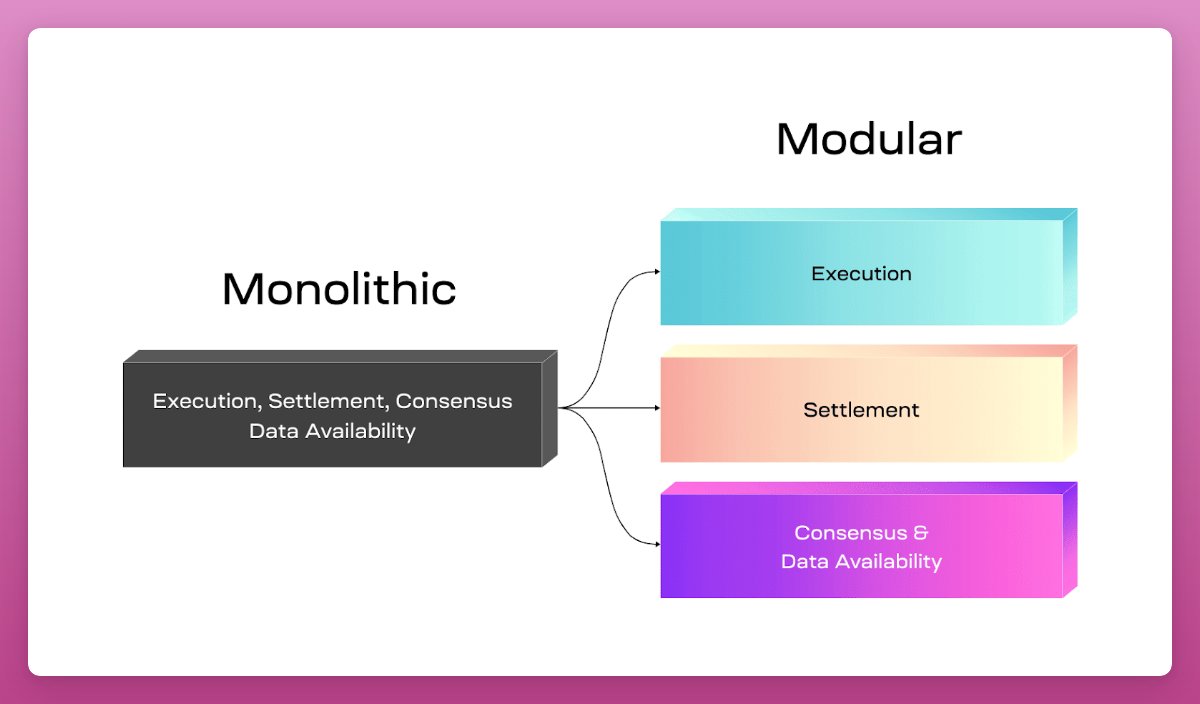
5/ Modular blockchains are composed of multiple layers, each with its own specialized function.
For example, one layer may handle execution, while another handles data availability and a third handles consensus.
For example, one layer may handle execution, while another handles data availability and a third handles consensus.

5/ For example, Rollups handle transaction execution by bundling multiple transactions into one single transaction.
Then data is posted to layer 1 where consensus is reached.
This is how Optimistic rollups (Optimism/Arbitrum) or zkRollups (zkSync/Starkware) work.
Then data is posted to layer 1 where consensus is reached.
This is how Optimistic rollups (Optimism/Arbitrum) or zkRollups (zkSync/Starkware) work.

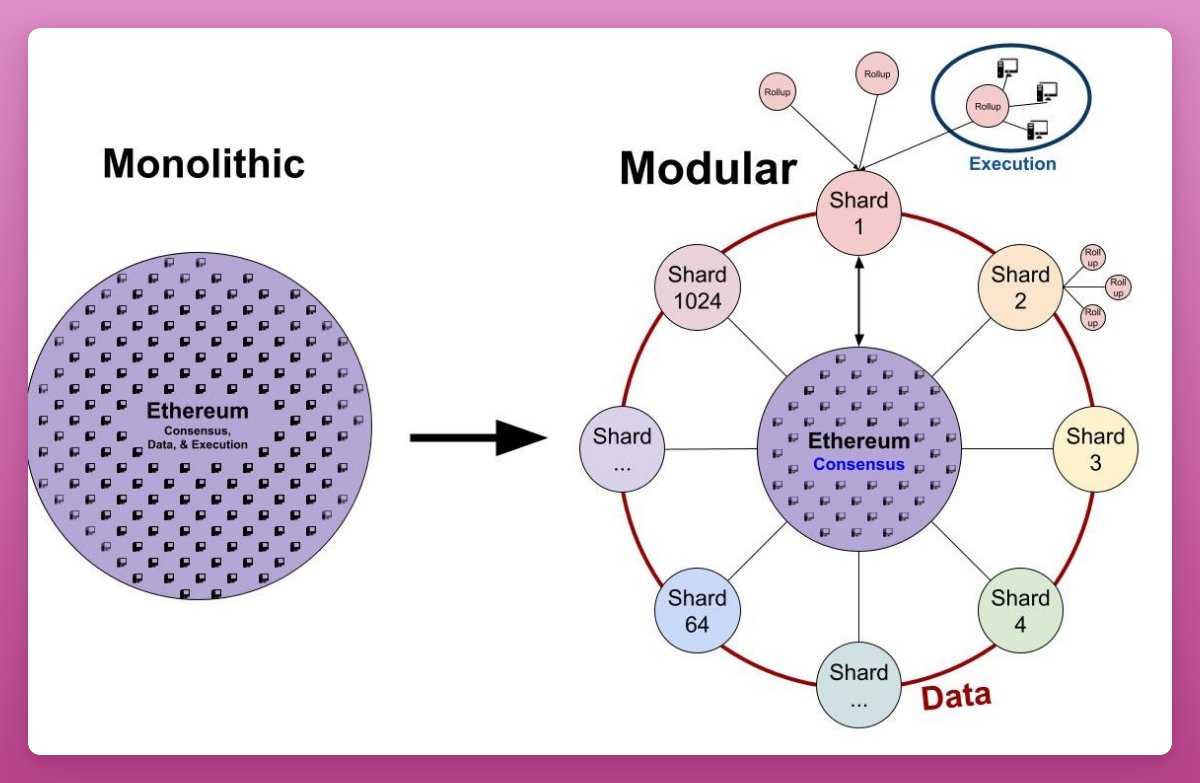
6/ To further increase scalability and maximize data availability, Ethereum will adopt a sharded design.
In short: Shards can process transactions in parallel or act as storage 'depots' for different chunks of blockchain data.
In short: Shards can process transactions in parallel or act as storage 'depots' for different chunks of blockchain data.
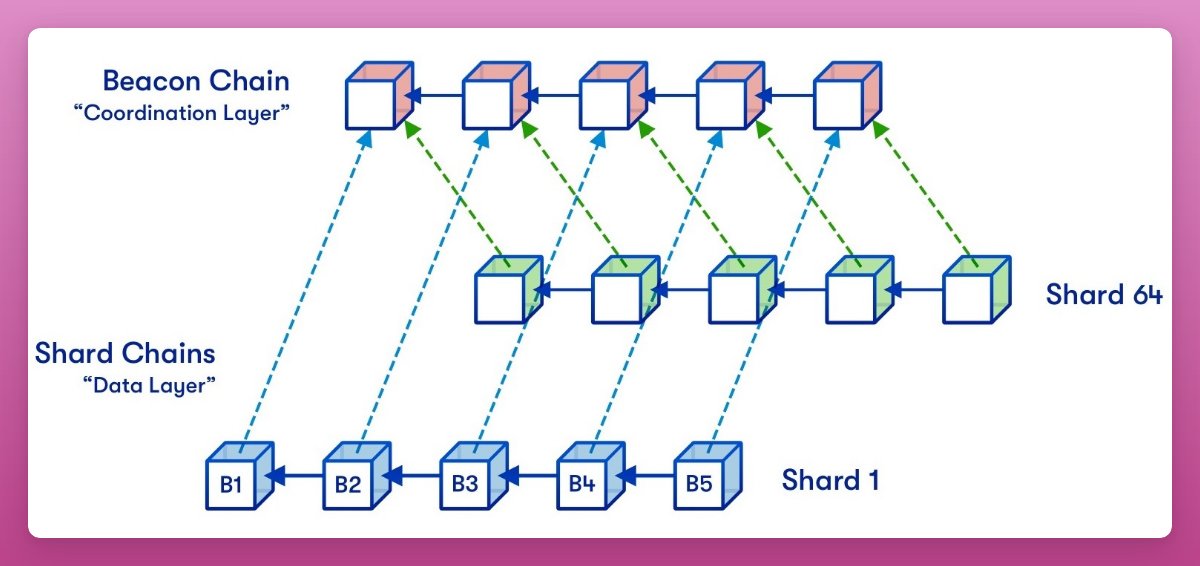
7/ This allows nodes to only store the data published on their shard chain, reducing storage requirements and improving performance.
It's a complex topic, but this blog post is a good start:
ethereum.org
It's a complex topic, but this blog post is a good start:
ethereum.org
8/ Thanks to rollups and sharding, Ethereum is becoming a modular blockchain.
Sharding is being developed in stages – the next upgrade, EIP-4844, is coming sometime mid-2023.
It will reduce costs of L2 rollups by 10-100x!
Sharding is being developed in stages – the next upgrade, EIP-4844, is coming sometime mid-2023.
It will reduce costs of L2 rollups by 10-100x!
9/ Another modular design was announced by @BitDAO_Official
BitDAO will launch a 'modular Ethereum Layer 2' with three layers:
• One for transaction execution
• Another for transaction finality
• Third for data availability
Gas will be paid in $BIT
BitDAO will launch a 'modular Ethereum Layer 2' with three layers:
• One for transaction execution
• Another for transaction finality
• Third for data availability
Gas will be paid in $BIT
10/ Additionally, modular blockchains allow for new blockchains to be easily launched, as they can utilize existing modular blockchains for their offloaded functions.
This reduces time to deployment and minimizes costs.
This reduces time to deployment and minimizes costs.
11/ Cosmos SDK already allows for simple deployment of application-specific blockchains.
Yet, these Cosmos Hub (dApps) don't have shared security—but this will change with the launch of Atom 2.0 and Interchain Security!
Yet, these Cosmos Hub (dApps) don't have shared security—but this will change with the launch of Atom 2.0 and Interchain Security!
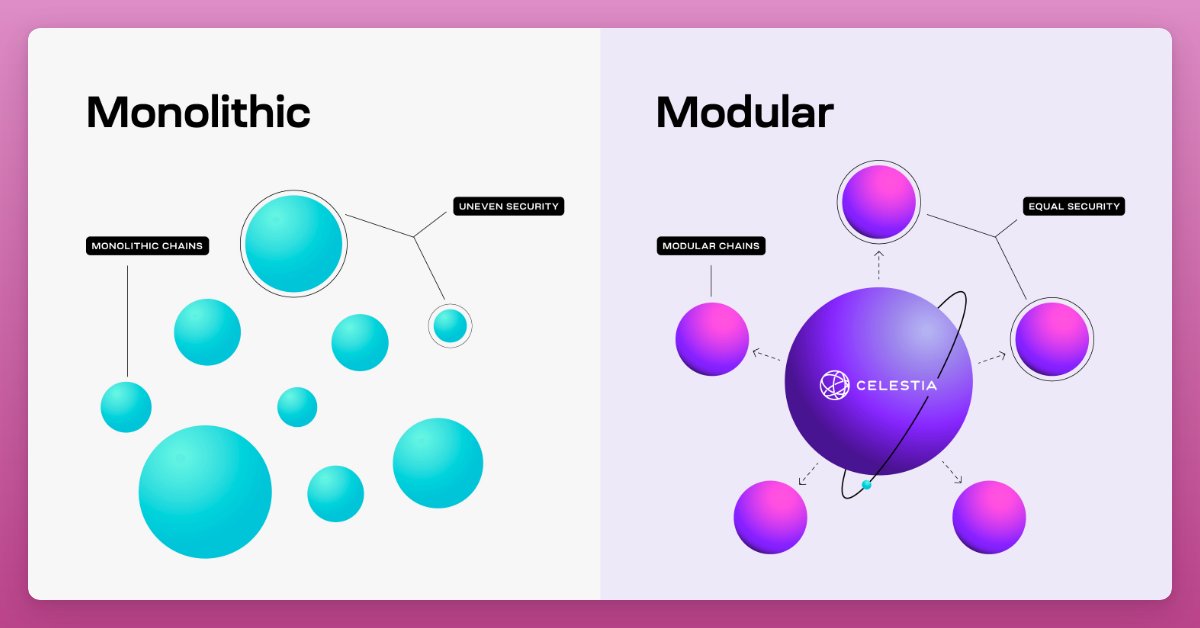
12/ Another example is Celestia.
@CelestiaOrg claims to be 'the first modular blockchain network'.
It specialized in consensus and data availability, offloading execution to separate chains.
It doesn't even have smart contracts 👀
@CelestiaOrg claims to be 'the first modular blockchain network'.
It specialized in consensus and data availability, offloading execution to separate chains.
It doesn't even have smart contracts 👀

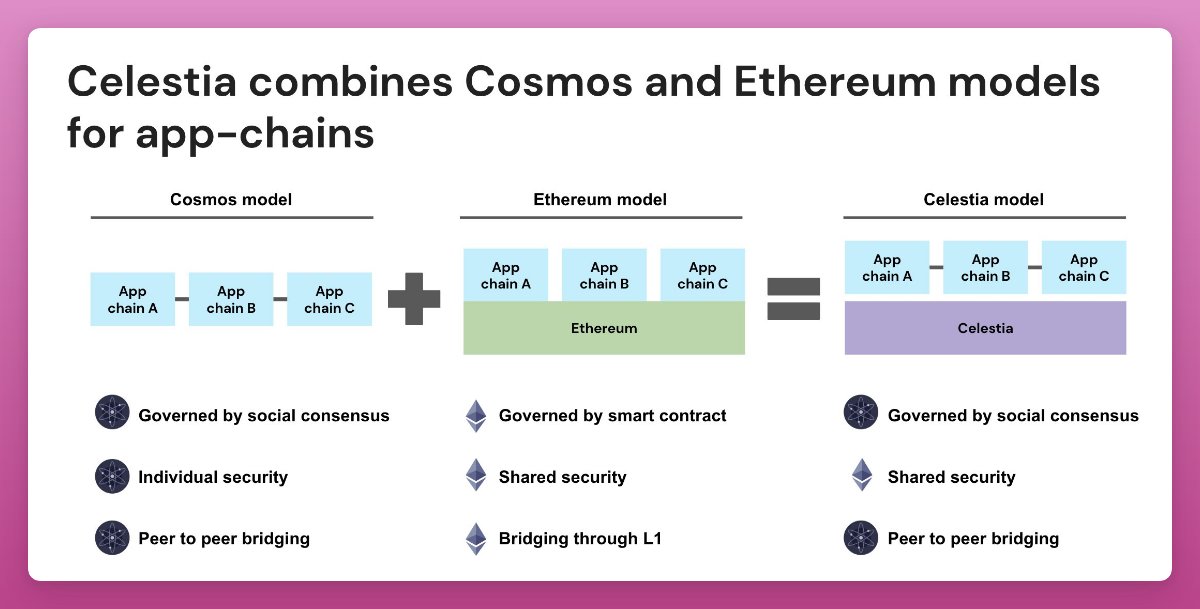
13/ Celestia's 'vision is a marriage of Cosmos’ sovereign interoperable zones and a rollup-centric Ethereum with shared security' @celestiascholar
In practice it means apps/chains can be launched fast with their own governance rules while sharing security guarantees.
In practice it means apps/chains can be launched fast with their own governance rules while sharing security guarantees.
14/ Overall, modular blockchains offer benefits over monolithic designs, such as increased scalability to solve the blockchain trilemma.
@Delphi_Digital called it a paradigm shift: "We expect their network effects to become increasingly more apparent over the next few years."
@Delphi_Digital called it a paradigm shift: "We expect their network effects to become increasingly more apparent over the next few years."
15/ What are other examples of modular blockchains?
Follow me @DefiIgnas for more.
Like/Retweet the first tweet below if you can:
Follow me @DefiIgnas for more.
Like/Retweet the first tweet below if you can:
Loading suggestions...