

Thanks to @zugmanfabio, I came to know about a follow up study by Bessembinder on long-term stock market returns.
Leaving my notes here.
Leaving my notes here.
A common criticism against cap-weighted index such as S&P 500 is that it inherently allocates capital to overpriced stocks. Cap weighted index also inevitably leads to high concentration over time.

Bessembinder identified stocks whose gross (one plus) returns since a prior low point accumulate to 5x one time, two consecutive times (to a combined 25x), three consecutive times (to a combined 125x) and consecutive four times (to a combined of 625x).
See the method here.
See the method here.

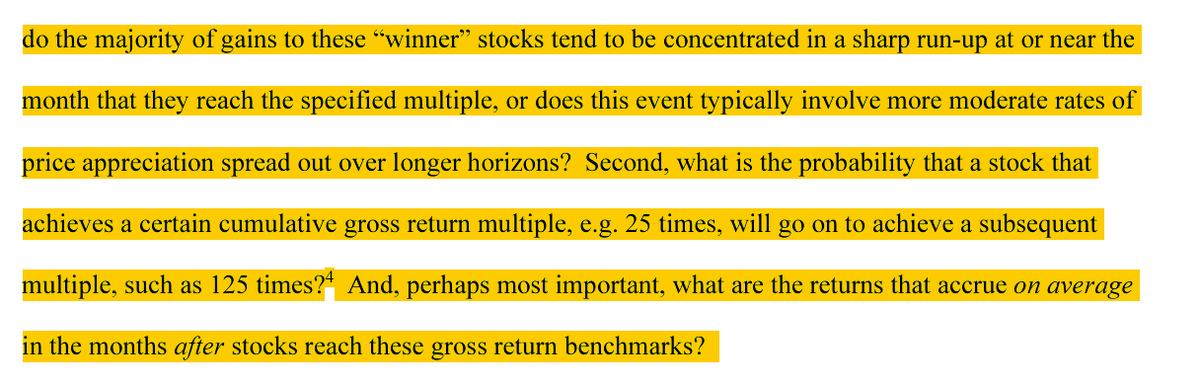
Here are the questions the study try to answer. The answers to these questions are posted below.
“winner” stocks are not uncommon in the U.S. ~13% stocks generated 25x from its *trough*, ~4% made 125x, and only ~1% did 625x.
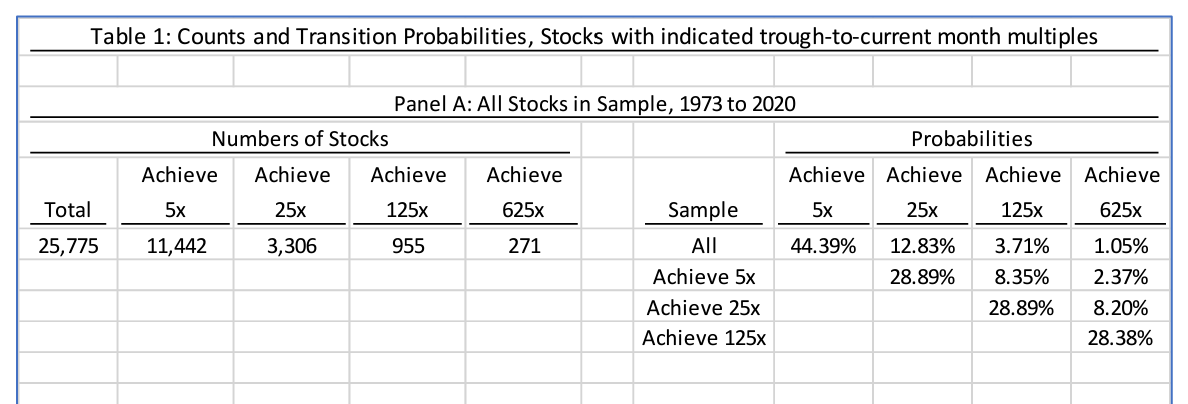
The within-sample probability that a sample stock that reaches one of these multiples will subsequently reach the next (from 5x to 25x, 25x to 125x, and 125x to 625x) is surprisingly stable at ~28-29%.
Kinda strange to see how consistent this number is.
Kinda strange to see how consistent this number is.
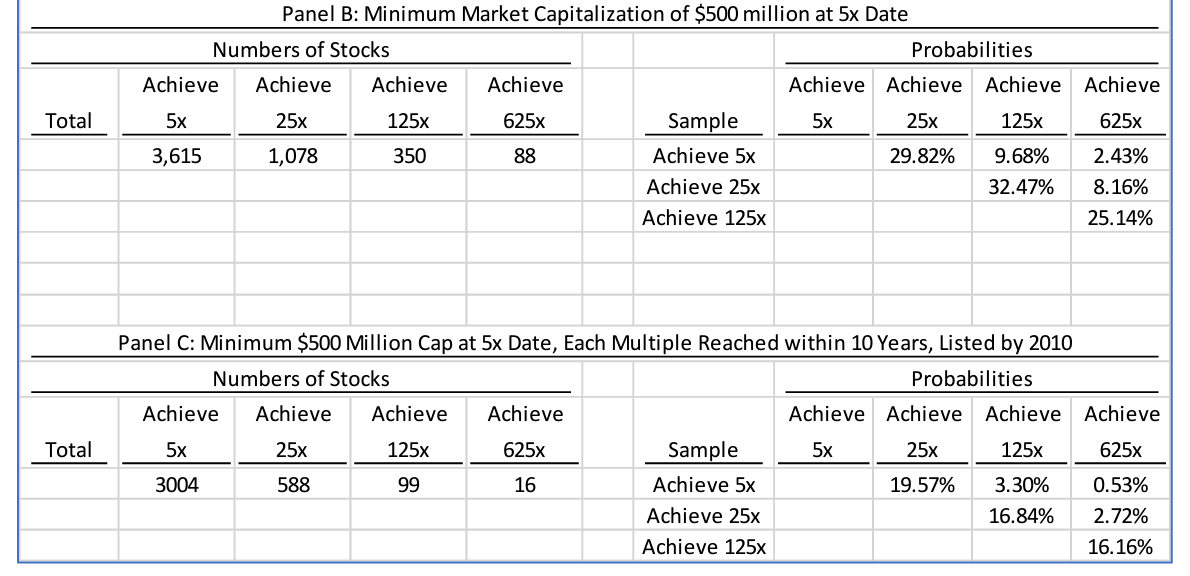
Surprisingly, larger cap stocks (~$500 mcap) are almost twice as likely to go from 5x->25x->125x->625x than the full sample data. Less surprisingly, larger cap stocks take relatively more time to get there.
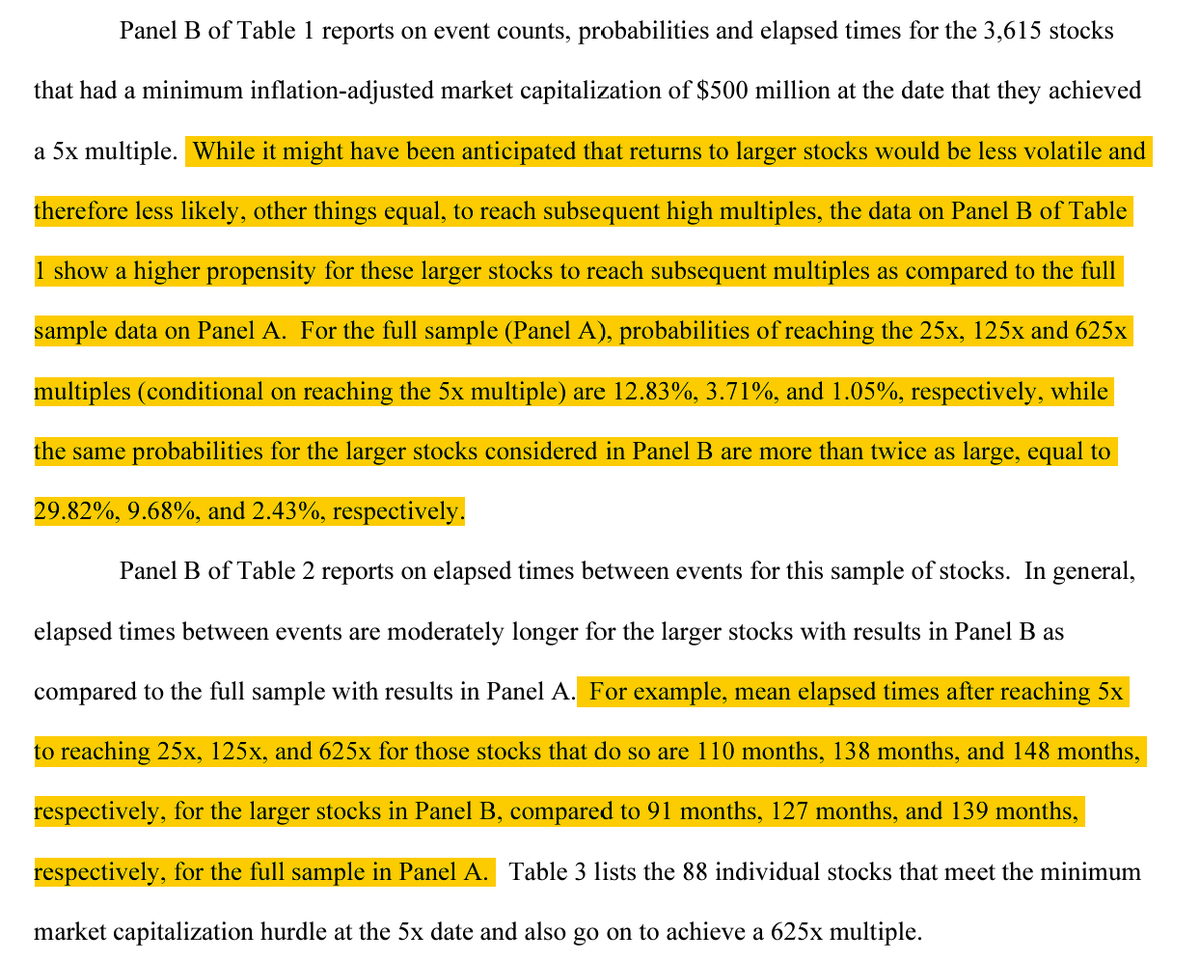
"this study reveals little or no evidence that a strategy of investing in those stocks that previously attained a given gross return multiple generates abnormal returns during subsequent months."
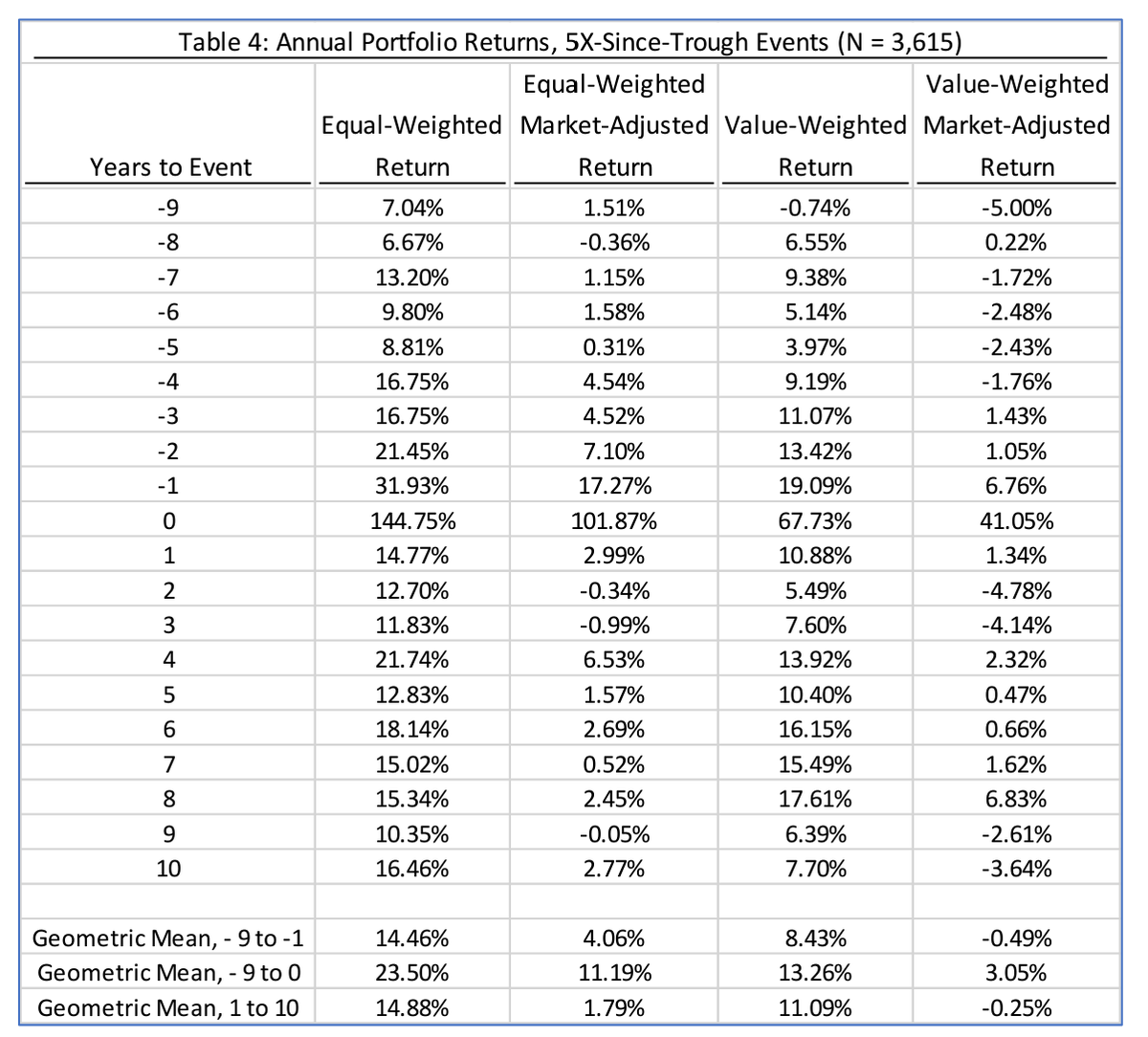
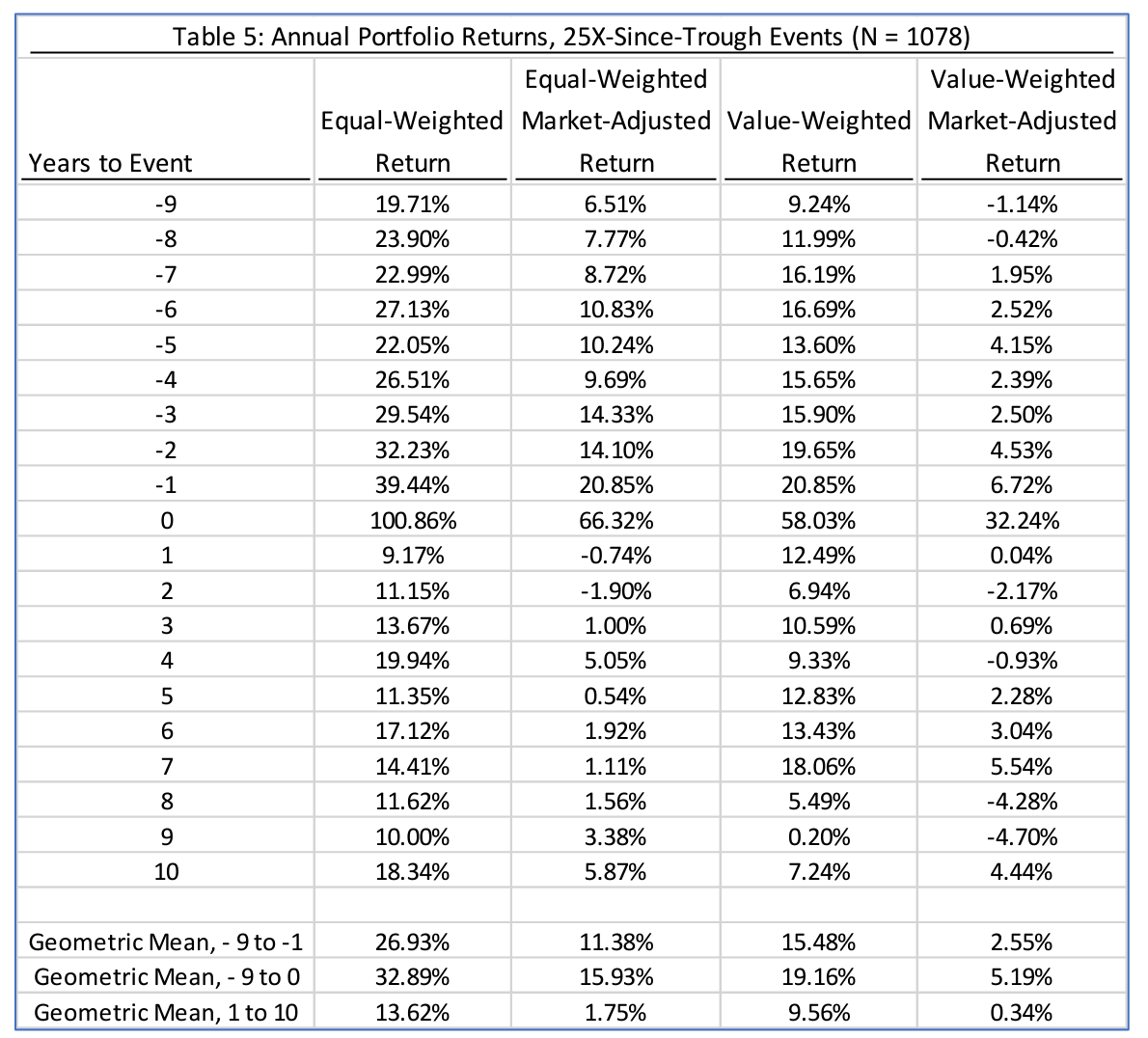
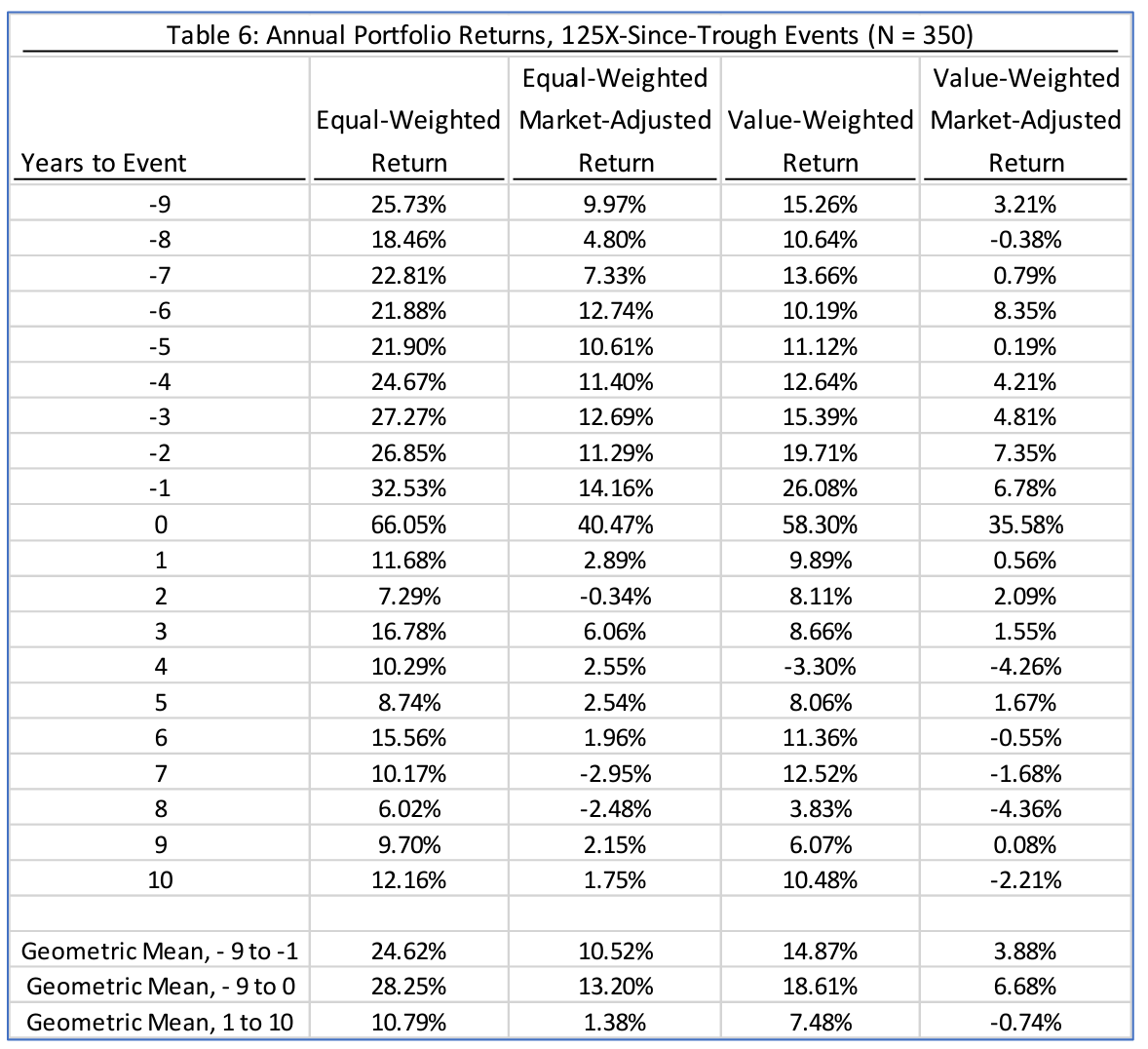
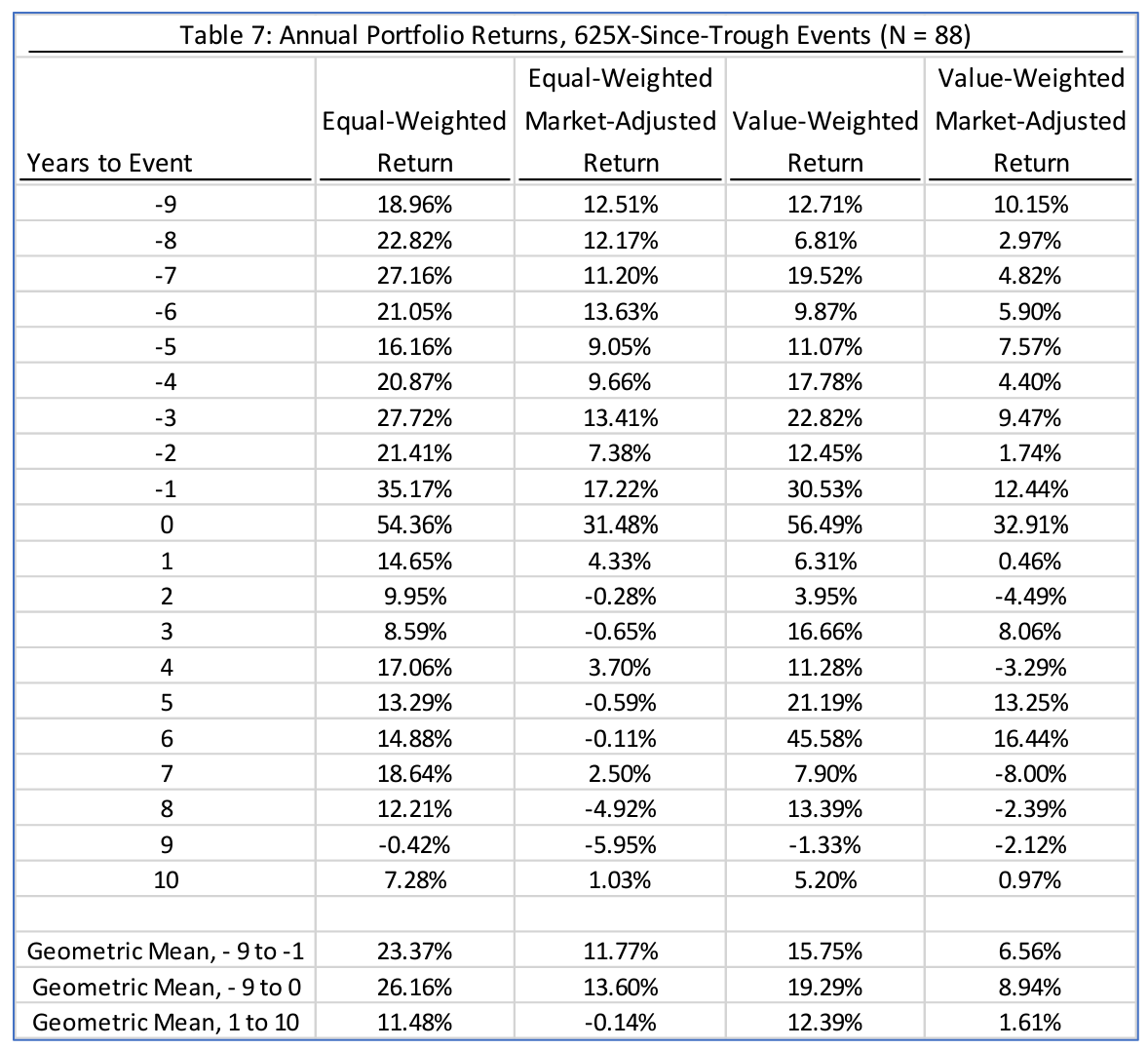
Equal weighted of "winner stocks" seem to do better than value weighted of "winner stocks" but after transaction costs, perhaps there is not much to gain from this "insight" as well.
"To be successful, investment strategies that involve concentrated portfolio positions require the ability to reliably discern in real time between stocks where the current market price fully incorporates the firm’s future potential versus those that do not."
In other words, active investing remains and perhaps will always remain very, very hard!
Full paper link: papers.ssrn.com.
Full paper link: papers.ssrn.com.
Loading suggestions...