

1/ Curve just released the Curve stablecoin docs.
The biggest innovation is Lending-Liquidating AMM algorithm (LLAMMA).
So, how does it work?
*I'm learning as I'm writing this thread*
The biggest innovation is Lending-Liquidating AMM algorithm (LLAMMA).
So, how does it work?
*I'm learning as I'm writing this thread*
2/ The problem with current CDP (collateral-debt position) stablecoins is that they have to liquidate undercollateralized positions to keep the peg.
Partial liquidations help, but they have two problems:
1. Expose CDPs to bad debt
2. Users get penalized for liquidations
Partial liquidations help, but they have two problems:
1. Expose CDPs to bad debt
2. Users get penalized for liquidations
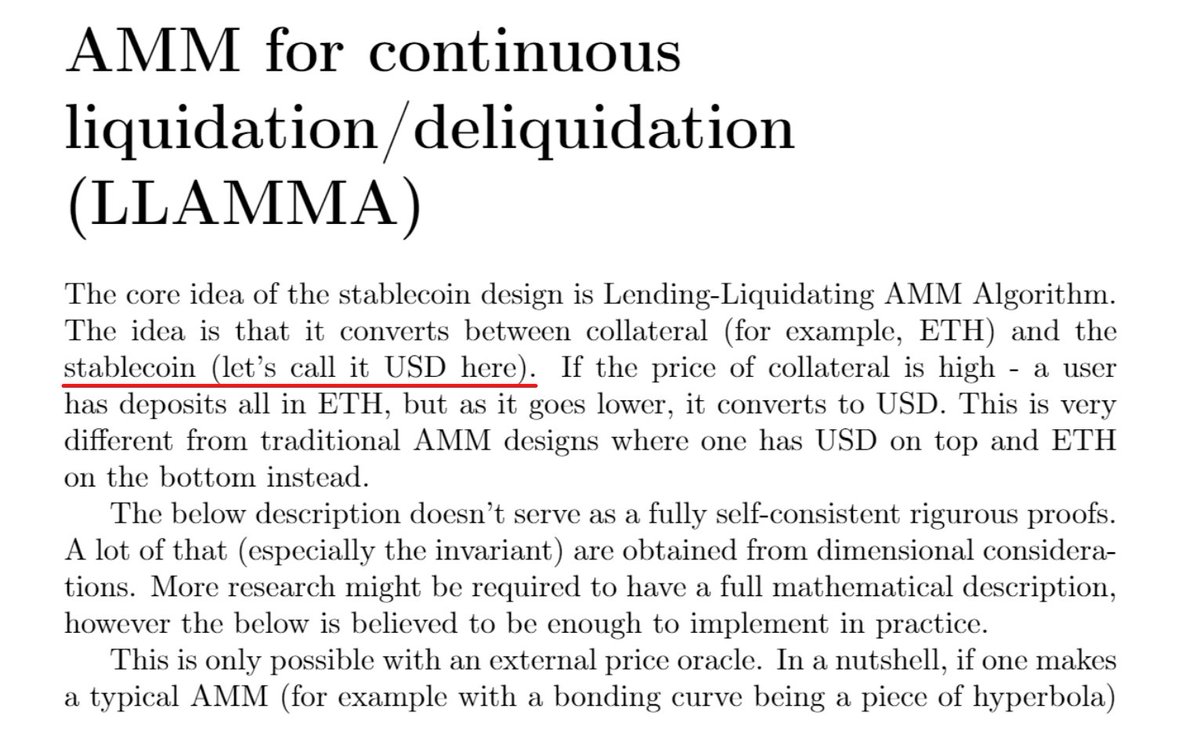
3/ The core idea of crv is an AMM for continuous liquidation or deliquidation.
This Lending-Liquidating AMM converts between collateral (ETH) and a stablecoin.
So when collateral price is high, user deposits all in ETH, but when prices goes down, ETH is converted to USD.
This Lending-Liquidating AMM converts between collateral (ETH) and a stablecoin.
So when collateral price is high, user deposits all in ETH, but when prices goes down, ETH is converted to USD.

4/ Thus Pcenter is the price at which liquidity is formed.
When ETH price reaches Pcu, AMM collateral is converted to USD.
When ETH price goes up and reaches Pcd, the AMM collateral is converted to all in ETH.
When ETH price reaches Pcu, AMM collateral is converted to USD.
When ETH price goes up and reaches Pcd, the AMM collateral is converted to all in ETH.
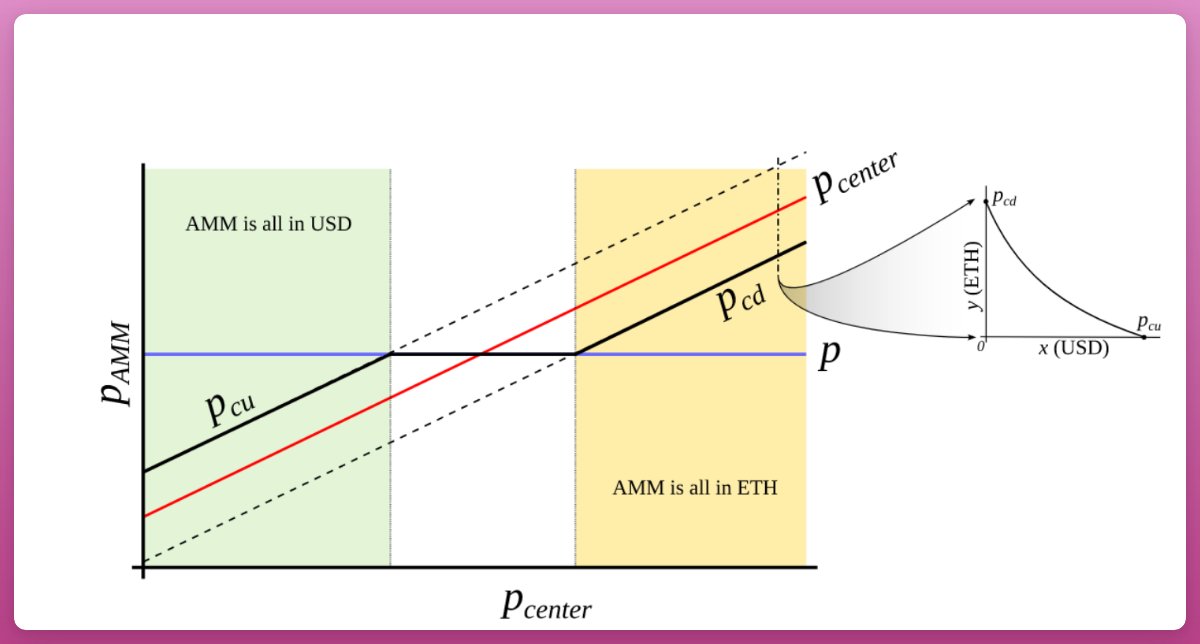
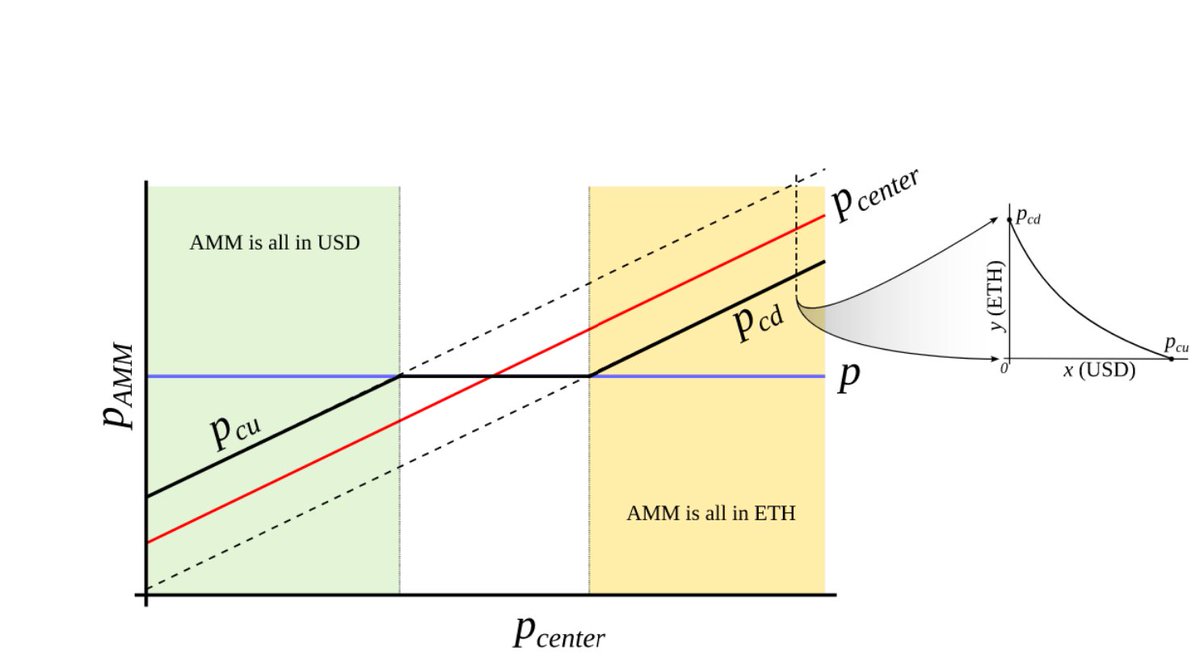
5/ This model prevents positions from being liquidated (it just gets closed down) and no risk of bad debt.
(On a side note, does it mean that collateral suffers from impermanent loss?)
(On a side note, does it mean that collateral suffers from impermanent loss?)
6/ Another important point is that LLAMMA uses ETH/USD as price source and $crvUSD could be traded above or under the peg.
If price is above the peg, crvUSD will use Automatic Stabalizer (similar to Frax's AMOs)
You can learn about Automated Market Operations below:
If price is above the peg, crvUSD will use Automatic Stabalizer (similar to Frax's AMOs)
You can learn about Automated Market Operations below:
7/ This Automatic Stabalizer (PegKeeper) will simply mint crvUSD and deposit straight to Curve Pools.
It increases liquidity for crvUSD and generates trading fees.
If the price is below the peg, crvUSD is withdrawn from the pool and burnt, thus decreasing crvUSD's supply.
It increases liquidity for crvUSD and generates trading fees.
If the price is below the peg, crvUSD is withdrawn from the pool and burnt, thus decreasing crvUSD's supply.
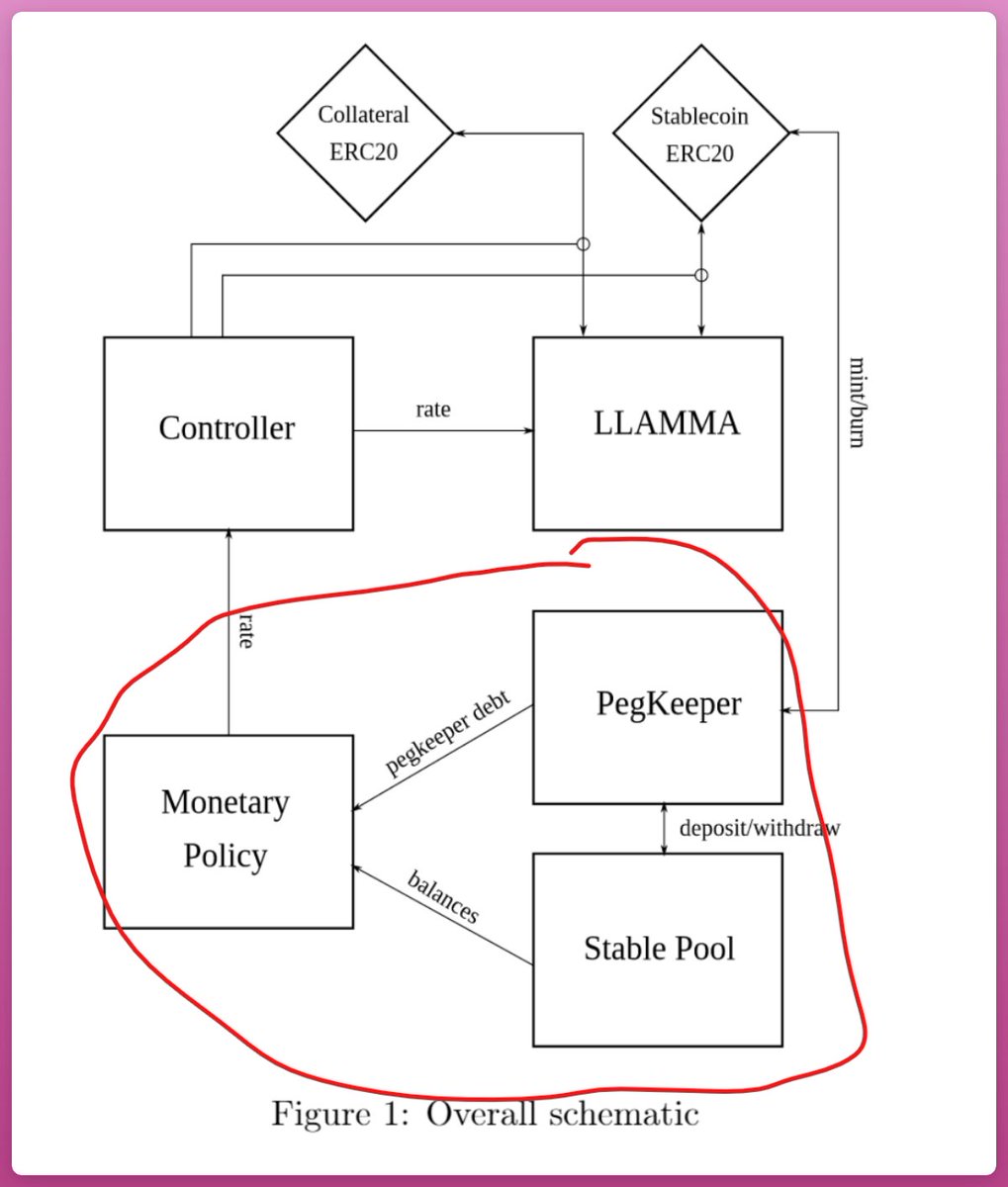
8/ Once again, I studied the paper at same time as I wrote the tread, so let me know what I got wrong or did not mention.
Update:
1. The whitepaper does not mention it explicitly but it seems that the 'stablecoin' they have in mind is crvUSD itself.
So, to my understanding, the LLAMMA can have USDT/crvUSD or USDC/crvUSD or even 3pool/crvUSD pools.
2. It doesn't mention $CRV anywhere it seems 🤔
1. The whitepaper does not mention it explicitly but it seems that the 'stablecoin' they have in mind is crvUSD itself.
So, to my understanding, the LLAMMA can have USDT/crvUSD or USDC/crvUSD or even 3pool/crvUSD pools.
2. It doesn't mention $CRV anywhere it seems 🤔
Loading suggestions...