

A growing list of landfill-to-solar projects across the US could help propel underserved communities to the forefront of the clean energy future. vox.com
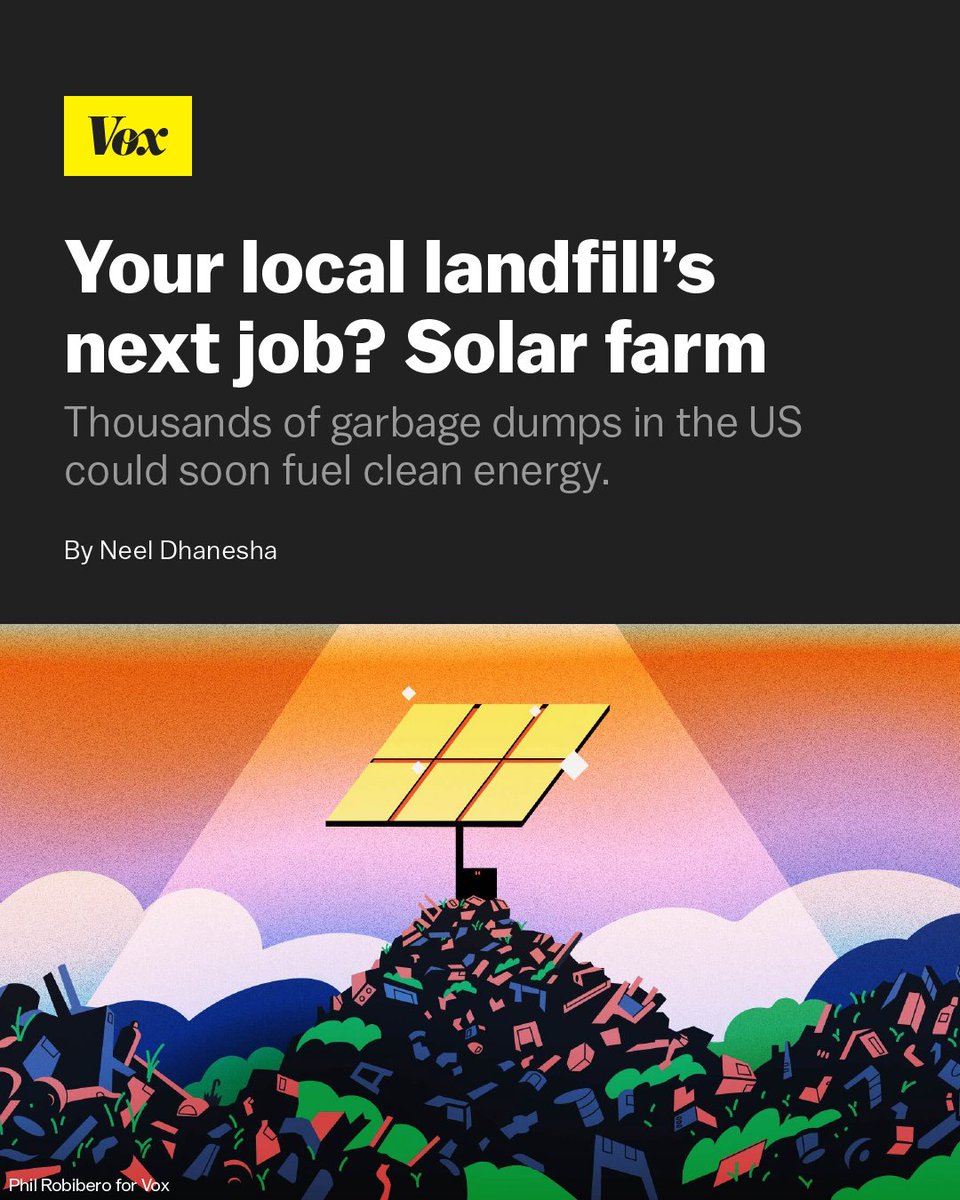
Landfill solar projects have the potential to generate at least 63.2 gigawatts of power across the US — the equivalent of powering the entire state of South Carolina – according to a 2021 @RockyMtnInst report. vox.com
In the 1990 book Dumping in Dixie, @DrBobBullard found that many landfills were systematically placed in majority-Black neighborhoods. Little has changed; race continues to be one of the biggest factors in determining whether a person lives near a source of pollution in the US.
Once the site of Houston, Texas’s largest trash incinerator, a landfill in Sunnyside, a majority-Black neighborhood, was closed in the 1970s.
In the decades since, trees have been the only things to find any use for the site. vox.com
In the decades since, trees have been the only things to find any use for the site. vox.com
This year, work will begin to cut down those trees in Sunnyside and replace them with solar panels, creating a 52-megawatt solar farm and revitalizing a site that has long served as little more than a reminder of the injustices of the past. vox.com
Alongside the 50 megawatts of solar power that the Sunnyside solar project will send to the grid — making it the largest urban solar farm in the country — about 2 megawatts will go to a community solar project that is mostly reserved for its residents. vox.com
Together, inactive landfills, mines, and industrial sites make up a category of land the EPA calls “brownfields.” Cleaning up those sites and repurposing them for clean energy turns them into “brightfields.” vox.com
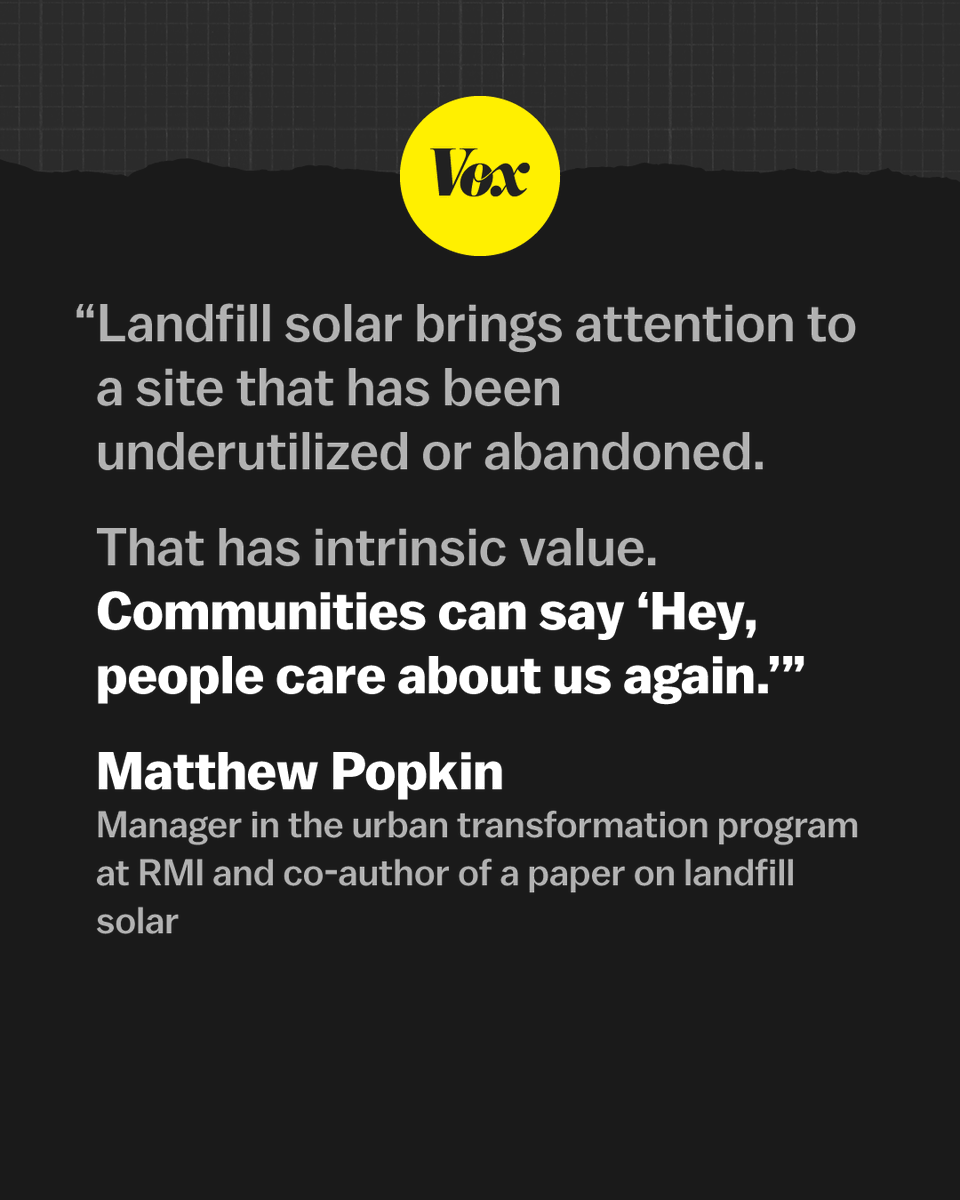
@Matthew_Popkin, a manager in the urban transformation program at @RockyMtnInst, thinks landfill solar is especially exciting, in part because it’s one of the rare forms of reuse for a landfill that’s actually quite safe. vox.com
Learn more from @neel_dhan about how clean energy can transform toxic landfills. vox.com
Loading suggestions...