
The Basics Of Ethereum Scaling
A quick guide on:
1. @zksync
2. @arbitrum
3. @0xPolygon
4. @optimismFND
5. @StarkWareLtd
🧵 by @MattFiebach:
A quick guide on:
1. @zksync
2. @arbitrum
3. @0xPolygon
4. @optimismFND
5. @StarkWareLtd
🧵 by @MattFiebach:
1/ L2 Tech Background:
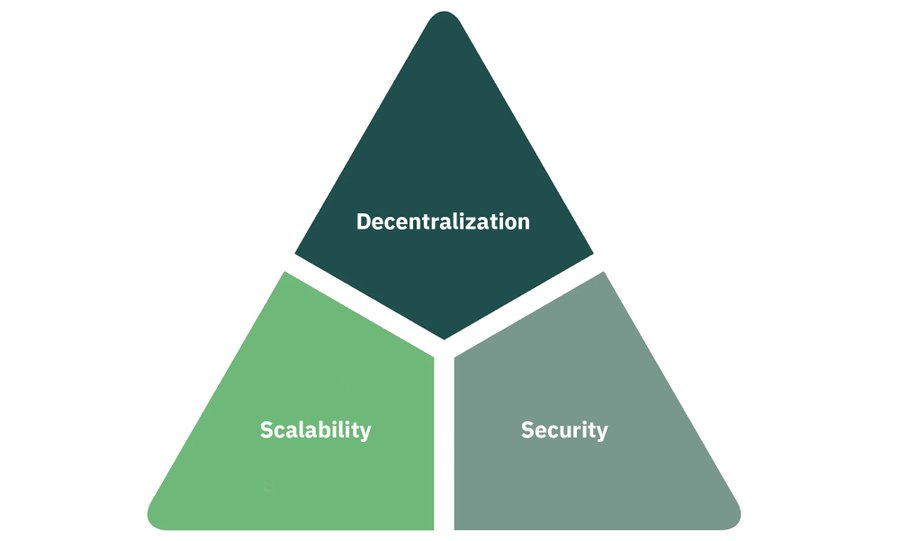
With ETH 2.0 and sharding a distant future, scaling Ethereum and defeating the blockchain trilemma is a feat being taken on by giga brain teams everywhere.
A basic understanding of these projects is a requirement for all interested in Ethereum's future.
With ETH 2.0 and sharding a distant future, scaling Ethereum and defeating the blockchain trilemma is a feat being taken on by giga brain teams everywhere.
A basic understanding of these projects is a requirement for all interested in Ethereum's future.
2/ L2 Tech Background Part II
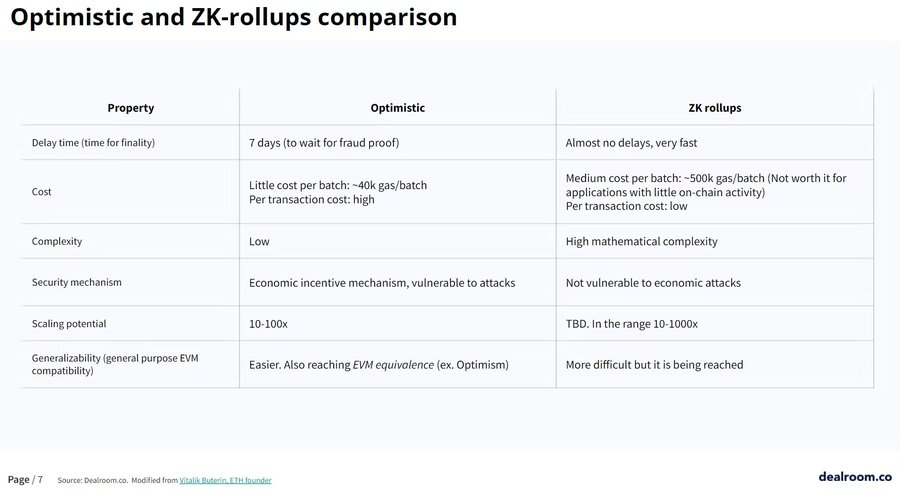
Zero Knowledge rollups use cryptographic proofs with a condensed version of all the txn information which is then verified on the L1.
Optimistic rollups assume a txn is valid, but have a waiting period in which anyone can challenge them.
Zero Knowledge rollups use cryptographic proofs with a condensed version of all the txn information which is then verified on the L1.
Optimistic rollups assume a txn is valid, but have a waiting period in which anyone can challenge them.
3/ L2 Tech Background Part III
Generating proofs requires a lot more computation and are a nascent tech as they apply to crypto. Optimistic rollups have a long waiting period but are simple in design.
Both are processed on the L1 in batches to help scale the network.
Generating proofs requires a lot more computation and are a nascent tech as they apply to crypto. Optimistic rollups have a long waiting period but are simple in design.
Both are processed on the L1 in batches to help scale the network.
4/ Starkware:
Starkware uses STARK (zk) proofs for 2 products.
1. StarkNet: A general purpose smart contract L2 anyone can build dApps on top of.
2. StarkEx: Lets dApps create application-specific L2 rollups with no competition for block space, but lack composability.
Starkware uses STARK (zk) proofs for 2 products.
1. StarkNet: A general purpose smart contract L2 anyone can build dApps on top of.
2. StarkEx: Lets dApps create application-specific L2 rollups with no competition for block space, but lack composability.
5/ Starkware Part II
Notably, dApps on Starkware are programmed in Cairo and not Solidity. This could make the development process a bit more difficult than some of the other technologies we explore here.
Warp is working on a solidity to Cairo compiler for EVM compatibility.
Notably, dApps on Starkware are programmed in Cairo and not Solidity. This could make the development process a bit more difficult than some of the other technologies we explore here.
Warp is working on a solidity to Cairo compiler for EVM compatibility.
6/zkSync:
zkSync 2.0 uses a different type of cryptographic zk-proofs called SNARKS.
Similar to StarkNet, zkSync’s zkEVM is a general purpose smart contract L2. However, it is able to compile high-level solidity code through its compiler to provide EVM compatibility.
zkSync 2.0 uses a different type of cryptographic zk-proofs called SNARKS.
Similar to StarkNet, zkSync’s zkEVM is a general purpose smart contract L2. However, it is able to compile high-level solidity code through its compiler to provide EVM compatibility.

7/ zkSync Part II
At a more technical level, the networks have different trust assumptions when it comes to storing data.
zkSync’s zkEVM launches this month and will later deploy zkPorter to store data off-chain, secured by the eventual zkSync token in a PoS network.
At a more technical level, the networks have different trust assumptions when it comes to storing data.
zkSync’s zkEVM launches this month and will later deploy zkPorter to store data off-chain, secured by the eventual zkSync token in a PoS network.
8/ zkSync Part III
This will make zksync a volition whereas StarkNet is a standard zk rollup.
Many speculate playing around in the zkSync ecosystem may lead to an airdrop.
This will make zksync a volition whereas StarkNet is a standard zk rollup.
Many speculate playing around in the zkSync ecosystem may lead to an airdrop.
9/ Optimism:
The original optimistic rollup deployment, Optimism, is based on the Ethereum plasma white paper: A now trashed Ethereum base layer scaling solution.
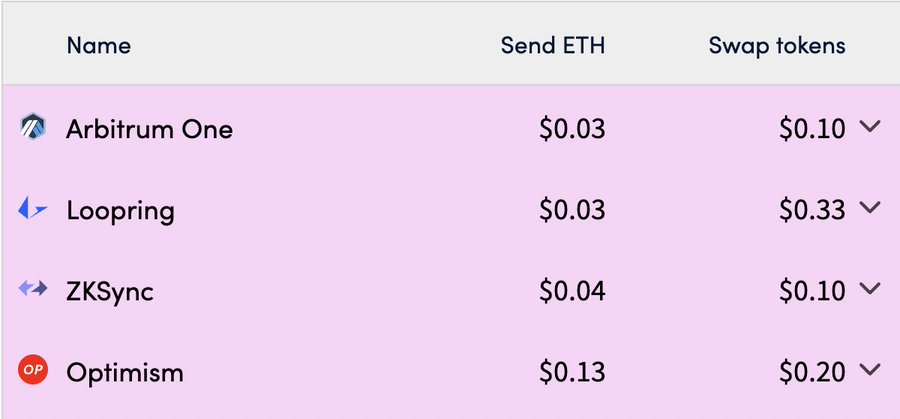
Optimism is generally the most expensive of the L2s we look at, but their upcoming Bedrock upgrade could fix that.
The original optimistic rollup deployment, Optimism, is based on the Ethereum plasma white paper: A now trashed Ethereum base layer scaling solution.
Optimism is generally the most expensive of the L2s we look at, but their upcoming Bedrock upgrade could fix that.
10/ Arbitrum:
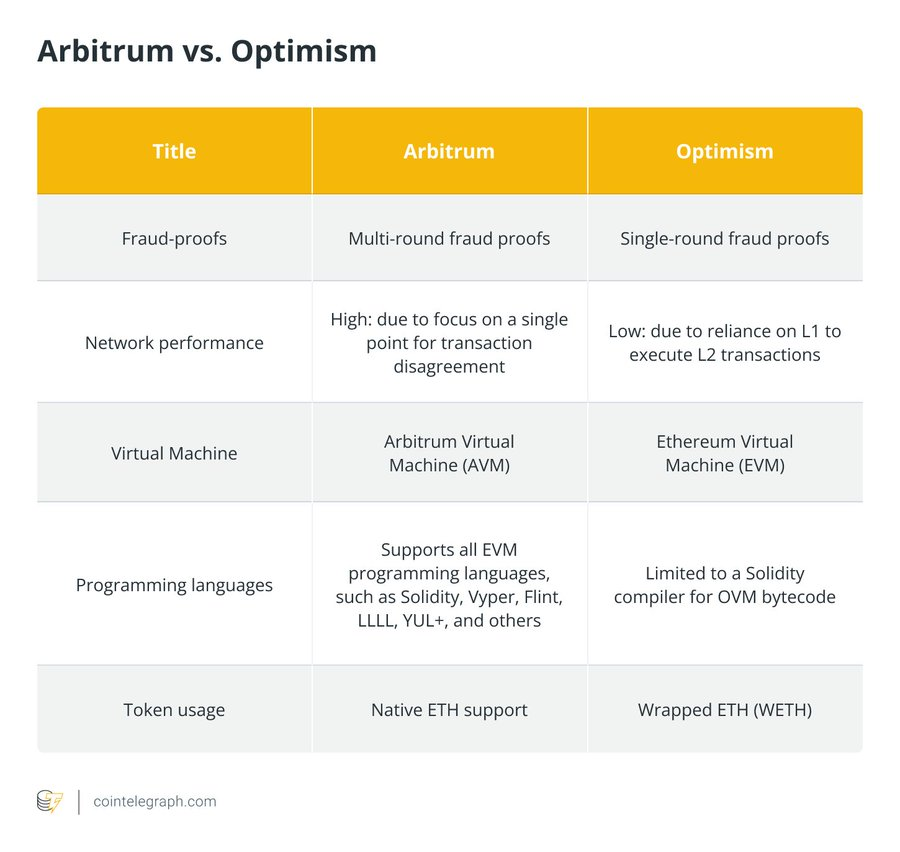
Arbitrum is a lot like Optimism but uses a different virtual machine supporting more programing languages, native ETH and generally cheaper txns.
(h/t @CoinTelegraph)
Arbitrum is a lot like Optimism but uses a different virtual machine supporting more programing languages, native ETH and generally cheaper txns.
(h/t @CoinTelegraph)
11/ Polygon:
Polygon (Matic) works a bit differently as it is a side-chain and not a true Layer-2 that settles to Ethereum.
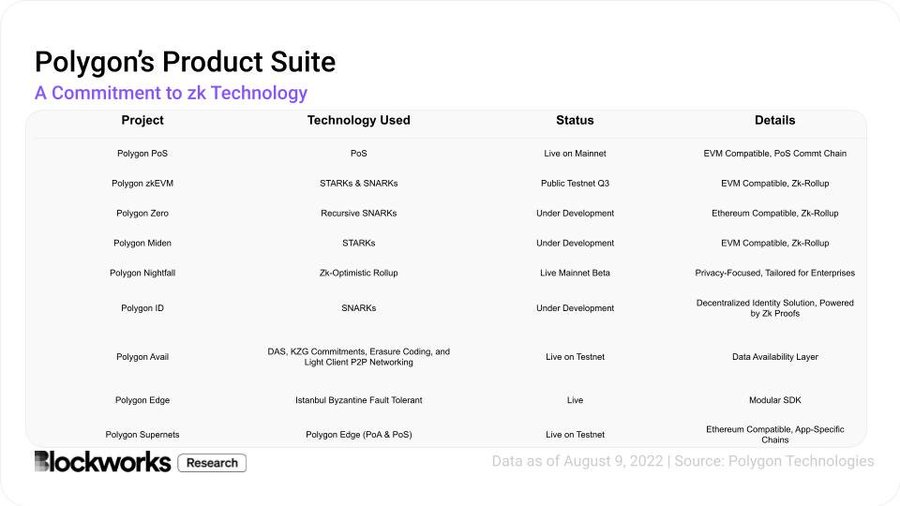
Polygon is building a “Swiss Army Knife” of scaling solutions mostly focused on zk tech.
Polygon (Matic) works a bit differently as it is a side-chain and not a true Layer-2 that settles to Ethereum.
Polygon is building a “Swiss Army Knife” of scaling solutions mostly focused on zk tech.
12/ Polygon Part II
Polygon is tackling scaling through STARKs, SNARKs, data availability sampling, KZG commitments, and more.
Polygon is tackling scaling through STARKs, SNARKs, data availability sampling, KZG commitments, and more.
13/ Polygon Part III
Notably, Polygon is a Business Development machine and is partnered with some major companies.
Notably, Polygon is a Business Development machine and is partnered with some major companies.
14/ More Insights
For more breakdowns on crypto, DeFi and even macro subscribe to our newsletter:
getrevue.co
For more breakdowns on crypto, DeFi and even macro subscribe to our newsletter:
getrevue.co
Loading suggestions...