

𝗨𝗻𝘁𝗮𝗻𝗴𝗹𝗶𝗻𝗴 𝘁𝗵𝗲 𝗸𝗻𝗼𝘁𝘀: 𝗖𝗵𝘂𝗰𝗵𝘂 𝗣𝗮𝗻𝗱𝗲 𝗮𝗻𝗱 𝗮𝗹𝗹𝗲𝗴𝗲𝗱 𝗕𝗿𝗮𝗵𝗺𝗶𝗻 𝗮𝗻𝗰𝗲𝘀𝘁𝗿𝘆 𝗷𝗶𝗯𝗲
In this thread, a closer look would be taken towards the Chuchu Pande jibe that was ill-intentionally associated with Bandhalgoti clan.
1/n
In this thread, a closer look would be taken towards the Chuchu Pande jibe that was ill-intentionally associated with Bandhalgoti clan.
1/n
To begin with let's have a look at P Carnegy report, where the first mention of Chuchu Pande was made.
At first Carnegy states that he don't have official history of Bandhalgoti clan and his theory is based on the enquiry from Mahdauna family (covered in previous thread).
2/n
At first Carnegy states that he don't have official history of Bandhalgoti clan and his theory is based on the enquiry from Mahdauna family (covered in previous thread).
2/n

Carnegy assigned cousinhood to Kanhpuria and Bandhalgoti clans. He assigned one Kinu Pande as progenitor of Kanhpuria and his brother Chuchu as the progenitor of Bandhalgoti, both whom were in service of Hasanpur Raj.
3/n
3/n
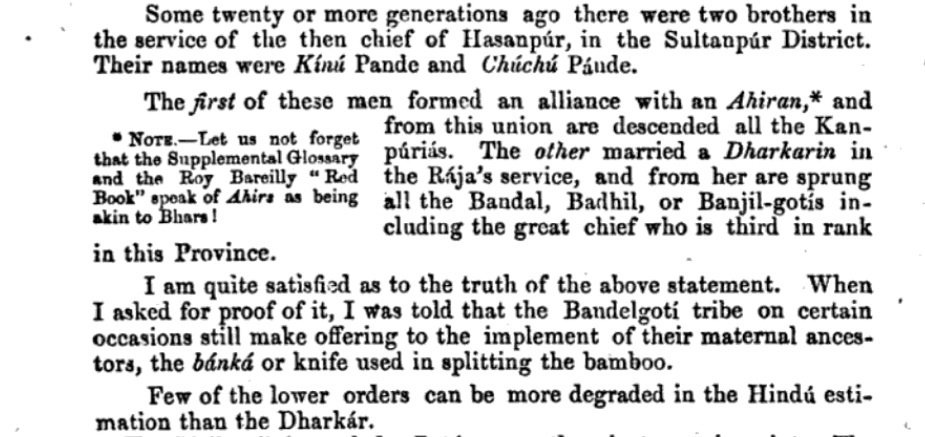
But his theory contradicts itself when he again assign Chuchu Pande of Allahabad as ancestor of Kanhpuria and not Kinu Pande of Hasanpur.
While the official history of Kanhpuria clan begin from Jhusi where a saint named Sach resided at Bhardwaj ashram who blessed Kanh,
4/n
While the official history of Kanhpuria clan begin from Jhusi where a saint named Sach resided at Bhardwaj ashram who blessed Kanh,
4/n
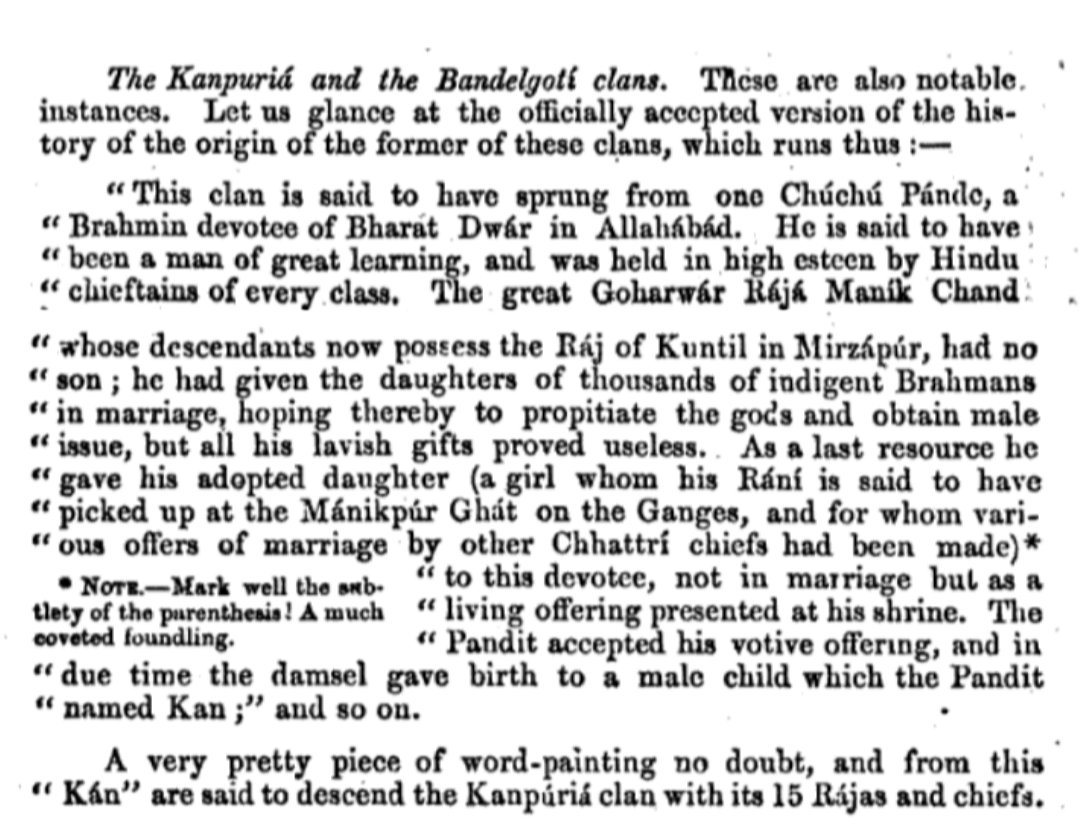
a Chandravanshi Kshatriya. Later the brahminical fables added 83 generations of saints in their lineage and termed them "BrahmKshatriya" or "Rishivanshi Kshatriya" which will be covered in later thread.
If we take for a moment, Chuchu as distorted form of Sach then again
5/n
If we take for a moment, Chuchu as distorted form of Sach then again
5/n
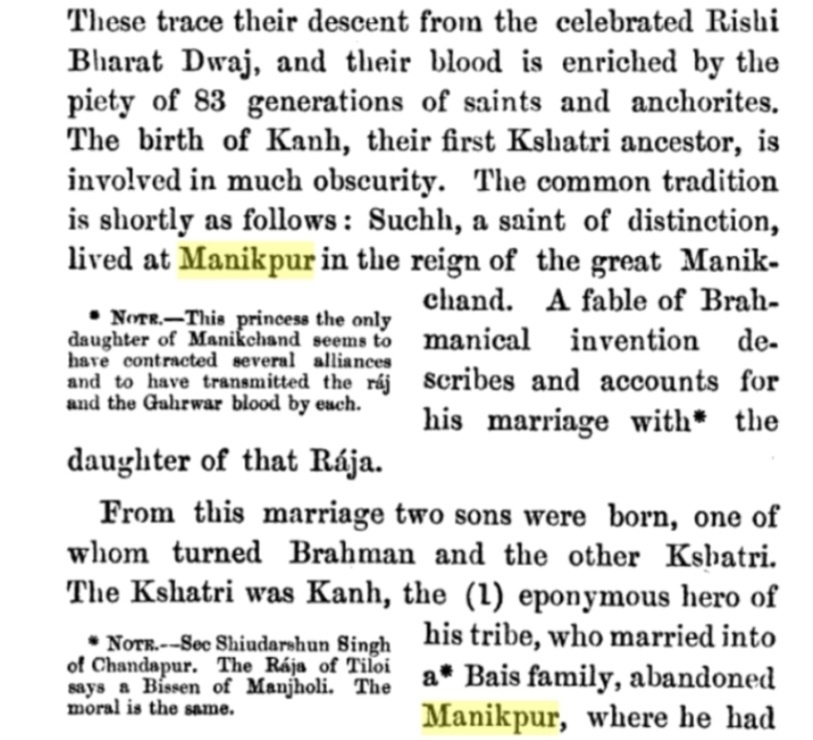
there is no Kinu Pande or Hasanpur Raj in Kanhpuria's annals which prove Carnegy's statement to be nothing else than a jibe.
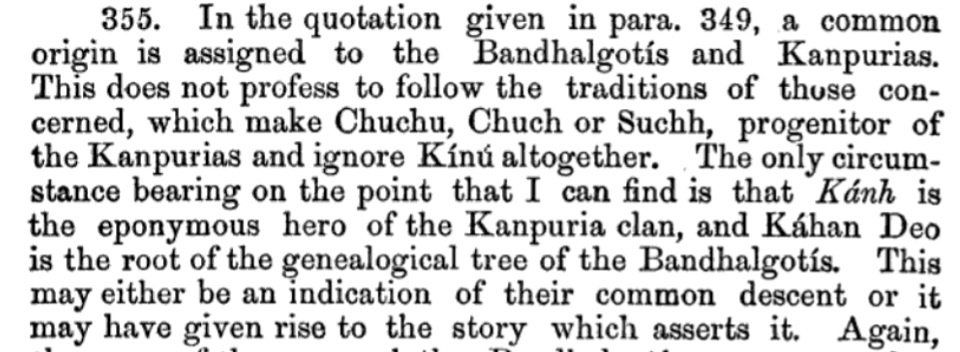
This alleged cousinship of Kanhpuria and Bandhalgoti may have arised because both have an ancestor with resembling name Kanh and Kahan deo.
6/n
This alleged cousinship of Kanhpuria and Bandhalgoti may have arised because both have an ancestor with resembling name Kanh and Kahan deo.
6/n
And if we locate their first settlement then Kanh of Kanhpuria was in Pratapgarh while Kahan Deo of Bandhalgoti, the great-grandfather of Suda Rae was in Narwargarh. Also their timeline differ by a gap of atleast 200 years.
7/n
7/n
𝗖𝗿𝗮𝗰𝗸𝗶𝗻𝗴 𝗖𝗵𝘂𝗰𝗵𝘂 𝗣𝗮𝗻𝗱𝗲 𝗷𝗶𝗯𝗲: 𝗔 𝗹𝗼𝗼𝗸 𝗮𝘁 𝘄𝗵𝗲𝗿𝗲𝗮𝗯𝗼𝘂𝘁𝘀 𝗼𝗳 𝗣𝗮𝗻𝗱𝗲𝘀 𝗼𝗳 𝗦𝘂𝗹𝘁𝗮𝗻𝗽𝘂𝗿
There is no record of Chuchu Pande prior to Carnegy report. Though to find the cause of jibes like alleged Pande ancestry, servantship to
8/n
There is no record of Chuchu Pande prior to Carnegy report. Though to find the cause of jibes like alleged Pande ancestry, servantship to
8/n
Hasanpur Raj, we would have to visit the below three subjects.
i) Official history of Bandhalgoti
ii) Amorhia Pande
iii) history of Hasanpur Raj
9/n
i) Official history of Bandhalgoti
ii) Amorhia Pande
iii) history of Hasanpur Raj
9/n
𝘖𝘧𝘧𝘪𝘤𝘪𝘢𝘭 𝘩𝘪𝘴𝘵𝘰𝘳𝘺 𝘰𝘧 𝘉𝘢𝘯𝘥𝘩𝘢𝘭𝘨𝘰𝘵𝘪
They trace their lineage to Sudah Rai, a Suryavanshi Kshatriya of Narwargarh who while on pilgrimage to Ayodhya defeated Bhars and established his fort at Amethi.
The date of Suda Rai pilgrimage to Oudh agrees
10/n
They trace their lineage to Sudah Rai, a Suryavanshi Kshatriya of Narwargarh who while on pilgrimage to Ayodhya defeated Bhars and established his fort at Amethi.
The date of Suda Rai pilgrimage to Oudh agrees
10/n
in date with the Kachwaha migration to Jaipur.
After a lapse of six generations, came Mandhata Singh who was childless. In the village of Kannu or Kurmu resided a saint Kanak Muni whose prayers blessed Mandhata Singh with a son named Sut Shah who was later named by the
11/n
After a lapse of six generations, came Mandhata Singh who was childless. In the village of Kannu or Kurmu resided a saint Kanak Muni whose prayers blessed Mandhata Singh with a son named Sut Shah who was later named by the
11/n
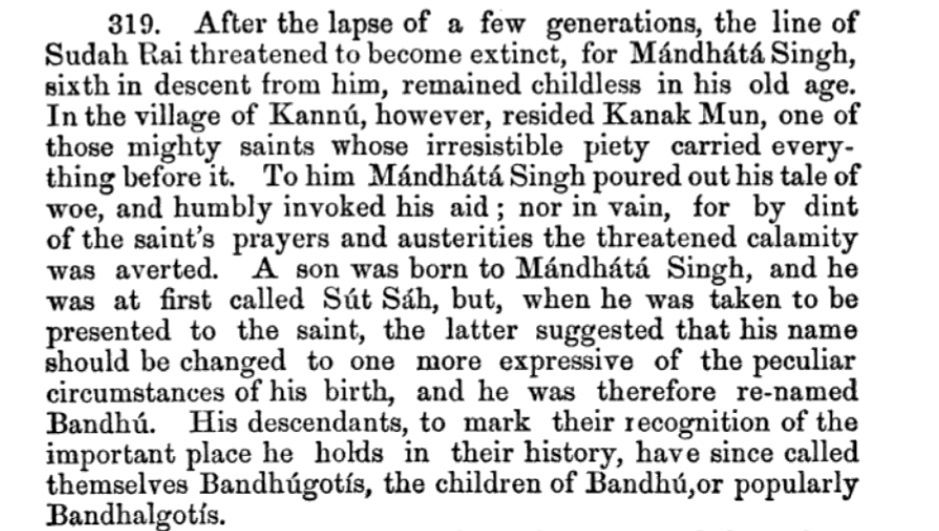
saint as Bandhu.
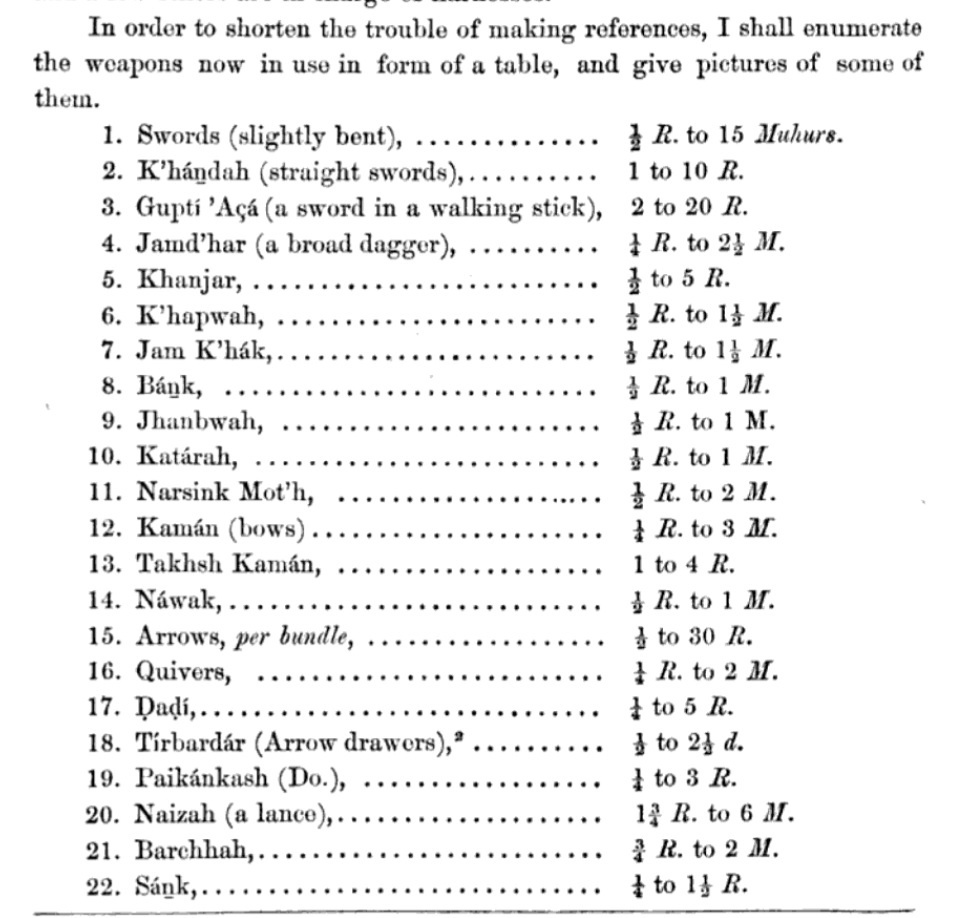
At some occasions Bandhalgoti clan make veneration to bánk (an Indian origin curved dagger), this dagger is enlisted in weapons in Ain-i-Akbari (Check no 8) which P Carnegy equated with a bamboo splitting knife in his report to support his Dharkarin theory.
12/n
At some occasions Bandhalgoti clan make veneration to bánk (an Indian origin curved dagger), this dagger is enlisted in weapons in Ain-i-Akbari (Check no 8) which P Carnegy equated with a bamboo splitting knife in his report to support his Dharkarin theory.
12/n
𝘈𝘮𝘰𝘳𝘩𝘪𝘢 𝘗𝘢𝘯𝘥𝘦 (𝘒𝘢𝘺𝘢𝘴𝘵𝘩 𝘤𝘰𝘯𝘷𝘦𝘳𝘵 𝘵𝘰 𝘉𝘳𝘢𝘩𝘮𝘢𝘯)
Rae Jagat Singh, a Kayasth was Subahdar of Sultanpur at the time of Tughlaq. In 1376 AD, one Dom named Ugrasen of Domangarh demanded the hand of Brahmin girl of Amorha, Basti.
13/n
Rae Jagat Singh, a Kayasth was Subahdar of Sultanpur at the time of Tughlaq. In 1376 AD, one Dom named Ugrasen of Domangarh demanded the hand of Brahmin girl of Amorha, Basti.
13/n
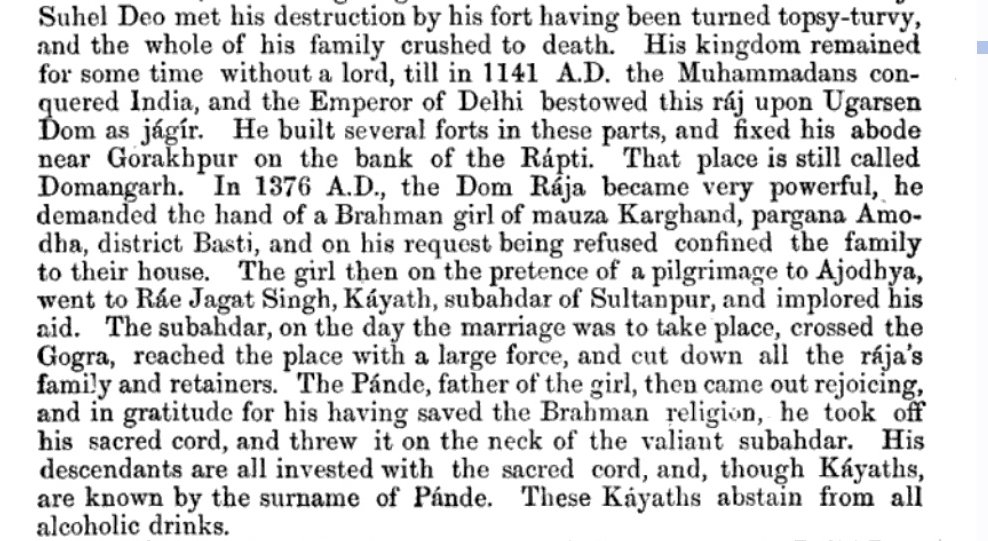
That girl then went to Rae Jagat Singh and pleaded for help. On the day of her marriage, he came with a large force and killed all the family members of Ugrasen. Father of that girl then came rejoicing and married her daughter to Jagat and also bestowed him "Janeu" and
14/n
14/n
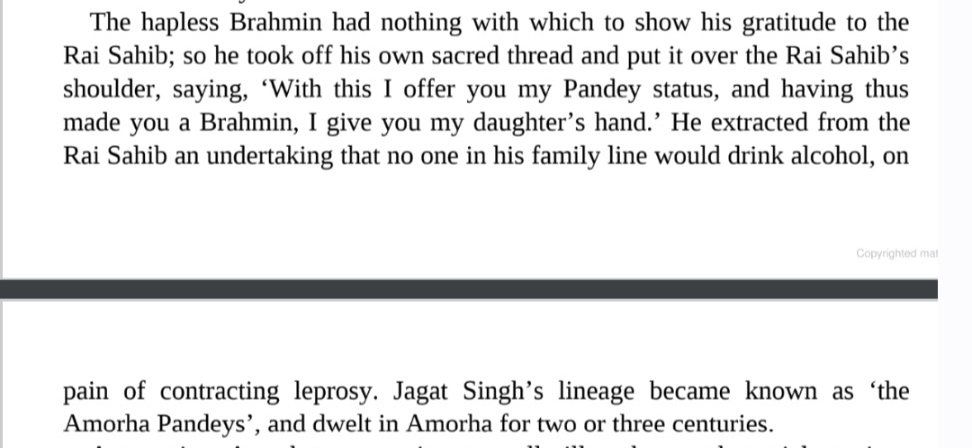
Brahmin status and said that all his descendants will be afterwards known by the title of Pande.
Descendants of Jagat resided in Sultanpur, Basti, Bahraich afterwards and were known as Pande Brahman or Amorha Kayasth.
15/n
Descendants of Jagat resided in Sultanpur, Basti, Bahraich afterwards and were known as Pande Brahman or Amorha Kayasth.
15/n
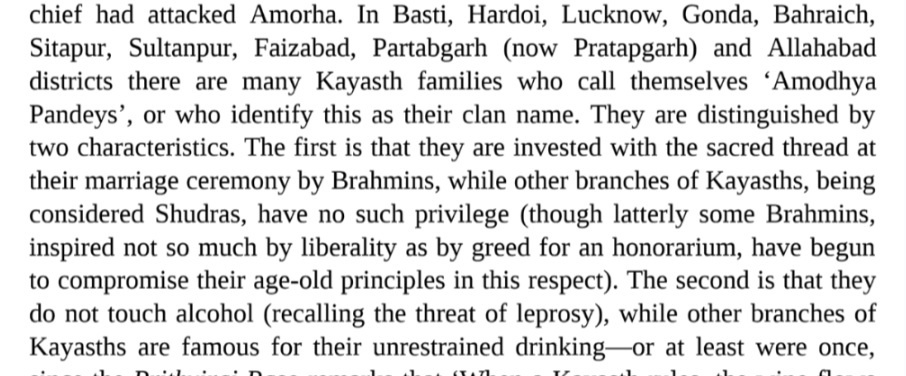
Nawal Shah, a Bandhalgoti rajput from the house of Naraini(cadet branch of Garh-Amethi) was risaldar in the army of Rae Jagat Singh and had received for his bravery a region later known by the name of Nawabganj in Gonda.
This family later made their capital at Mankapur which
16/n
This family later made their capital at Mankapur which
16/n
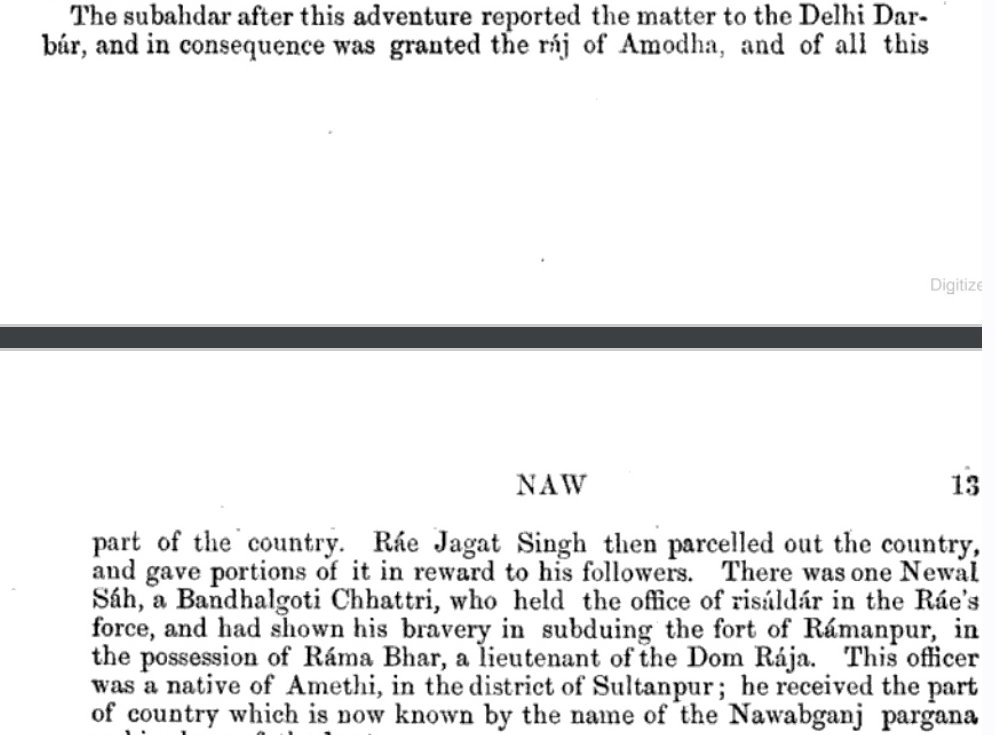
was later acquired by Bisen rajputs.
Maybe for serving in the army of Amorhia Pande, Mahdauna family associated "origin from Chuchu Pande" jibe to defame Bandhalgoti rajput. It may not be a coincidence that the first settlement of Sadasukh Pathak in Oudh was also Amorha.
17/n
Maybe for serving in the army of Amorhia Pande, Mahdauna family associated "origin from Chuchu Pande" jibe to defame Bandhalgoti rajput. It may not be a coincidence that the first settlement of Sadasukh Pathak in Oudh was also Amorha.
17/n
𝘉𝘳𝘪𝘦𝘧 𝘩𝘪𝘴𝘵𝘰𝘳𝘺 𝘰𝘧 𝘏𝘢𝘴𝘢𝘯𝘱𝘶𝘳 𝘙𝘢𝘫
Raja of Hasanpur were related to Rajkumar and Bachgotis of Sultanpur and trace their lineage to Bariar Shah of 1248 AD.
Ancestors of this family were Diwan under Sharqi dynasty and held importance to a level that no
18/n
Raja of Hasanpur were related to Rajkumar and Bachgotis of Sultanpur and trace their lineage to Bariar Shah of 1248 AD.
Ancestors of this family were Diwan under Sharqi dynasty and held importance to a level that no
18/n
Taluqa in eastern Oudh could be imagined without acceptance from Raja of Hasanpur.
Later Tilok Chand (Rajkumar rajput) of Dhammaur estate, fought Babar and on defeat he was converted to Muslim and received the title of Khan-i-Azam.
19/n
Later Tilok Chand (Rajkumar rajput) of Dhammaur estate, fought Babar and on defeat he was converted to Muslim and received the title of Khan-i-Azam.
19/n
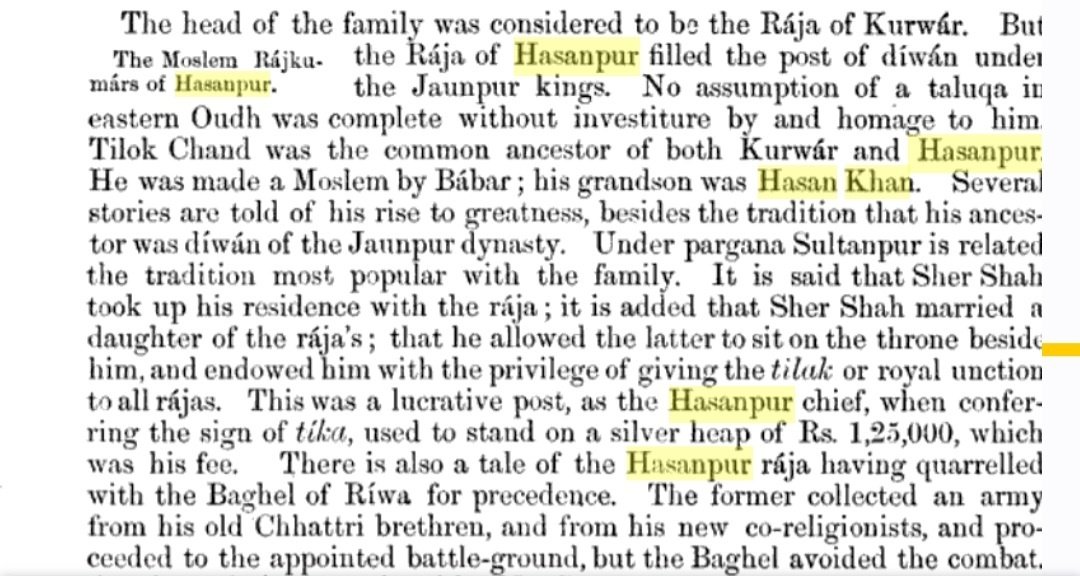
His grandson was Hasan Khan who founded Hasanpur Raj, splitting from Dhammaur Raj.
During the time of Hasan Khan existed five house of Bandhalgoti rajputs in Sultanpur namely Naraini, Baragaon, Gangoli, Nanawan, Kannu, Udiawan & Bihta (Garh-Amethi).
20/n
During the time of Hasan Khan existed five house of Bandhalgoti rajputs in Sultanpur namely Naraini, Baragaon, Gangoli, Nanawan, Kannu, Udiawan & Bihta (Garh-Amethi).
20/n
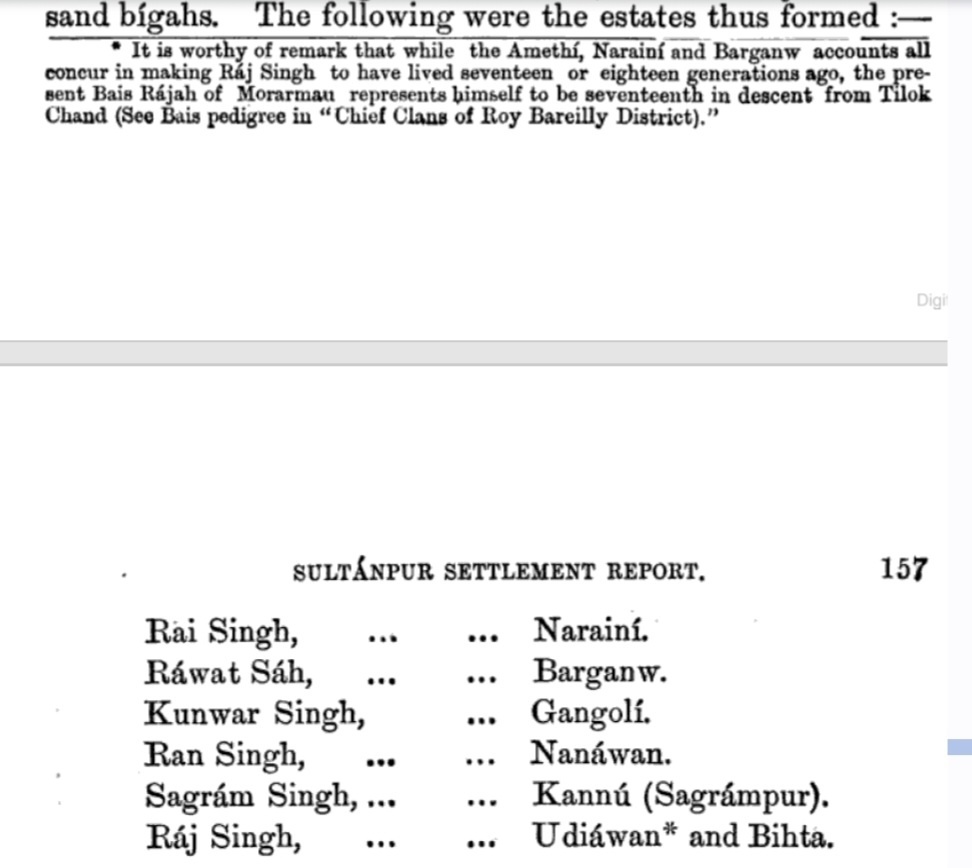
One Bandhalgoti prince Dharámír, a descendant of Raj Singh of Udiawan received Tikri from his brother Raja Ramdeo. He was an ally to Raja Hasan Khan in a conflict against Baghels of Rewa. In return for this, he received five large villages, Sarwawan and others between Tikri
21/n
21/n
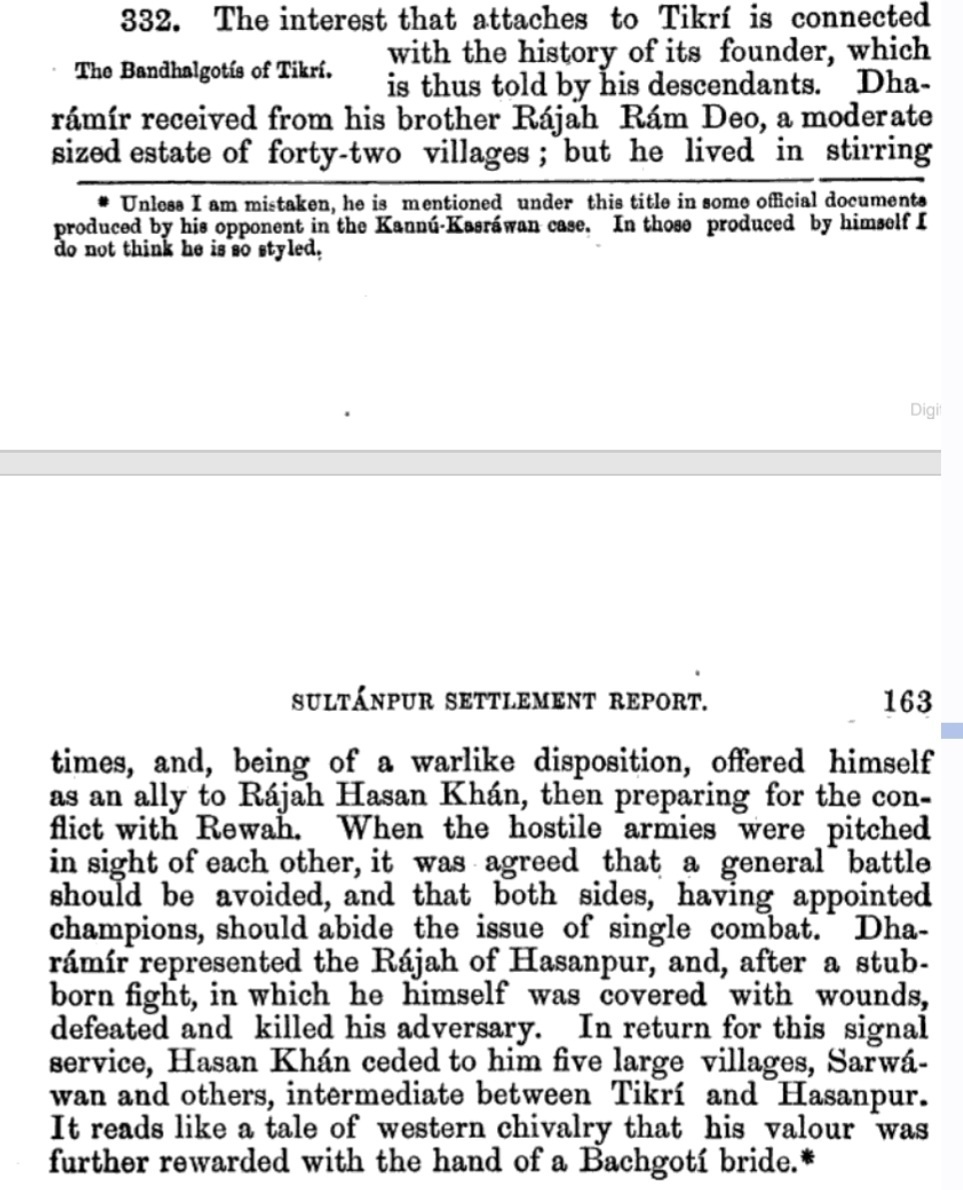
and Hasanpur.
The jibe of Bandhalgoti's ancestor being a servant to Hasanpur Raj comes from the fact that one later descendant of Raj Singh (Dharámír) was an ally to Hasan Khan (not servant) and had received the villages for his chivalry. To be noted, there is no Chuchu
22/n
The jibe of Bandhalgoti's ancestor being a servant to Hasanpur Raj comes from the fact that one later descendant of Raj Singh (Dharámír) was an ally to Hasan Khan (not servant) and had received the villages for his chivalry. To be noted, there is no Chuchu
22/n
but Dharámír in the annals.
Even if we go by the Ain-i-Akbari record then it states that Garh-Amethi (as it was earlier known) was held by Bahmangoti rajput.
23/n
Even if we go by the Ain-i-Akbari record then it states that Garh-Amethi (as it was earlier known) was held by Bahmangoti rajput.
23/n

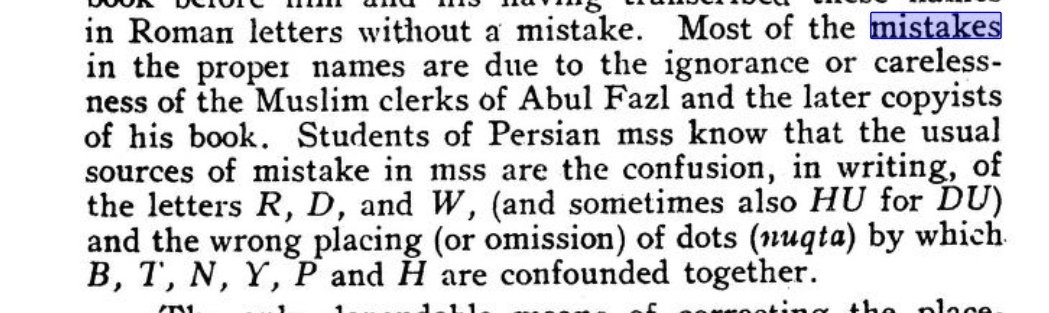
This "Bahmangoti" instead of Bandhalgoti seem as mistake of clerks of Abul Fazl who wrote H in place of D and in later English translation by Jarret.
n/n
n/n
Ending the long thread with a meme 🙂
Man Singh of Mahdauna who couldn't trace his ancestry before Sadasukh, while talking to P Carnegy about Rajputs:
Man Singh of Mahdauna who couldn't trace his ancestry before Sadasukh, while talking to P Carnegy about Rajputs:

Loading suggestions...