

“Fed needs to raise rates above the CPI to kill inflation” → widely spread narrative on Twitter
Inflation is at 8.3%, meaning the Fed would need to raise an additional 5% aka play with fire.
Let's debunk this narrative.
A thread
Inflation is at 8.3%, meaning the Fed would need to raise an additional 5% aka play with fire.
Let's debunk this narrative.
A thread
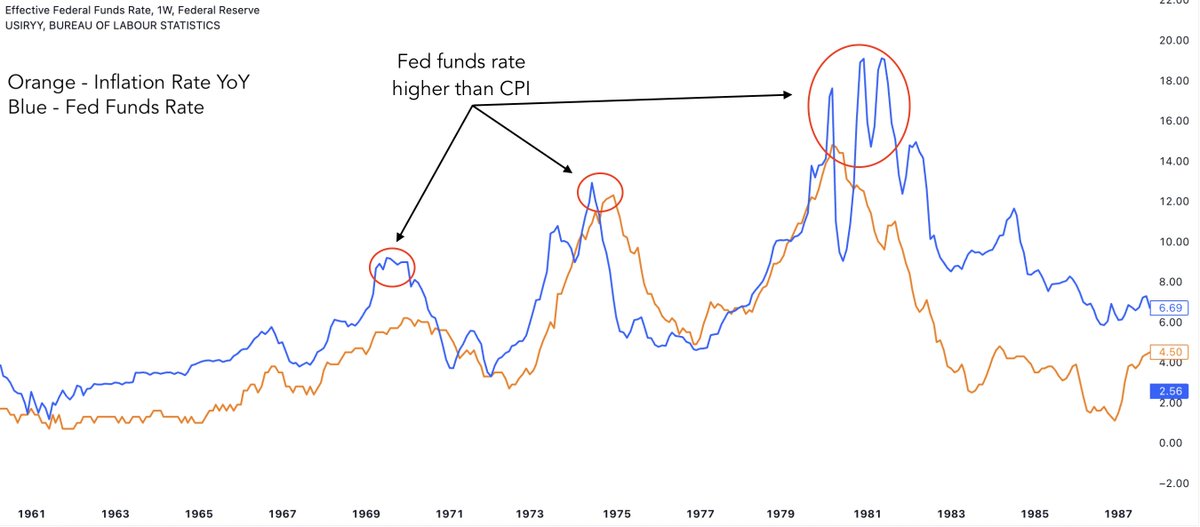
2/ The typical argument is the episode of 1970s.
As inflation rose, the Fed systematically rose interest rates above inflation to end the spiral.
If this repeats, we’re only at the beginning of the tightening cycle with a lot more pain ahead of us.
As inflation rose, the Fed systematically rose interest rates above inflation to end the spiral.
If this repeats, we’re only at the beginning of the tightening cycle with a lot more pain ahead of us.
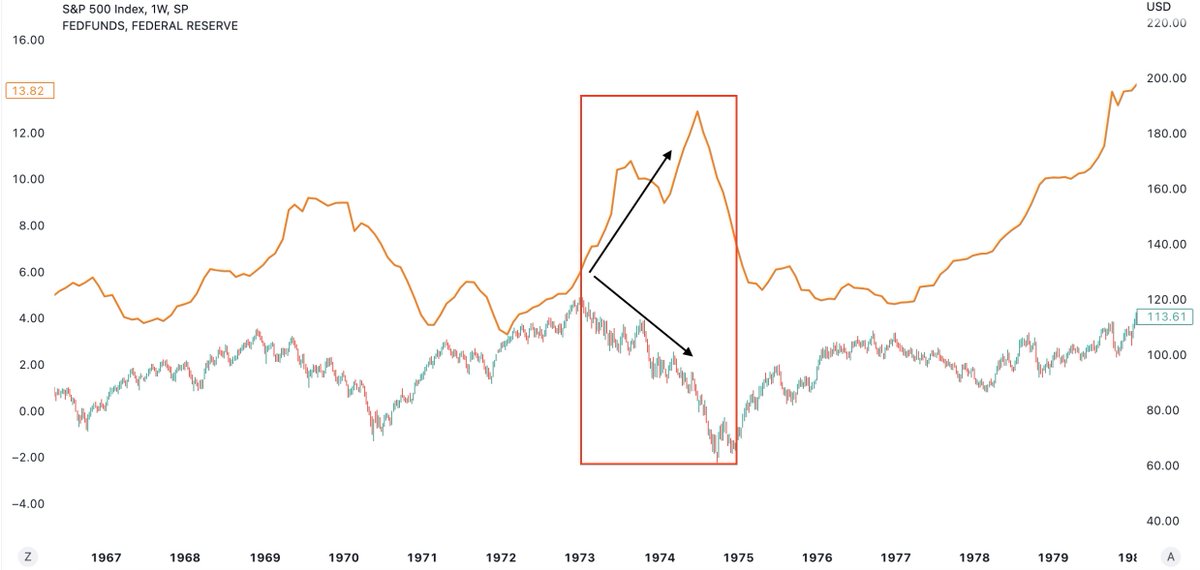
3/ If 8% rates go through, there's a high probability the markets will crash.
Maybe a waterfall-type capitulation event, as most are anticipating.
Similar to the 1972 - 74 tightening cycle.
Maybe a waterfall-type capitulation event, as most are anticipating.
Similar to the 1972 - 74 tightening cycle.
4/ To better understand if the Fed needs to raise rates above CPI we have to look at history.
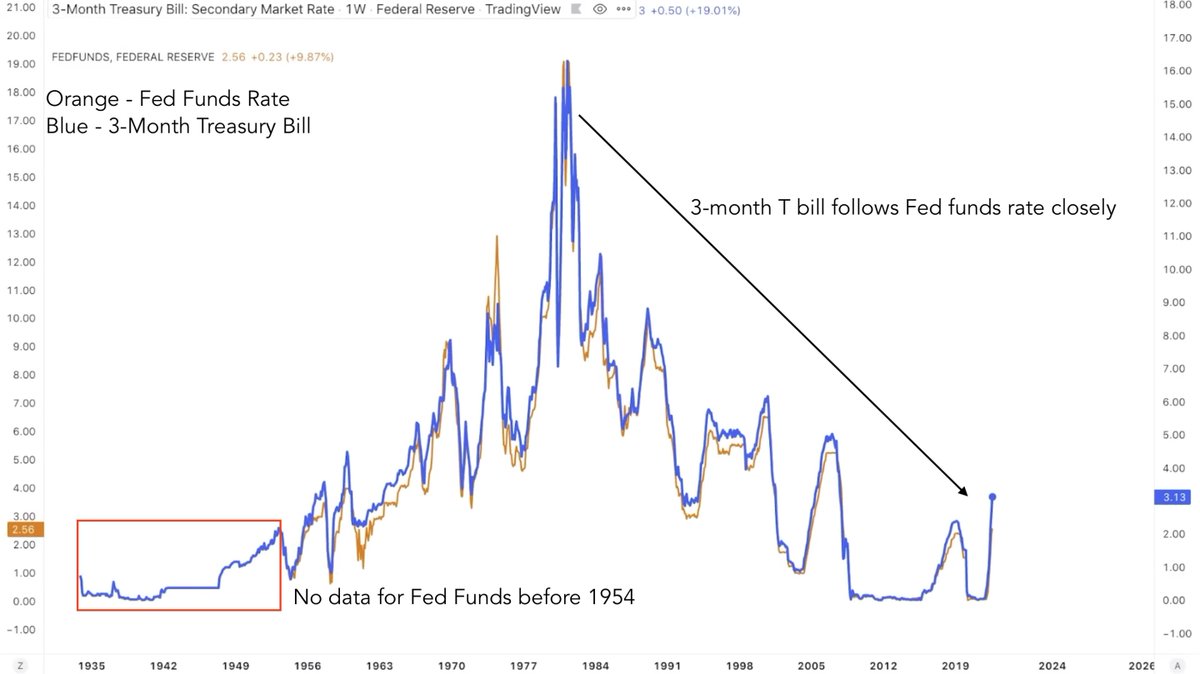
5/ We’re going to use the 3-month T-bill here for 2 reasons:
1) The T-bill is a good proxy for the Fed Funds Rate, given the close relation between the two.
2) There is no data for the Fed Funds Rate going back further than 1954.
1) The T-bill is a good proxy for the Fed Funds Rate, given the close relation between the two.
2) There is no data for the Fed Funds Rate going back further than 1954.
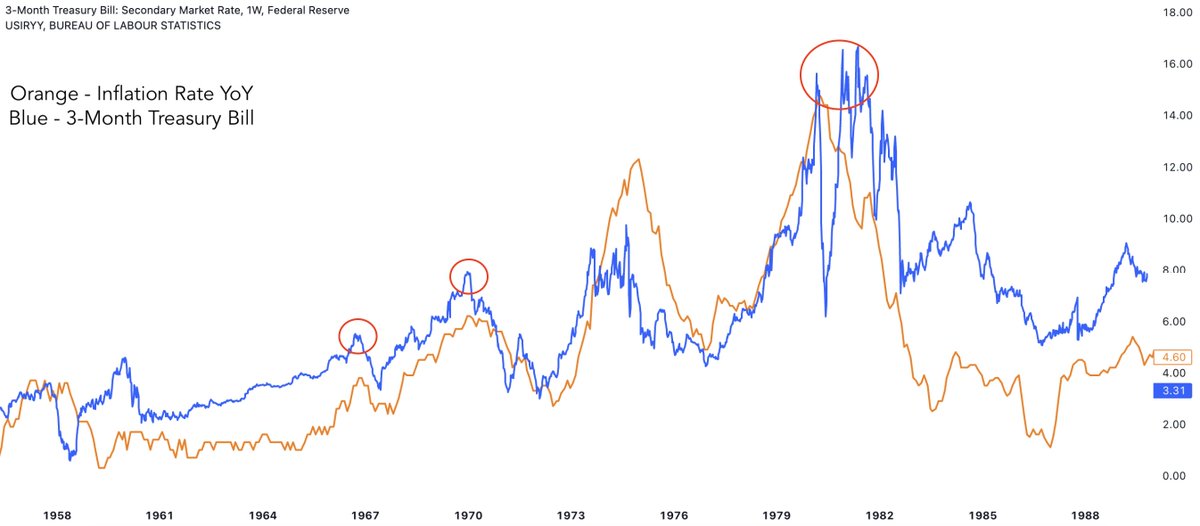
6/ Similar to the Fed Funds Rate in the 1970s, the 3-month T-bill rose above CPI in inflationary times.
7/ Let’s go back further in time when inflation and interest rate dynamics have been much different.
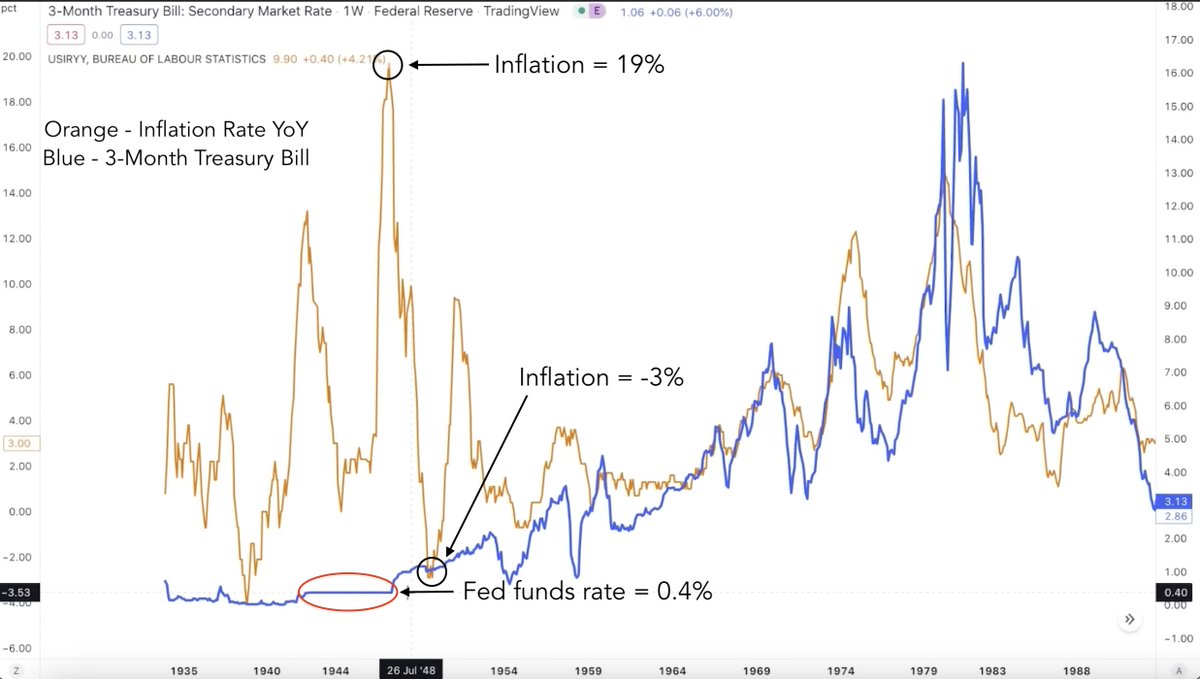
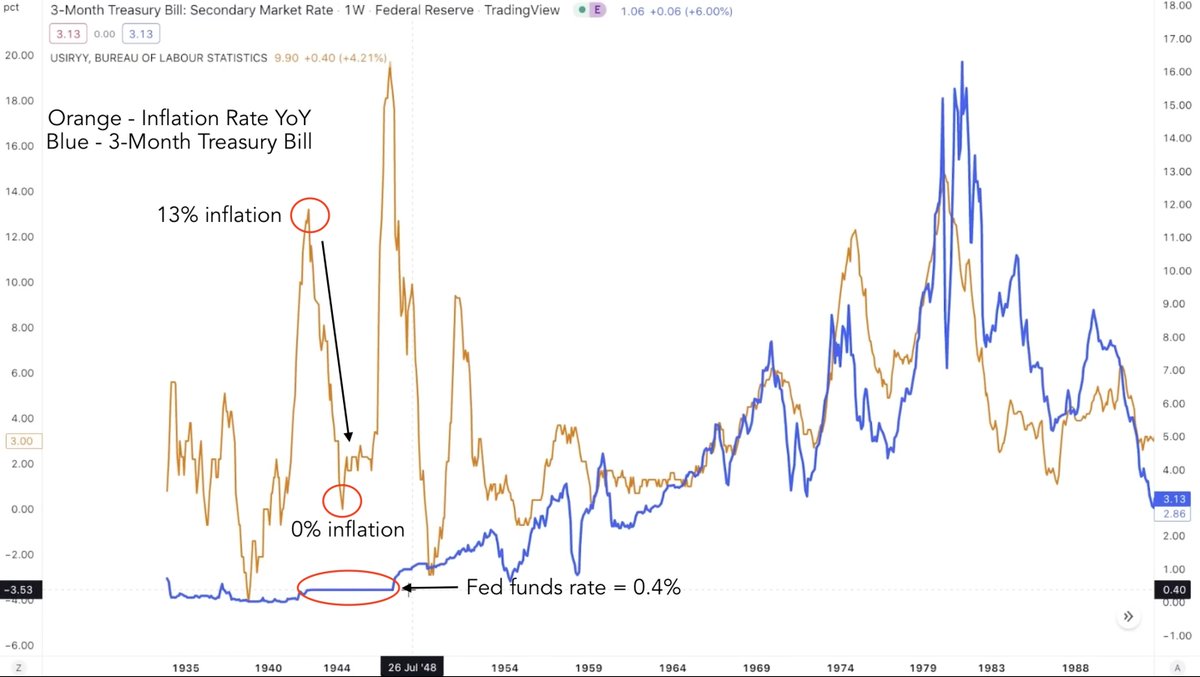
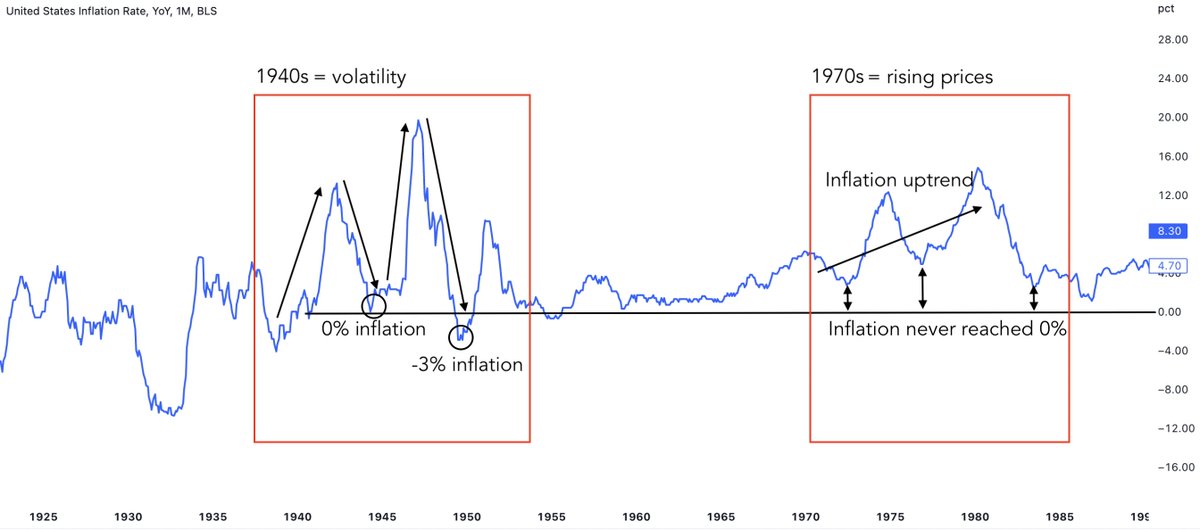
8/ In the 1940s, the Fed did not need to raise rates above inflation.
Fed Funds Rate back then was at 0.4% for almost a decade.
But inflation went up and down violently during the same period with numbers as high as 19% and as low as -3%.
Fed Funds Rate back then was at 0.4% for almost a decade.
But inflation went up and down violently during the same period with numbers as high as 19% and as low as -3%.
9/ In the 1942 - 44 episode, inflation declined from 13% to 0% in 2 years while the Fed Funds Rate stayed at 0.4%.
10/ So why did the Fed have to raise interest rates above CPI in the 1970s?
→ Inflation Expectations
→ Inflation Expectations
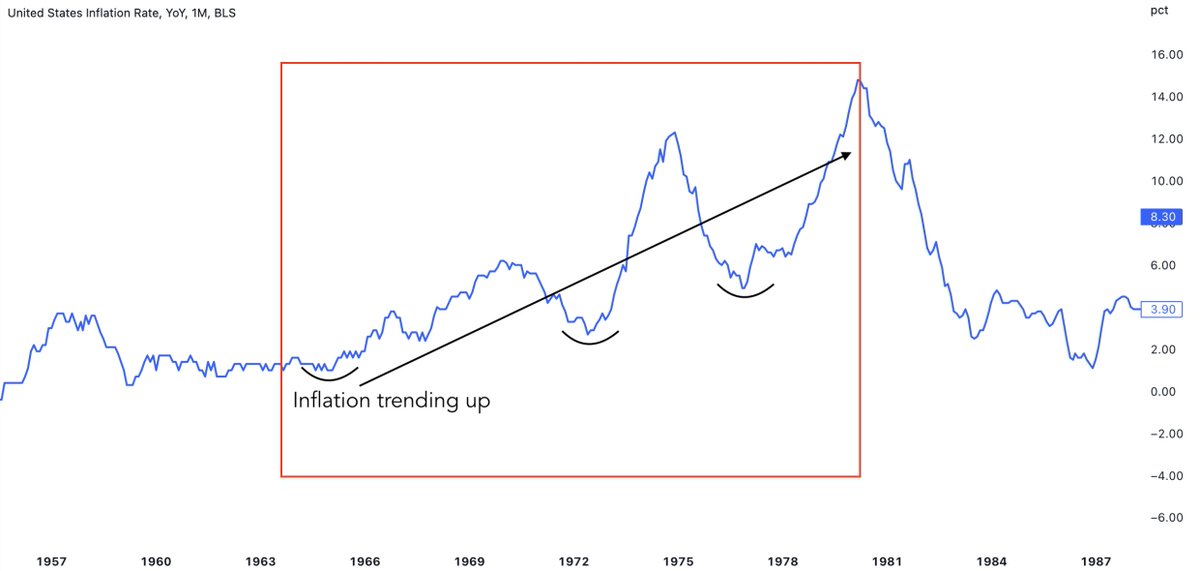
11/ From 1964, inflation went up only.
Prices were never stable.
And consumers got used to rising prices for a prolonged period.
But that wasn’t the case in the 1940s.
Prices were never stable.
And consumers got used to rising prices for a prolonged period.
But that wasn’t the case in the 1940s.
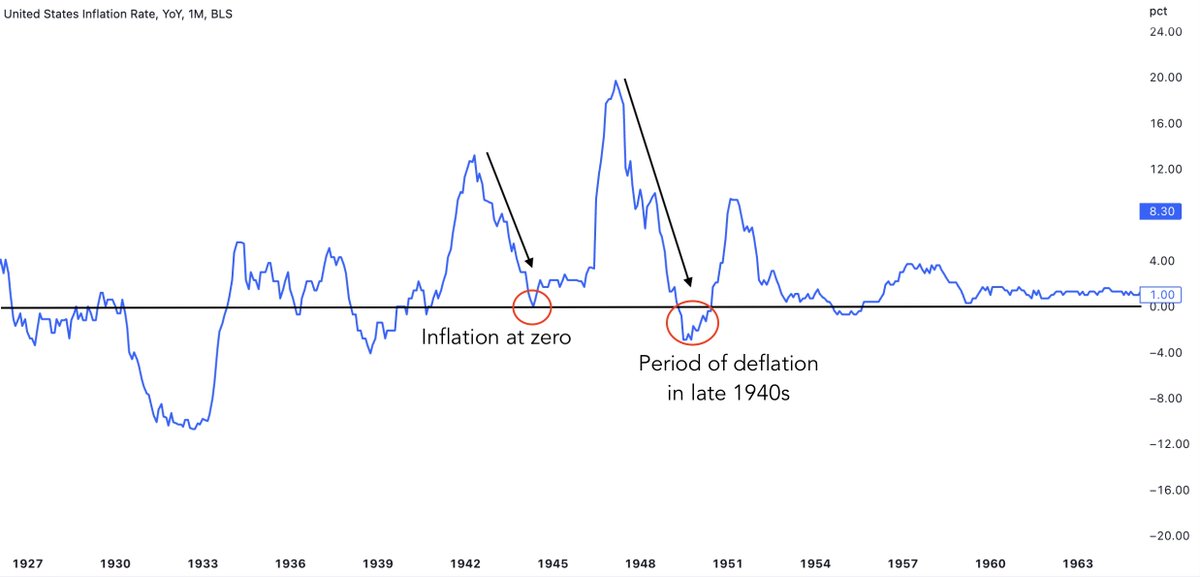
12/ In the 1940s, inflation did reach staggering numbers but it came down to zero.
In fact, in 1949 it even went below zero into a period of deflation.
In fact, in 1949 it even went below zero into a period of deflation.
13/
1940s = volatility in prices
1970s = rising prices
This makes a big difference in consumer psychology.
1940s = volatility in prices
1970s = rising prices
This makes a big difference in consumer psychology.
14/ High inflation expectations lead to increased consumer spending because consumers expect higher prices in the future.
That doesn’t necessarily hold true when inflation expectations are low.
So what are inflation expectations today?
That doesn’t necessarily hold true when inflation expectations are low.
So what are inflation expectations today?
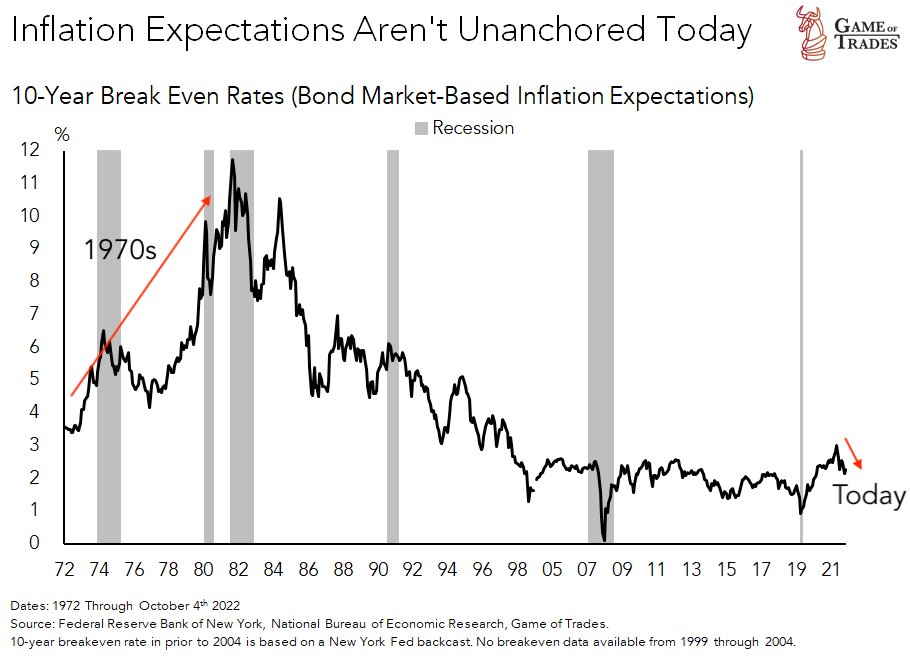
15/ Today, 1 and 10-year breakeven inflation rates are around 2%.
5-year consumer-based expectation just above 2%.
In 1979, 5-year inflation expectations stood at 7%.
So, it makes sense that the Fed had to raise rates above 7% back then.
5-year consumer-based expectation just above 2%.
In 1979, 5-year inflation expectations stood at 7%.
So, it makes sense that the Fed had to raise rates above 7% back then.
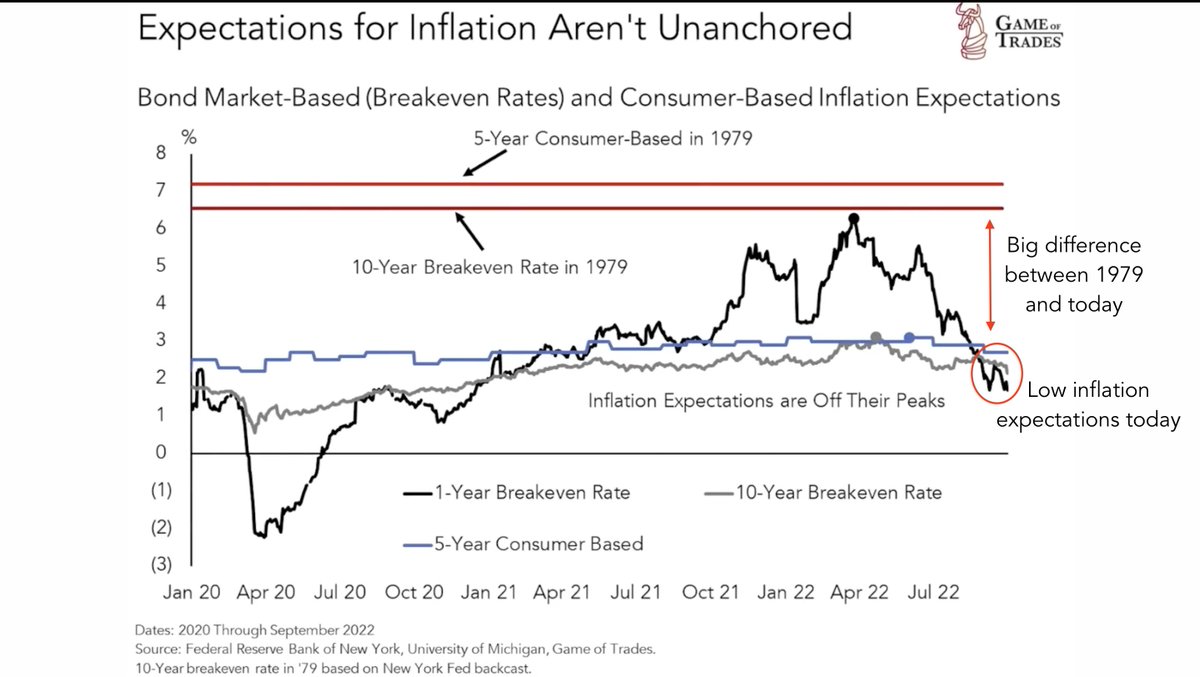
16/ Given today’s inflation expectations are already very low and continue to trend lower, we don’t think the Fed has to get as aggressive as it did back in the 1970s.
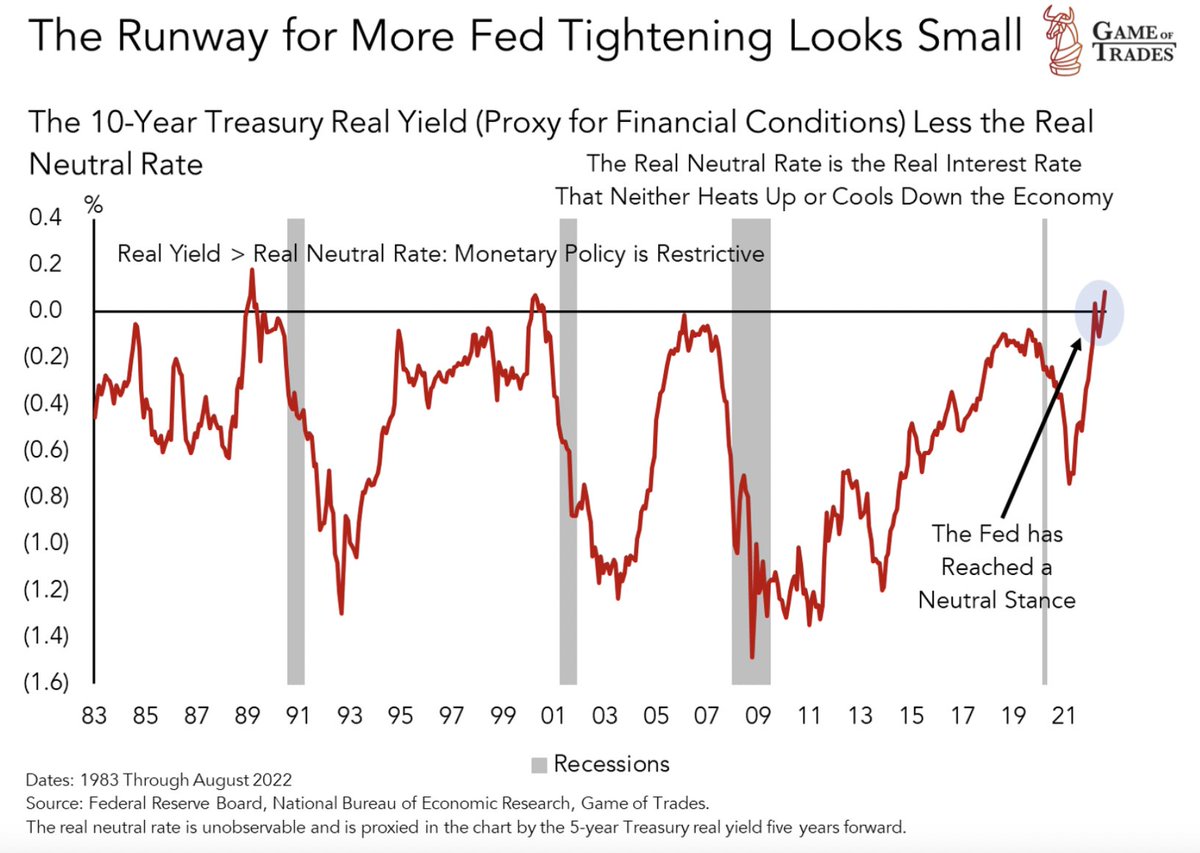
17/ The vast majority of tightening is now behind.
The chart below shows that today’s monetary policy is already very tight with little runway hereon.
We believe a Fed pause lies in the not so distant future.
The chart below shows that today’s monetary policy is already very tight with little runway hereon.
We believe a Fed pause lies in the not so distant future.
18/ Thanks for reading!
If you liked this, please like and retweet the first tweet below.
And follow @gameoftrades_ for more market insights, finance and investment strategy content.
If you liked this, please like and retweet the first tweet below.
And follow @gameoftrades_ for more market insights, finance and investment strategy content.
جاري تحميل الاقتراحات...