
Politics
International Relations
Patriotism
Conflict Studies
Occupation of rural Luhansk
Ukraine's policies
Separatist sympathies
Russian narrative control
Maidan protest
Crimea annexation
I wanted to elaborate on theme in my recent piece for @opendemocracyru on occupation of rural #Luhansk east #Ukraine: the policies Kyiv got right that bolstered patriotic residents/civic society and tamped down separatist sympathies seen in 2014. THREAD opendemocracy.net
To review: in 2014 #Russia controlled narrative in Luhansk Oblast. Ukraine was traumatized, disorganized, disoriented after whirlwind of Maidan + Crimea annexation. Russia confidently launched program of sedition+separatism and engaged many locals angry about Maidan victory. 2/
On one hand pro-UA civil society found voice in unprecedented way (and significant numbers joined volunteer brigades + UA army), but on the other it was countering a well organized, well funded and armed movement that grabbed the political initiative. UA was on the back foot. 3/
When dust settled in #Donbas conflict most urban areas (40% of region) were controlled by Moscow, 60% of territory by Kyiv. I arrived in #Severodonetsk in March 2015, immediately encountered full ideological spectrum. But most intense impression was political alienation...4/
At time I wrote several very pessimistic pieces about risk that gap between Kyiv and the "under control" Donbas could widen before UA even had time to craft reintegration approach to occupied areas. Friction around social policies towards huge IDP population, memory policies. 5/
Pro-UA locals told me glumly city had nickname "Separadonetsk." I easily found people sympathetic to separatist project + disappointed Ukraine vanquished it in their city. I had recently moved to UA from eastern RU and felt many were living in same info-environment. 6/
But here's the thing... situation did not continue radicalizing in govt controlled cities. Time smoothed things more than I realized it would and Kyiv got a lot right. Underrated factor of UA public policy is that it doesn't take ideas all the way to their maximum expression. 7/
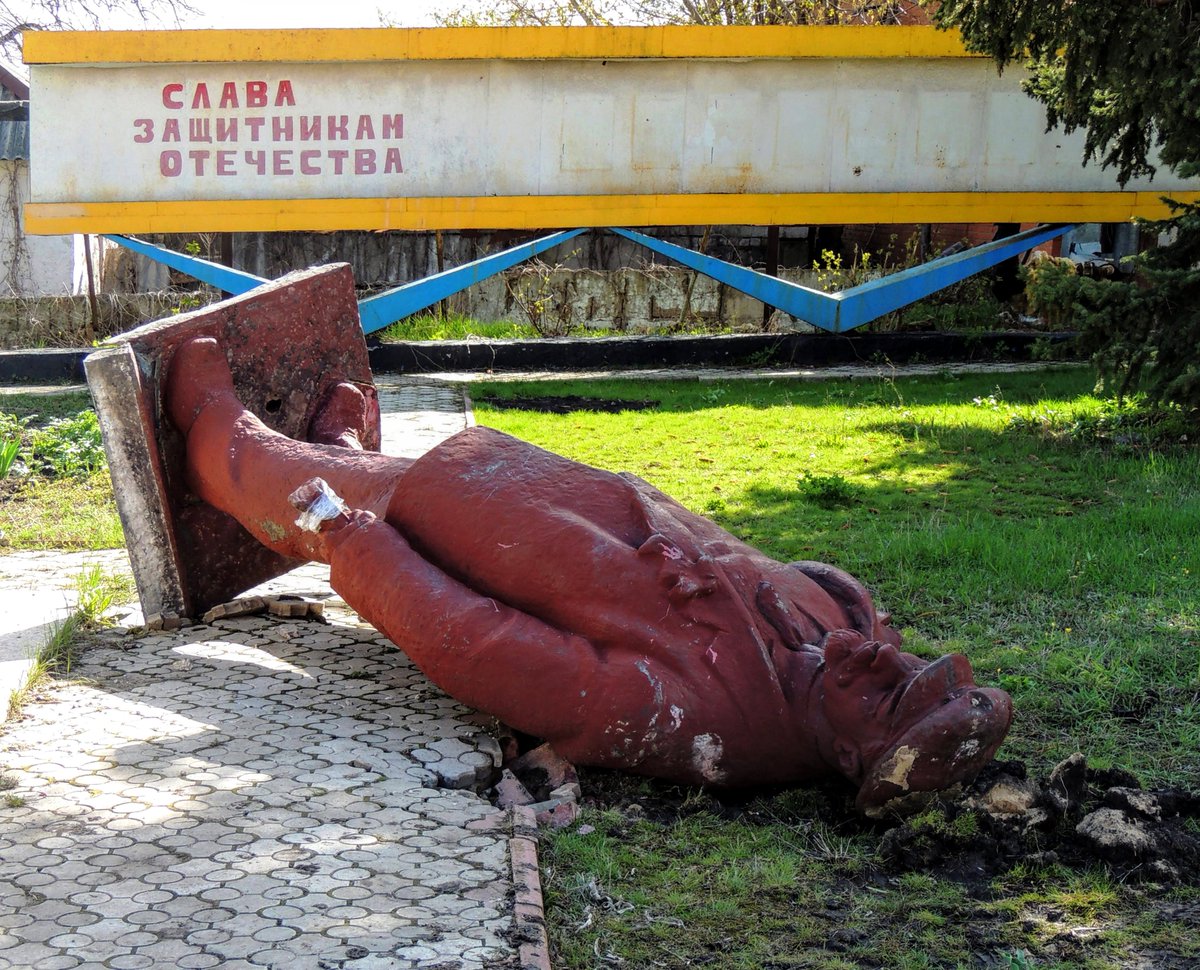
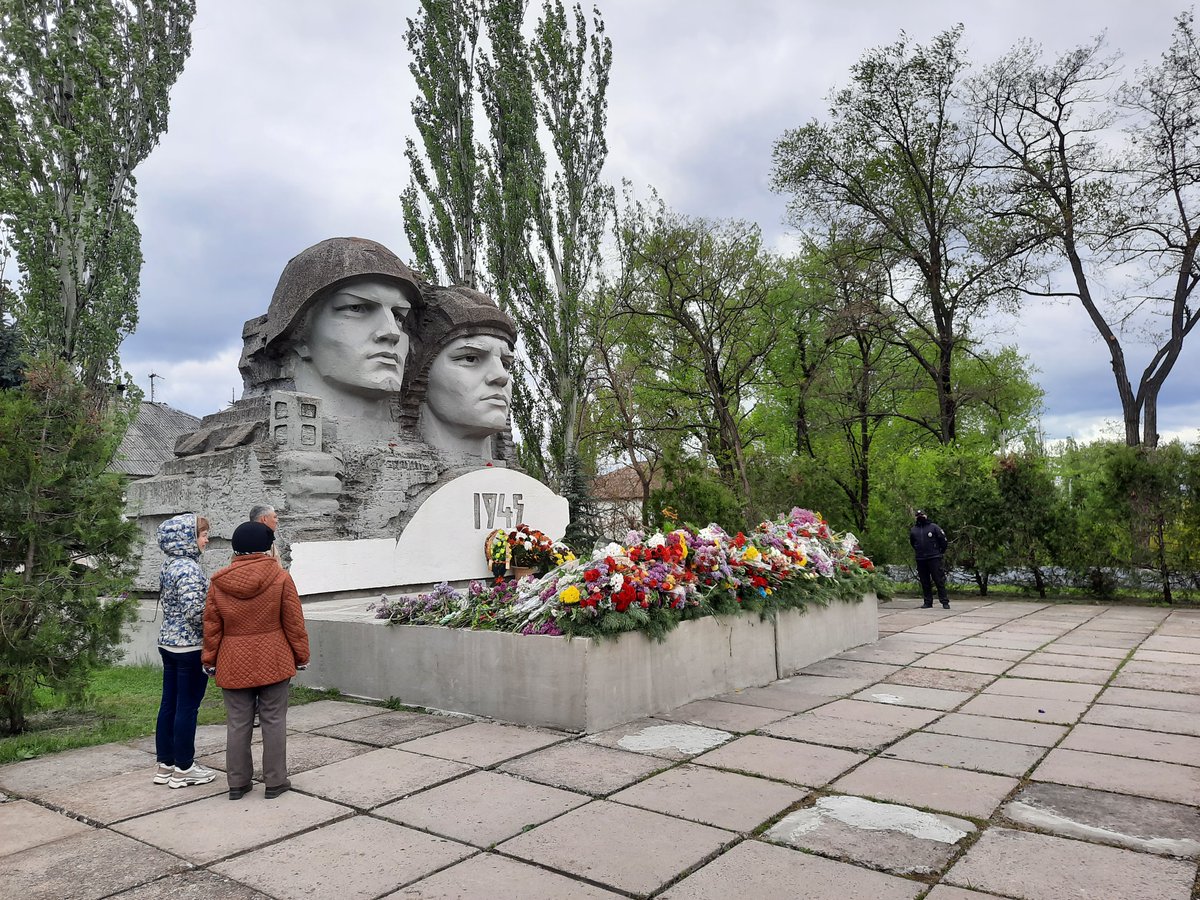
Let's take de-Communization. I caught the end of "Leninfall" (Stanytsia Luhanska below) +wave of distress and anger that triggered among Soviet-nostalgic residents. But Kyiv kept its promise to exempt monuments related to WWII. They remain a major part of Donbas shared spaces. 8/
RU-sympathetic locals didn't like cancellation of May 9 parades. But holiday was NOT banned as some propagandists claim, just some symbols like St. George ribbon (which RU made separatist symbol). Holiday was ambiguous but not a flashpoint. Both sides celebrated in own ways. 9/
Or let's take language question. There's a debate about law passed in 2020 to increase use of Ukrainian in schools, stores and other public places. I remain very conflicted about utility of trying to get adults (let alone pensioners!) to change their language habits, BUT...10/
It was enforced really gently in places like Severodonetsk. Cashiers and public servants addressed you in Ukrainian w/out grumpiness, many locals were bemused. Some answered in Russian, you could ask to switch, others happily responded in Ukrainian. Basically no friction. 11/
An essentially Russophone city picked up some more linguistic trimmings of Ukrainian, people got a bit more practice. The amount of passion I've seen some people on here expressing about second class status of Russian in UA Donbas doesn't jive with ambiguous reality. 12/
I remember hearing middle aged ladies on my block talk about an agitation speech by local RU-friendly (ОПЗЖ) Rada candidate: " He says 'Russian language, Russian language!' And we say 'Pensions! Utilities!' And he says 'Russian language!' What does he think we're SPEAKING?!"13/
UA policy pulled some punches that could have triggered further alienation and radicalization. Then, at the same time, decentralization and investment from the center are sprucing up cities and towns across the region. In concert this was smart public policy. 14/
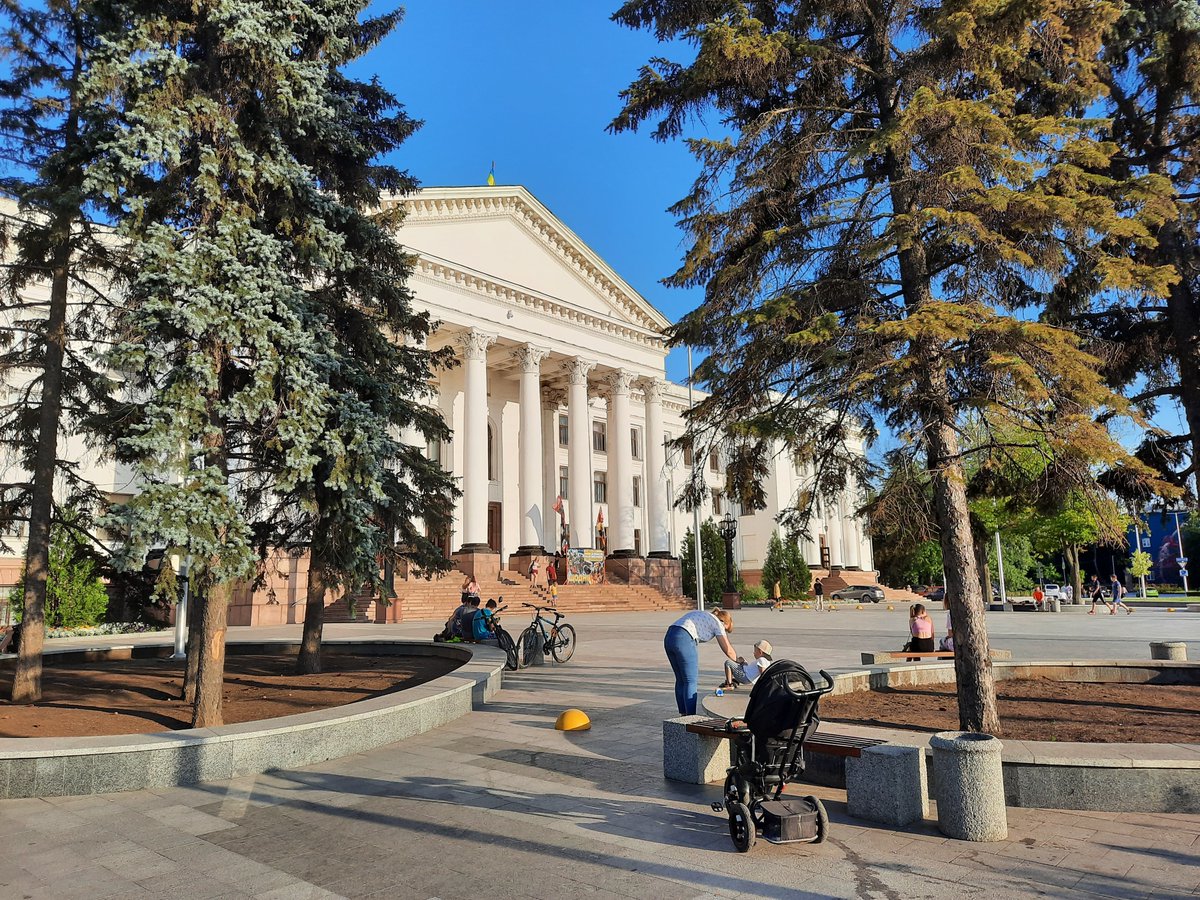
New facades and windows on apartment buildings. Better sidewalks, street lights in formerly dark corners. Nice new flowerbeds, renovated parks. New public service centers with genuinely fast and easy procedures. 15/
Mariupol spiffed up beyond recognition. Kramatorsk, Sloviansk, Bakhmut,Severodonetsk, even rural county seats like Starobilsk, Lyman got noticably nicer. Decentralization made these places more pleasant + optimistic-feeling. The shabbiness I saw in 2015 significantly receded. 16/
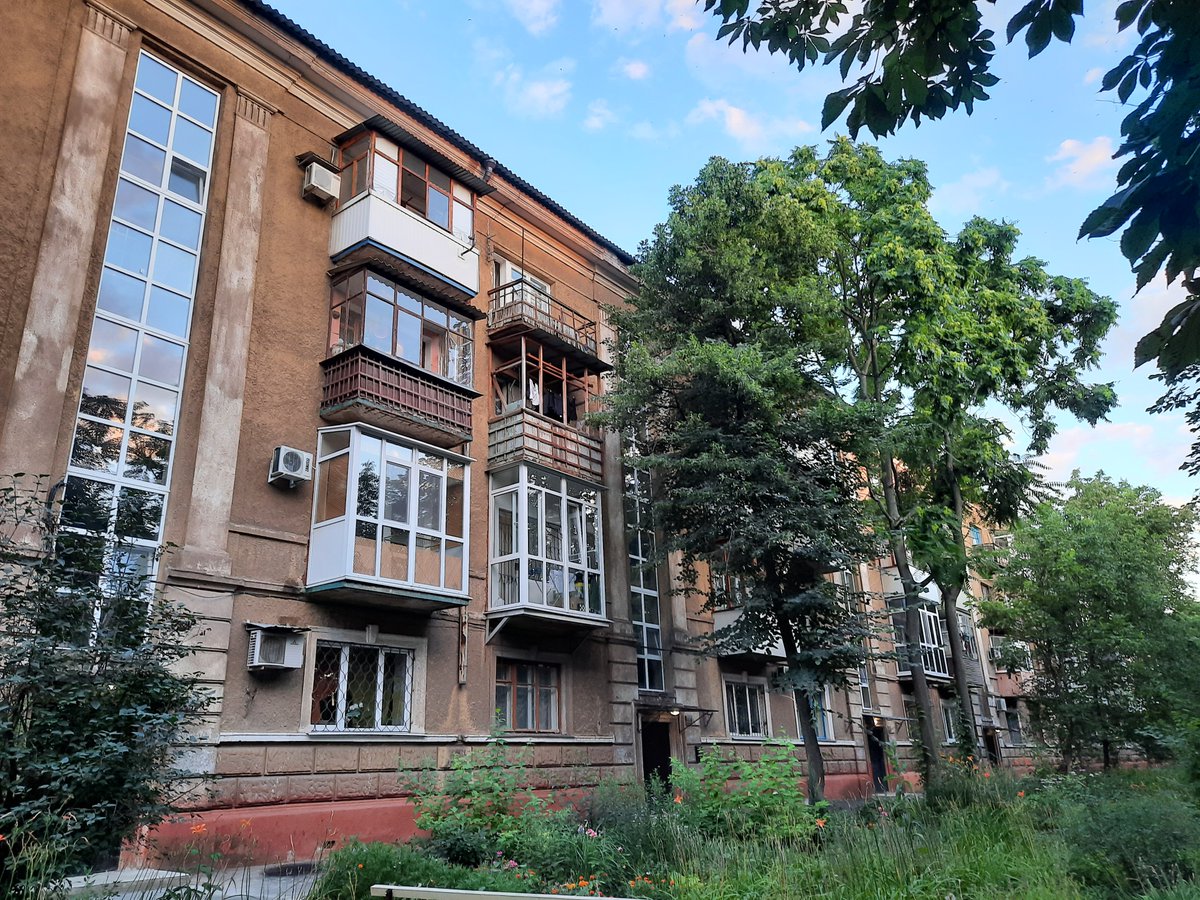
At same time demand for good food, services grows. Restaurant scene underwent revolution in my 6 years in Donbas. My wife and I can't believe how hard it is to get services of same quality in our EU displacement that we had in provincial Severodonetsk. This was new! 17/
In summary, decentralization, investment in Donbas cities, good response from private sector (and plenty of international assistance to grease skids) + certain pragmatism in cultural policy encouraged pro-UA feeling without dramatically inflaming pro-RU camp. 18/
This doesn't mean there weren't lots of alienated, RU-sympathetic, Soviet-nostalgic people! They didn't LIKE a lot of cultural policy. Lack of progress in Minsk process and continued low-level violence on frontlines also engendered bitterness. But they weren't mobilized. 19/
Balance shifted towards the optimistic and Ukraine-oriented and during Russia's invasion and orgy of destruction in Donbas they set the civic tone. In parlance of Russian political technology they were the "passionate element" (пассионарная часть) that determines direction. 20/
This wasn't revolutionary change, but it slowly unfolded before my eyes and we saw the fruits of it in 2022. Despite the horror and destruction, Ukraine can feel some optimism about Donbas civil society as part of the greater national community. Good policy played a role. END
Loading suggestions...