

🔵⚪️ TACTICAL FOCUS 🧘
Erling #Haaland moves and positioning against West Ham, and how it affects Man City’s build-up🧵
Erling #Haaland moves and positioning against West Ham, and how it affects Man City’s build-up🧵

I. HAALAND and drop offs
We could have seen a consequent participation in second build-up phase from Haaland. Drawing out midfielders to create space, and help City to annihilate West Ham’s first line of pressure
We could have seen a consequent participation in second build-up phase from Haaland. Drawing out midfielders to create space, and help City to annihilate West Ham’s first line of pressure
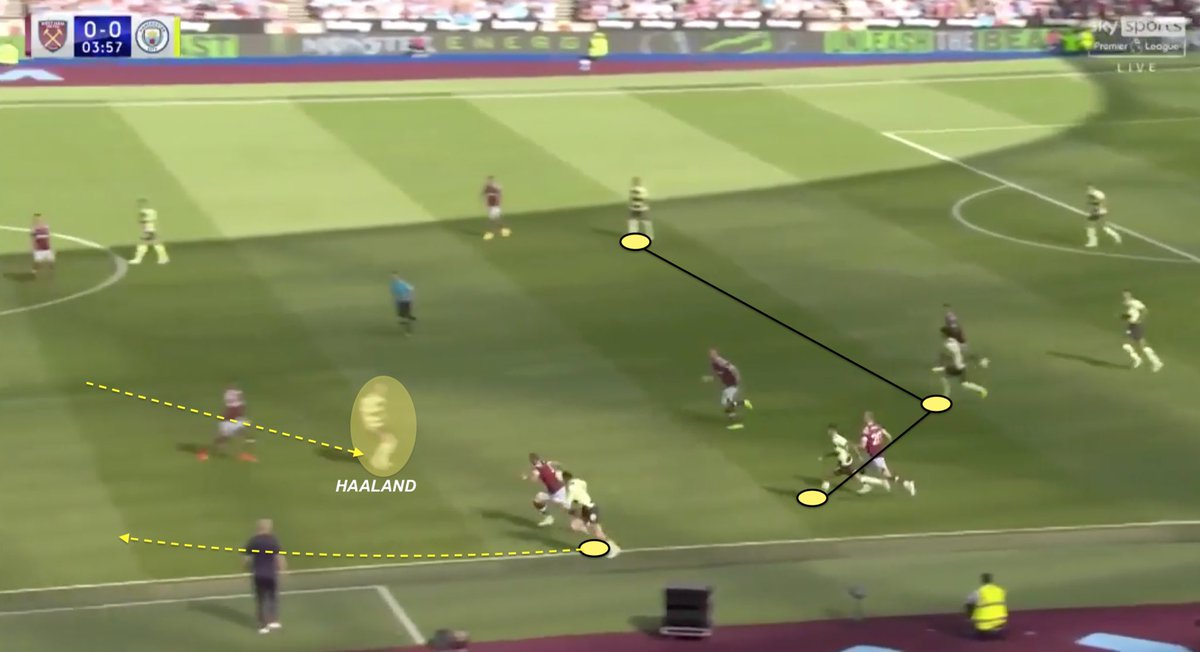
Haaland also tested if Zouma or Johnson implemented zonal marking or individual : Zouma tended to jump pour, while Johnson covered potential runs in behind.
That’s why Haaland made his runs in Johnson’s area (we will talk about it later on).
That’s why Haaland made his runs in Johnson’s area (we will talk about it later on).
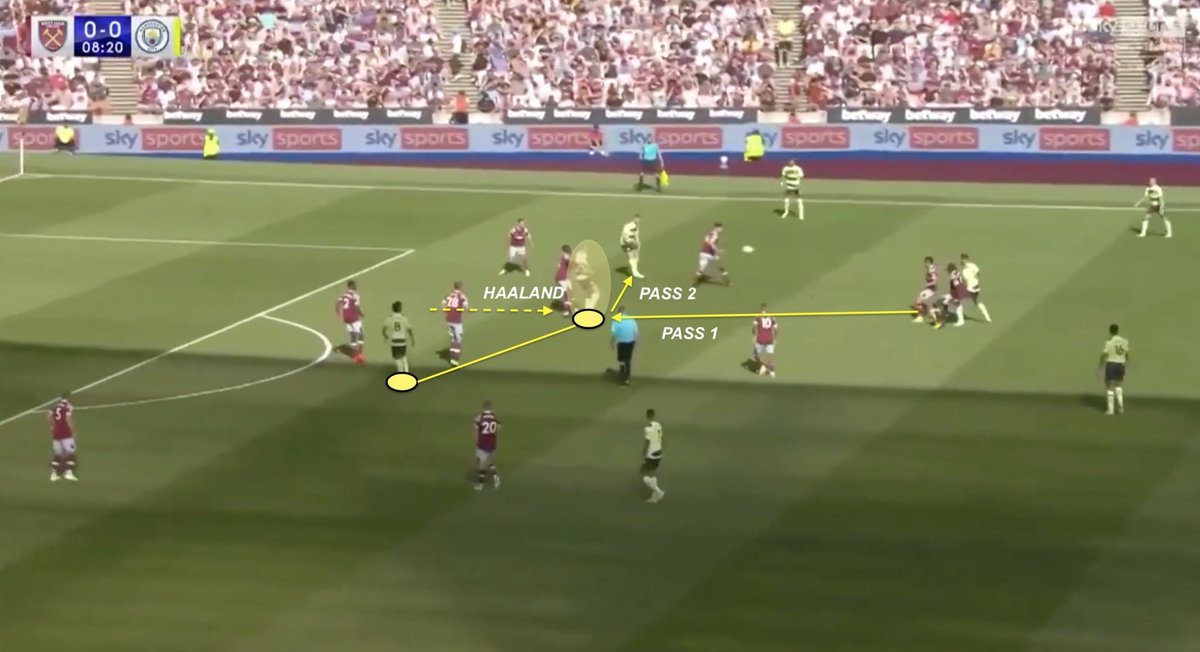
These drop-offs were at the core of City’s build-up, because of West Jam interesting off-ball structure (duplicating City’s initial 3-2 structure). Haaland could receive first pass and orientate wide (Grealish).
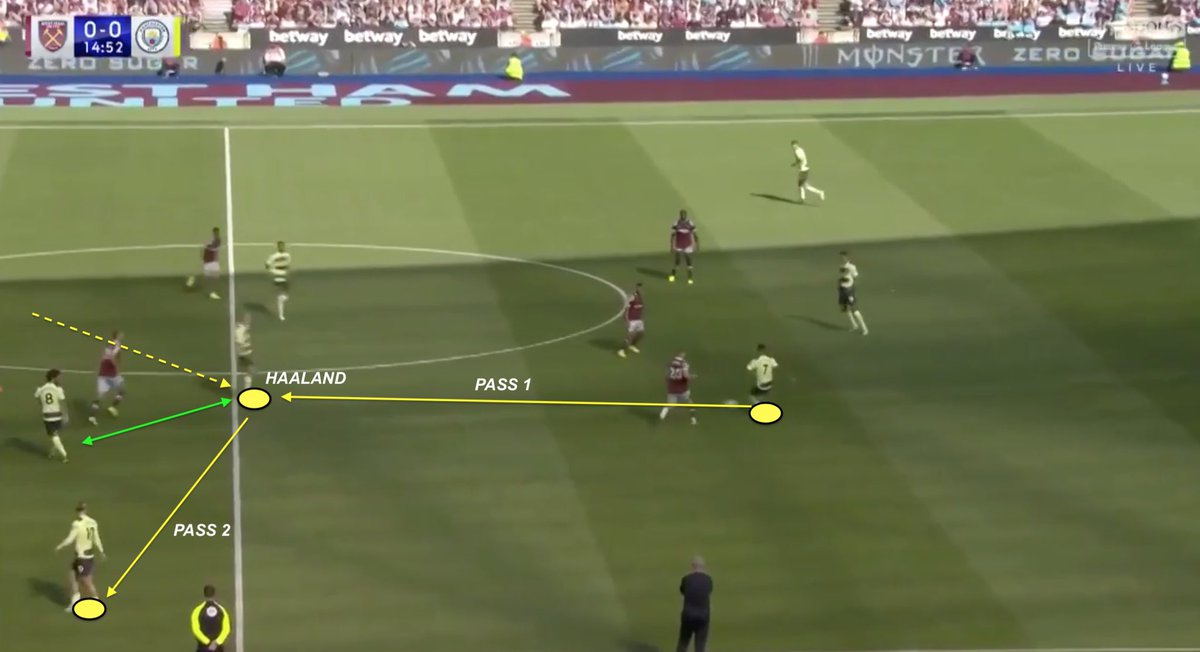
Haaland’s high mobility across final third has been efficient in order to creat those triangle passing patterns. Grealish or Foden had a significant impact to overload lanes.
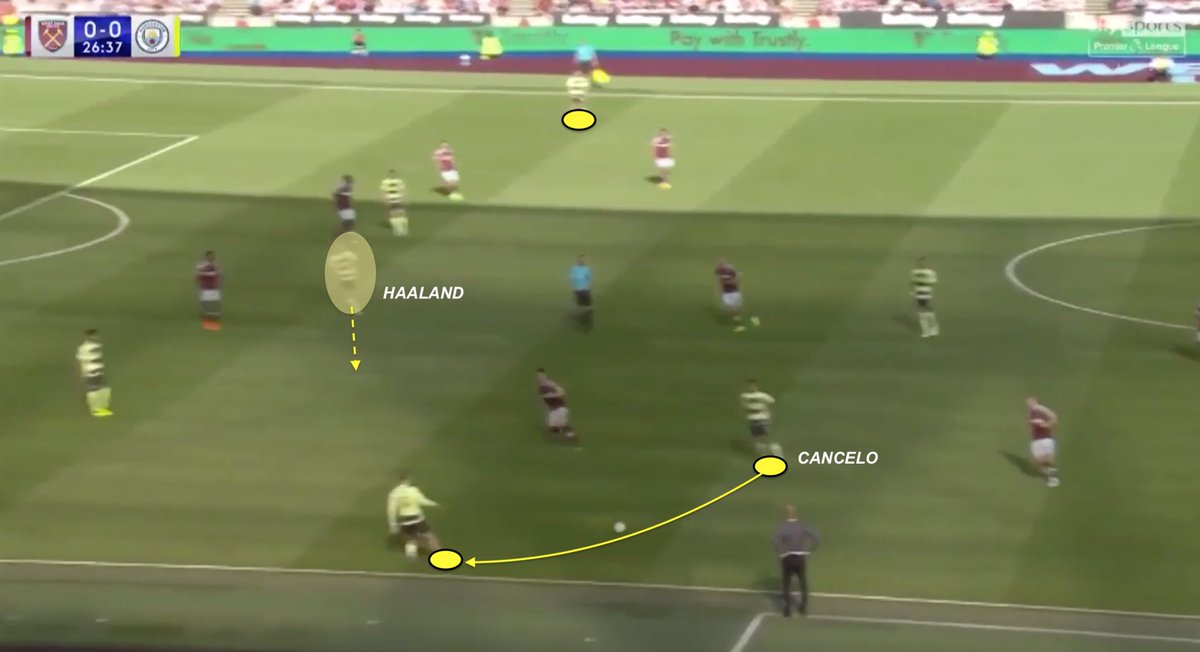
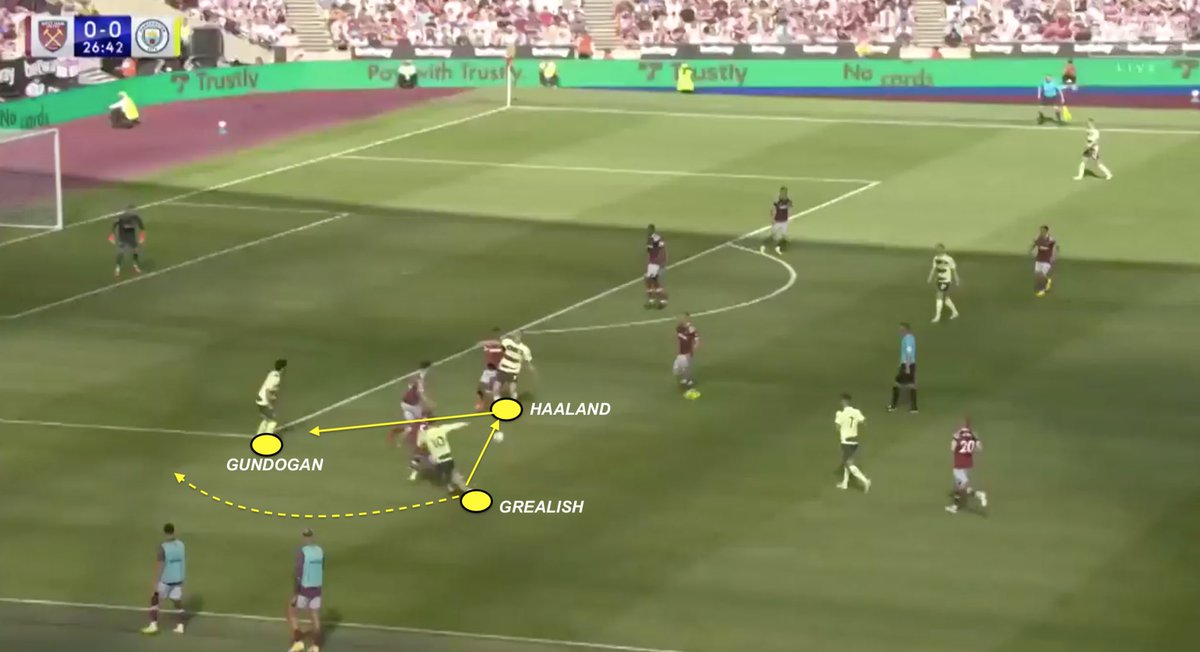
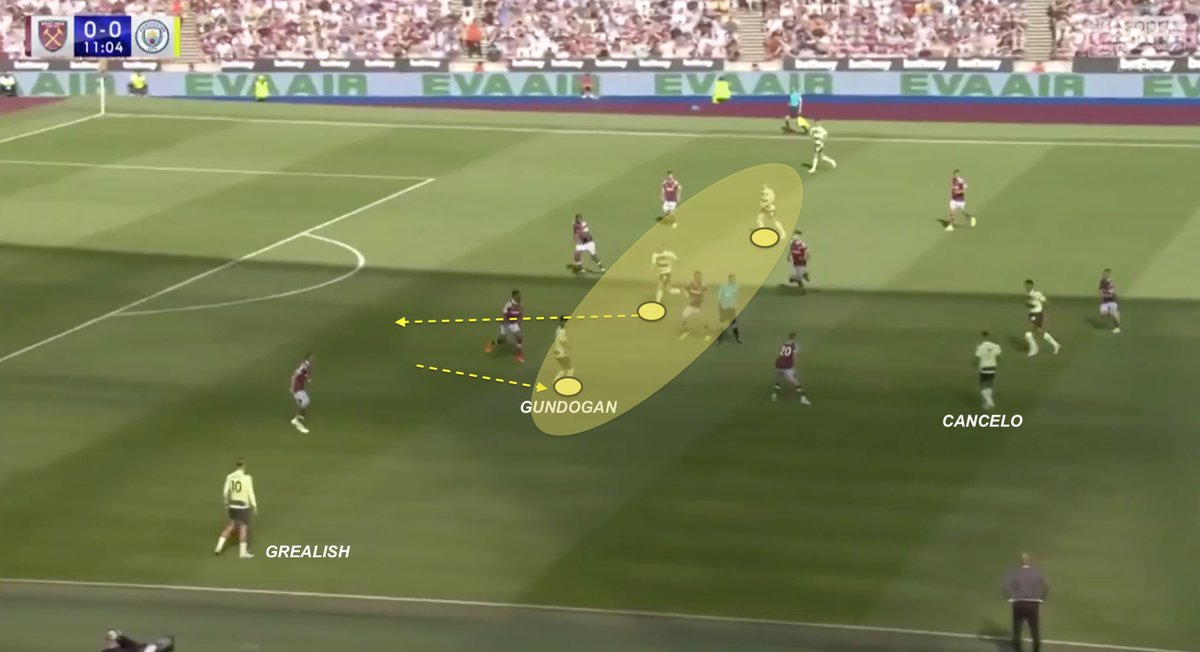
Left or right lane, Gundogan was the free electron around Haaland, to end passing circuit. Those Haaland moves allowed City to dominate lanes when West Ham implemented low block.
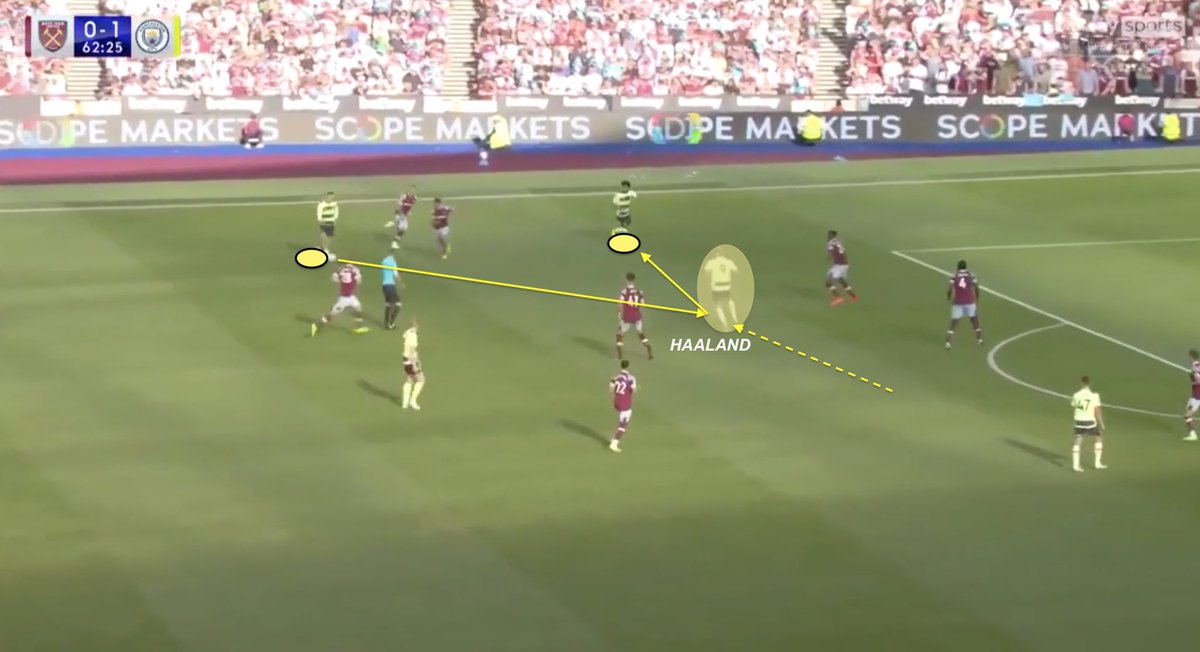
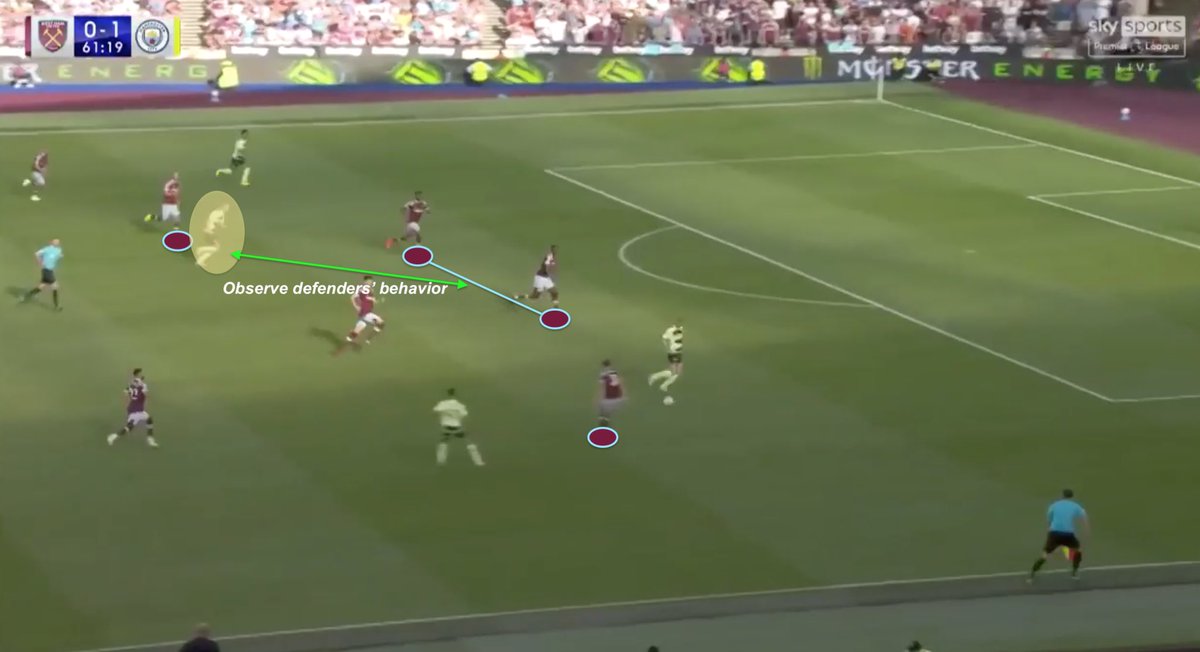
Instead of staying upfront waiting for the cross, Haaland decided to propose alternatives, such as these moves to the edge of penalty box.
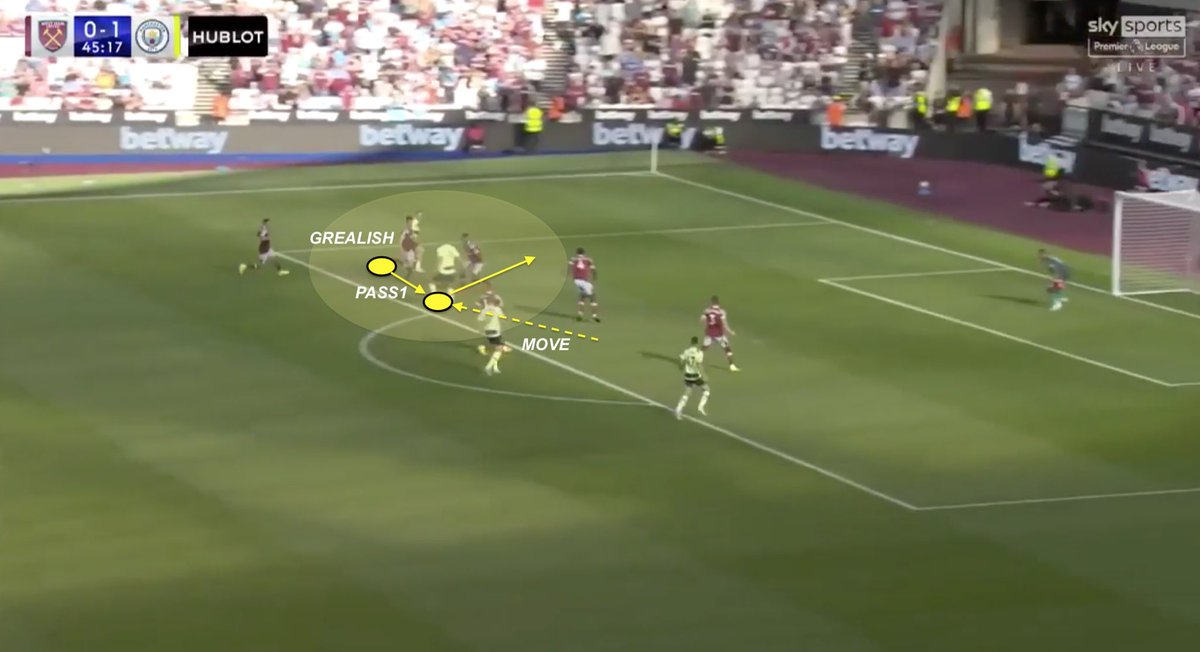
II. HAALAND’S POSITIONING BEFORE THE RUN
Just before starting his runs, Haaland regularly scans negotiable spaces and willingly take his eyes away from the ball.
Just before starting his runs, Haaland regularly scans negotiable spaces and willingly take his eyes away from the ball.
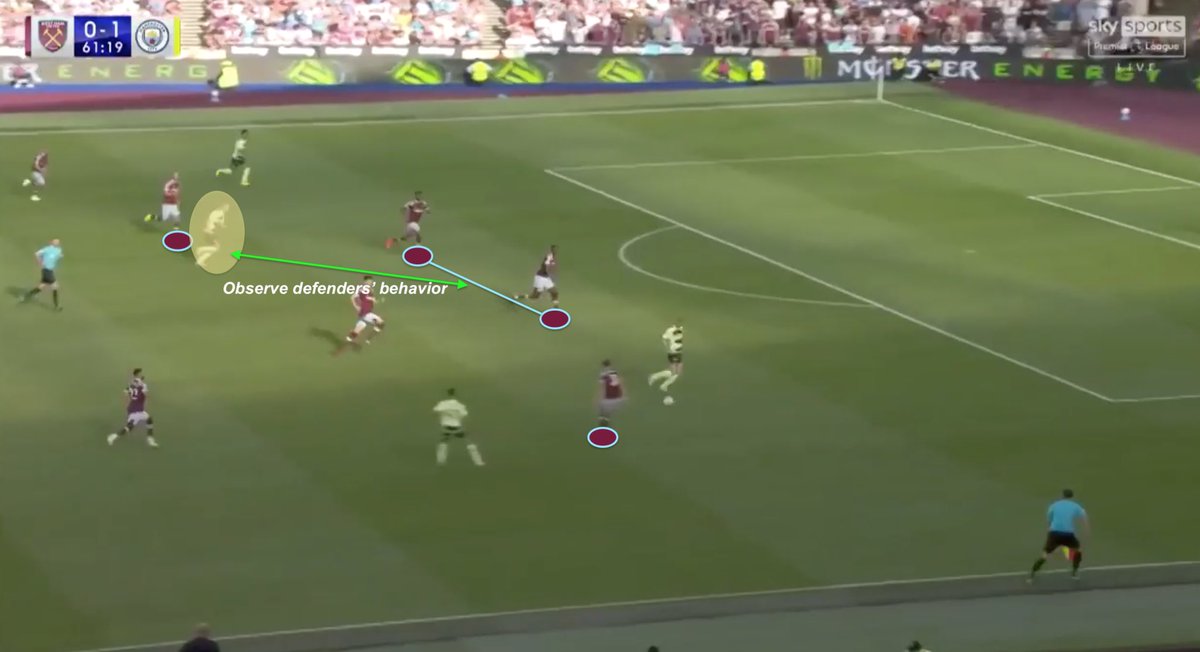
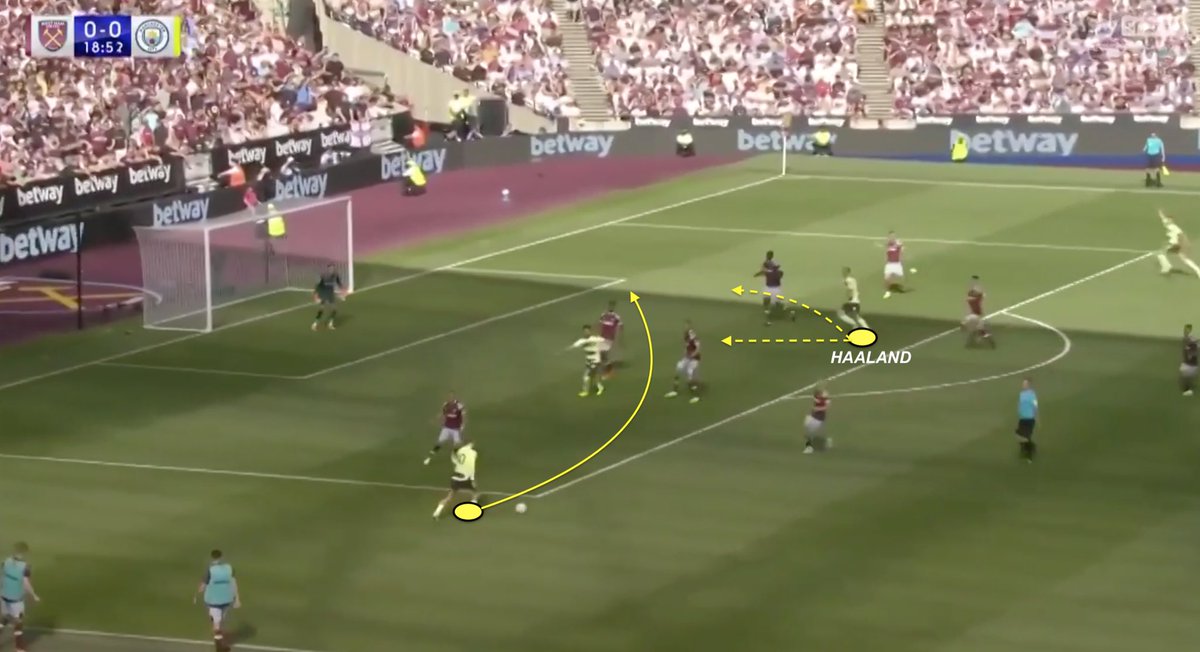
His teammates moves have also facilitated Haaland’s runs in behind. Gundogan dropping off (draw ouf Johnson) or Cancelo curved runs into central spaces, both had consequences on the way Haaland penetrated central defense.
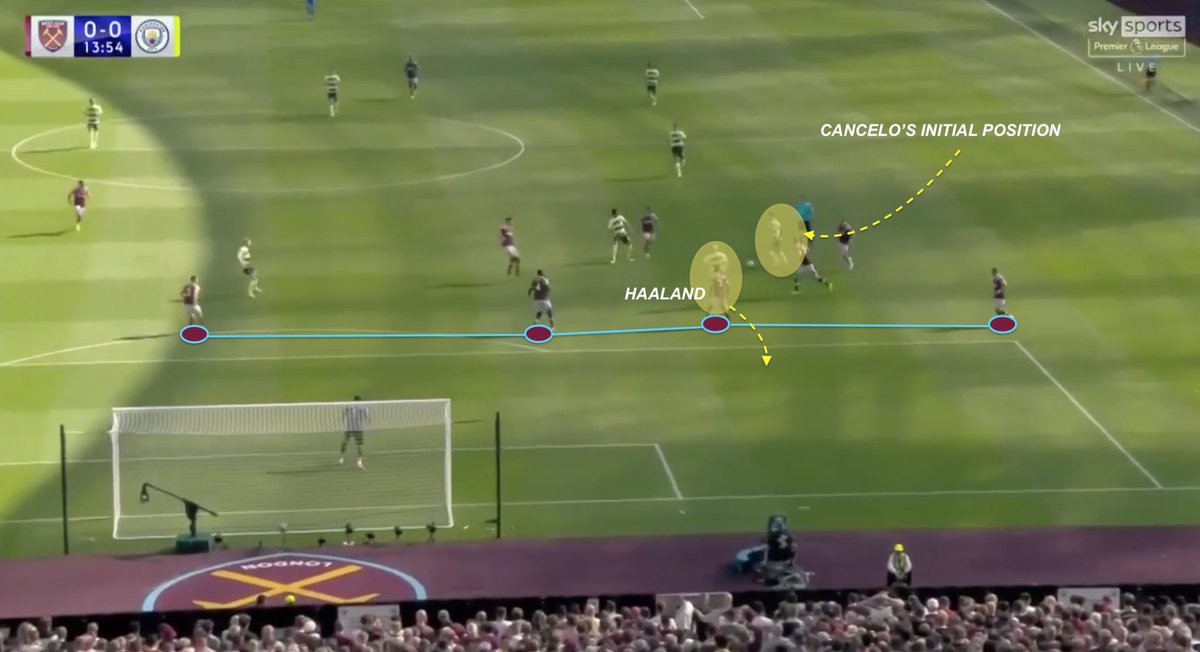
Elite Haaland’s positioning in penalty box, always keeping distance and position between both central defenders before the cross. Besides, West Ham had some troubles to balance zonal marking in penalty box.
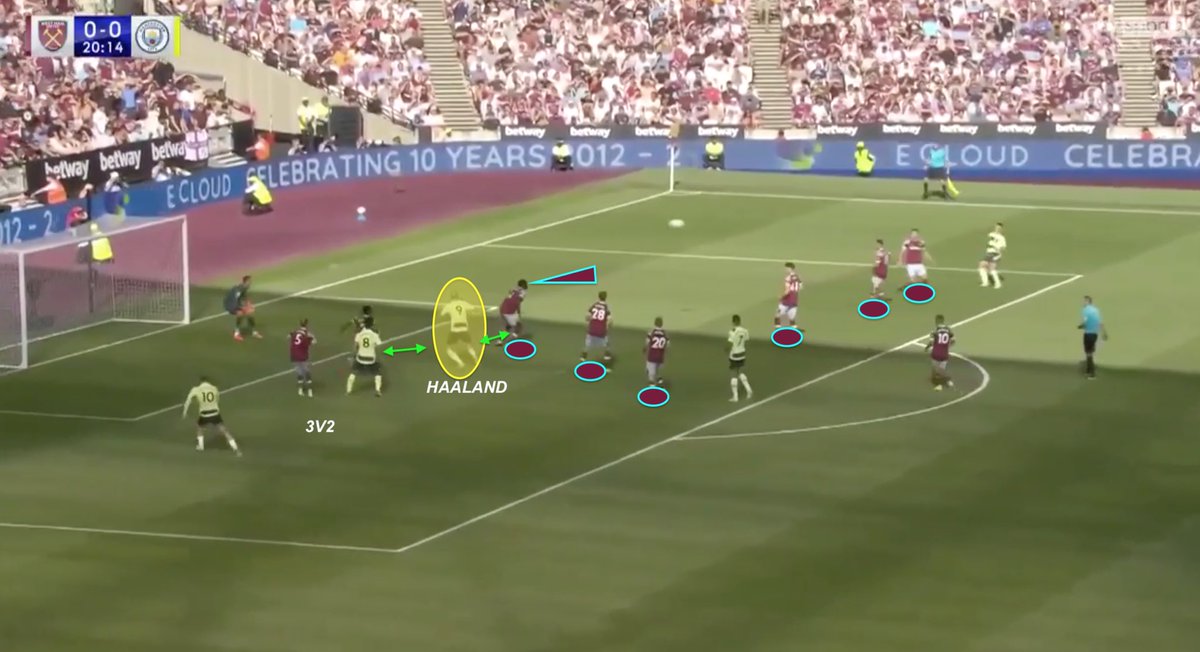
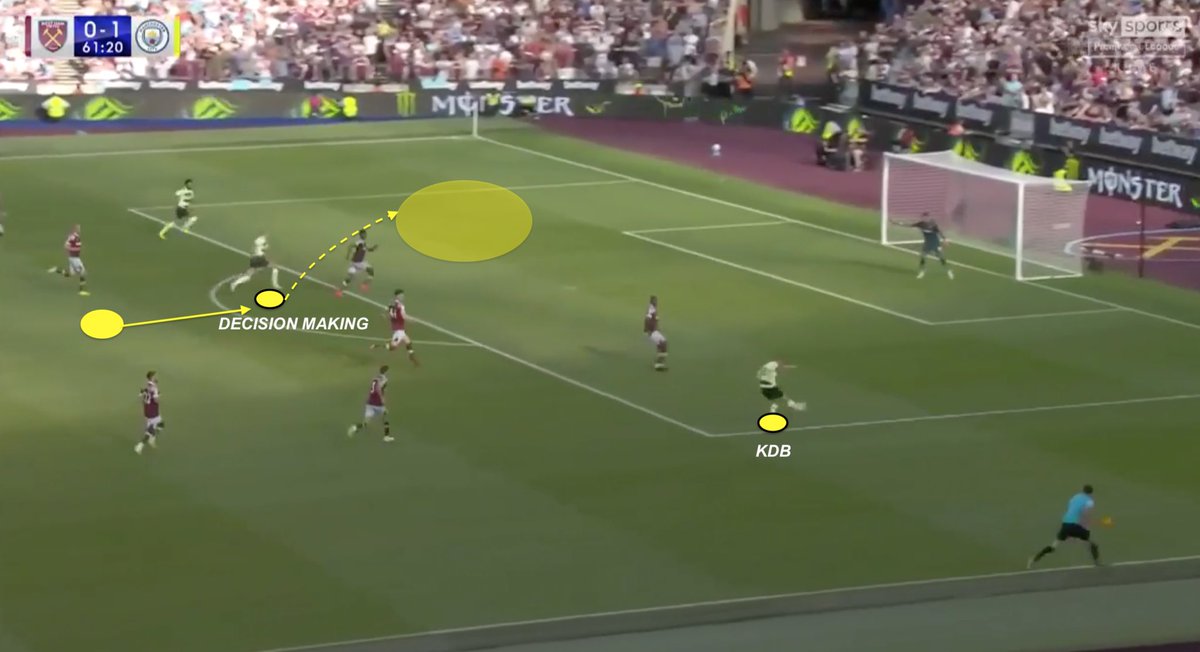
What makes Haaland’s marking unpredictable, is his decision making. That moment at the edge of penalty box. After a slight vertical run he suddenly change direction and defender can’t follow him, given his pace.
III. HAALAND’S RUNS IN BEHIND
If this image was screenshot last season, Gundigan would have likely passed the ball to Grealish, to insist on width. Haaland offers more verticality and efficiency in passing circuits.
If this image was screenshot last season, Gundigan would have likely passed the ball to Grealish, to insist on width. Haaland offers more verticality and efficiency in passing circuits.
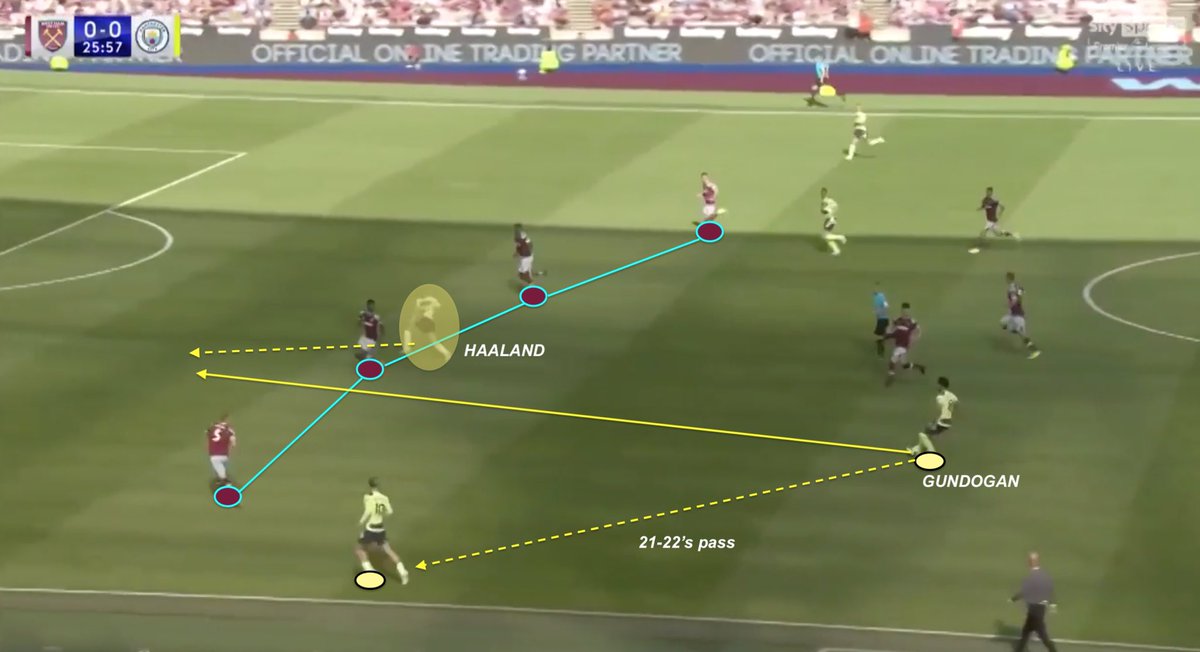
Even if Haaland didn’t receive the ball, he pursued his run and kept distance with Johnson, to maintain pressure on central defense.
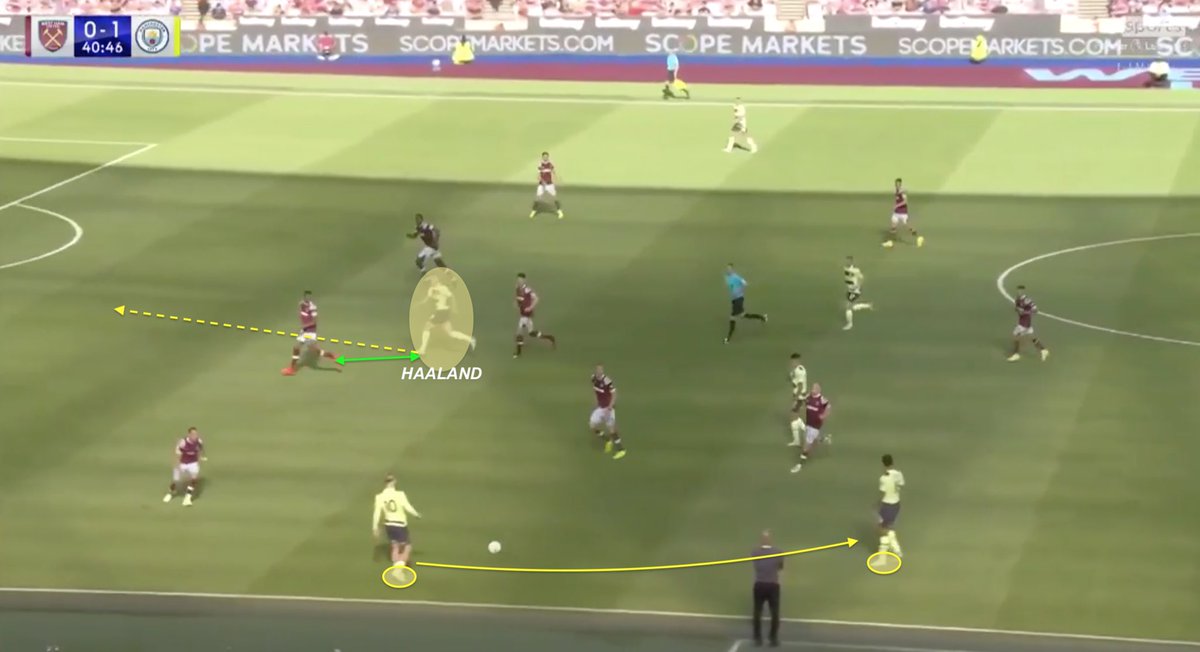
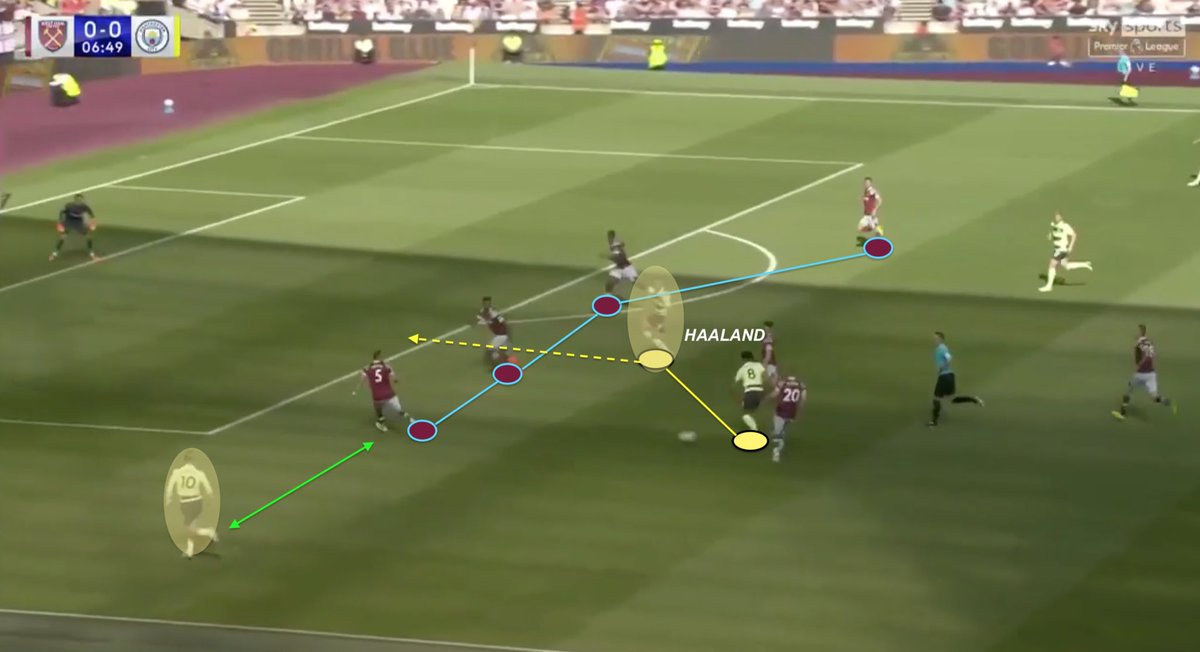
As I said earlier, Haaland tested both central defenders to know which one applied individual marking. That’s why majority of his runs in behind were concentrated in Johnson’s area. And most of them have been successful.
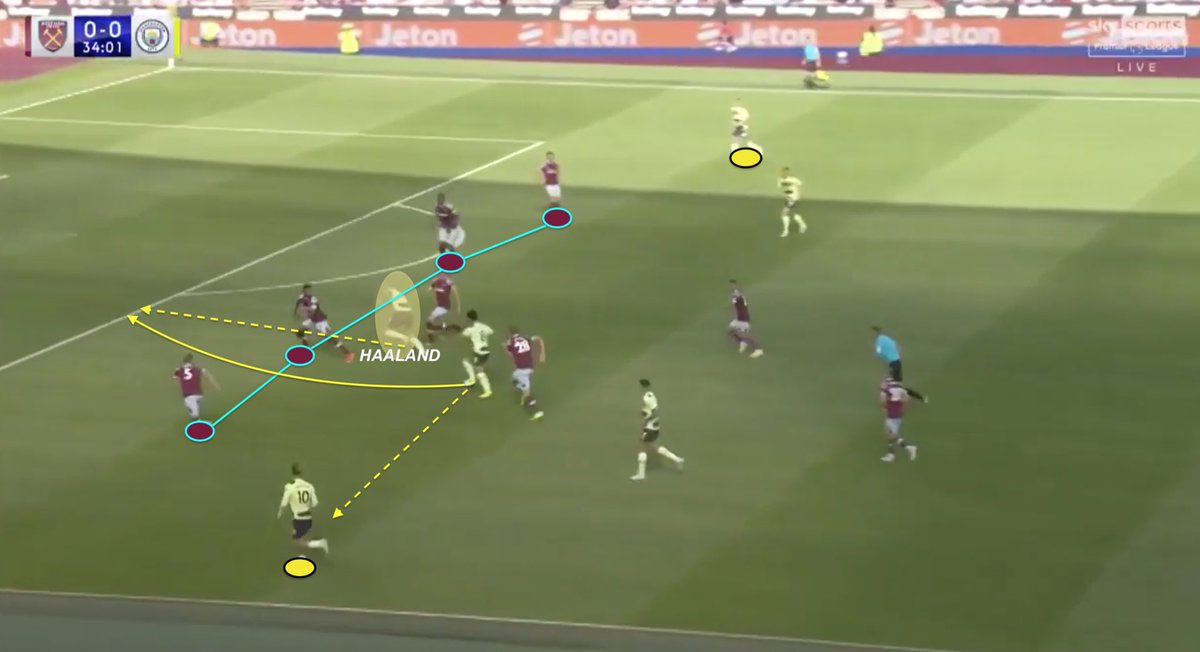
On the second goal, Haaland highlighted to Premier League his timing and the execution of his runs, associated with KDB passing skills.

IV. GUNDOGAN-HAALAND, HYPNOTIZE DEFENSE
Last point to analyse Haaland’s moves : This flourishing off-ball relation with Gundogan adds another difficulty to opponent’s central defense, because positions are permanently changing
Last point to analyse Haaland’s moves : This flourishing off-ball relation with Gundogan adds another difficulty to opponent’s central defense, because positions are permanently changing
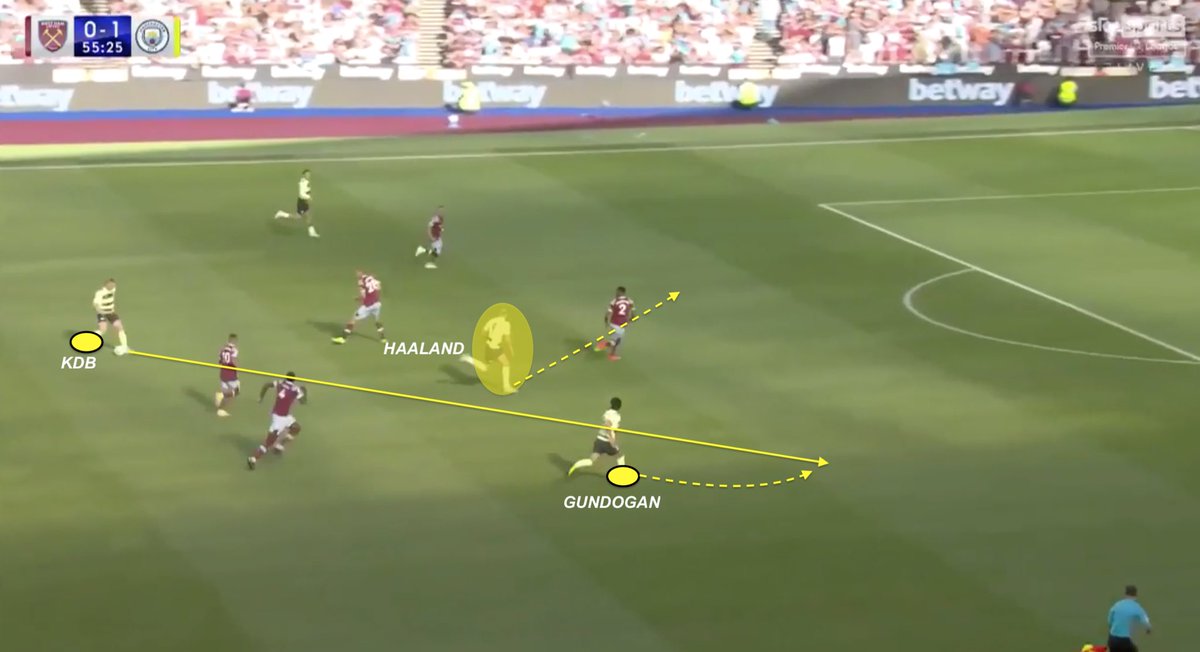
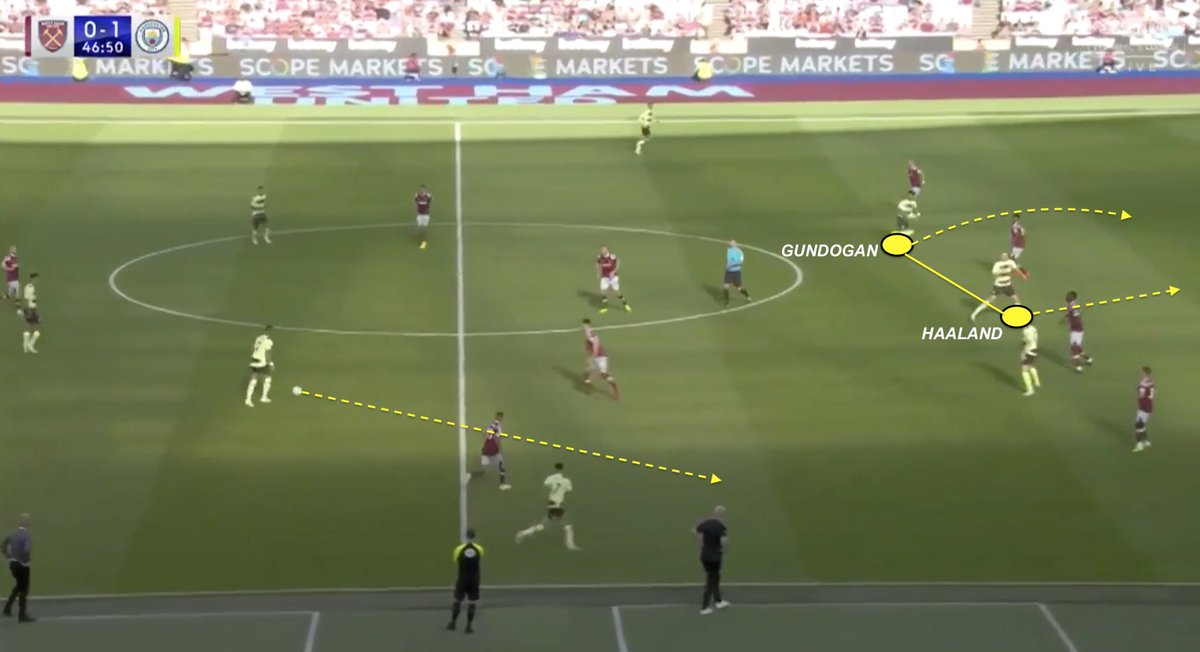
As @nonewthing predicted last year, Guardiola, with Haaland signing, is looking for depth when City reaches final third, but not only in transitions : even if the opponent implements zonal marking or low-block
Loading suggestions...