

What exactly is a JSON Web Token.
Thread 🧵
Thread 🧵
JSON Web Token (JWT) is a secure way to transmit information between parties as a JSON object.
This information is trustworthy because it is digitally signed.
This information is trustworthy because it is digitally signed.
JWTs can be signed using a secret or public key to ensure that only the intended recipient can read the token's contents.
You can see the structure of the JWT in the picture below.
It contains:
- Header
- Payload
- Signature
It contains:
- Header
- Payload
- Signature

The Header contains the information about the token type and the hash algorithm that was used for signing and encoding.
In our example, you can see we're using an HS256 hash.
In our example, you can see we're using an HS256 hash.
The Payload contains session data we want to send between the client and server.
Standard data:
- Issuer(iss)
- Subject (sub)
- Audience (aud)
- Expiration time (exp) - in unix timestampt format
- Issued at (iat) - in unix timestampt format
Standard data:
- Issuer(iss)
- Subject (sub)
- Audience (aud)
- Expiration time (exp) - in unix timestampt format
- Issued at (iat) - in unix timestampt format
You can also include custom session data into the payload you want to exchange with the server.
In our example, we're sending the role information and user_id.
The additional information you're sending in the payload should be short in size.
In our example, we're sending the role information and user_id.
The additional information you're sending in the payload should be short in size.
Also, keep in mind that payload can be easily decoded so you mustn't be sending any critical or sensitive data.
Signature is the last and most important part of JWT.
Base64url encoding is used to calculate signature by encoding the header and payload and then concatenating them with a period separator.
Base64url encoding is used to calculate signature by encoding the header and payload and then concatenating them with a period separator.
The result is then used as an argument for the cryptographic function defined in the Header of the JWT.
As you can see, if you change either the header or payload, the signature has to be re-calculated.
As you can see, if you change either the header or payload, the signature has to be re-calculated.
The private key used for calculation is stored on the auth server and is not accessible/visible to third parties.
Let's discuss a bit about how JWT works. 👇🏻
1️⃣ User signs up
The user will sign up with their email/password.
This information is received by the Authentication Server.
The user will sign up with their email/password.
This information is received by the Authentication Server.

2️⃣ Verify + Generate JWT
The authentication server verifies the email/password combination.
If the combination is correct, it will generate the JSON web token.
For this, the secret salt or private key can be used.
The JWT is returned to the user.
The authentication server verifies the email/password combination.
If the combination is correct, it will generate the JSON web token.
For this, the secret salt or private key can be used.
The JWT is returned to the user.
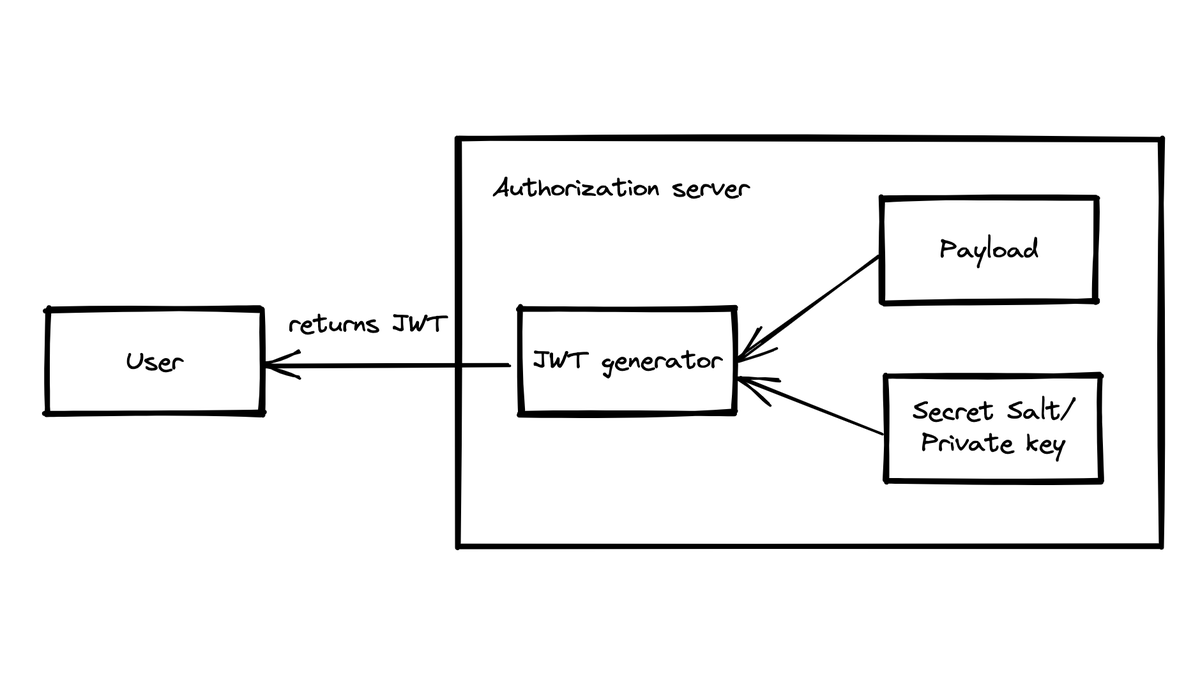
The JWT is usually stored on the client in the session data.
For this, cookies or databases can be used.
In the following, let's use a GET request as an example.
For this, cookies or databases can be used.
In the following, let's use a GET request as an example.
3️⃣ Access data
The client can use the generated and stored JWT to access protected data on the server.
The client will do this by including the JWT into the HTTP authorization header of every upcoming request it will make to the protected resource.
The client can use the generated and stored JWT to access protected data on the server.
The client will do this by including the JWT into the HTTP authorization header of every upcoming request it will make to the protected resource.
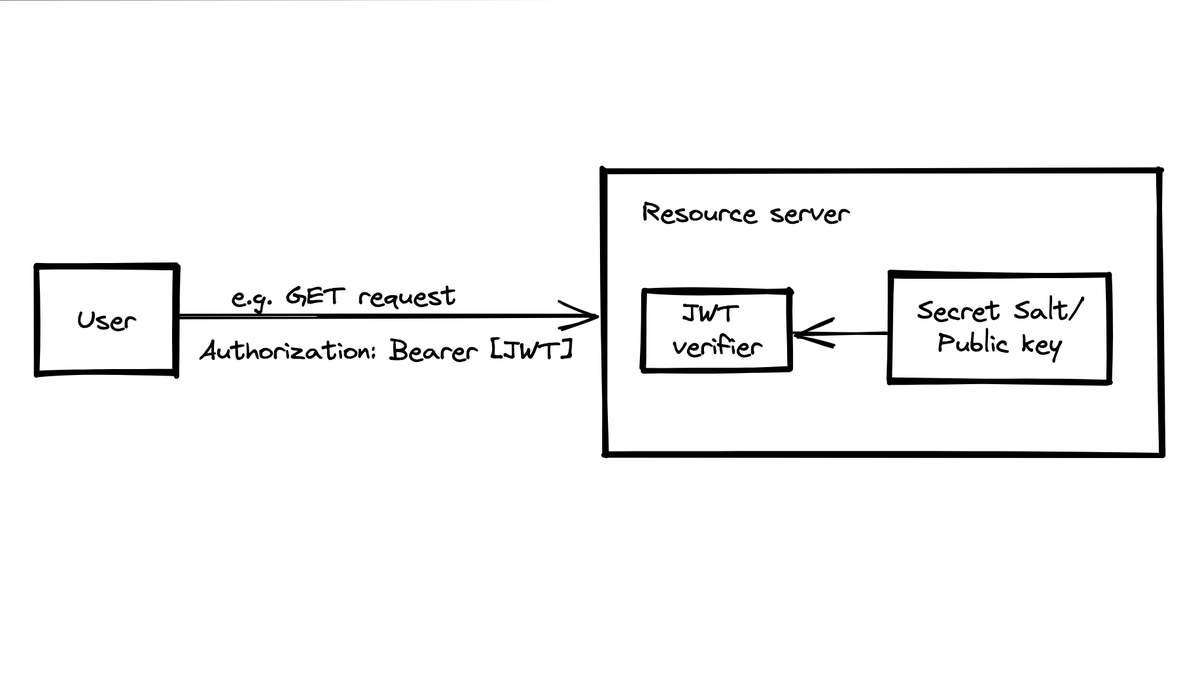
4️⃣ Request verification + resources sent
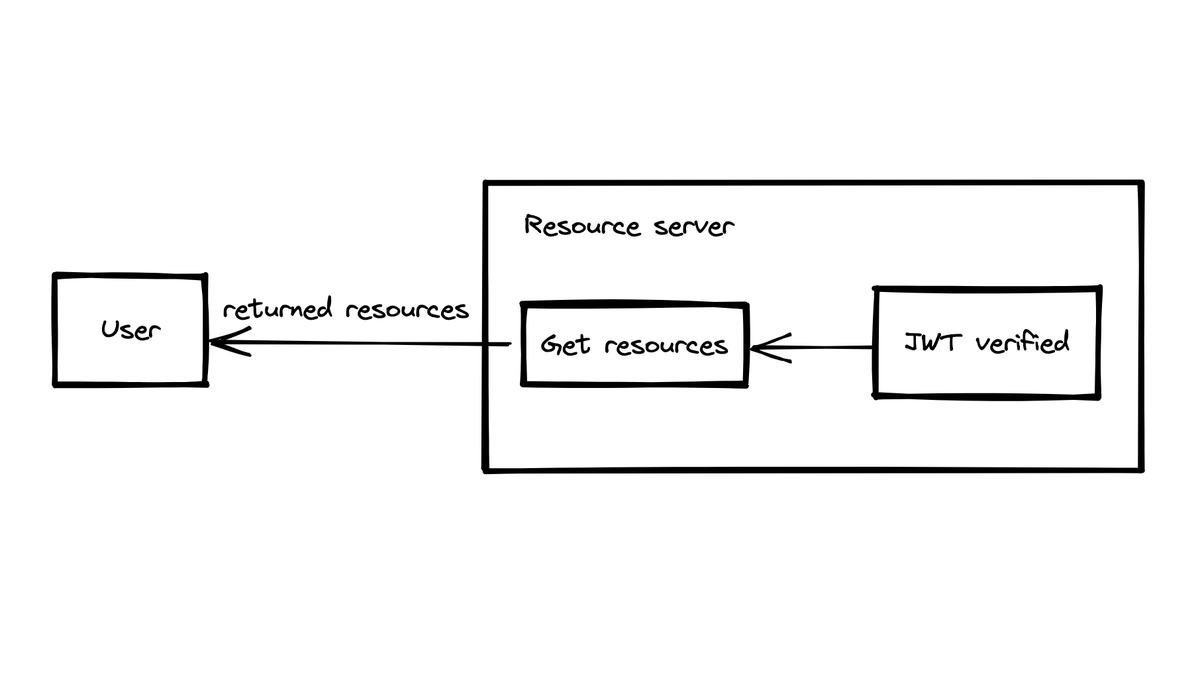
In the last step, the resource server receives the request with the JWT.
It verifies the JSON web token authenticity.
If it's correct, it will read the resource and return it to the user.
In the last step, the resource server receives the request with the JWT.
It verifies the JSON web token authenticity.
If it's correct, it will read the resource and return it to the user.
With that said, this is pretty much it for this thread.
Follow @Rapid_API for more exclusive content.
Visit RapidAPI Hub (RapidAPI.com) and get access to over 40,000 APIs. 🐙💙
Follow @Rapid_API for more exclusive content.
Visit RapidAPI Hub (RapidAPI.com) and get access to over 40,000 APIs. 🐙💙

جاري تحميل الاقتراحات...