
History
Politics
Religion
Culture
Historical Analysis
Social Commentary
Political Commentary
Media Critique

#Thread Yesterday, I came across a Twitter thread put out by a foot soldier of Hindutva that claims the Mughal fort in Delhi was not built by Emperor Shah Jahan in the 17th century but by Anangpal Tomar in the 11th century. It has over 12,600 likes and over 4,800 retweets.

It isn’t original. There are YouTube videos and other right-wing websites made between 2014 and now that make the same claim and cite the same “evidence”. I traced the source of all these claims and found it to be the guru maharaj of Hindutva School of Historical Forgery—PN Oak.
All these claims come from Oak’s book, Delhi’s Red Fort is Hindu Lal Kot. It would take a whole book to debunk this fakery so I wouldn’t even attempt it. But since @sujoyrc sahib suggested that I address the Twitter claim in a thread, let us look at some of the "evidence" cited.
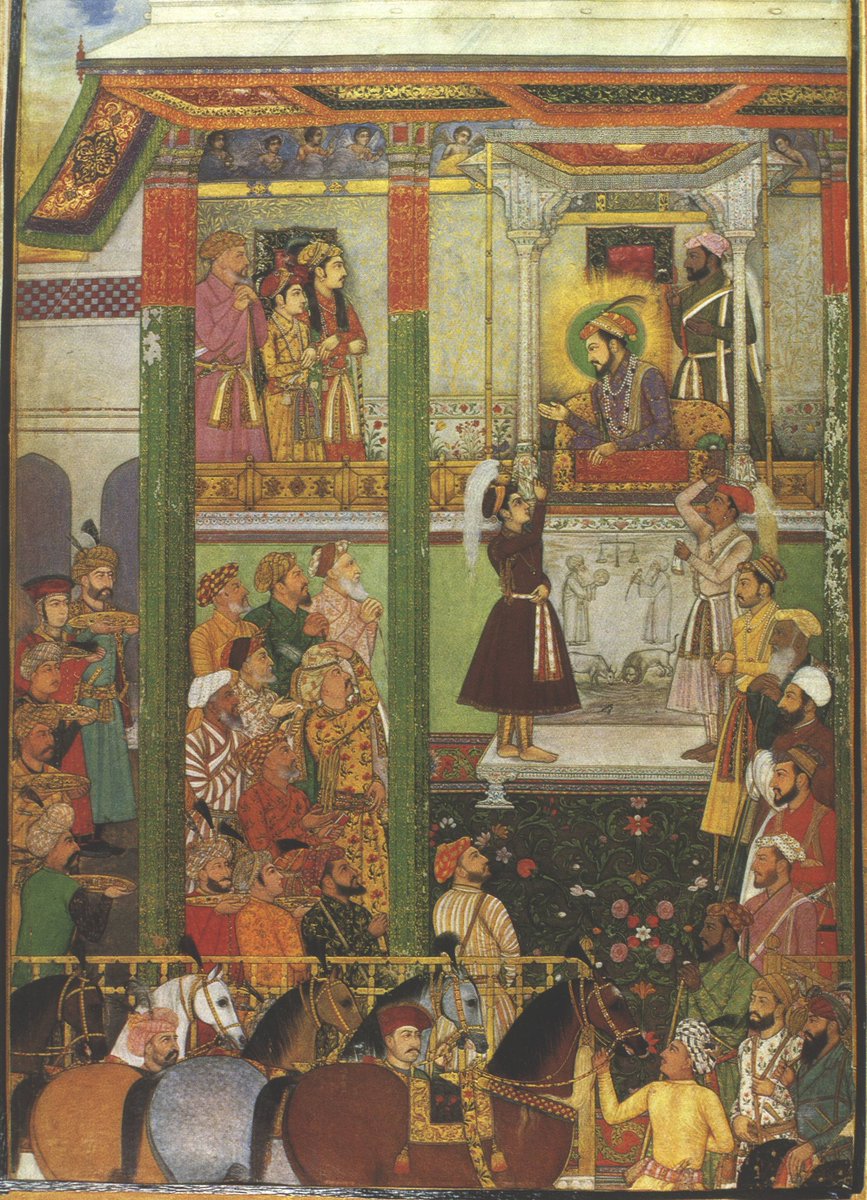
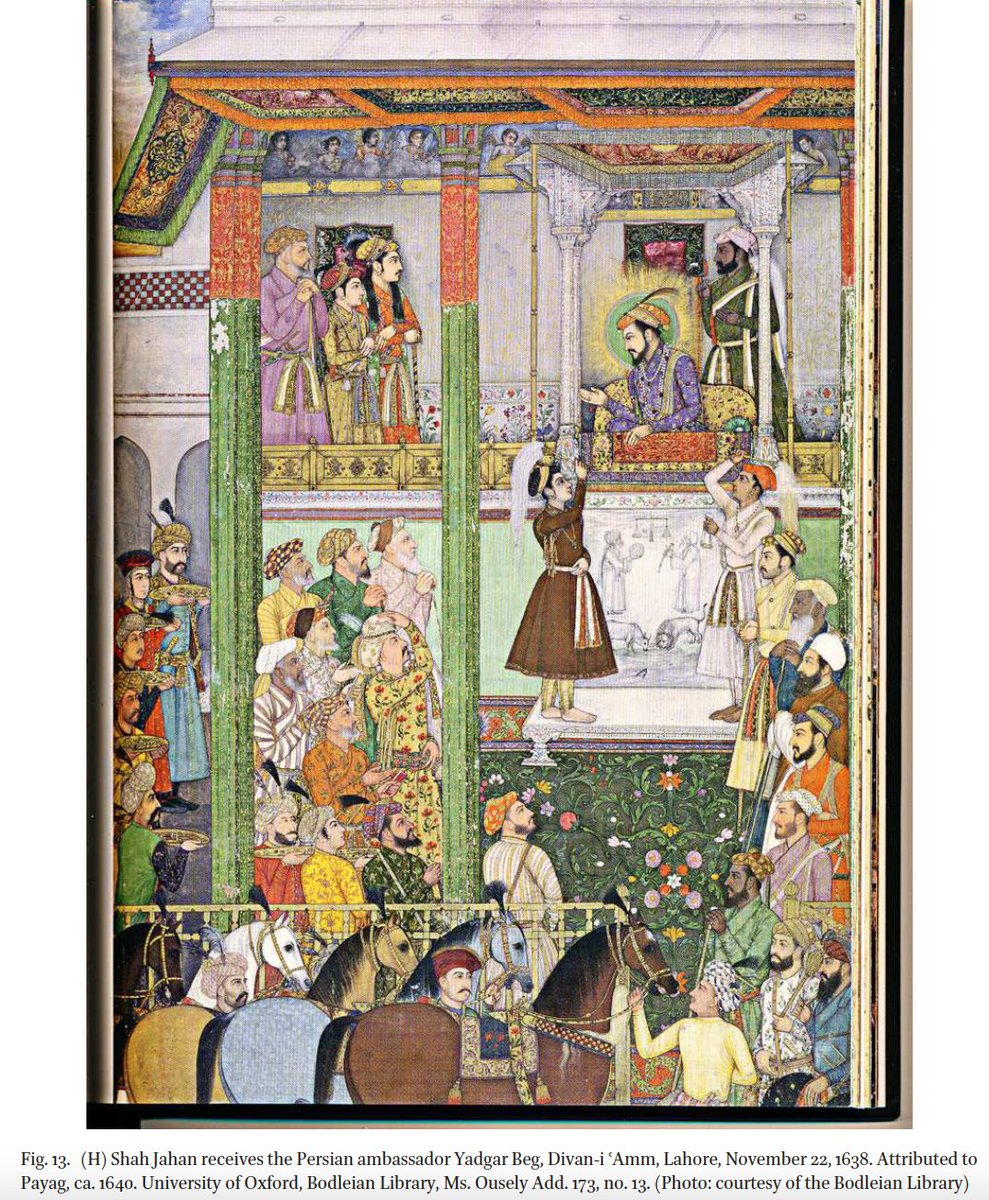
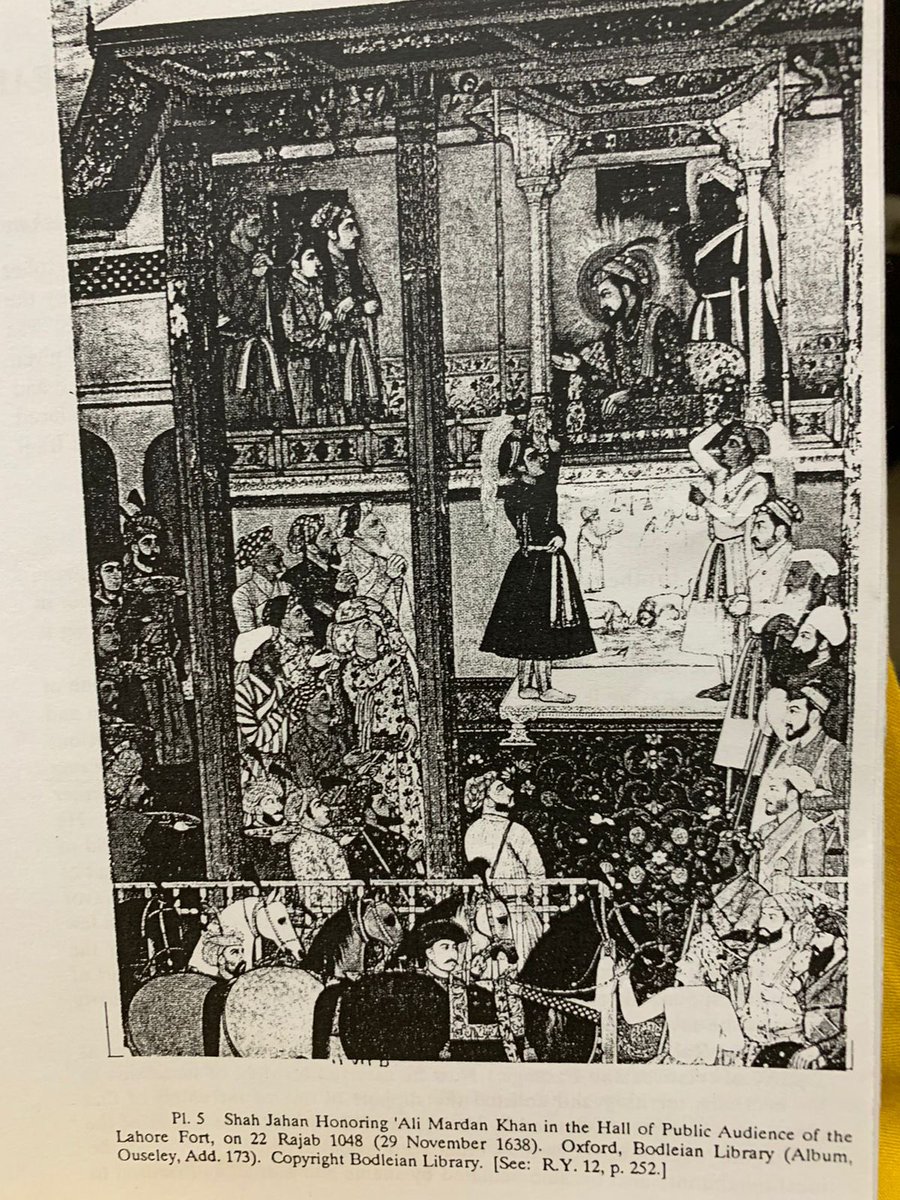
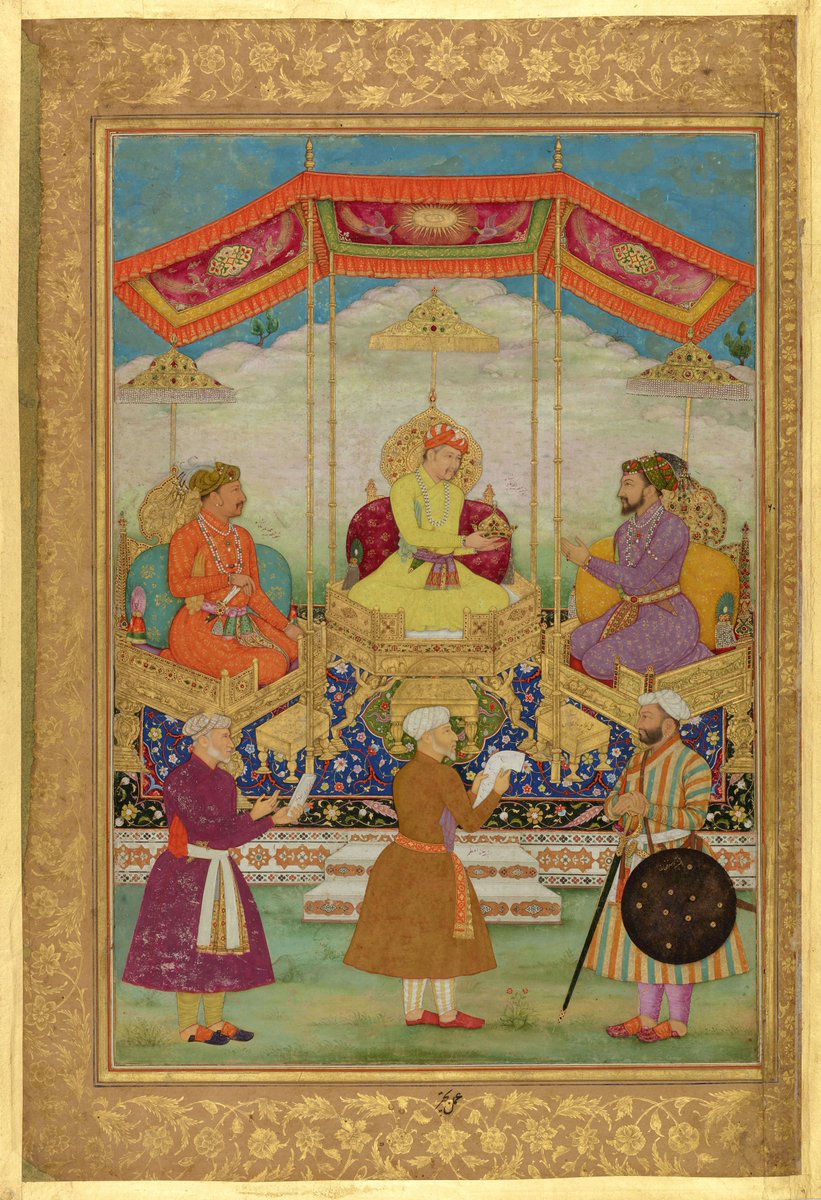
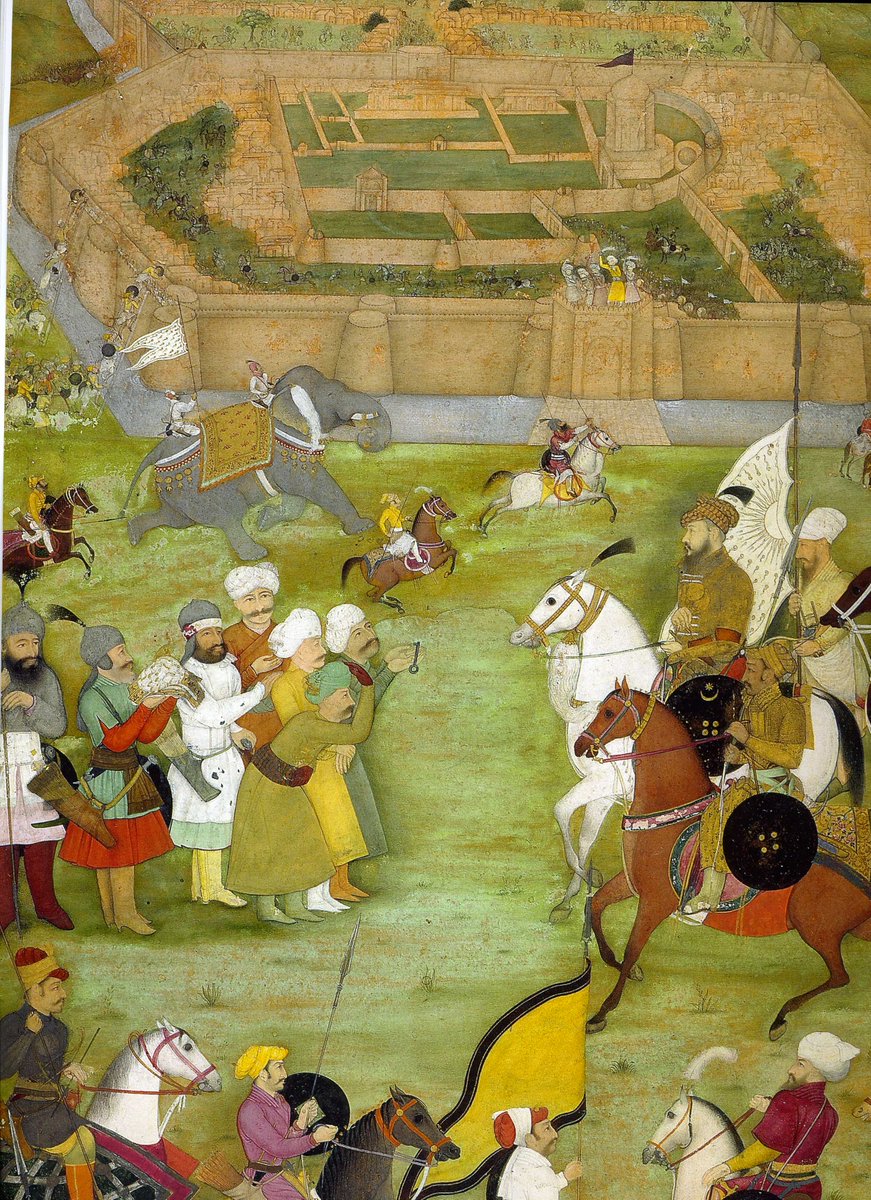
The first is a Mughal miniature with a caption that describes the event as Shah Jahan receiving a Persian ambassador at the Diwan-i Aam in Delhi in 1628. Since Shah Jahan started building the Red Fort in Delhi only in 1639, it has been argued that the fort was pre-existing.
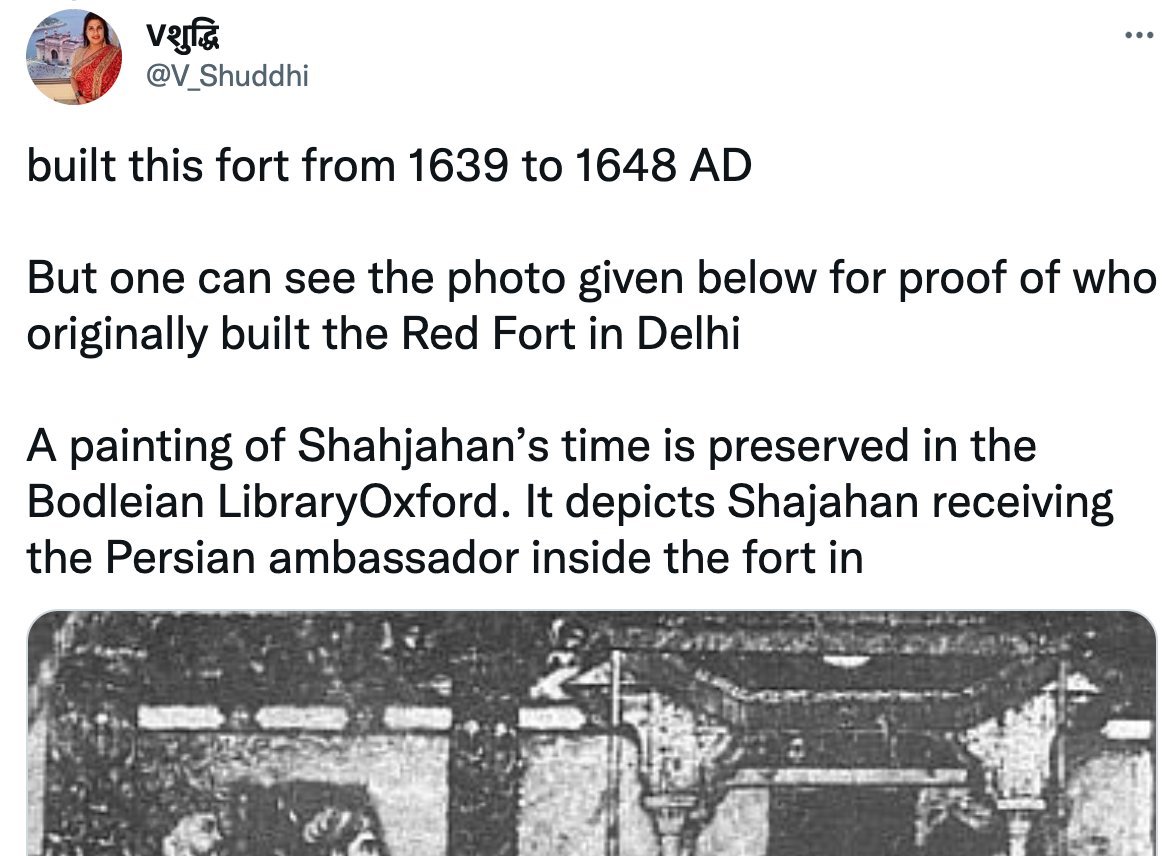
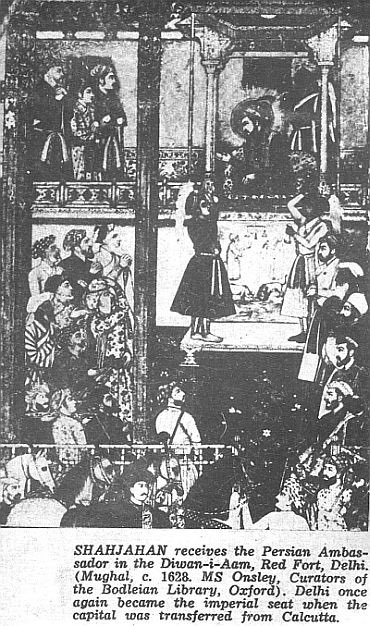
This painting, dated around 1640 and attributed to the artist Payag, actually depicts a scene at the Lahore fort in 1638. It’s amazing to note that the whole edifice of this grand claim about the original builder of the Red Fort rests on a misdated painting.
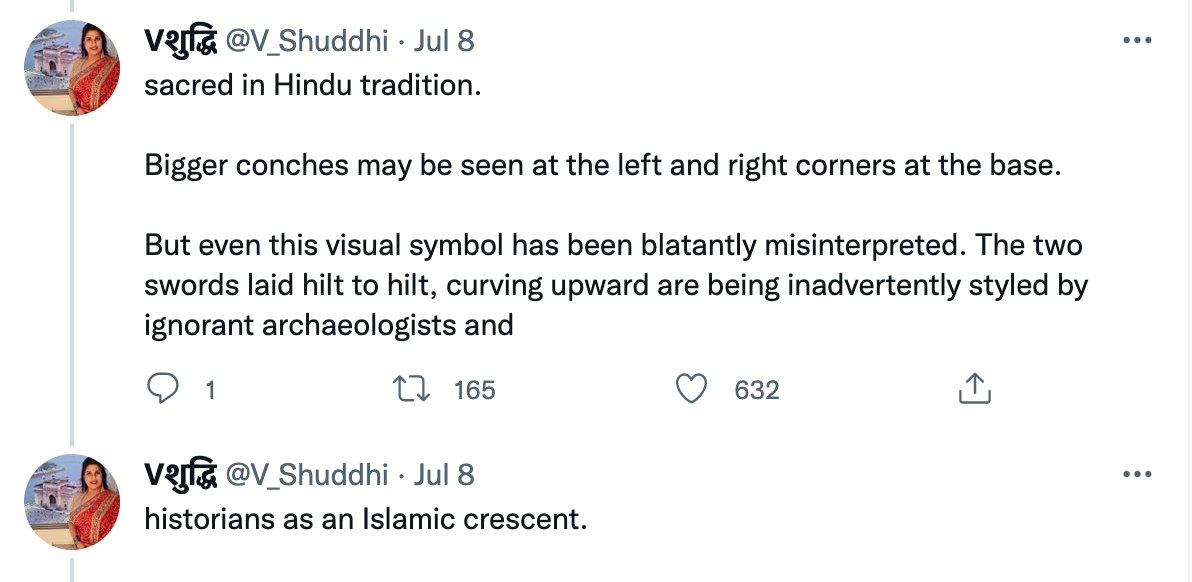
Look at this other piece of "evidence". This is being claimed as the emblem of king Anangpal Tomar! First of all, who knew what was the royal emblem of the Tomar king? There is not a shred of evidence regarding this so any claim about the Tomar royal emblem is total falsehood.
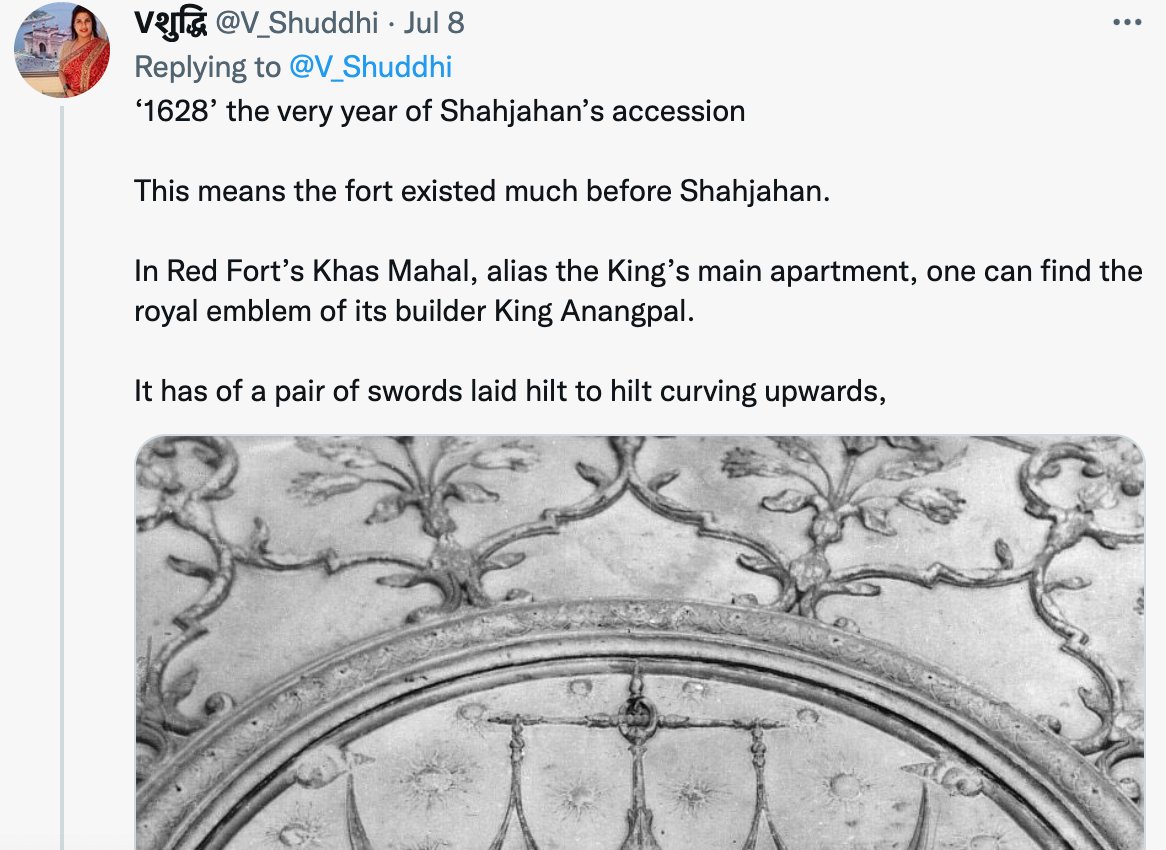
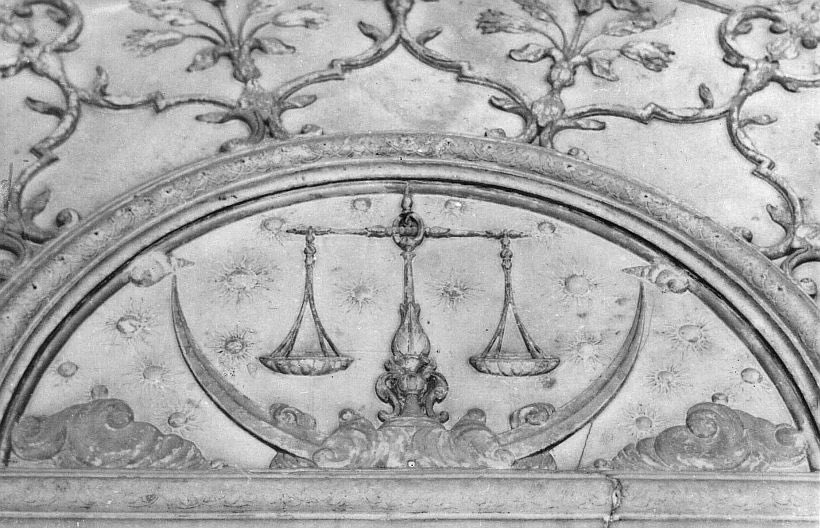
This is the Mughal mizaan-i adl or scales of justice suspended over a crescent that also looks like curved scimitars. The Mughal architectural vocabulary was quite rich and drew from various local and foreign, Islamic and pre-Islamic sources.
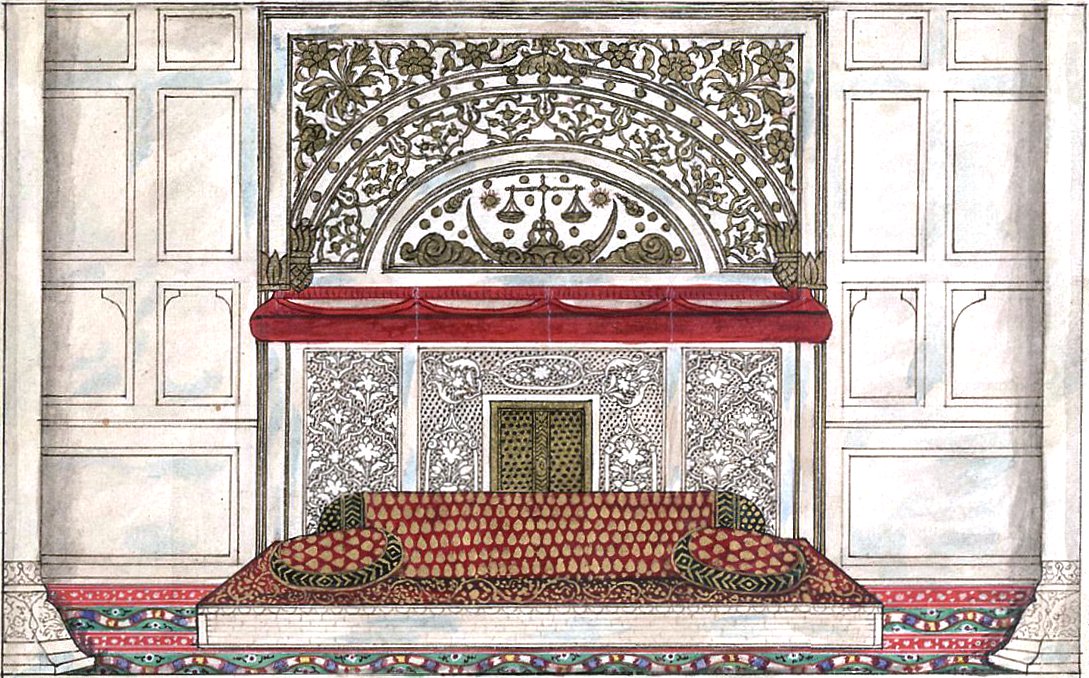
The presence of the scales of justice in the imperial quarters led Thomas Metcalfe to assume in the 19th century that the Red Fort was built by European architects. This is a painting by Mazhar Ali Khan dated 1843 accompanying Metcalfe’s comment.
The British couldn’t believe that an “Oriental despot” could build such fine buildings like the Red Fort palaces and the Mughal architectural crowning glory, the Taj Mahal. So, they convinced themselves that the Europeans and other foreigners guided the Mughals.
This same logic, albeit in a different way, is now put forward by the Hindu Right—that the Mughals couldn’t have built such fine buildings and only converted pre-existing “Hindu” buildings to “Muslim” ones.
Thus, the Taj Mahal is “Tejo Mahalaya”, Red Fort is by Anangpal Tomar, Jama Masjid is “Jamuna Mandir” nonsense. It’s funny that colonial-era prejudices are being regurgitated as decolonization rhetoric by the Hindu Right.
The mizaan-i adl alludes to Shah Jahan’s perception of his rule. The scales suspended over a crescent surrounded by many stars or suns and clouds, and within a semi-circle. This is a depiction of the heavens, signifying the reach of Mughal justice—the universe—and its fairness.
Perhaps it was also a reminder to those judging others, in this case the emperors, that they will be judged, too, on Judgment Day so they better be fair in their conduct and discharge of adl.
This is known even to those making fraudulent claims about the Red Fort. So, a fact-check has been anticipated and countered with the funny claim that it has been “blatantly misrepresented” by “ignorant archaeologists and historians”—but who seem to have done it “inadvertently”!
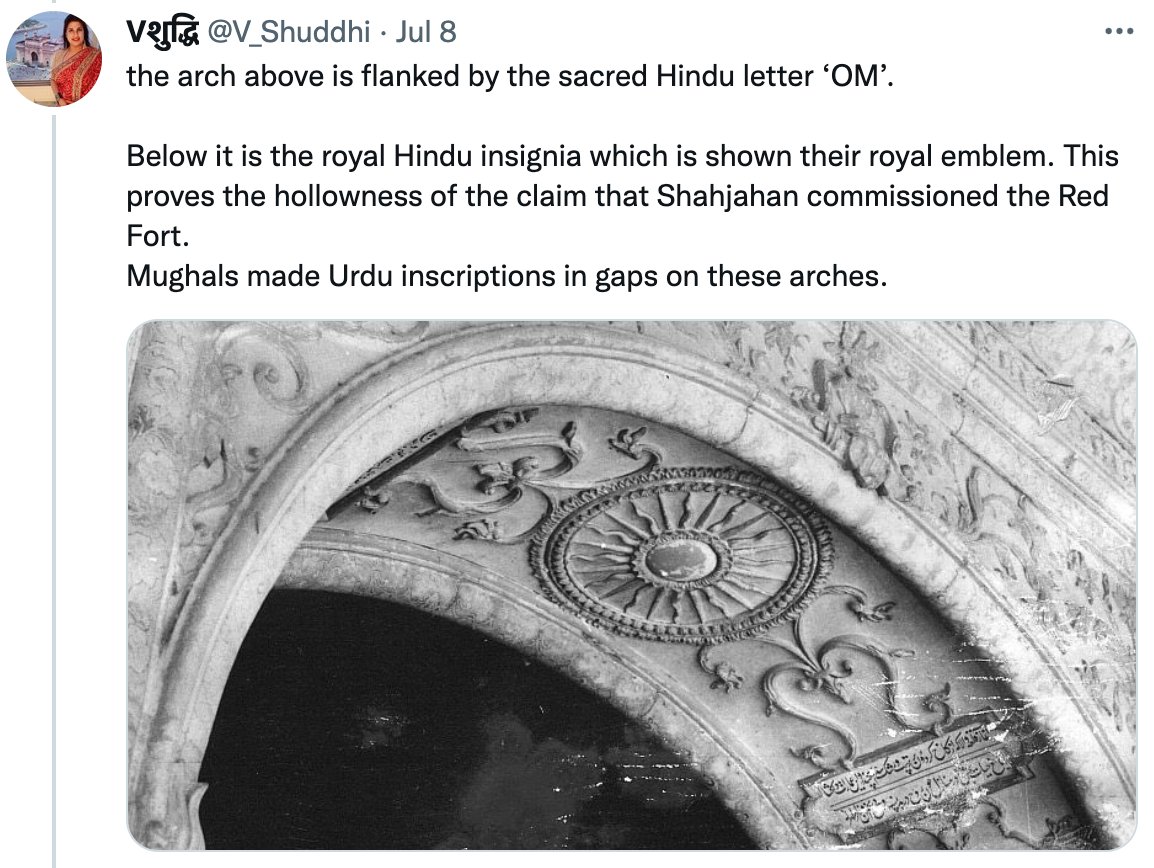
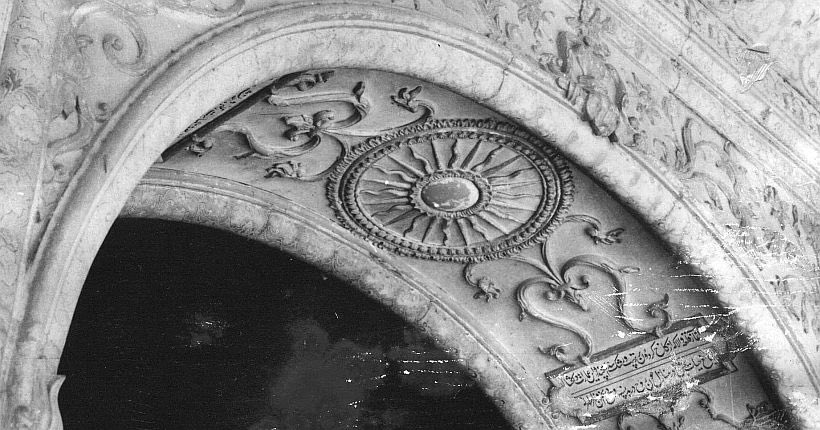
This other “proof” assumes that solar motifs are seen only in Hindu iconography. Clearly, no attempt has been made to study or analyse the centrality of the sun in Mughal projections of power and legitimacy.
The various synonyms of the sun—khorshīd, jamshīd, mihr, iqbal—were used by the Mughals in creating their idiom of sacred kingship. Look at this painting of Akbar passing his crown to Shah Jahan. See what is staring down on Akbar (and the Mughal throne) from the canopy—the sun.
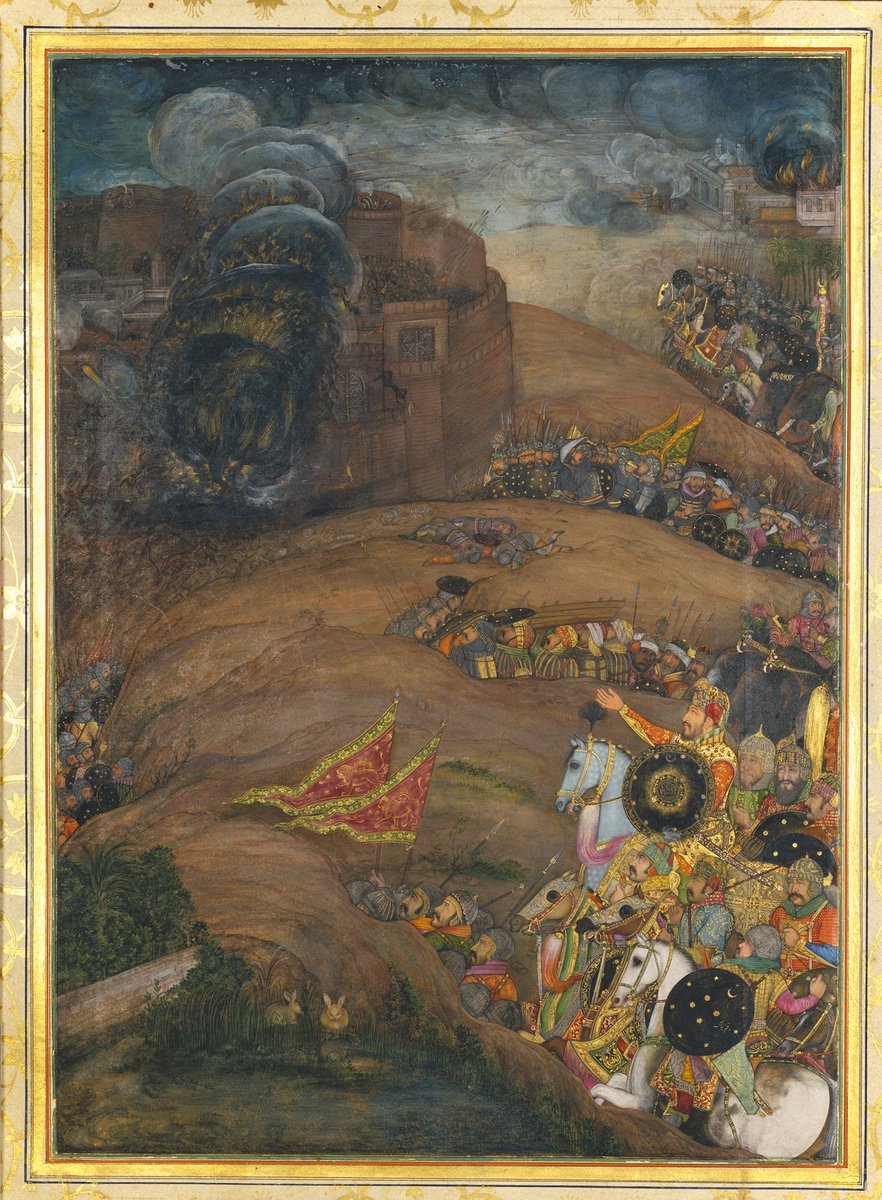
Look at these two paintings and focus on the Mughal banners in red, green, and white. What do you see there? The sun.
A solar symbol in the emperor’s private quarters is quite natural. This is flanked by inscriptions in Farsi (not Urdu, as the commentator claims) that tell us about the construction, cost, and completion of the fort and how the palaces are akin to divine mansions in paradise.
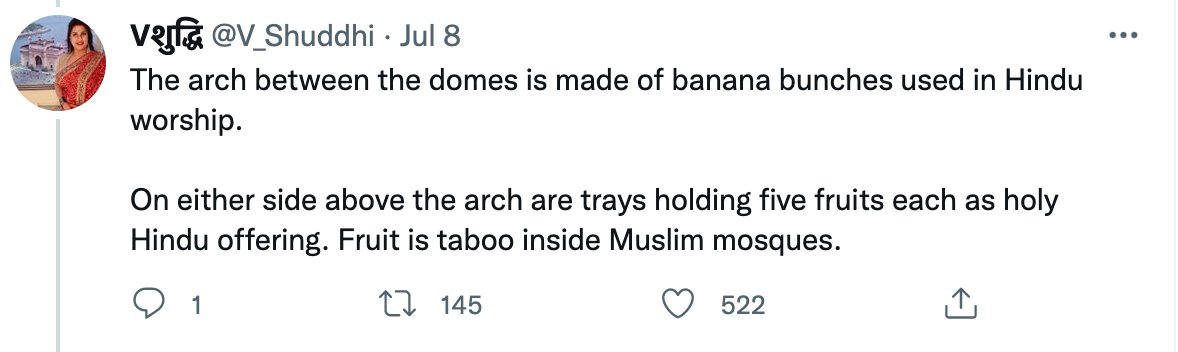
In Islam, paradise is a garden in full bloom and with fruit-laden trees. That’s why the Mughal chaharbagh gardens, whether at the Taj Mahal or Humayun’s Tomb, were full of fruit trees—they mimicked paradise.
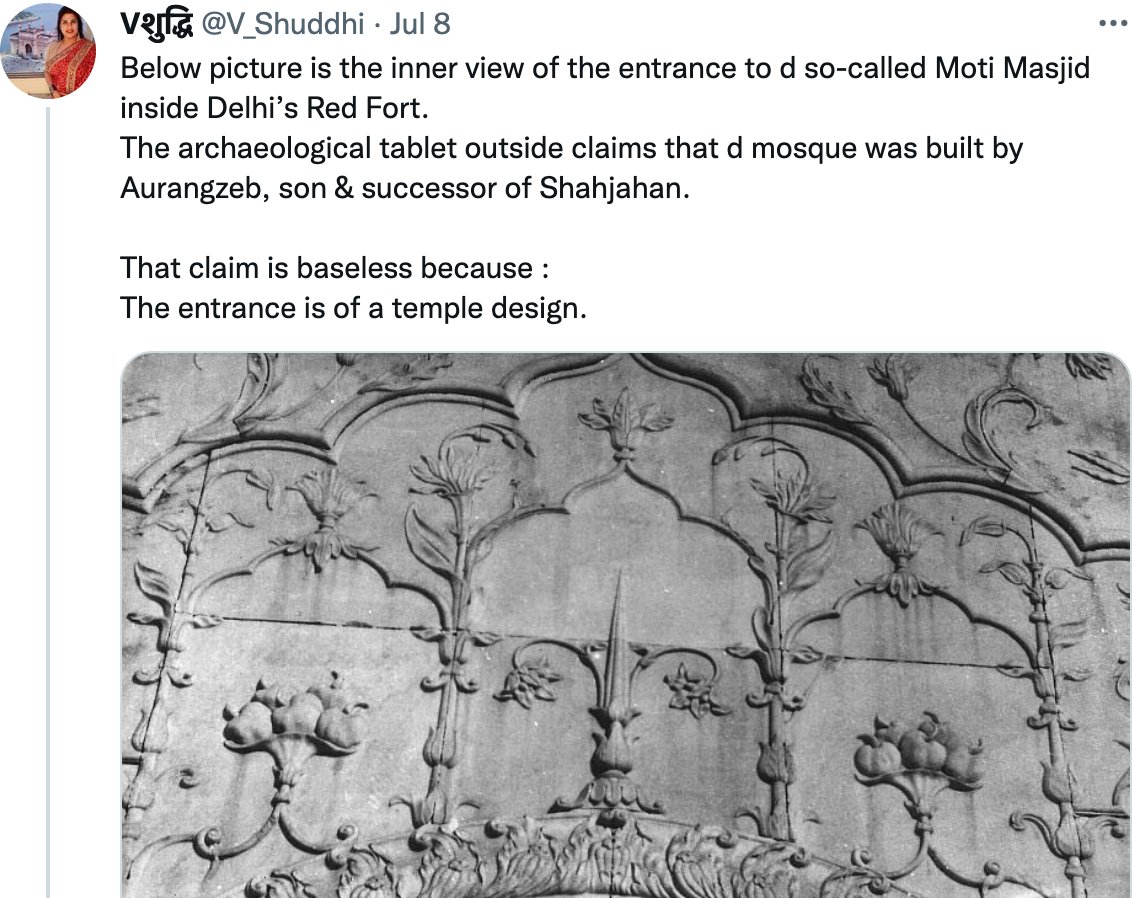
And various buildings built across the central lands of Islam throughout history, including mosques, have had floral and vegetal motifs. Only someone totally unfamiliar with the history of Islam would claim that “fruit is taboo”—the Quran also mentions several fruits.
It is a tiring and fruitless exercise to fact-check RW "history" because it is deliberate political propaganda. But I just hope that some people who are genuinely curious about the past but who are confused with so much misinformation around will find this thread useful.
Loading suggestions...