

1/🧵
Ever wonder why tick bites can lead to a red meat allergy, including even anaphylaxis?
The answer requires us to examine sugars, tick saliva, and an anti-cancer drug.
#medtwitter #tweetorial
Ever wonder why tick bites can lead to a red meat allergy, including even anaphylaxis?
The answer requires us to examine sugars, tick saliva, and an anti-cancer drug.
#medtwitter #tweetorial

2/
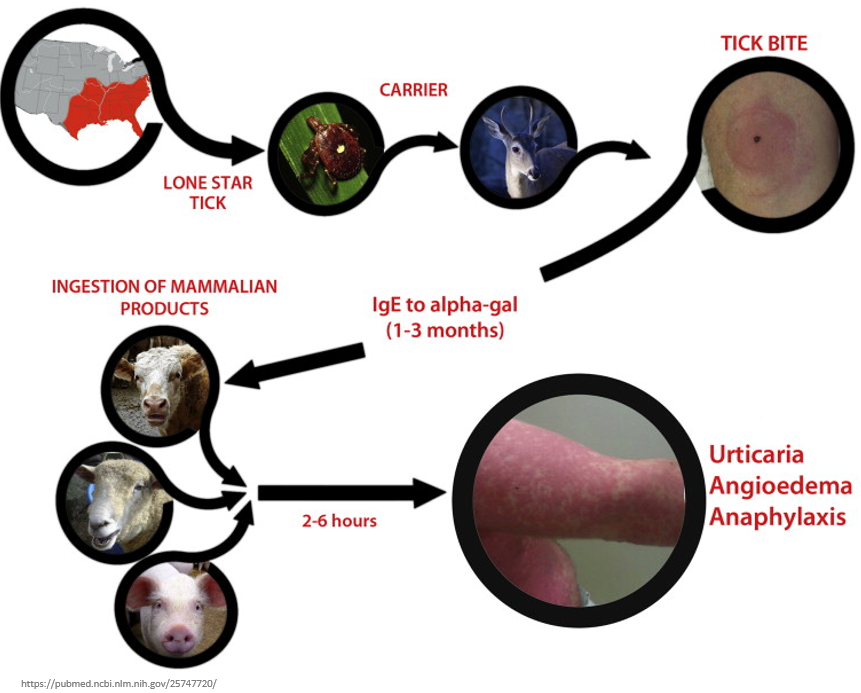
The first inclination that a link b/w tick bites and meat allergy might exist occurred in Georgia in 1991.
10 cases were reported (but not published) of people developing hives or anaphylaxis w/ red meat ingestion, weeks to months after tick bites.
pubmed.ncbi.nlm.nih.gov
The first inclination that a link b/w tick bites and meat allergy might exist occurred in Georgia in 1991.
10 cases were reported (but not published) of people developing hives or anaphylaxis w/ red meat ingestion, weeks to months after tick bites.
pubmed.ncbi.nlm.nih.gov

3/
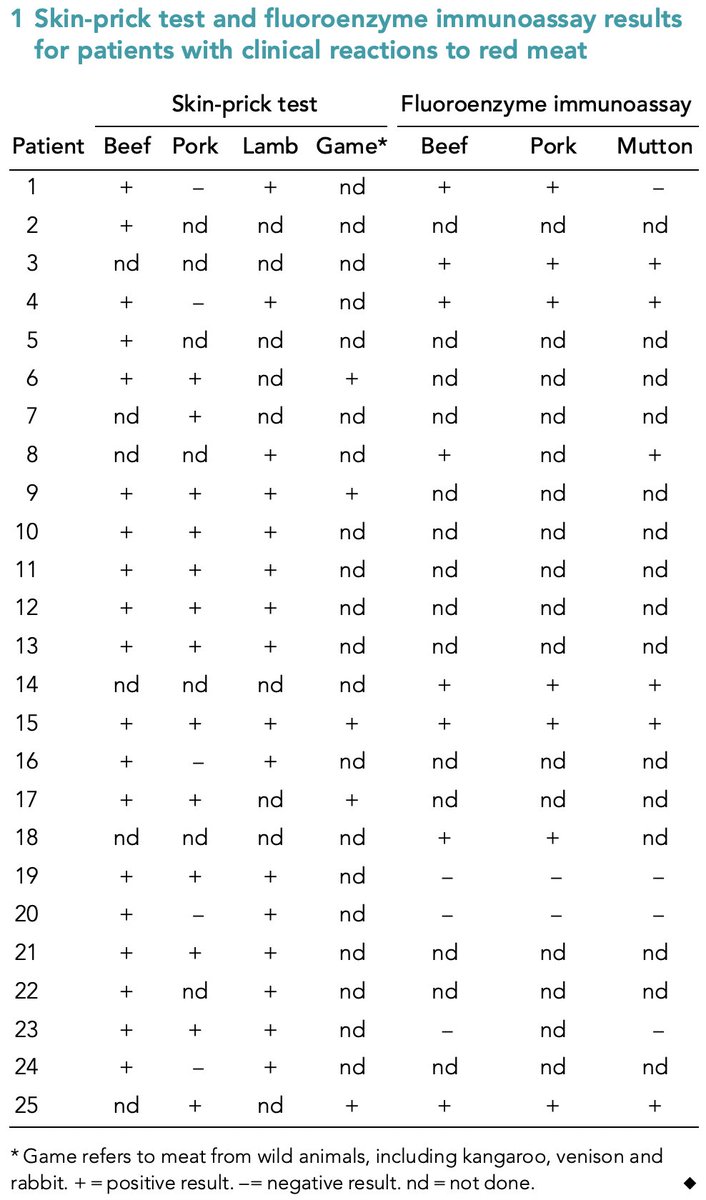
A 2009 case series described 25 patients who developed red meat allergies 1-6 months after tick bites. Reactions to meat again ranged from urticaria to full anaphylaxis.
🔑There seemed to be a clear association b/w tick bites and meat allergy onset.
pubmed.ncbi.nlm.nih.gov
A 2009 case series described 25 patients who developed red meat allergies 1-6 months after tick bites. Reactions to meat again ranged from urticaria to full anaphylaxis.
🔑There seemed to be a clear association b/w tick bites and meat allergy onset.
pubmed.ncbi.nlm.nih.gov
4/
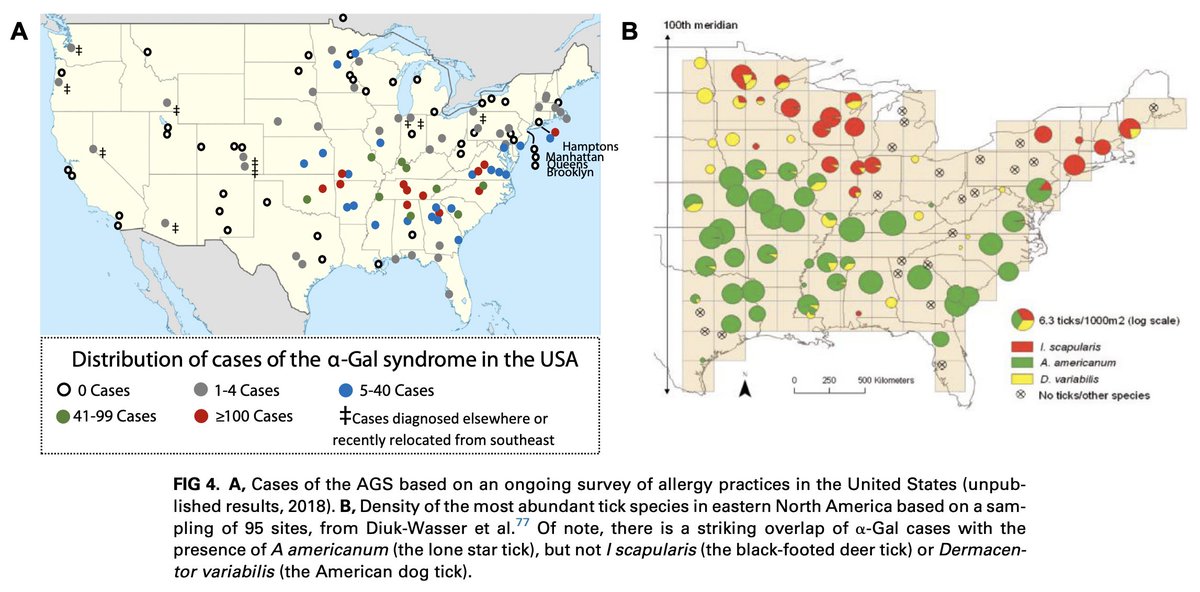
Since then, numerous reports have documented the emergence of red meat allergies after tick bites.
💡The most common implicated tick species in the US is the lone star tick (amblyomma americanum), w/ other species reported in different countries.
pubmed.ncbi.nlm.nih.gov
Since then, numerous reports have documented the emergence of red meat allergies after tick bites.
💡The most common implicated tick species in the US is the lone star tick (amblyomma americanum), w/ other species reported in different countries.
pubmed.ncbi.nlm.nih.gov
5/
But why would tick bites potentially lead to a red meat allergy? Those things seem to have nothing to do with each other.
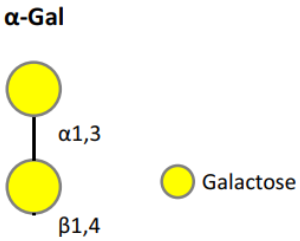
The key to this story is a carbohydrate molecule called alpha-gal (galactose-α-1,3-galactose).
pubmed.ncbi.nlm.nih.gov
But why would tick bites potentially lead to a red meat allergy? Those things seem to have nothing to do with each other.
The key to this story is a carbohydrate molecule called alpha-gal (galactose-α-1,3-galactose).
pubmed.ncbi.nlm.nih.gov
6/
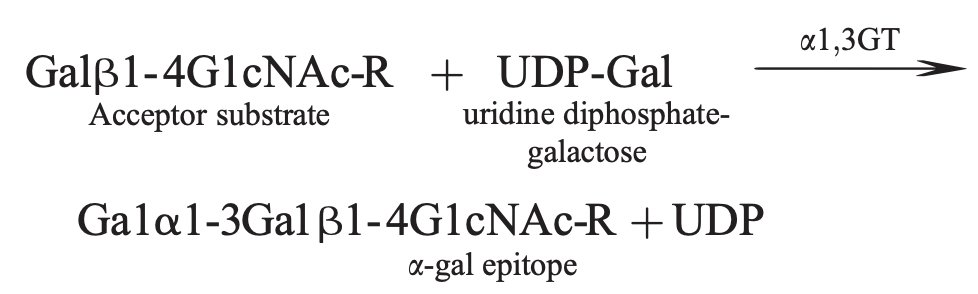
Alpha-gal is an oligosaccharide found on glycoproteins/glycolipids in cells and tissues of non-primate mammals.
⚡️Primates (including we humans) cannot not make alpha-gal, as we lack the enzyme needed to assemble it (alpha 1,3-galactosyltransferase).
pubmed.ncbi.nlm.nih.gov
Alpha-gal is an oligosaccharide found on glycoproteins/glycolipids in cells and tissues of non-primate mammals.
⚡️Primates (including we humans) cannot not make alpha-gal, as we lack the enzyme needed to assemble it (alpha 1,3-galactosyltransferase).
pubmed.ncbi.nlm.nih.gov
7/
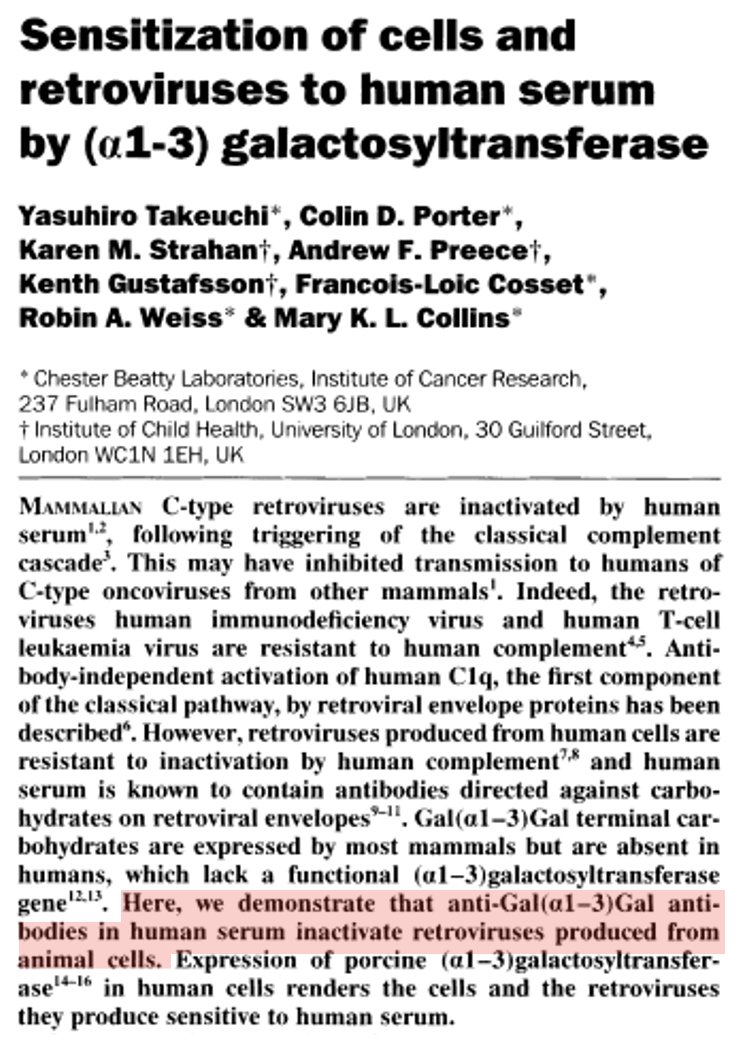
Our primate ancestors evolved to lack alpha 1,3-galactosyltransferase, becoming unable to produce alpha-gal.
This likely helped protect from viruses from other mammals, which are coated in alpha-gal and get flagged as foreign by the immune system.
pubmed.ncbi.nlm.nih.gov
Our primate ancestors evolved to lack alpha 1,3-galactosyltransferase, becoming unable to produce alpha-gal.
This likely helped protect from viruses from other mammals, which are coated in alpha-gal and get flagged as foreign by the immune system.
pubmed.ncbi.nlm.nih.gov
8/
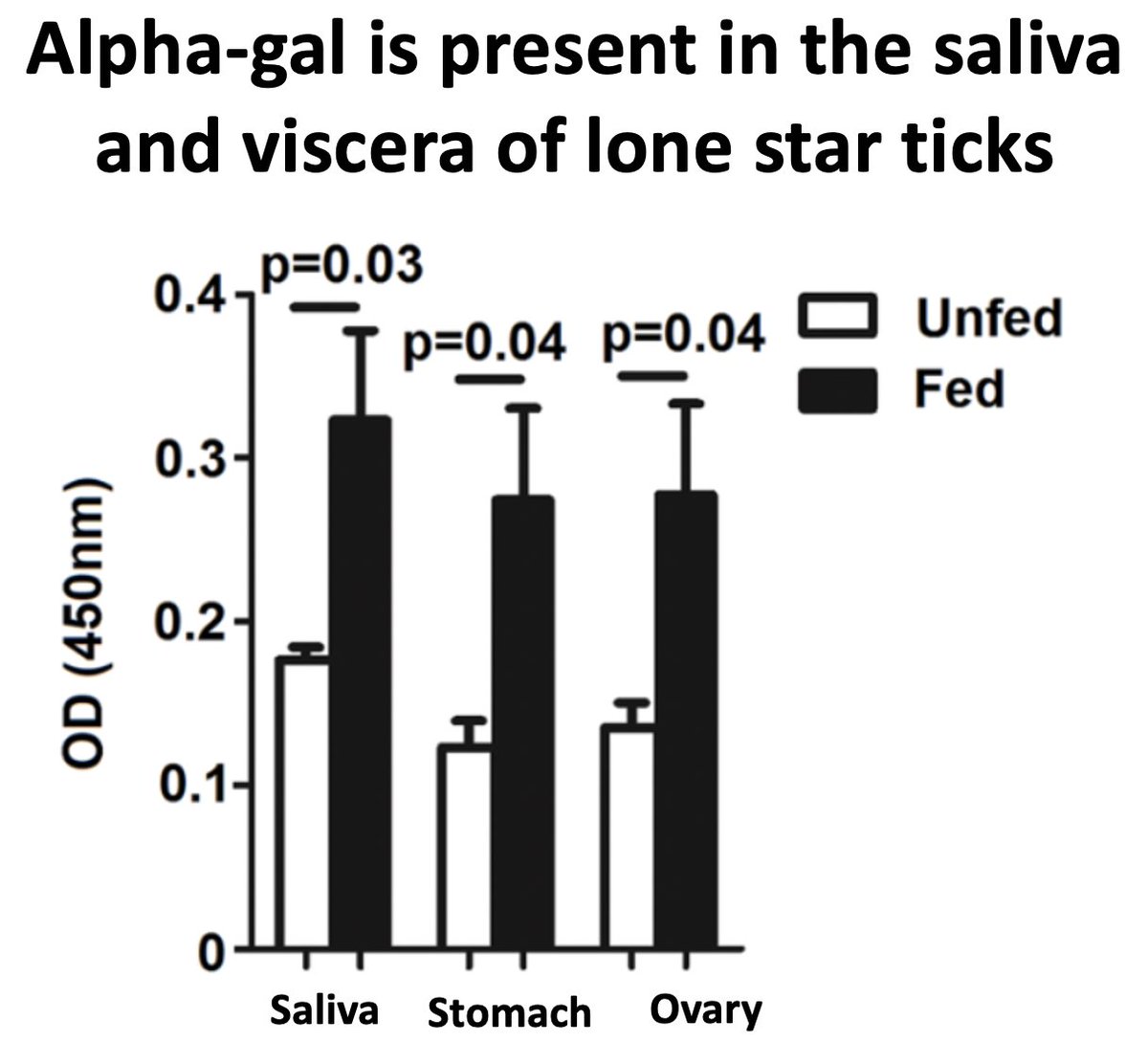
We are exposed to alpha-gal when consuming meat. But why could a tick bite lead to a meat allergy?
It turns out that lone star tick viscera/saliva contain alpha-gal. The levels rise during feeding and the tick injects it directly into a person's skin.
pubmed.ncbi.nlm.nih.gov
We are exposed to alpha-gal when consuming meat. But why could a tick bite lead to a meat allergy?
It turns out that lone star tick viscera/saliva contain alpha-gal. The levels rise during feeding and the tick injects it directly into a person's skin.
pubmed.ncbi.nlm.nih.gov
9/
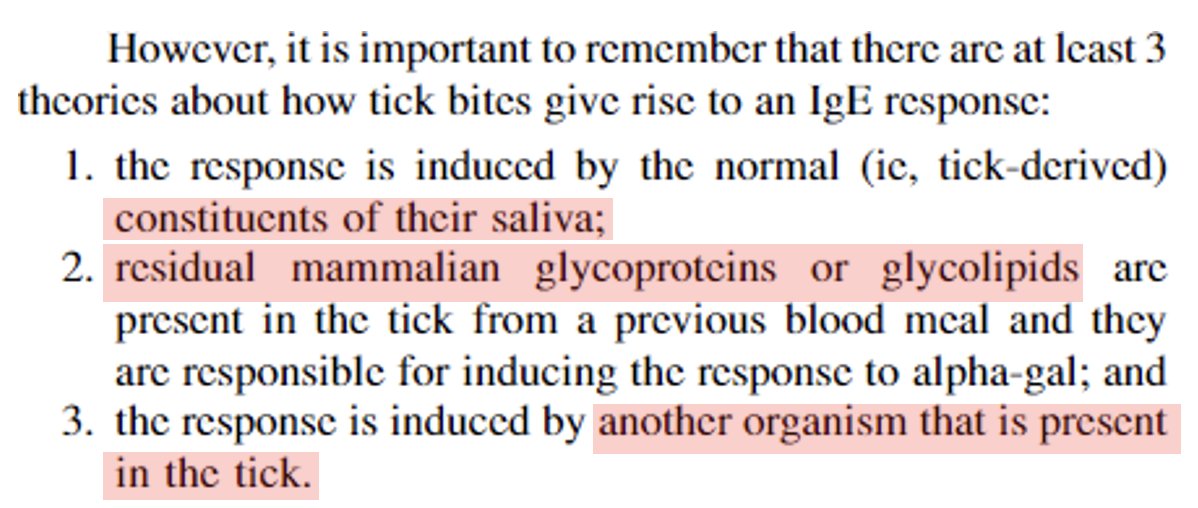
The leading mechanistic theory supposes that ticks produce their own alpha-gal.
It’s also possible that tick-borne alpha-gal comes from either the blood of animals a tick previously fed on or symbiont bacteria in tick saliva.
ncbi.nlm.nih.gov
The leading mechanistic theory supposes that ticks produce their own alpha-gal.
It’s also possible that tick-borne alpha-gal comes from either the blood of animals a tick previously fed on or symbiont bacteria in tick saliva.
ncbi.nlm.nih.gov
10/
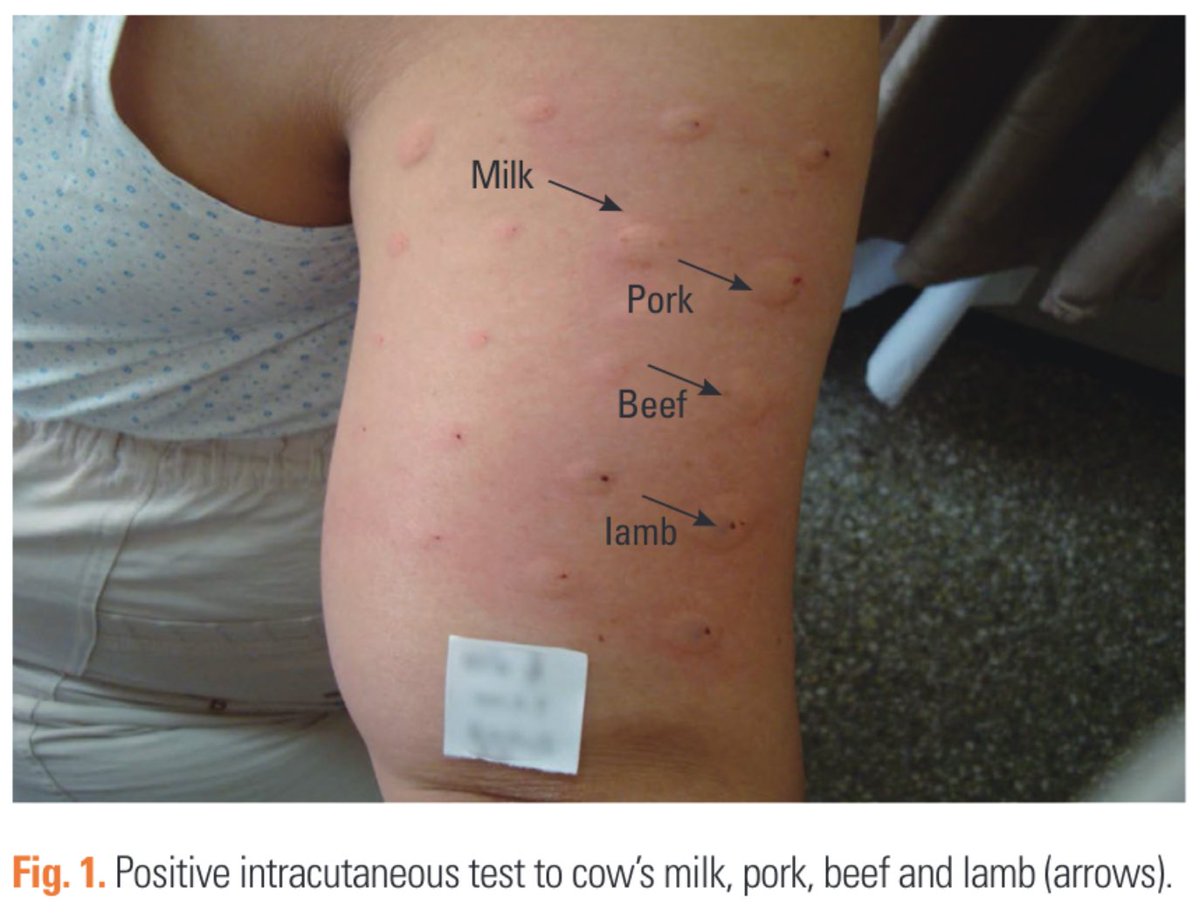
Exposure to alpha-gal via tick bite can lead to IgE-mediated allergic sensitization to meat (and other animal products like milk), and development of a meat allergy.
This is how a tick bite could make you allergic to red meat.
pubmed.ncbi.nlm.nih.gov
Exposure to alpha-gal via tick bite can lead to IgE-mediated allergic sensitization to meat (and other animal products like milk), and development of a meat allergy.
This is how a tick bite could make you allergic to red meat.
pubmed.ncbi.nlm.nih.gov
11/
It's not clear why only certain types of ticks can induce an alpha-gal meat allergy.
Theories focus on differences in habitat, behavior, and tick anatomy, but no one really knows.
ncbi.nlm.nih.gov
It's not clear why only certain types of ticks can induce an alpha-gal meat allergy.
Theories focus on differences in habitat, behavior, and tick anatomy, but no one really knows.
ncbi.nlm.nih.gov
12/
Let's end w/ 2 fascinating clinical correlates.
First, the anti-cancer antibody cetuximab can produce allergic reactions including anaphylaxis.
The antibody itself contains an alpha-gal moiety, which mediates the allergic reaction, just like meat.
pubmed.ncbi.nlm.nih.gov
Let's end w/ 2 fascinating clinical correlates.
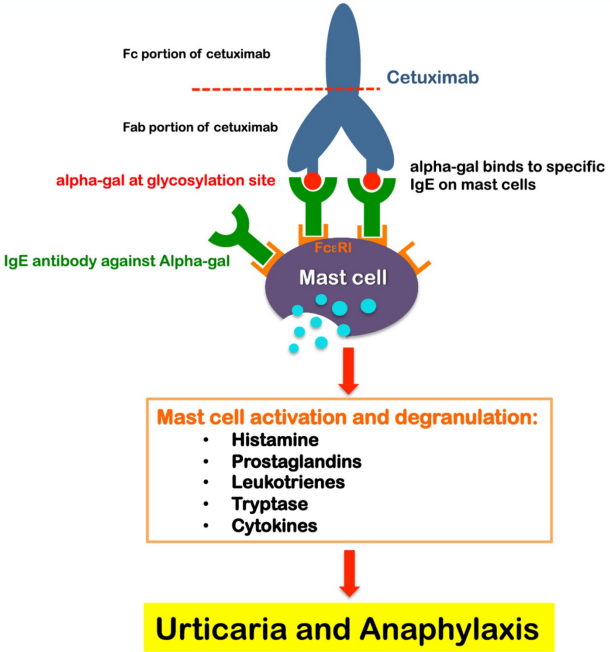
First, the anti-cancer antibody cetuximab can produce allergic reactions including anaphylaxis.
The antibody itself contains an alpha-gal moiety, which mediates the allergic reaction, just like meat.
pubmed.ncbi.nlm.nih.gov
13/
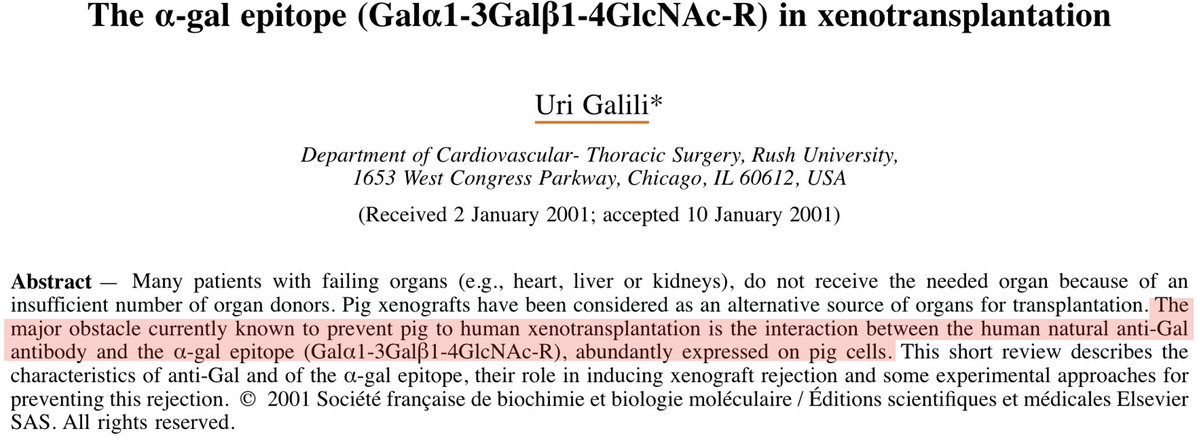
Second, it turns out that immunological response to the alpha-gal epitope, and subsequent organ rejection, is a main barrier to xenotransplantation (transplanting animal organs into humans).
pubmed.ncbi.nlm.nih.gov
Second, it turns out that immunological response to the alpha-gal epitope, and subsequent organ rejection, is a main barrier to xenotransplantation (transplanting animal organs into humans).
pubmed.ncbi.nlm.nih.gov
14/
The first successful xenotransplantation of a pig heart into a human patient in Jan. 2022 utilized a pig genetically modified to lack alpha-gal (among other modifications).
The patient passed away 2 months later but this served as proof of concept.
newyorker.com
The first successful xenotransplantation of a pig heart into a human patient in Jan. 2022 utilized a pig genetically modified to lack alpha-gal (among other modifications).
The patient passed away 2 months later but this served as proof of concept.
newyorker.com
15/
And to bring this story full circle, pigs (and other animal types) genetically modified to lack alpha-gal may in the future offer meat-allergic individuals a type of meat they can safely eat...
And to bring this story full circle, pigs (and other animal types) genetically modified to lack alpha-gal may in the future offer meat-allergic individuals a type of meat they can safely eat...
16/
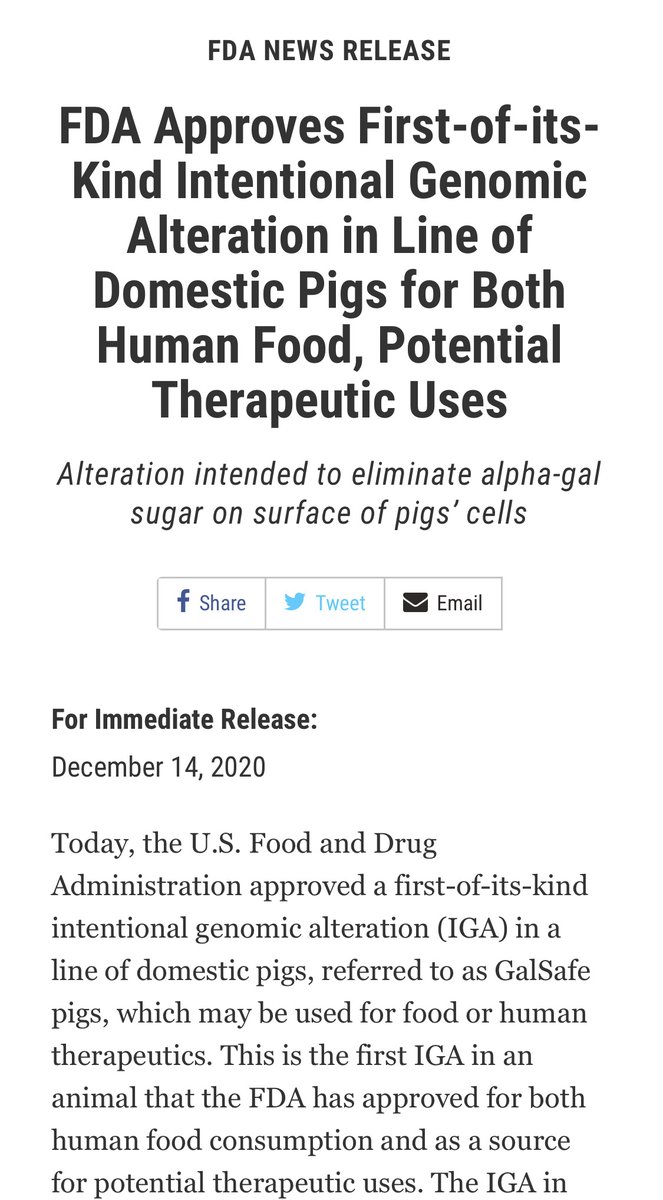
The company that produced the alpha-gal knock out pigs for human heart transplantation apparently has made the animals' meat available for alpha-gal allergic consumers.
They’ve called them “GalSafe” pigs.
fda.gov
The company that produced the alpha-gal knock out pigs for human heart transplantation apparently has made the animals' meat available for alpha-gal allergic consumers.
They’ve called them “GalSafe” pigs.
fda.gov
17/SUMMARY
🪲Bites from the lone star tick (and others) can lead to meat allergy
🪲Alpha-gal in tick saliva sensitizes to the same epitope found on animal tissue
🪲Cetuximab allergy occurs via the same mechanism
🪲Alpha-gal knock out in pigs is promising re xenotransplantation
🪲Bites from the lone star tick (and others) can lead to meat allergy
🪲Alpha-gal in tick saliva sensitizes to the same epitope found on animal tissue
🪲Cetuximab allergy occurs via the same mechanism
🪲Alpha-gal knock out in pigs is promising re xenotransplantation
If you want to learn more about the fascinating alpha-gal/meat allergy connection, check out this episode from @radiolab
radiolab.org
radiolab.org
Thank you so much to @rubin_allergy for thoughtful peer review of this tweetorial!
Loading suggestions...