
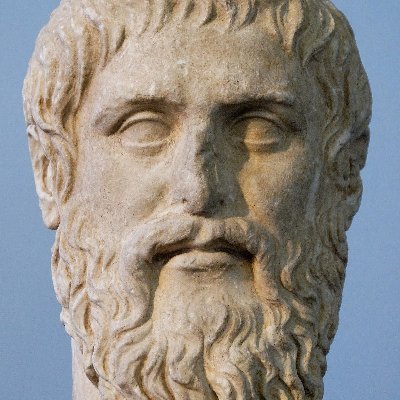
Analysing one of the greatest speeches in history, Cicero's denunciation of Catiline in 63 B.C.
We'll look at the rhetorical devices used by Cicero to inspire & persuade his audience.
You can use these techniques too: in emails, over breakfast, or at work.
We'll look at the rhetorical devices used by Cicero to inspire & persuade his audience.
You can use these techniques too: in emails, over breakfast, or at work.

First, some historical context:
Marcus Tullius Cicero (106-43 BC) was one of the most important men of his time, and he was acclaimed as Rome's greatest orator.
In 63 BC, while serving as consul (the highest elected office of the Roman Republic) he uncovered a conspiracy...
Marcus Tullius Cicero (106-43 BC) was one of the most important men of his time, and he was acclaimed as Rome's greatest orator.
In 63 BC, while serving as consul (the highest elected office of the Roman Republic) he uncovered a conspiracy...
A man called Catiline had banded together some disillusioned aristocrats & veterans, and plotted to overthrow the Republic.
Cicero became aware of these plans, and at a meeting of the Roman Senate on the 8th November he revealed them, denouncing Catiline in the process.
Cicero became aware of these plans, and at a meeting of the Roman Senate on the 8th November he revealed them, denouncing Catiline in the process.
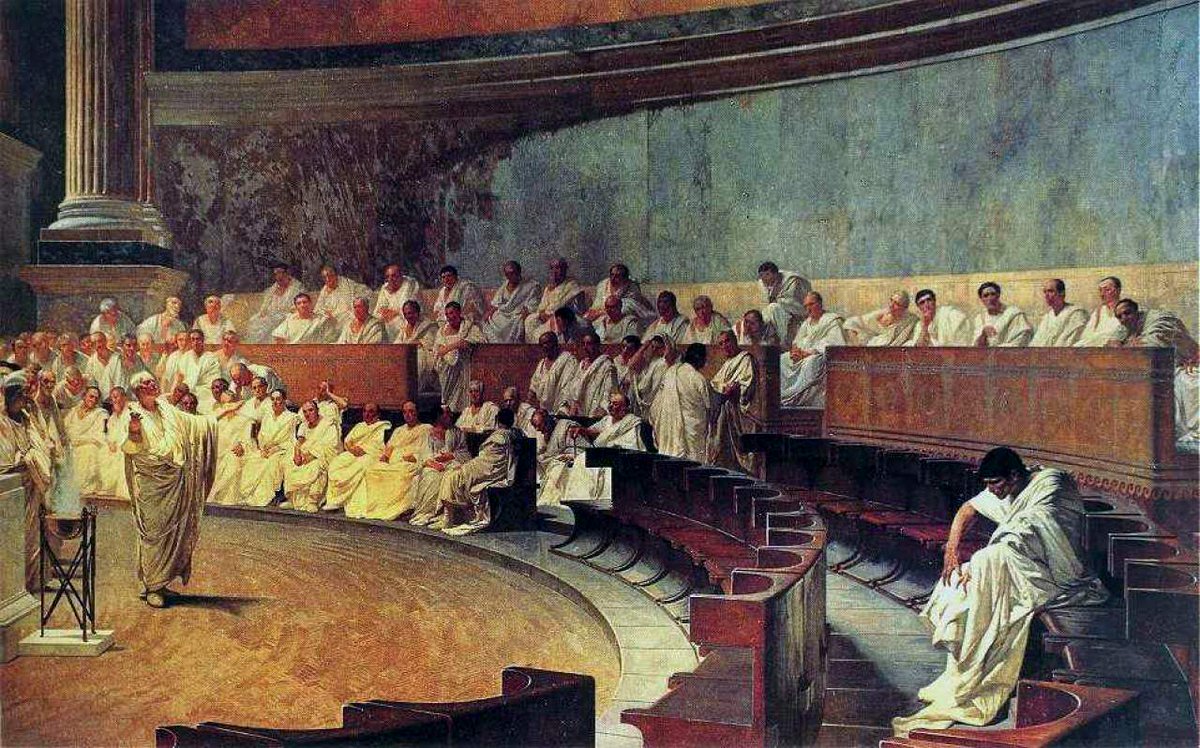
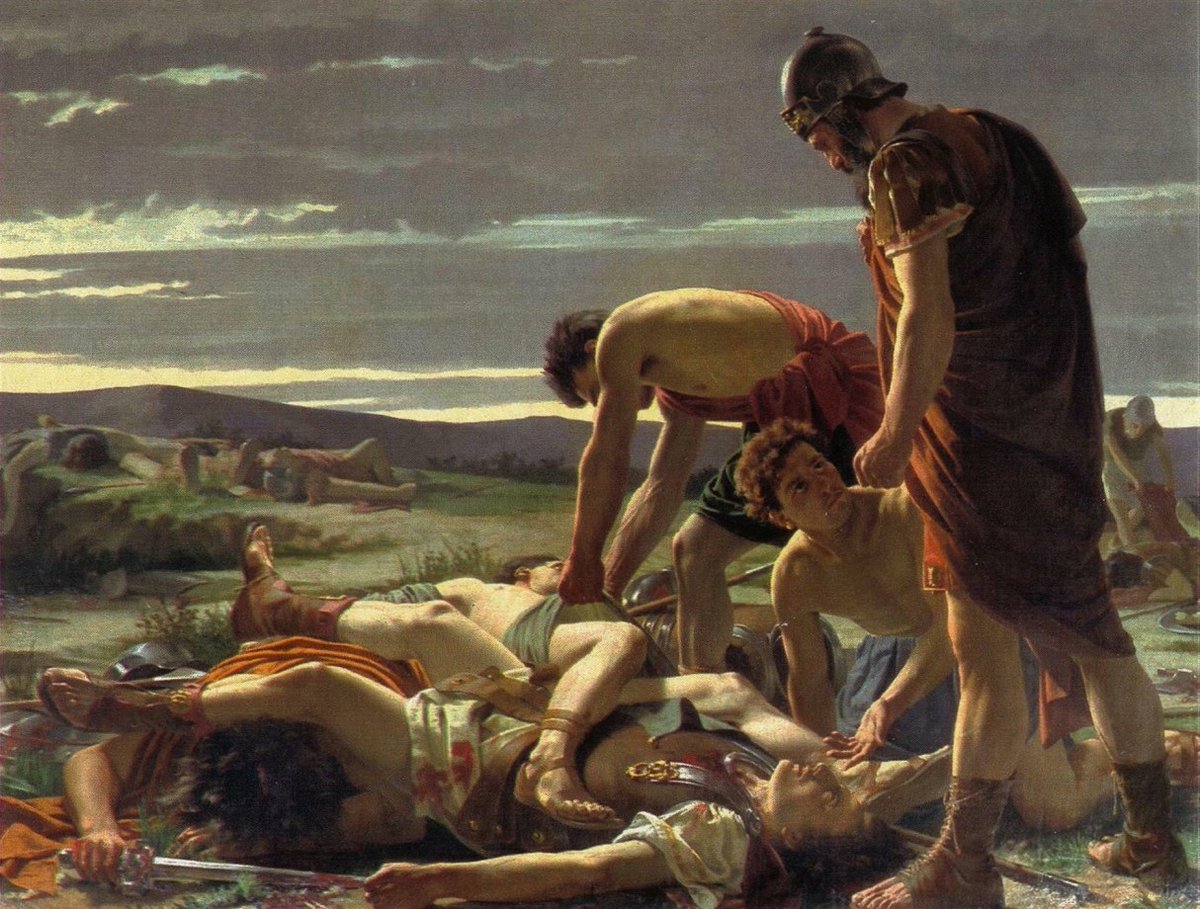
Catiline's co-conspirators were arrested and executed, while Catiline himself fled and, after raising a small army, was defeated.
Cicero was hailed as 'Father of the Fatherland' for saving the Republic.
And here is how he did it...
Cicero was hailed as 'Father of the Fatherland' for saving the Republic.
And here is how he did it...
(A quick textual note)
Cicero actually gave three speeches, two of them after Catiline fled. He wrote them down - in Latin - of course, but Cicero's rhetorical brilliance is universal.
So, a few quirks of Latin grammar aside, we can still learn from him today.
Cicero actually gave three speeches, two of them after Catiline fled. He wrote them down - in Latin - of course, but Cicero's rhetorical brilliance is universal.
So, a few quirks of Latin grammar aside, we can still learn from him today.
RHETORICAL DEVICES
Ecphonesis
A short exclamatory phrase, usually emotional, between longer clauses.
It grabs the audience's attention and allows you to make a sharp, powerful statement.
Ecphonesis
A short exclamatory phrase, usually emotional, between longer clauses.
It grabs the audience's attention and allows you to make a sharp, powerful statement.
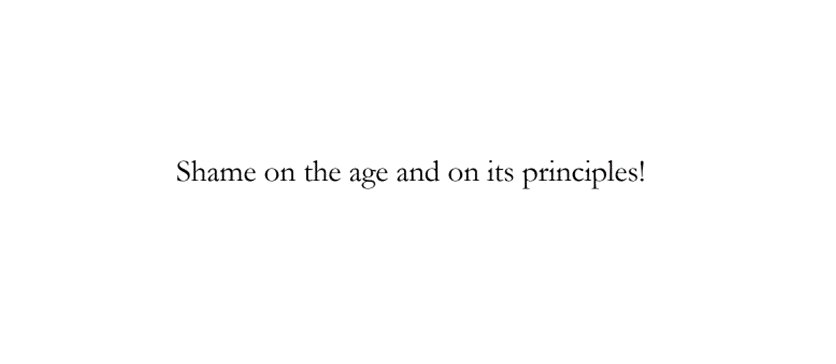
Antithesis
Placing two opposing ideas in the same clause.
This has a powerful contrasting effect. The audience understands your point without the need for further elaboration.
Placing two opposing ideas in the same clause.
This has a powerful contrasting effect. The audience understands your point without the need for further elaboration.
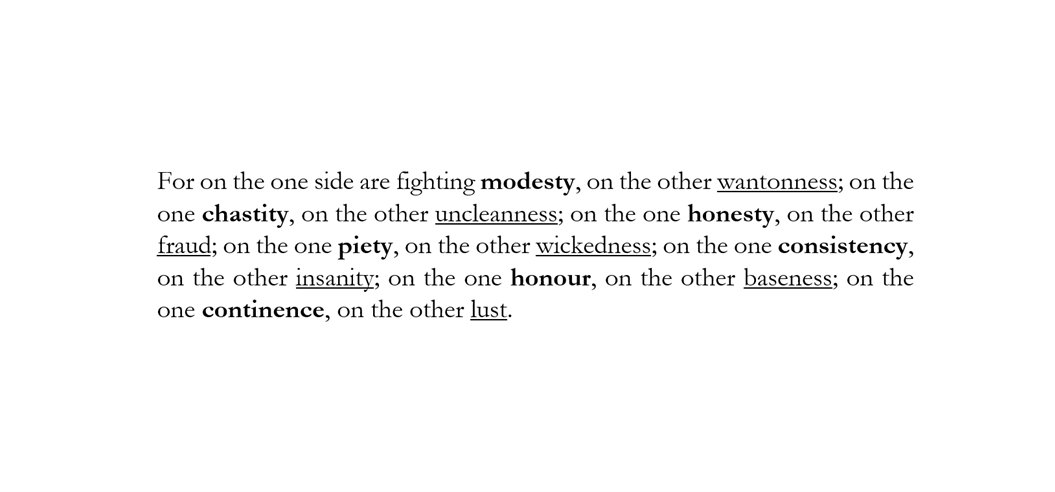
Exergasia
The repetition of the same idea in different ways.
It emphasises & embellishes your point, and makes it stick in the audience's mind because you have drawn such attention to it.
The repetition of the same idea in different ways.
It emphasises & embellishes your point, and makes it stick in the audience's mind because you have drawn such attention to it.
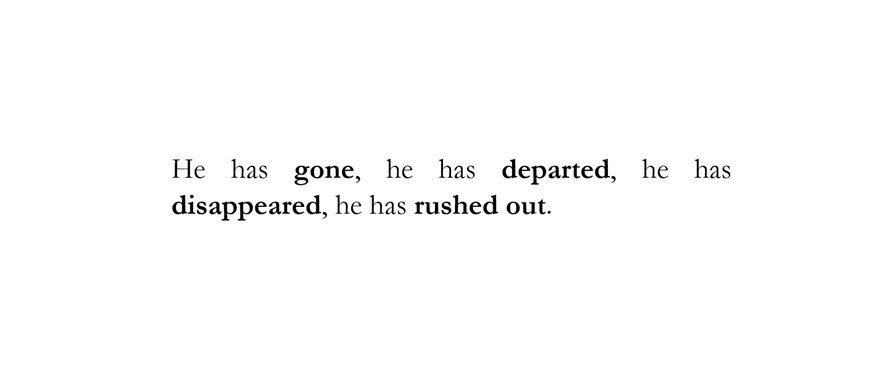
Apophasis
Drawing attention to something by claiming you don't want to bring it up.
Cicero loves this one. It lets you make an ad hominem attack while denying you intend to do so.
A form of ironic criticism, basically, which may rely on prior knowledge in your audience.
Drawing attention to something by claiming you don't want to bring it up.
Cicero loves this one. It lets you make an ad hominem attack while denying you intend to do so.
A form of ironic criticism, basically, which may rely on prior knowledge in your audience.
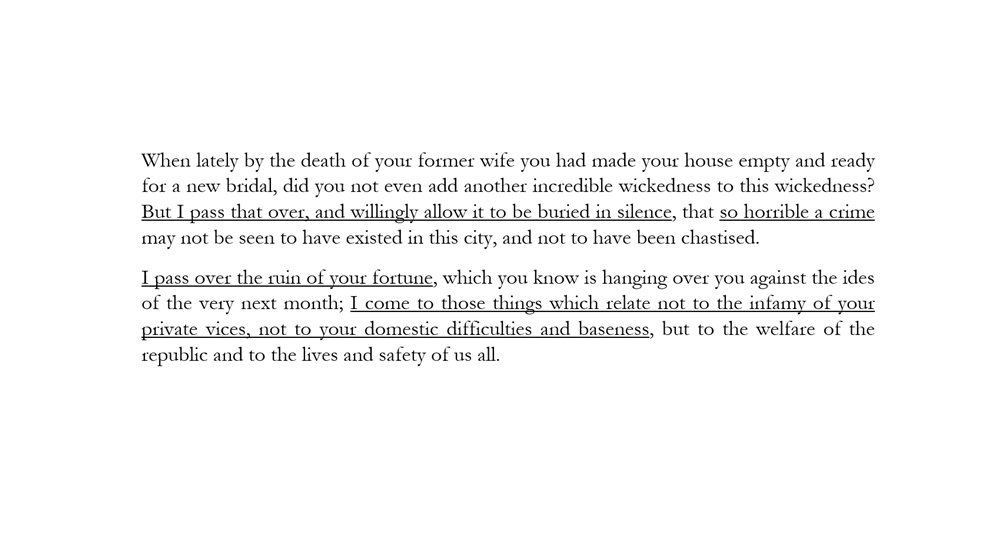
Diacope (bold)
The repetition of a word separated by a small number of intervening words.
Places extra importance on the repeated word.
Apostrophe (underlined)
A sudden address to somebody other than your audience.
This has a dramatic, almost theatrical effect.
The repetition of a word separated by a small number of intervening words.
Places extra importance on the repeated word.
Apostrophe (underlined)
A sudden address to somebody other than your audience.
This has a dramatic, almost theatrical effect.
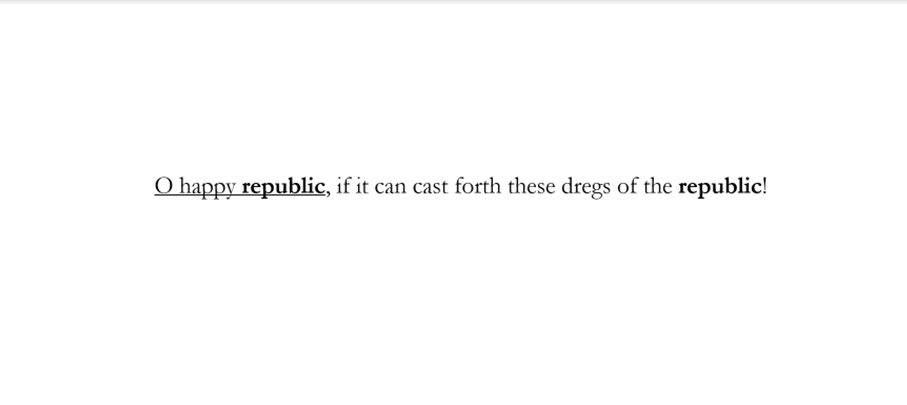
Procatalepsis
Anticipating a potential criticism and addressing it.
This shows a certain humility - by recognising possible mistakes - and also allows you to undermine opposing arguments before they are even made.
Anticipating a potential criticism and addressing it.
This shows a certain humility - by recognising possible mistakes - and also allows you to undermine opposing arguments before they are even made.
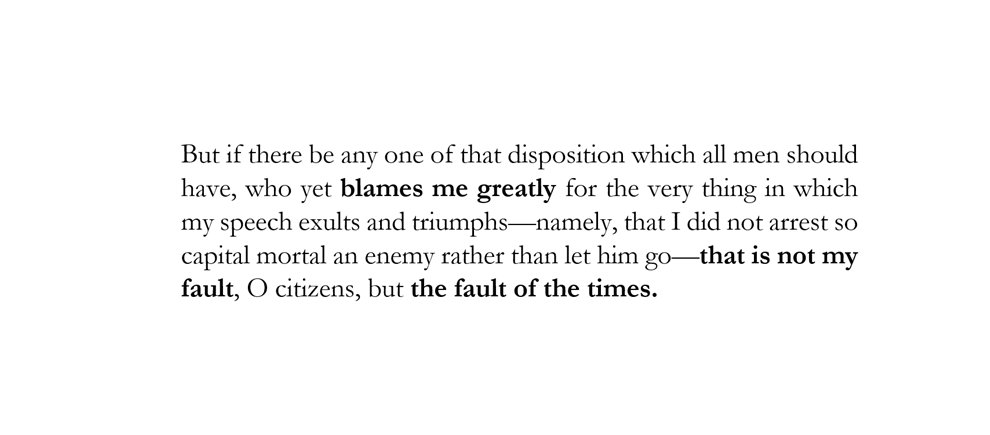
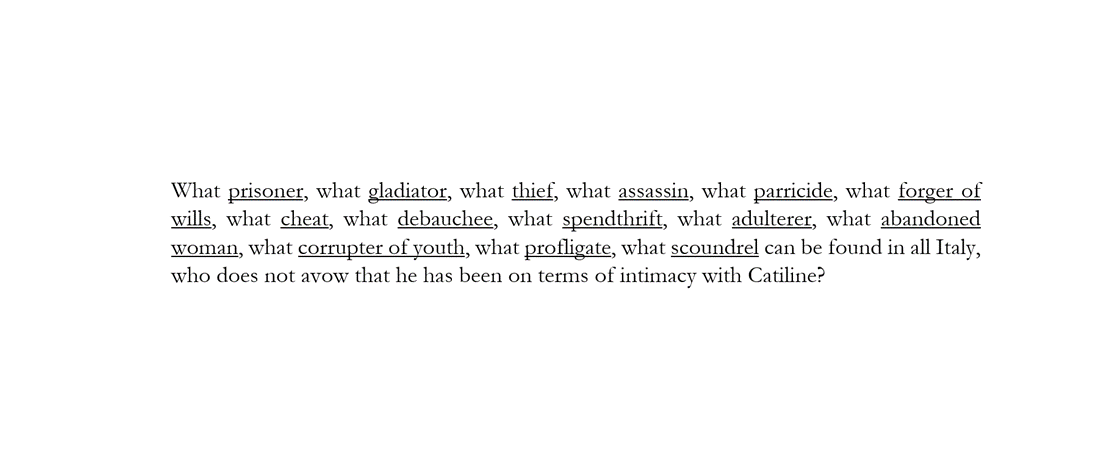
Auxesis
Repeating and exaggerating a point beyond necessity.
This builds momentum in your speech, creating a climactic effect which makes your point abundantly and powerfully clear in your audience's mind.
Repeating and exaggerating a point beyond necessity.
This builds momentum in your speech, creating a climactic effect which makes your point abundantly and powerfully clear in your audience's mind.
RHETORICAL STRUCTURE
Aristotle wrote that there are three forms of speech:
-deliberative (urging an action to be taken)
-forensic (establishing truth/falsehood, e.g. in court)
-ceremonial (praise-or-blame)
Cicero's Catilinarian Orations are a combination of all three.
Aristotle wrote that there are three forms of speech:
-deliberative (urging an action to be taken)
-forensic (establishing truth/falsehood, e.g. in court)
-ceremonial (praise-or-blame)
Cicero's Catilinarian Orations are a combination of all three.
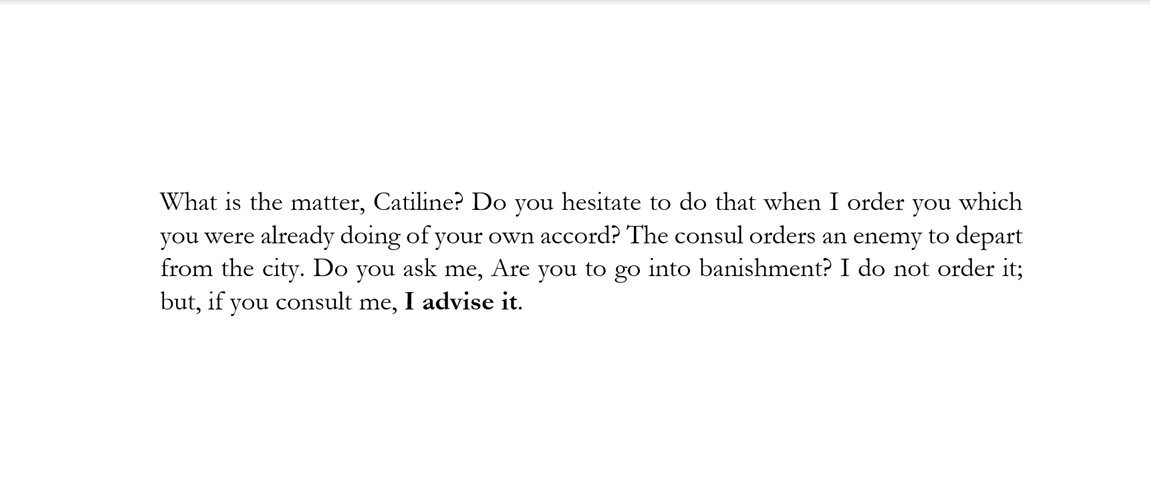
Here he is trying to convince the Senate that Catiline should be banished from Rome.
An example of deliberative rhetoric.
An example of deliberative rhetoric.
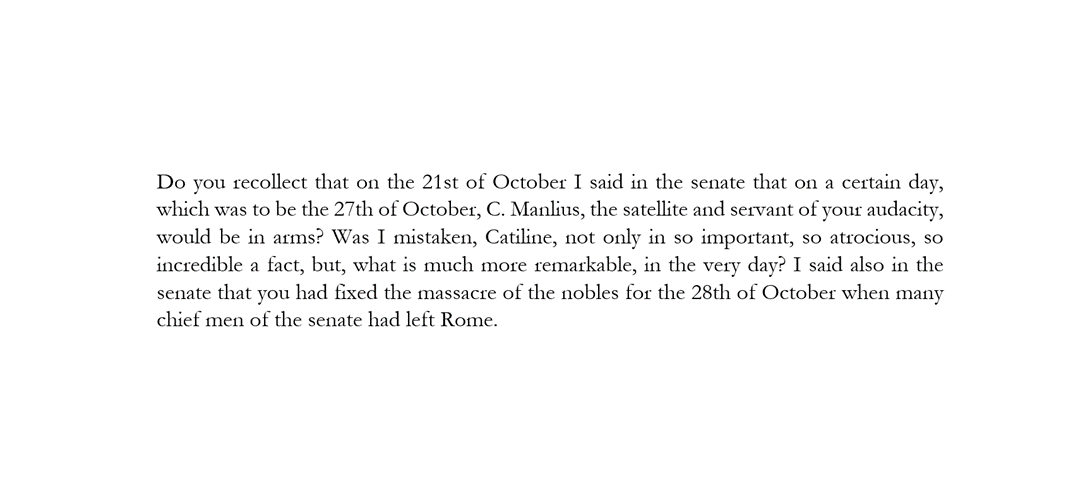
And here he adopts a forensic mode, seeking to prove the truthfulness of a factual statement.
Notice the inclusion of dates, and of question. This is like a legal cross-interrogation.
Notice the inclusion of dates, and of question. This is like a legal cross-interrogation.
And, of course, there was a strong "ceremonial" element to Cicero's speech: his heavy criticism of Catiline.
This is less about rational argument or provable facts. Rather, it is a character assassination.
Notice the abundance of morally weighted language.
This is less about rational argument or provable facts. Rather, it is a character assassination.
Notice the abundance of morally weighted language.
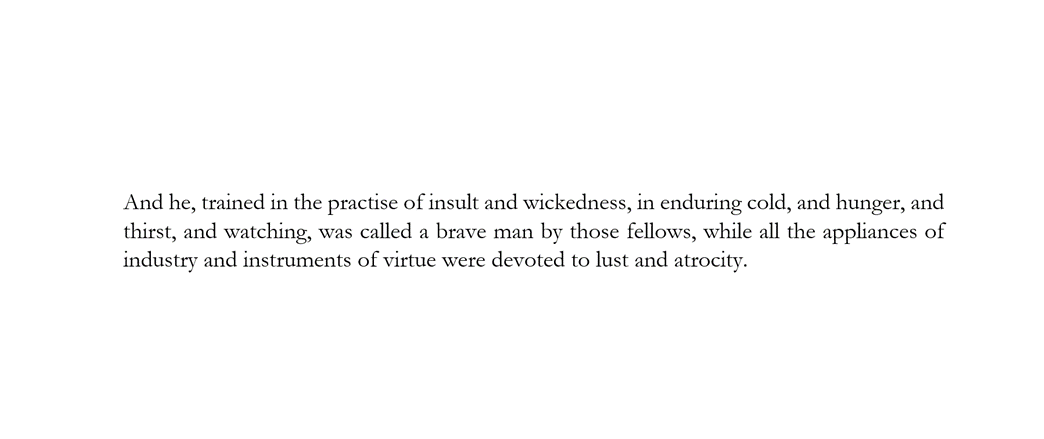
Aristotle also wrote about the three "persuasive appeals" of rhetoric that can be used to convince an audience.
-Ethos (the trustworthiness/authority of the speaker)
-Pathos (emotion)
-Logos (reason)
-Ethos (the trustworthiness/authority of the speaker)
-Pathos (emotion)
-Logos (reason)
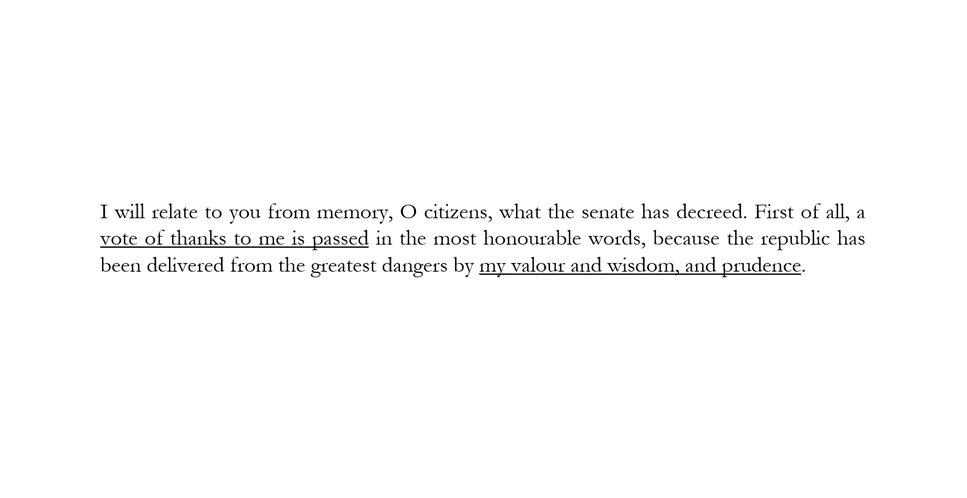
Here is an example of ethos.
Cicero is sort of boasting. But by referring to the honours he has been awarded, he is making himself a figure of authority in the audience's mind.
Somebody they can trust.
Cicero is sort of boasting. But by referring to the honours he has been awarded, he is making himself a figure of authority in the audience's mind.
Somebody they can trust.
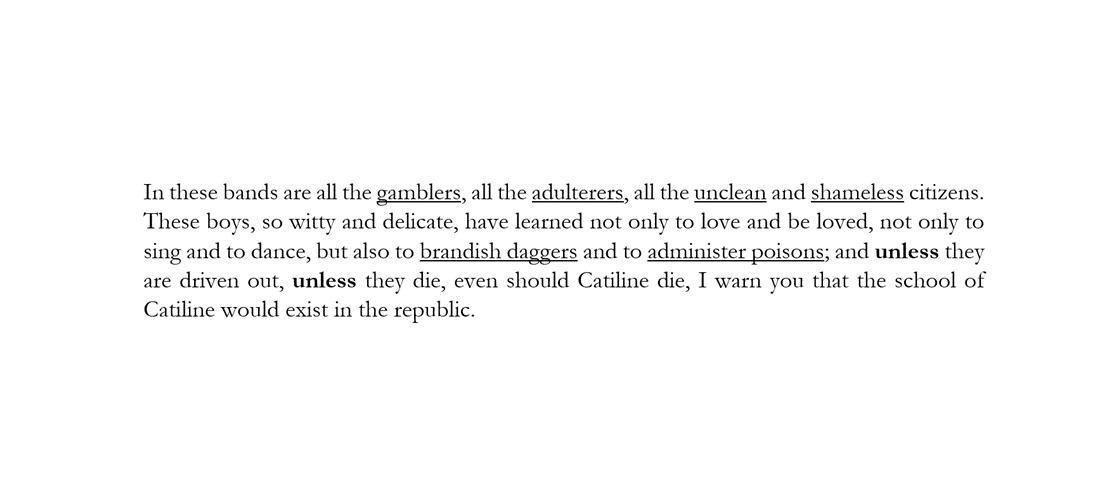
And here's an example of pathos.
Cicero is not using logic to urge his point. Instead, he is using highly charged language to get an emotional reaction from the Senators.
Cicero is not using logic to urge his point. Instead, he is using highly charged language to get an emotional reaction from the Senators.
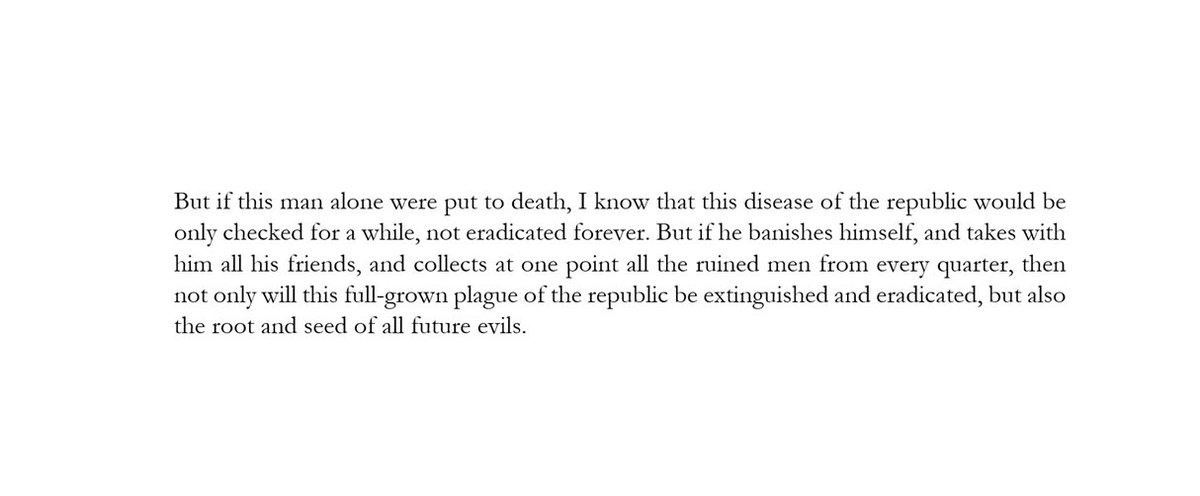
Cicero also uses logos.
Here he attempts to explain, in rational terms, why executing Catiline would not put an end to the revolutionary currents in Roman society.
Here he attempts to explain, in rational terms, why executing Catiline would not put an end to the revolutionary currents in Roman society.
Cicero also displays throughout the speech a mastery of the five "tenets" of rhetoric:
-Inventio (finding & creating arguments)
-Disposito (arranging them)
-Elocutio (using rhetorical devices)
-Memoria (memorising the speech)
-Actio (delivering it in the appropriate way)
-Inventio (finding & creating arguments)
-Disposito (arranging them)
-Elocutio (using rhetorical devices)
-Memoria (memorising the speech)
-Actio (delivering it in the appropriate way)
In Cicero's "De Oratore", a treatise on rhetoric, he writes that a great speaker must have knowledge both of facts and human nature.
Cicero displays both.
His factual knowledge is evident in references to relevant historical events.
Cicero displays both.
His factual knowledge is evident in references to relevant historical events.
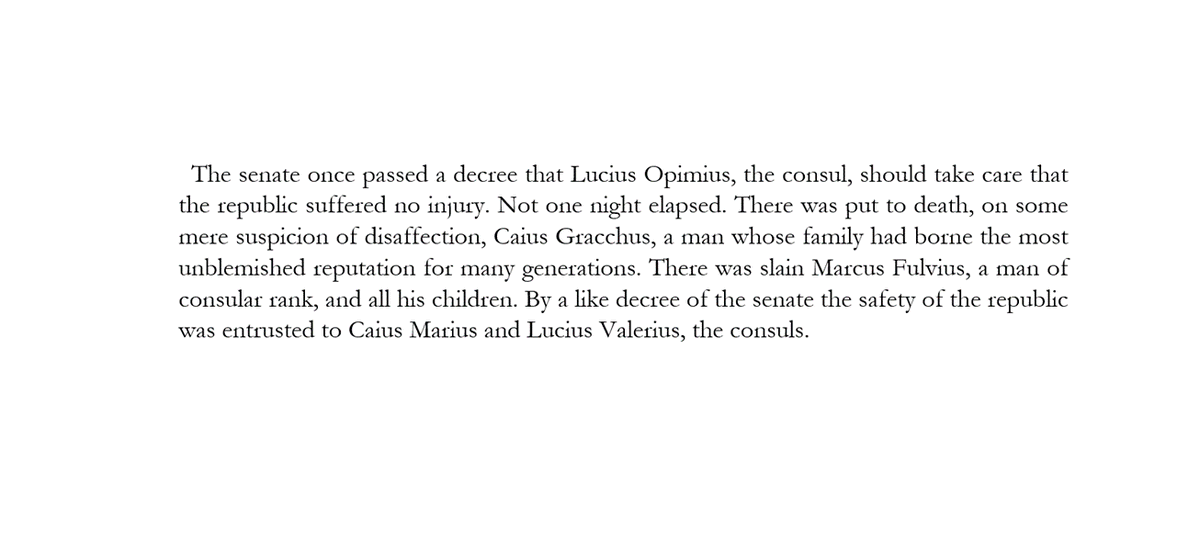
Knowledge of human nature isn't about the content of your speech, however.
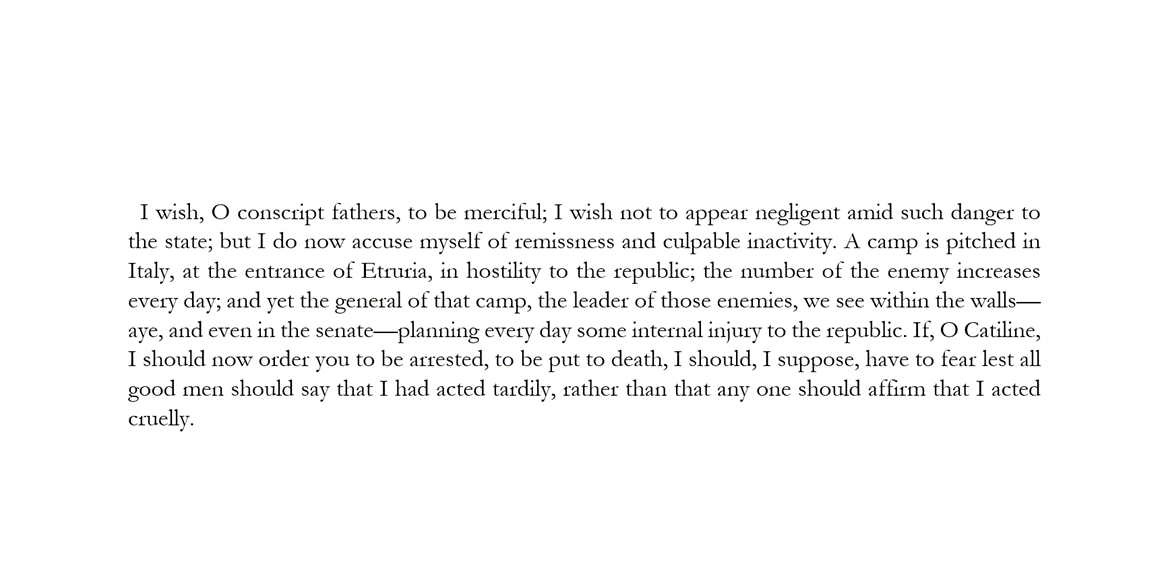
It's about knowing how to convince people.
This passage shows Cicero's deep understanding of human psychology. It is a short masterpiece of subtext, evocation, and invocation.
It's about knowing how to convince people.
This passage shows Cicero's deep understanding of human psychology. It is a short masterpiece of subtext, evocation, and invocation.
We could keep going, but I think that's enough for now.
Cicero's Catilinarian Orations are so famous because of their composition, rhetorical brilliance, and memorable portrayal of Roman politics.
Read them for yourself; you won't be disappointed.
Cicero's Catilinarian Orations are so famous because of their composition, rhetorical brilliance, and memorable portrayal of Roman politics.
Read them for yourself; you won't be disappointed.
And even if you're not speaking in the same lofty context, rhetoric is an important life skill.
You can use these techniques in almost any situation, every day. After all, humans speak all the time!
This is what the study of history is all about.
You can use these techniques in almost any situation, every day. After all, humans speak all the time!
This is what the study of history is all about.
I hope you found this both useful & fascinating.
In my free weekly newsletter, Areopagus, I share a tip about rhetoric (along with with six other short lessons)
Every Friday. All free.
getrevue.co
In my free weekly newsletter, Areopagus, I share a tip about rhetoric (along with with six other short lessons)
Every Friday. All free.
getrevue.co
جاري تحميل الاقتراحات...