

10 Lessons from The First Minute
(thread)
(thread)
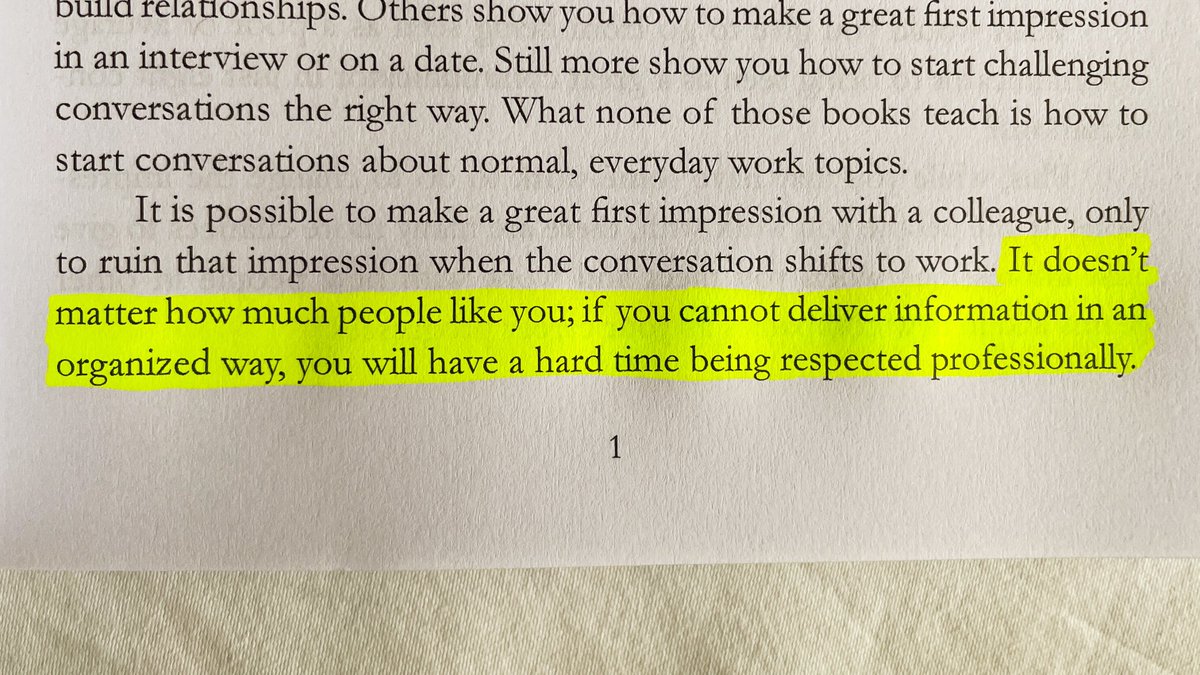
1) It doesn't matter how much people like you; if you cannot deliver information in an organised way, you will have a hard time being respected professionally.
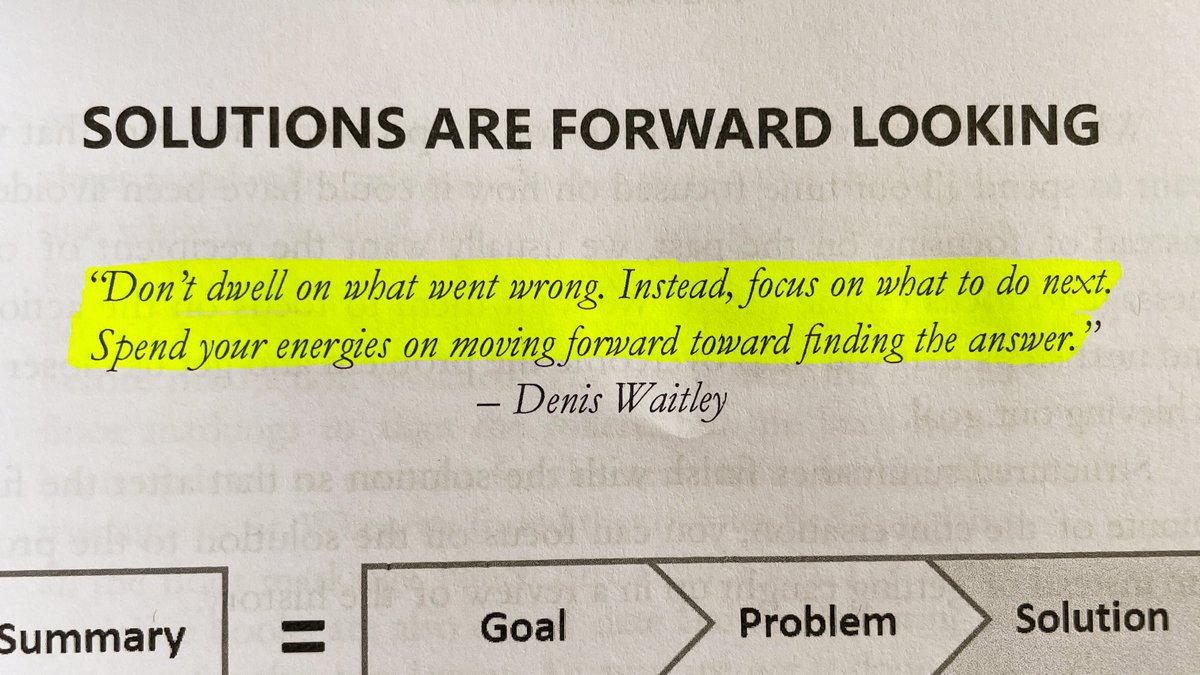
2) Don't dwell on what went wrong. Instead, focus on what to do next. Spend your energies on moving forward toward finding the answer.
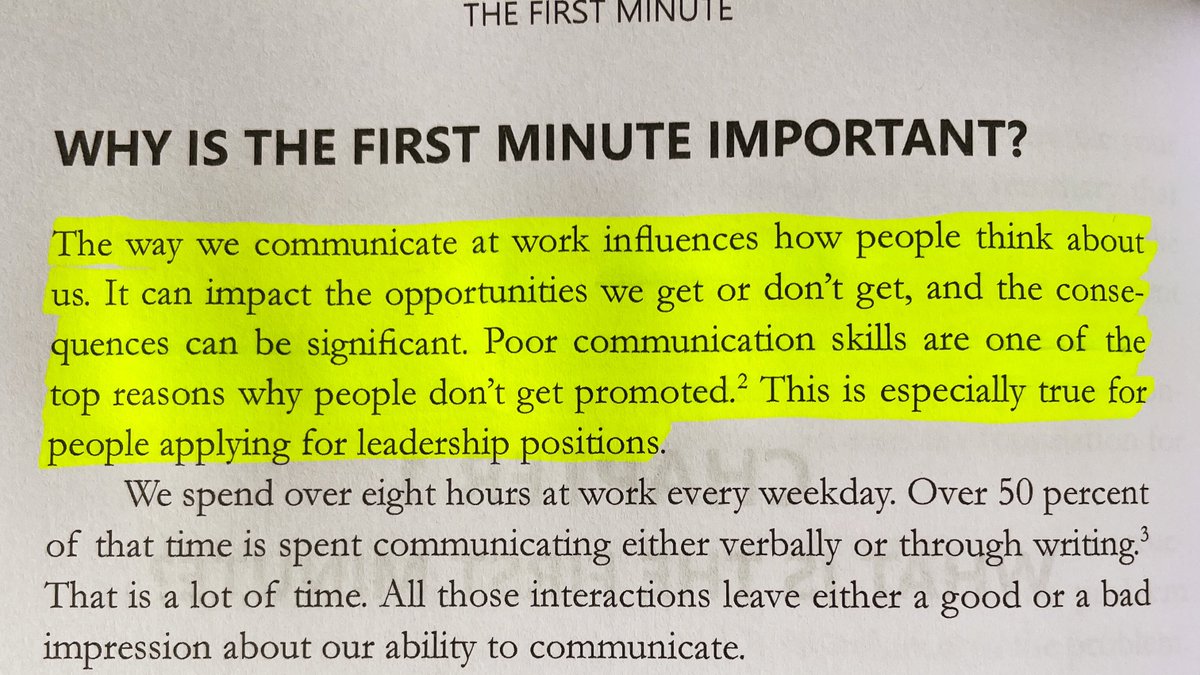
3) The way we communicate at work influences how people think about us. It can impact the opportunities we get or don't get, and the consequences can be significant.
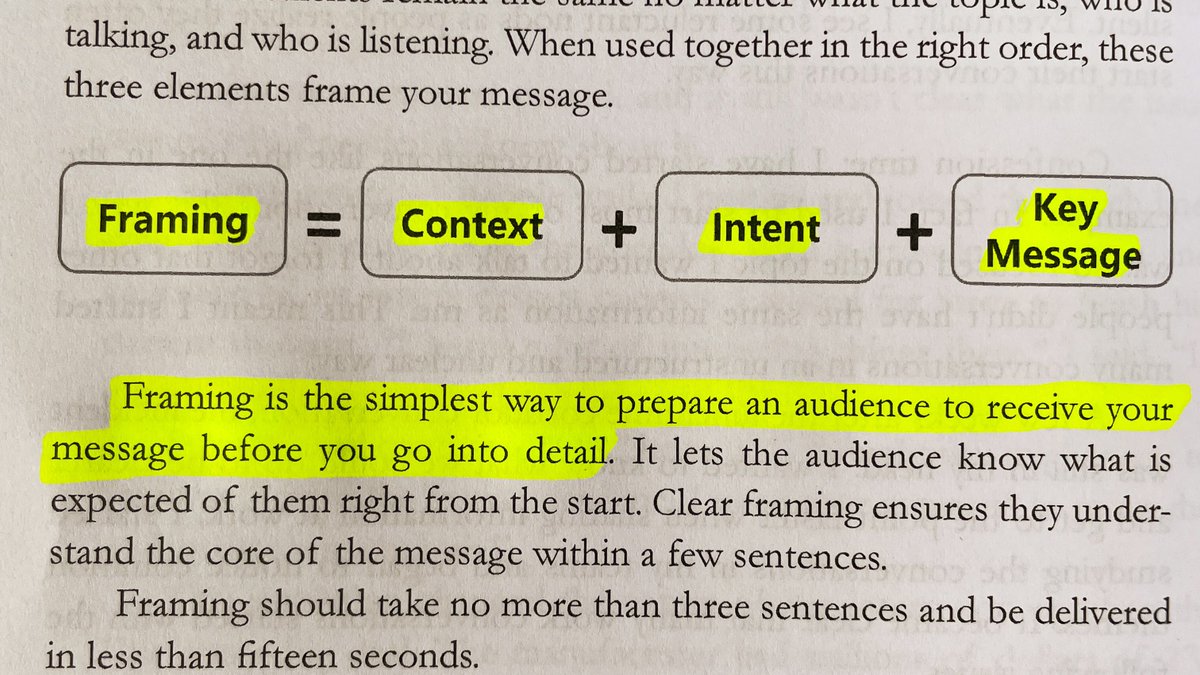
4) Framing = Context + Intent + Key Message
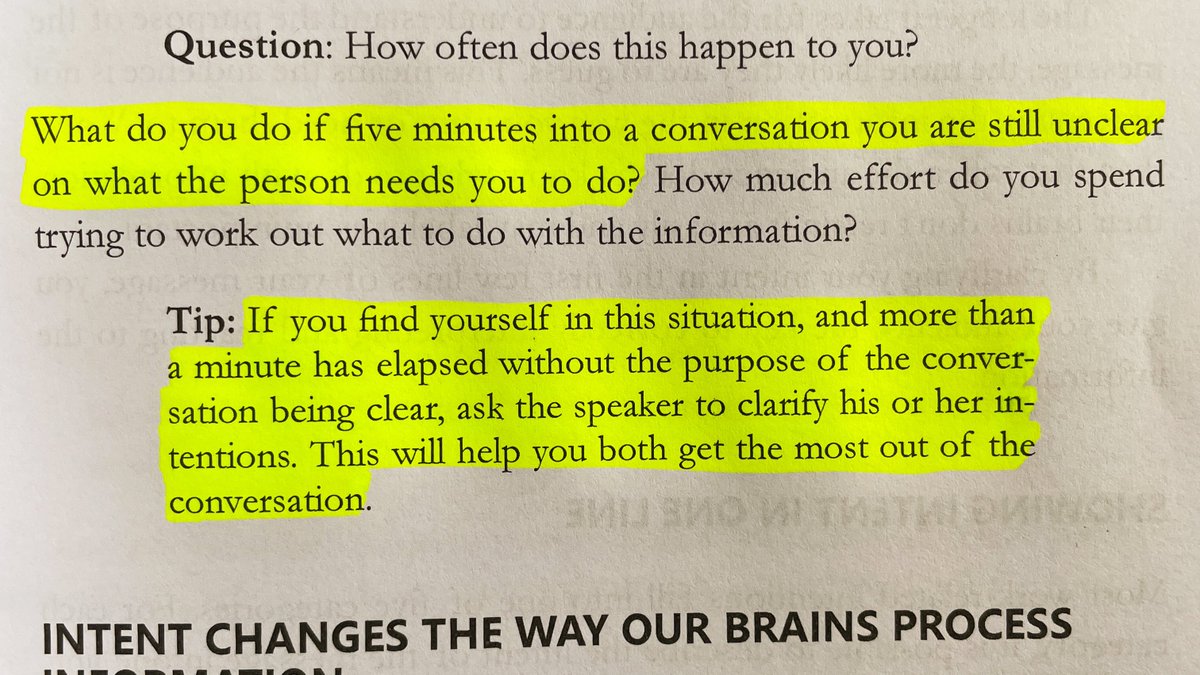
5) If you find yourself in this situation, and more than a minute has elapsed without the purpose of the conversation being clear, ask the speaker to clarify his or her in-
tentions. This will help you both get the most out of the conversation.
tentions. This will help you both get the most out of the conversation.
6) Don't ask for a minute if
you know you'll need five or ten or ten minutes to cover the topic.
you know you'll need five or ten or ten minutes to cover the topic.
7) Simple and to the point is always the best way to get your point across.
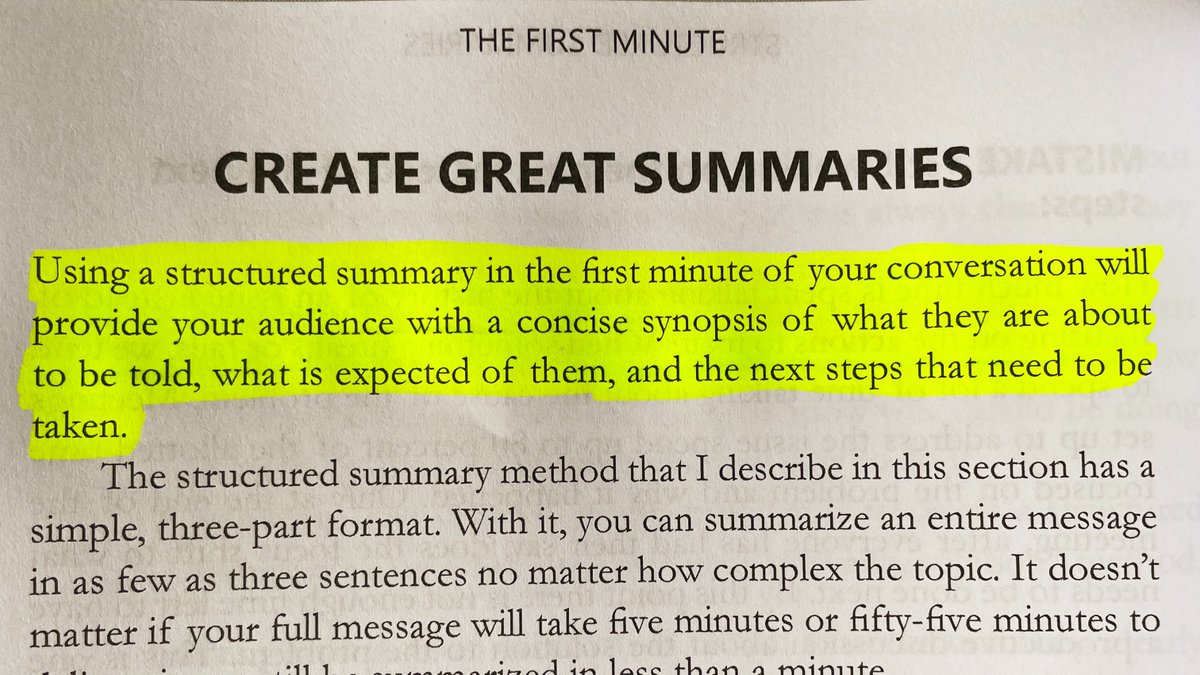
8) Using a structured summary in the first minute of your conversation will provide your audience with a concise synopsis of what they are about to be told, what is expected of them, and the next steps that need to be taken.
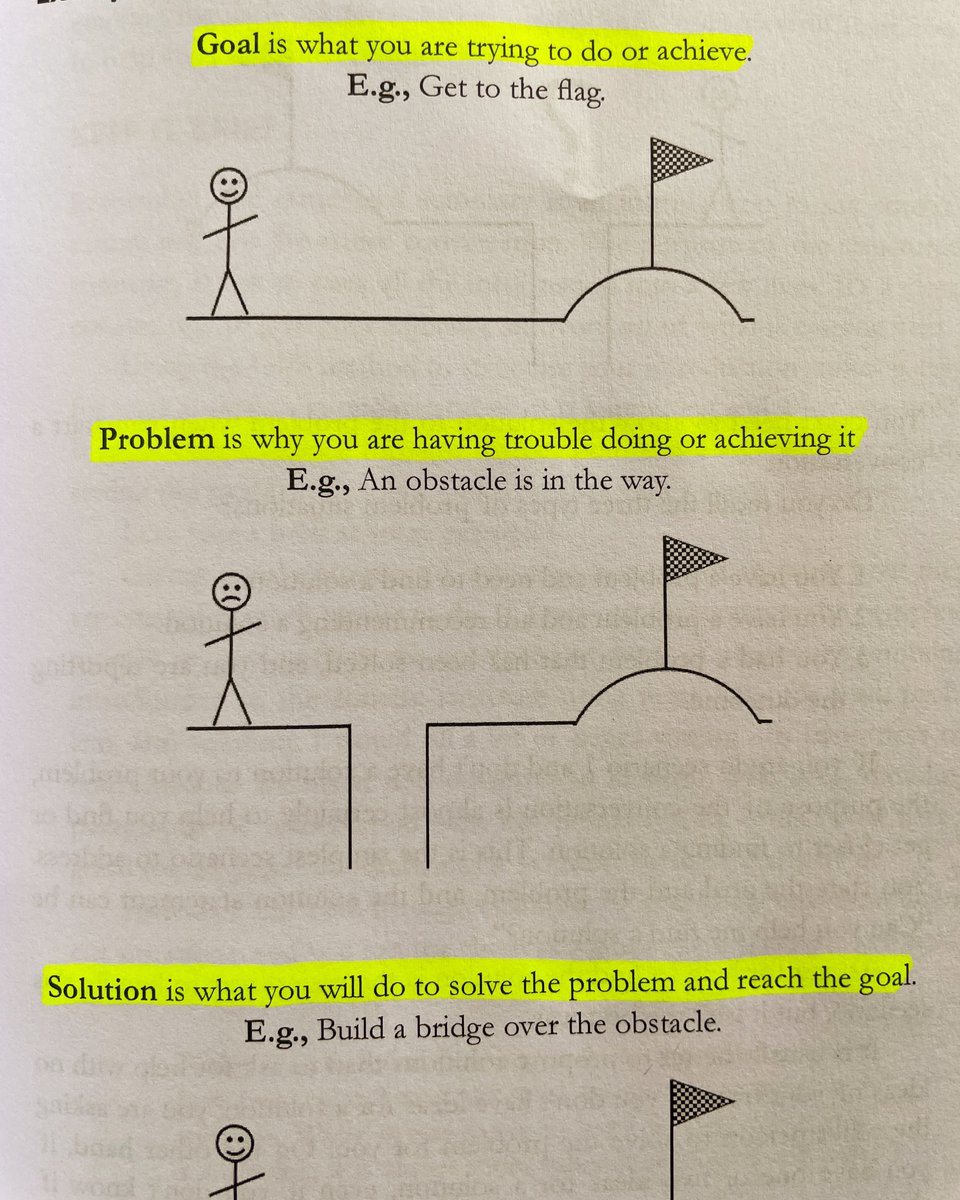
9) Goal is what you are trying to do or achieve.
Problem is why you are having trouble doing or achieving it
Solution is what vou will do to solve the problem and reach the goal
Problem is why you are having trouble doing or achieving it
Solution is what vou will do to solve the problem and reach the goal
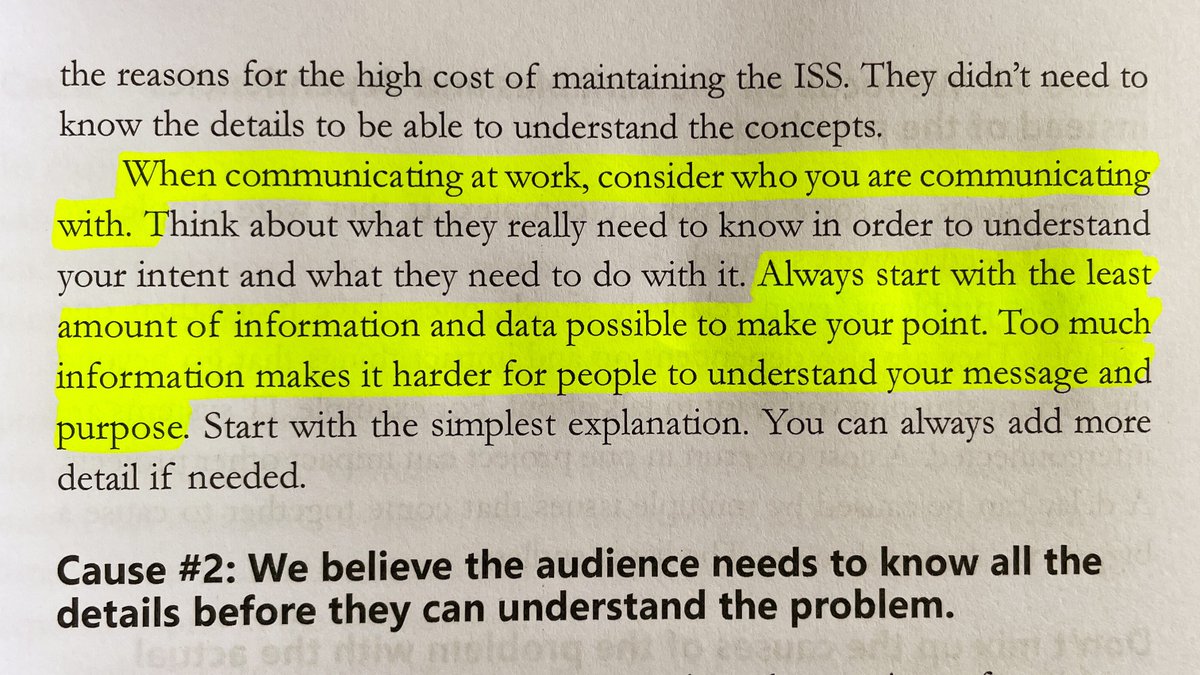
10) Too much information makes it harder for people to understand your message and purpose.
If you liked this thread then subscribe to our newsletter for more book reviews:
getrevue.co
getrevue.co

Loading suggestions...