

Kumari Kandam: The Lost Continent
Narrative of Atlantis, the legendary sunken metropolis detailed by the ancient Greek philosopher Plato, is well-known. The debate over whether this story should be regarded literally or simply as a morality tale continues to this day.
#Thread
Narrative of Atlantis, the legendary sunken metropolis detailed by the ancient Greek philosopher Plato, is well-known. The debate over whether this story should be regarded literally or simply as a morality tale continues to this day.
#Thread

A similar story exists further east in India's subcontinent, albeit it is perhaps less well known than Atlantis'. This is the 'lost continent' of Lemuria, which Tamil speakers commonly associate with the legend of Kumari Kandam.
Lemuria was coined in the later half of the nineteenth century. The existence of lemur fossils in Madagascar and India but not in continental Africa or the Middle East perplexed English geologist Philip Sclater.
Sclater argued that Madagascar and India were formerly part of a bigger continent in his 1864 article 'The Mammals of Madagascar,' and termed this lost landmass 'Lemuria.'
The scientific world of the time accepted Sclater's theory as the explanation for how lemurs could have moved from Madagascar to India or vice versa in ancient times.
However, with the development of modern concepts like continental drift and plate tectonics, Sclater's idea of a submerged continent became untenable. Nonetheless, the myth of a lost continent persisted, and some people believe that Lemuria was once a real continent.
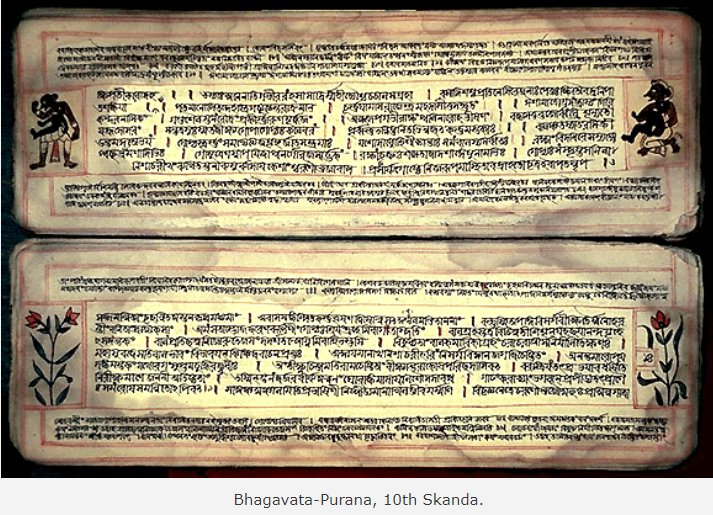
Tamil nationalists are one such group. The phrase Kumari Kandam originally appeared in the Tamil version of the Skanda Puranam, the Kanda Puranam, in the 15th century. However, many earlier Tamil literary works contain stories of an ancient land submerged by the Indian Ocean.
According to legend, the Pandiyan rulers previously ruled a stretch of land that was eventually absorbed by the sea. When stories about Lemuria came in colonial India, the country was in the midst of a period when folklore was coming to be accepted as fact.
As a result, Kumari Kandam was rapidly associated with Lemuria. Kumari Kandam's story is more than a story; it appears to be laced with nationalistic feelings.
According to legend, the Pandiyan kings of Kumari Kandam ruled over the whole Indian peninsula, and Tamil civilisation is the world's oldest civilisation.
When Kumari Kandam was drowned, its inhabitants dispersed over the globe and established diverse civilisations, leading to the idea that the vanished continent was also the origin of human civilisation.
So, how much truth is there in Kumari Kandam's story? The sea level was lower by 100 metres approximately 14,500 years ago and by 60 metres about 10,000 years ago, according to researchers at India's National Institute of Oceanography.
As a result, it's highly plausible that a land bridge previously connected Sri Lanka's island to India's mainland. Rising sea levels caused frequent flooding as the rate of global warming rose between 12,000 and 10,000 years ago.
This would have flooded prehistoric towns in India and Sri Lanka's low-lying coastal zones. These disastrous occurrences may have been passed down orally from generation to generation before being written down as Kumari Kandam's narrative.
Adam's Bridge (also known as Rama-Setu), a line of limestone shoals made up of sand, silt, and small stones located in the Palk Strait running 18 miles from mainland India to Sri Lanka, is one piece of evidence claimed to establish the existence of Kumari Kandam.

This strip of land was formerly thought to be a natural creation, but others contend that photographs taken by a NASA satellite show it to be a long-broken bridge beneath the sea's surface.
Another ancient tradition also supports the presence of a bridge in this place. The Ramayana narrates the story of Rama's wife, Sita, who is kidnapped on the island of Lanka. Rama orders the construction of a gigantic bridge over the ocean to bring his Vanara army to Lanka.
The ancient Tamil traditions of Kumari Kandam, like other so-called myths, appear to include some reality, but the exact amount remains unknown.
@buzz_chronicles save this

Loading suggestions...