

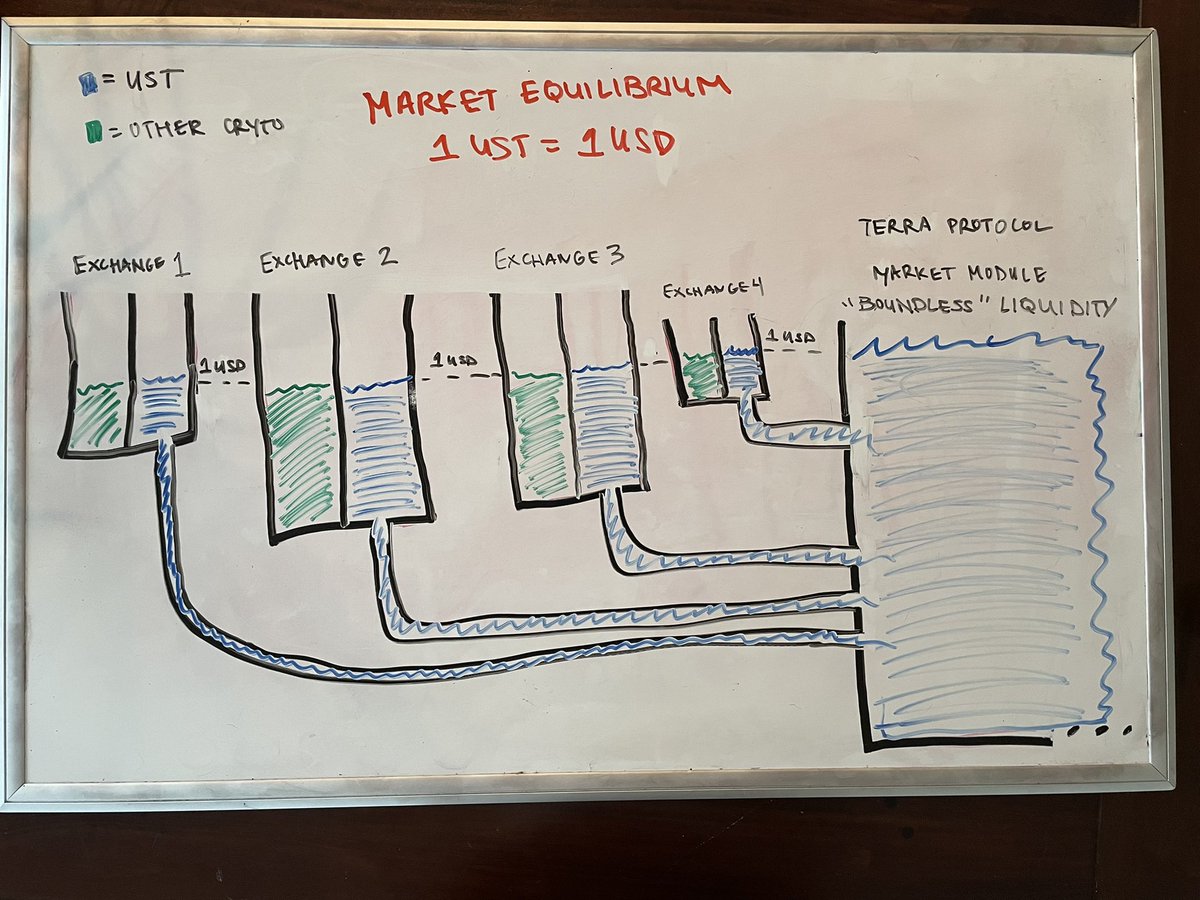
1/7 I’ll let you in on a secret: ON CHAIN, 1 UST ALWAYS EQUALS 1USD. The market module makes no distinction between fiat per Luna rates and their corresponding Terra stablecoin per Luna rates. UST “depeg” only happens on external exchanges, when pools are unbalanced.
2/7 AMM pools get unbalanced. It’s normal. They rebalance through arbitrage incentives. When one pool is unbalanced, people use other balanced pools or sources to trade against and profit the difference, leading to a “leveling” effect. Imagine the way water always seeks level.
3/7 The ultimate source for this balancing is the market module, which lets users users swap 1 UST for 1USD of Luna and vice versa. When off-chain pools of UST are unbalanced, the market module becomes the source or sink UST balancing, incentivized by arbitrage.
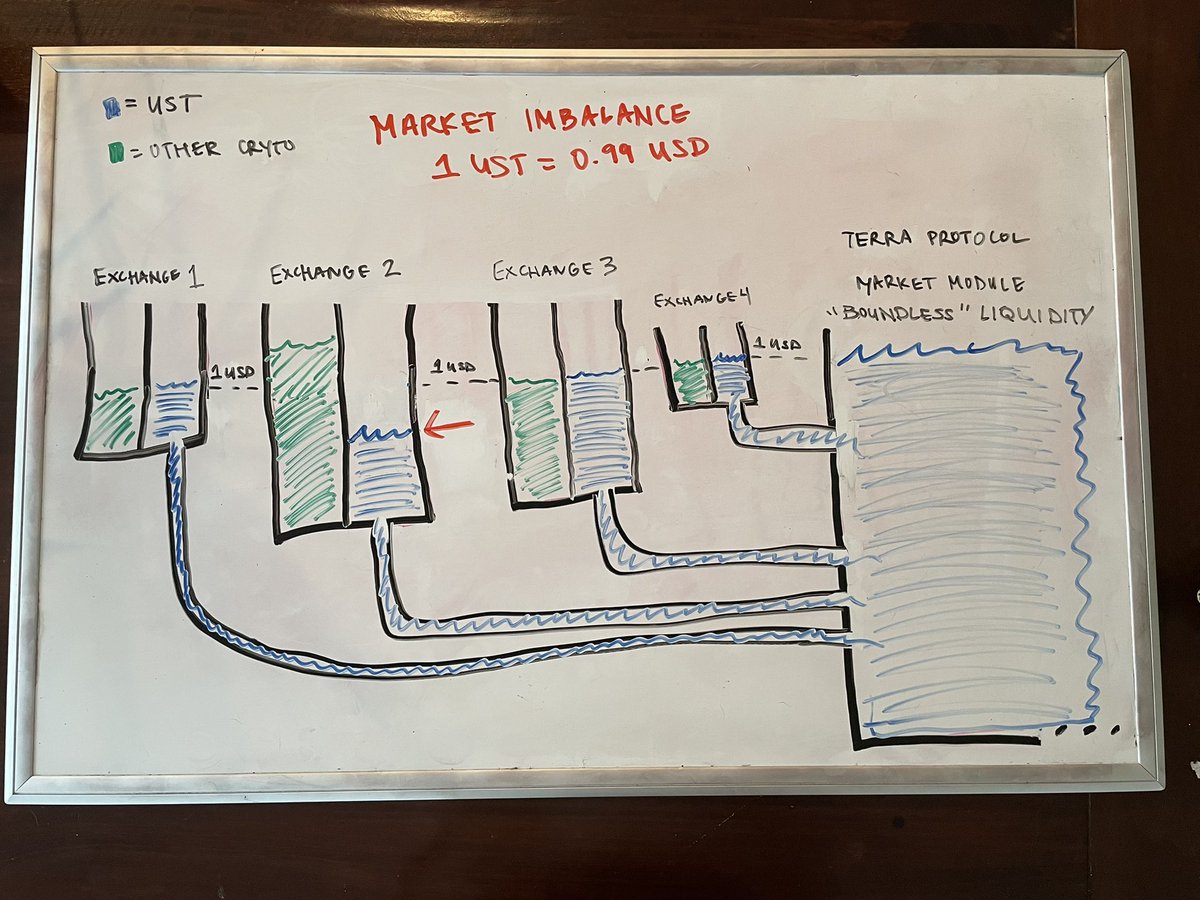
4/7 example: 1UST = .99 USD on exchange #2. Users buy 1 UST for .99 USD, swap 1 UST for 1 USD of Luna in the market module, which burns UST to mint Luna. Profit .01 USD. Repeat until pool is rebalanced, 1 UST = 1 USD, and the arbitrage opportunity is closed.
5/7 Reverse the process when price is high. Why does depeg happen? Why isn’t balancing instantaneous? Market fluctuation= normal and trades take time. The market module spread fee (valve in pic ⬇️) limits minting and burning volume. Too much at once ups the spread fee.
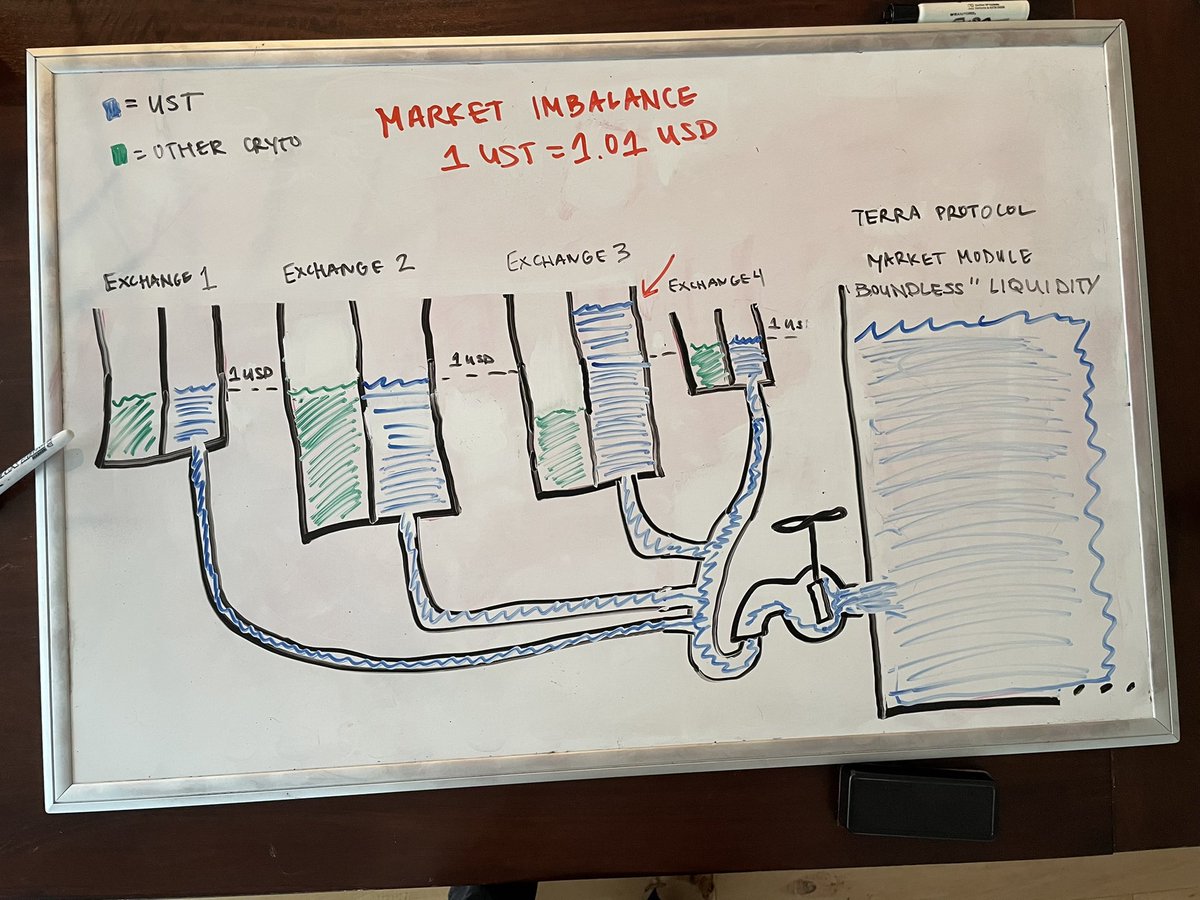
6/7 I’ll talk about how the spread works and why we have one another time. Just know that it prevents Oracle attacks and combats volatility spikes. TLDR: market module mint/burn process modulates supply of UST and balances prices of external exchanges through arbitrage.
7/7 The example pics in this tweet are not perfect, but they provide a good visualization of pool balancing effects. Think of the market module as a source of constant price. More drawings and interactive explanations are on their way. Further reading: docs.terra.money

#terra $luna @terra_money
جاري تحميل الاقتراحات...