

The Beginners Guide To Stablecoins
🧵 by @smyyguy
🧵 by @smyyguy
1/ A stablecoin is a digital asset that is "pegged" to the value of another asset, generally the US dollar
For example, 1 USDC is always redeemable for $1.00
For example, 1 USDC is always redeemable for $1.00
2/ Stablecoins aim to merge the speed and efficiency of blockchain technology with the stability of the US dollar
Which makes them VERY popular
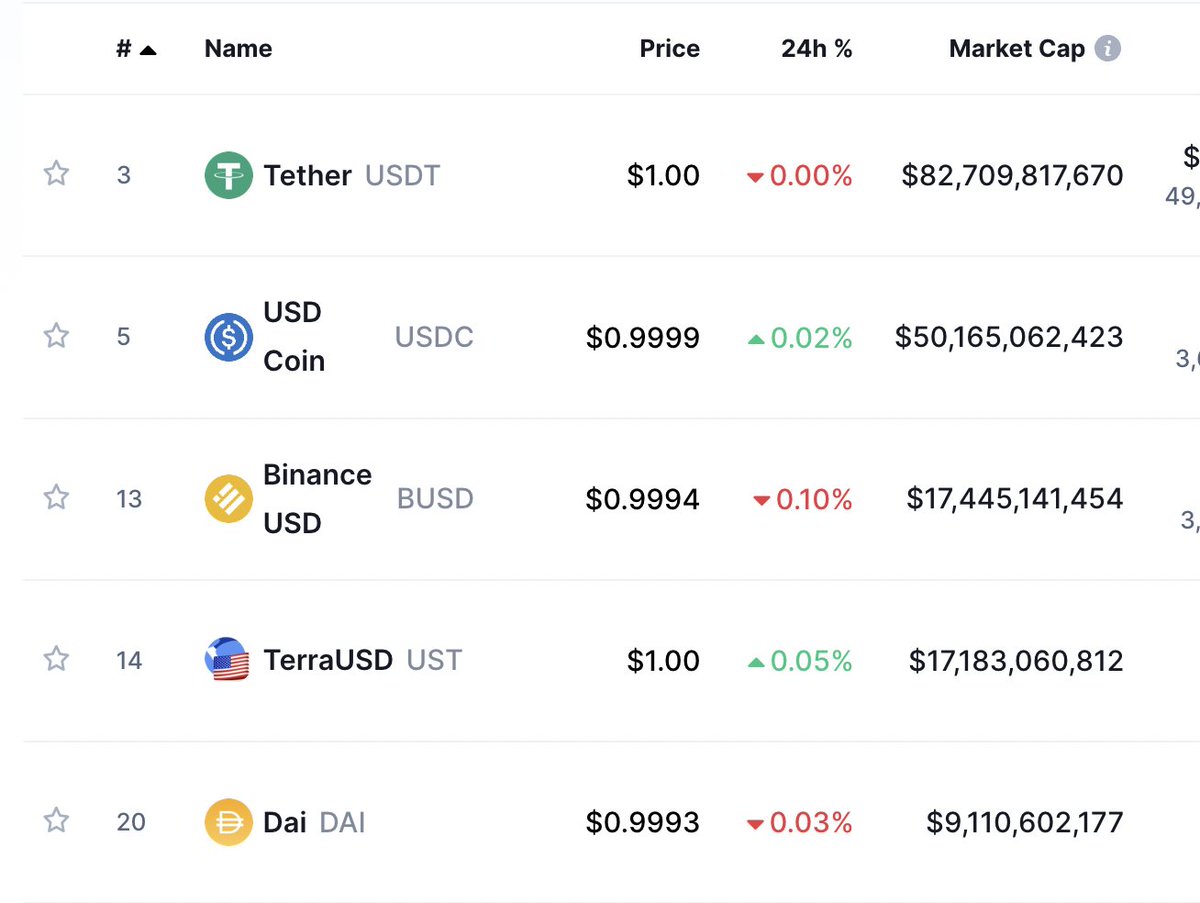
At a combined market cap of $189B, they account for roughly 9.5% of the total crypto market cap
Which makes them VERY popular
At a combined market cap of $189B, they account for roughly 9.5% of the total crypto market cap
3/ Stablecoins allow investors to:
- own low volatility, crypto native currency
- transfer money globally, instantly, and cheaply
- derisk portfolios without moving into fiat currency
Stables can simply be viewed as on-chain dollars
- own low volatility, crypto native currency
- transfer money globally, instantly, and cheaply
- derisk portfolios without moving into fiat currency
Stables can simply be viewed as on-chain dollars
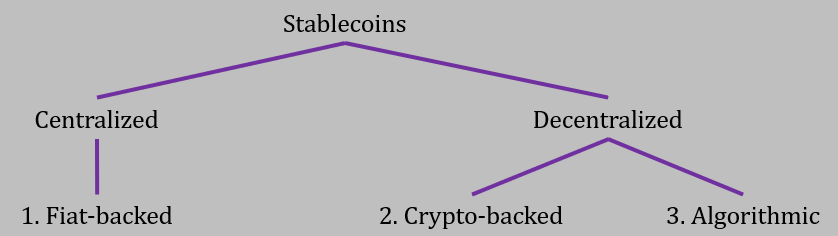
4.1/ Stablecoins: Fiat-backed
These stables are managed by various centralized custodians - example: USDC
They maintain their peg with a 100% collateralization approach.
This means every token in circulation is backed 1:1 with dollars/dollar equivalents held by the custodian
These stables are managed by various centralized custodians - example: USDC
They maintain their peg with a 100% collateralization approach.
This means every token in circulation is backed 1:1 with dollars/dollar equivalents held by the custodian
4.2/ Drawback: Trust
Users must trust that the centralized custodian has the 1:1 backing they claim to have. If a bank run occurs, can they pay their token-holders?
Users must trust that the centralized custodian has the 1:1 backing they claim to have. If a bank run occurs, can they pay their token-holders?
5/ Stablecoins: Crypto-backed
These are backed by over-collateralized crypto loans, meaning users must deposit more than $1 of crypto collateral to mint $1 in stablecoins
In contrast to fiat-backed, these are decentralized assets managed via smart contracts
These are backed by over-collateralized crypto loans, meaning users must deposit more than $1 of crypto collateral to mint $1 in stablecoins
In contrast to fiat-backed, these are decentralized assets managed via smart contracts
5.1/ The largest crypto-backed stablecoin is DAI. To use ETH as collateral, users must deposit at least $1.30 of ETH to mint $1 of DAI
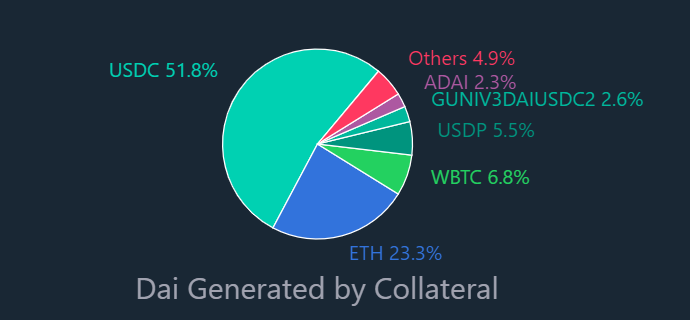
5.2/ Drawback: Capital Inefficiency
It does not always make sense for users to deposit more than $1 of crypto to receive just $1 in stables
Users also risk losing their collateral if the deposited value drops below the liquidation price. A necessary evil to maintain the peg
It does not always make sense for users to deposit more than $1 of crypto to receive just $1 in stables
Users also risk losing their collateral if the deposited value drops below the liquidation price. A necessary evil to maintain the peg
6/ Stablecoins: Algorithmic
Commonly viewed as the most decentralized, algorithmic stablecoins are either not backed by any collateral or are under-collateralized
They maintain their peg with mathematically determined expansion and contraction in supply
Commonly viewed as the most decentralized, algorithmic stablecoins are either not backed by any collateral or are under-collateralized
They maintain their peg with mathematically determined expansion and contraction in supply
6.1/ UST is the largest algo stable, and it maintains its peg by relying on LUNA to absorb any price volatility
The LUNA supply actively adds to or subtracts from UST's supply as users:
- burn $1 of LUNA to mint $1 of UST
- burn $1 of UST to mint $1 of LUNA
The LUNA supply actively adds to or subtracts from UST's supply as users:
- burn $1 of LUNA to mint $1 of UST
- burn $1 of UST to mint $1 of LUNA
6.2/ But the key to success for algo stablecoins is demand...
@bgilliam1982 wrote a fantastic piece on why @stablekwon focuses on generating demand for UST
"A stablecoin can only hold its peg for as long as there is enough demand to keep it there"
blockworks.co
@bgilliam1982 wrote a fantastic piece on why @stablekwon focuses on generating demand for UST
"A stablecoin can only hold its peg for as long as there is enough demand to keep it there"
blockworks.co
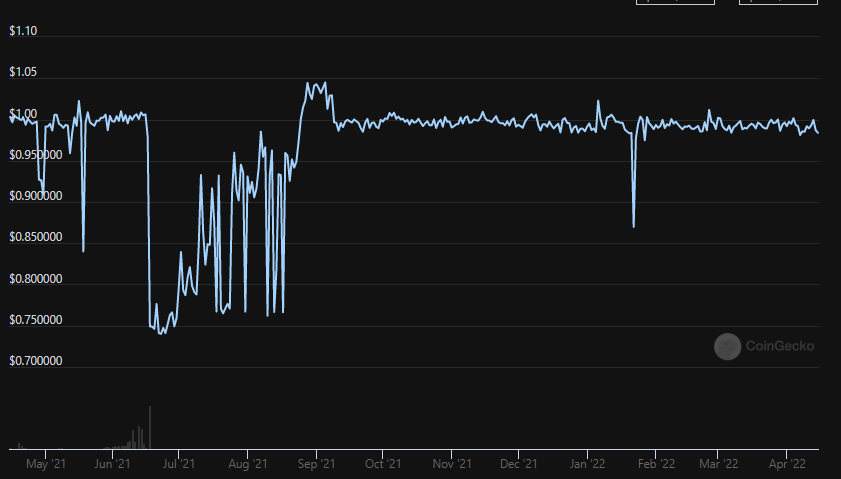
6.3/ Drawback: De-pegging risk
Historically building an algo stable is hard. While you gain the benefit of decentralized money, you undertake the risk of a broken peg
The tech has evolved over the iterations, and algo stables focused on demand appear to have lower de-peg risk
Historically building an algo stable is hard. While you gain the benefit of decentralized money, you undertake the risk of a broken peg
The tech has evolved over the iterations, and algo stables focused on demand appear to have lower de-peg risk
7/ Follow @smyyguy the get insights on the future of DeFi- Soon he will dive into how to earn yield on stablecoins👀
Loading suggestions...