

A thread on the Kernosovskiy & related icons. This image found in what's today Ukraine is from the Yamnaya horizon. If indeed it dates closer to then it is of considerable significance as it is a rare image from the early IE period. I've so far seen reasonably clear images of 3
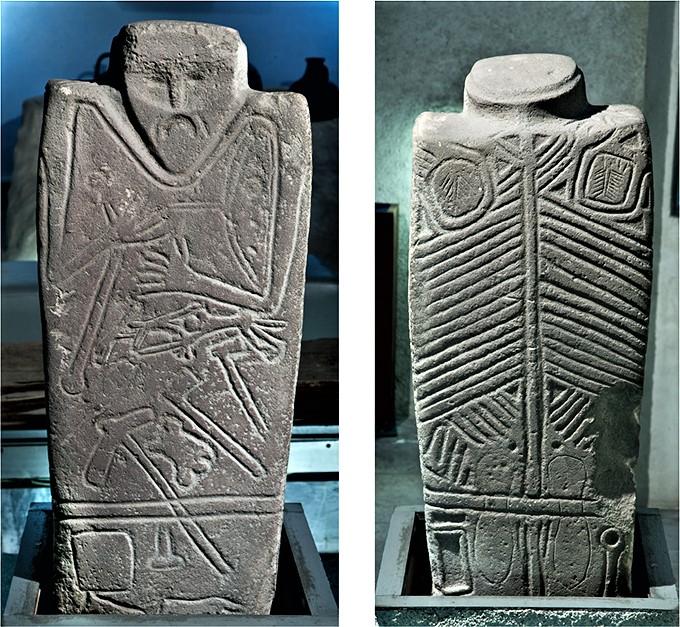
sides. Above are front & back & here is the 3rd side with clear imagery on it. It depicts an ithyphallic male figure in a general iconographic convention seen in the later "balbal" stones of shaka, mongolic & turkic peoples & the more mysterious Hakkari stones. However, there is
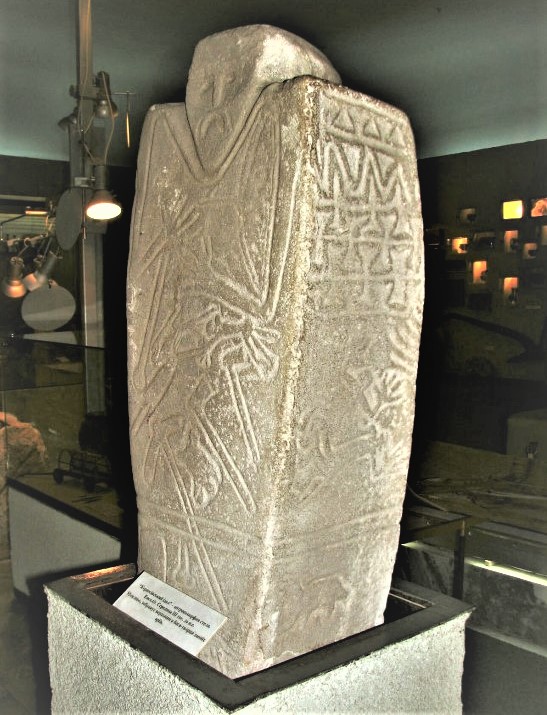
1 indicator of an early age -- the similarity of the axe on the image to the Abashevo axe that is closer culturally & temporally to Yamnaya. A similar axe is seen in the Federovsky idol from the Poltava region of Ukraine likely again from the Yamnaya age
Most interpreters of these images have invoked Indo-Aryan themes with an IE interpretation. We tend to agree with this though the iconographic conventions widely transcend cultures across Eurasia, as we have pointed out in several threads. Yet speculative one can point to several
parallels. 1. The male figure is shown in a vIrAsana-like pose both in Kernosovskiy and Fedrovsky images. 2. The ithyphallic nature preserved in the former suggest the IE deity of the rudra-class. 3. The Axes, the spear, bow, mace are typical of the armaments of the rudra-class.
4. The bovine & equine images are typical of the IE world. 5. The flayed skin -- probably ritual seat; 6. The square on the front side probably indicative of a ritual altar. Likewise, square & circle with trees inside them on the rear are altars related to AhavanIya& gArhapatya.
7. Below on rear side the imprints probably represent a praNIta-like pAtra & sruva or darvi.
Below is the Fedrovsky image. More fragmentary but clearly of same class with axe and arrow in front. Human figure following a horse. Rear is similar but no other iconic details preserved
Below is the Fedrovsky image. More fragmentary but clearly of same class with axe and arrow in front. Human figure following a horse. Rear is similar but no other iconic details preserved
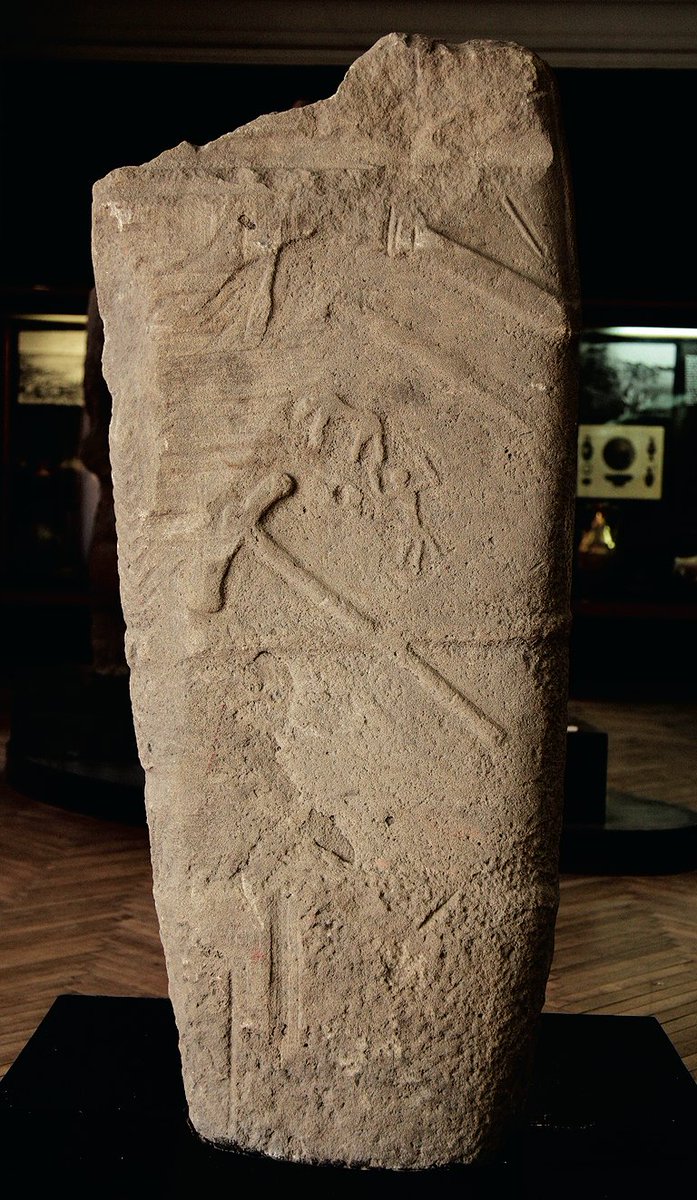
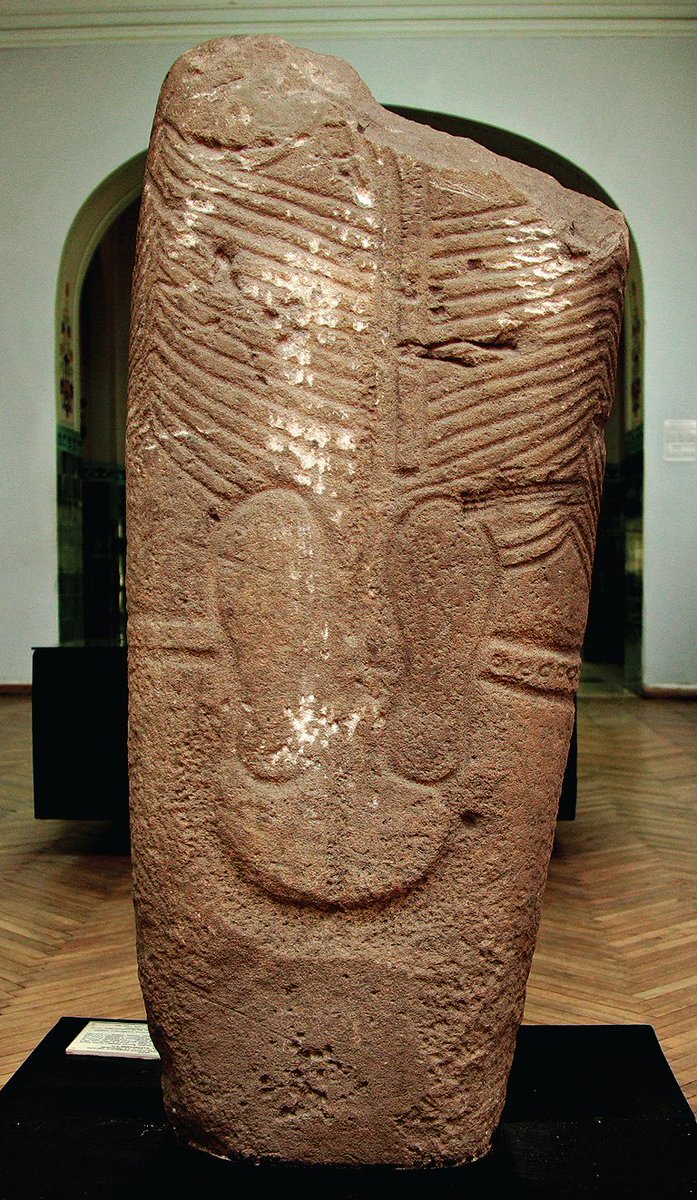
Probably Fedrovsky image also holds a mace, like the Kernosovskiy one. Next, we come to the Hakkari stones of Turkey. Below are 2 exemplars. Their exact age is not known but probably about 2000 years post Yamanya. Yet the preservation of the convention is strong.The age seems too
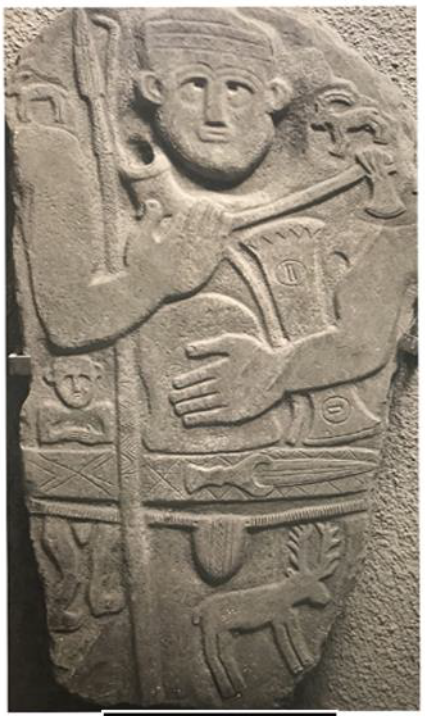
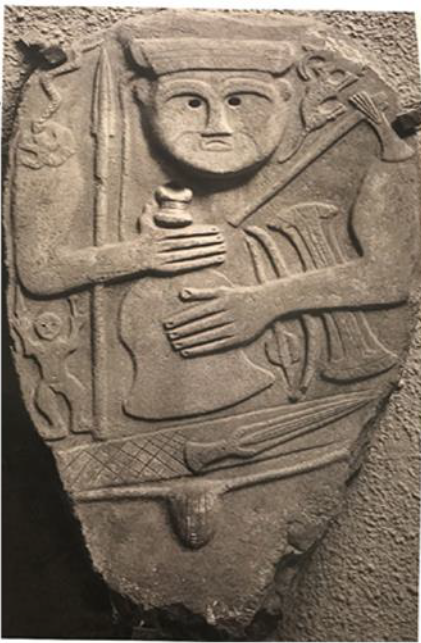
early for Turkic presence in Anatolia. The horn in the first of them suggests a shaka or related Iranic origin for these. The deer/mountain goat pattern seen in some steppe iranic images is also seen here. The artistry is somewhat more refined & weaponry clear of a later age.
There also seems to be a shift in meaning from a potential deity in the Yamnaya images to what might be a human warrior in the Hakkari images. The convention in this regard shifts closer to the balbal stones of the Mongolic &Turkic Khaganates with potential further semantic shift
Loading suggestions...