
Follow along to learn some quick facts about Percutaneous Transhepatic Cholangiography (PTC) and Biliary Drainage (PTBD)!
Created by Nanditha Guruvaiah (@NandiGuruvaiah), Dr. Laura Barnes (@LauraBarnesMD), & Michael Repajic (@michaeljrepajic)
#TwittIR #IR #IRad #SIR #MedEd
Created by Nanditha Guruvaiah (@NandiGuruvaiah), Dr. Laura Barnes (@LauraBarnesMD), & Michael Repajic (@michaeljrepajic)
#TwittIR #IR #IRad #SIR #MedEd

PTC and PTBD are diagnostic and therapeutic procedures respectively used to visualize and relieve obstructions along the biliary tract.

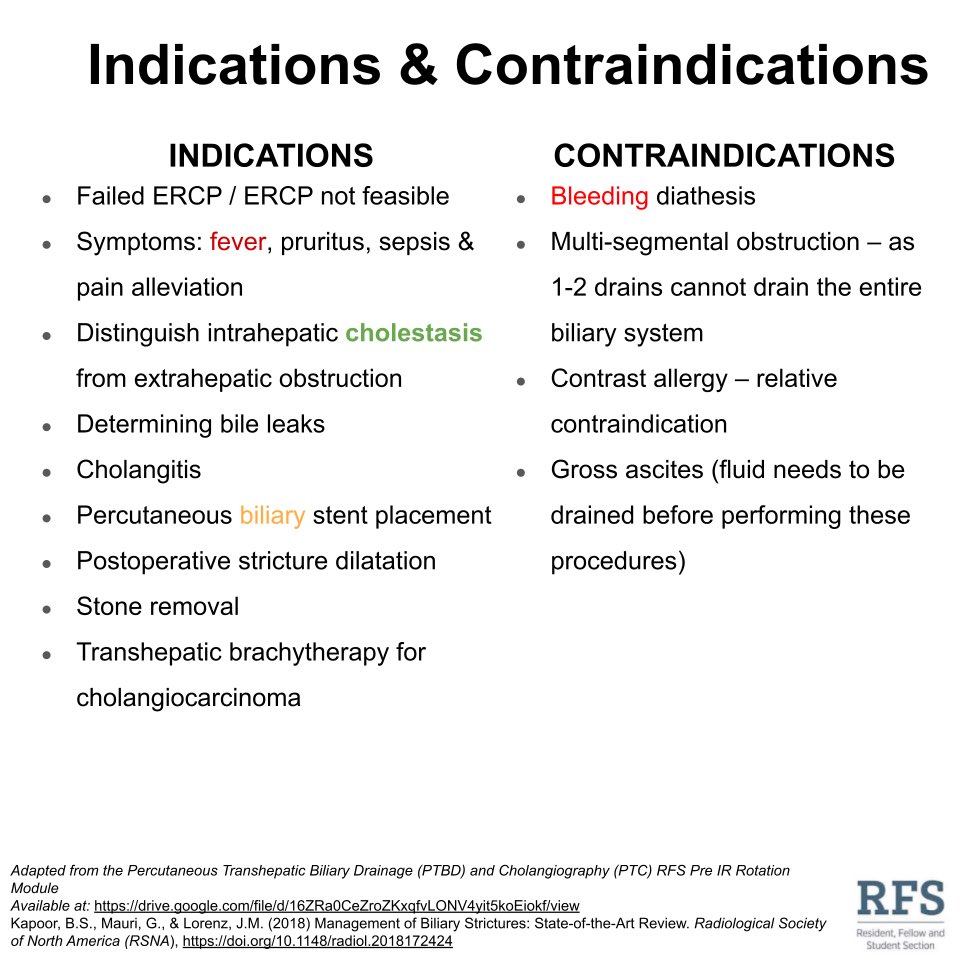
Shown below is a list of indications and contraindications to consider when performing PTC/PTBD.
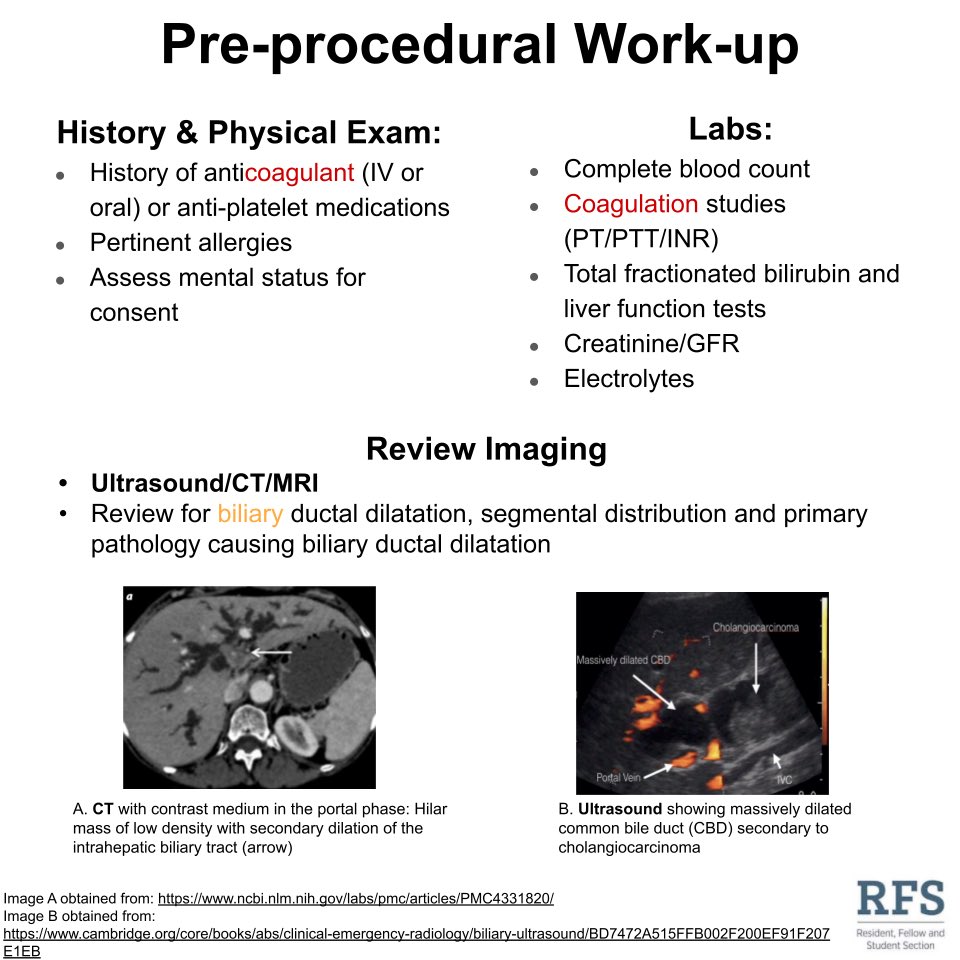
Pre-procedural work-up involves a thorough H&P, labs to assess for coagulopathies and liver function (among others), and a review of imaging studies (US/CT/MRI) for sources of biliary ductal dilatation.
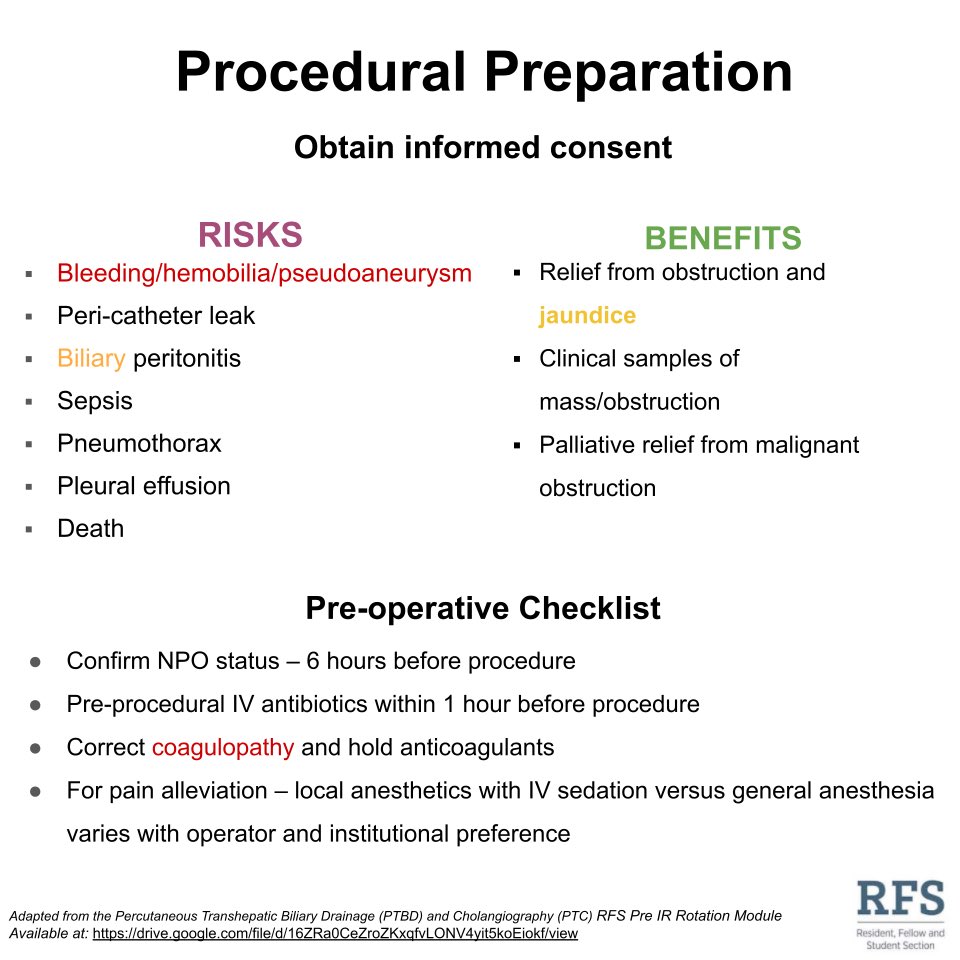
Patients should be aware of the risks and benefits of this procedure before consenting.
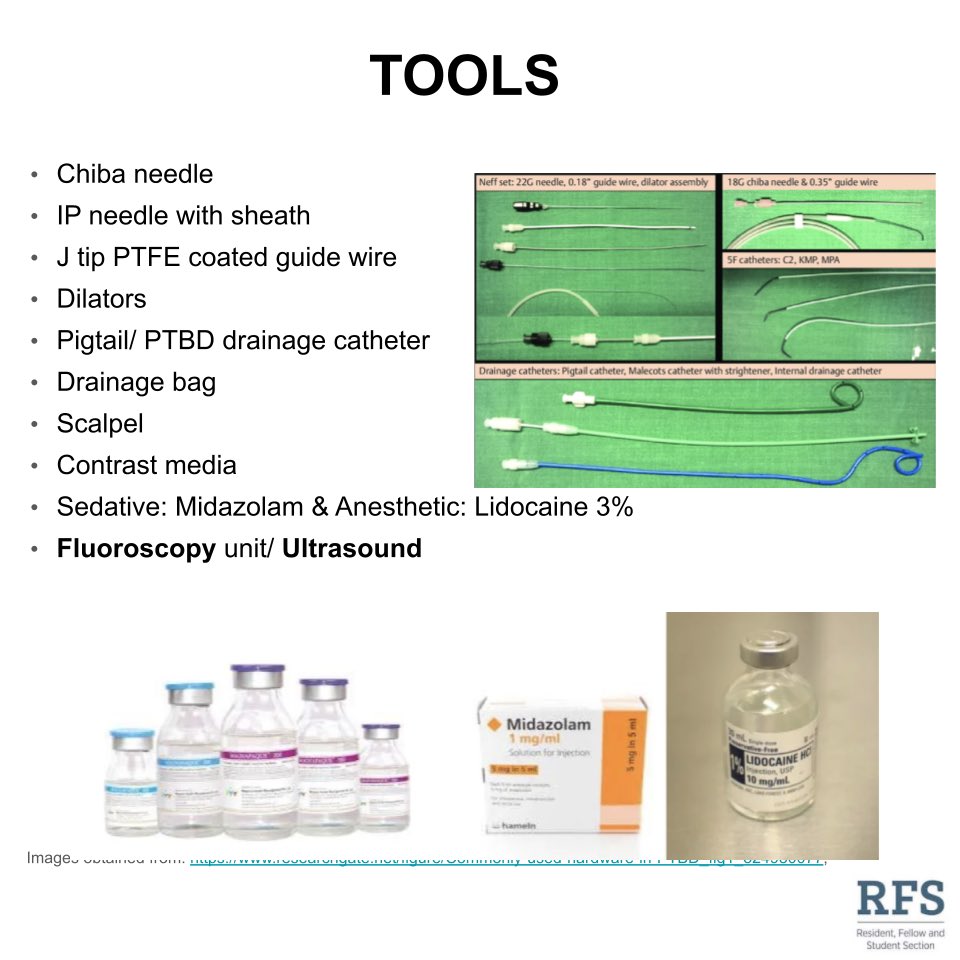
Listed below are the tools that will be used during the procedure. PTC/PTBD is performed under imaging guidance such as fluoroscopy/US.
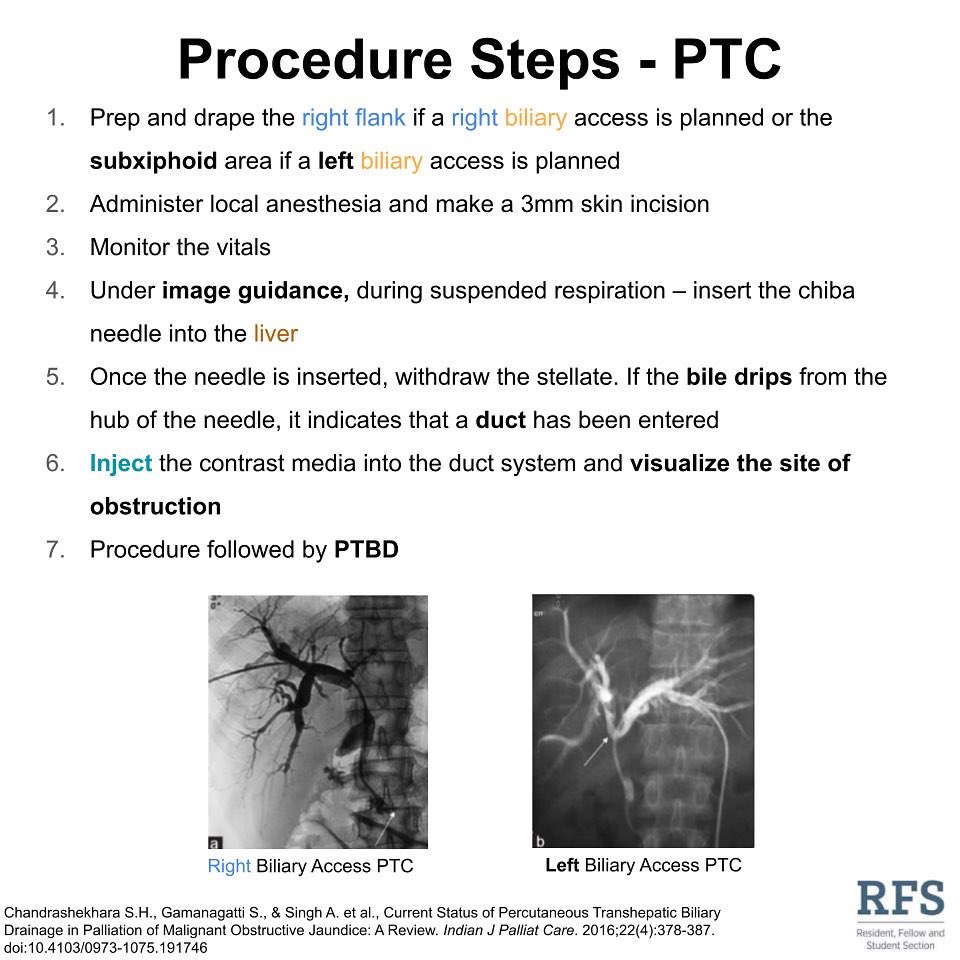
PTC - After the area is prepped and local anesthetic is applied, a fine needle is inserted into the liver through the skin and contrast media is injected to visualize the site of obstruction.
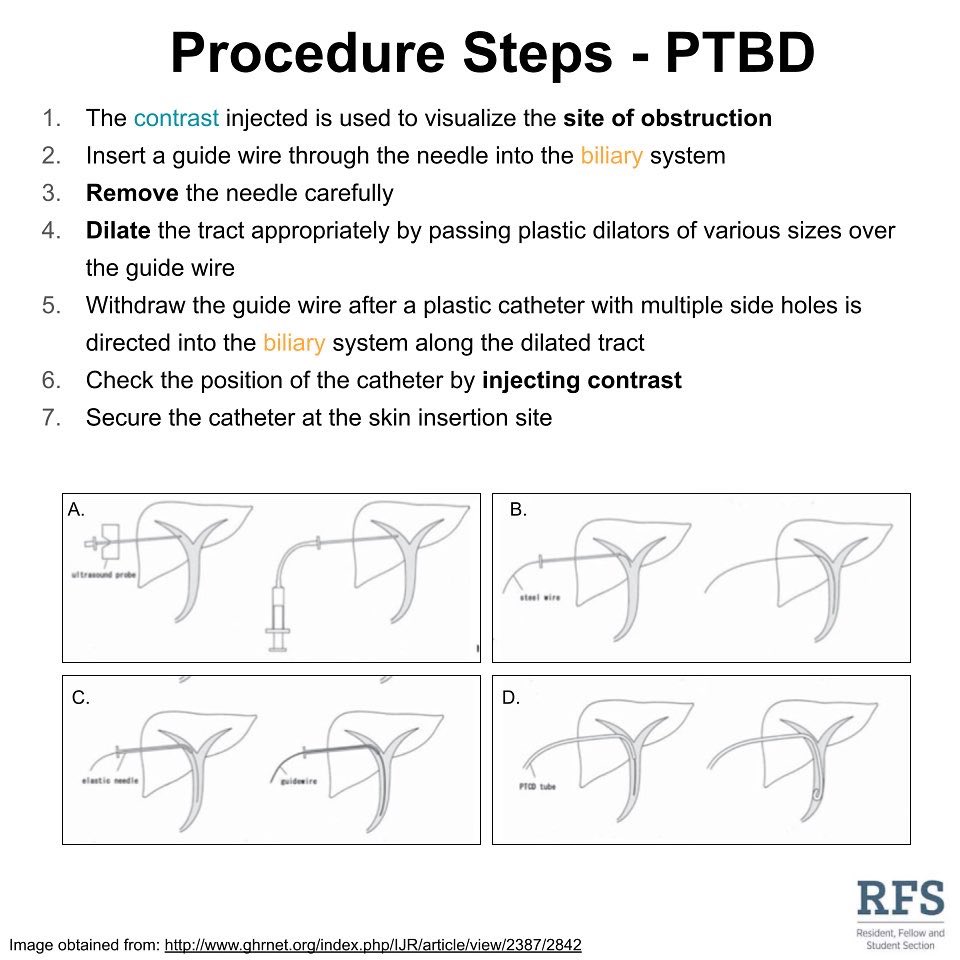
PTBD - Once the obstruction is visualized, a guide wire is inserted through the needle and the biliary tract is further dilated to facilitate the placement of a catheter for drainage purposes.
After the procedure, the patient’s vitals and drain outputs are closely monitored before discharge.

Loading suggestions...