

I try to stay away from editorializing on here, but I will make an exception for this New Yorker interview with Princeton historian Stephen Kotkin.
Kotkin makes some bizarre claims about Russian history which should be addressed. Let's begin 🧵
newyorker.com
Kotkin makes some bizarre claims about Russian history which should be addressed. Let's begin 🧵
newyorker.com
Some background first: Editor David Remnick asks Kotkin about the role of NATO expansion in causing the #UkraineConflict.
Kotkin goes on a weird essentialist rant in which he claims that Russia has always been an aggressive, autocratic power that hostile to the West.
Kotkin goes on a weird essentialist rant in which he claims that Russia has always been an aggressive, autocratic power that hostile to the West.

Let's begin with the "suspicion" of Westerners part.
That claim doesn't really hold up scrutiny for the Russian Empire, which was modeled by Peter I on European absolute monarchies. Post-Peter, Russian monarchs spoke numerous European languages and had European relatives.
That claim doesn't really hold up scrutiny for the Russian Empire, which was modeled by Peter I on European absolute monarchies. Post-Peter, Russian monarchs spoke numerous European languages and had European relatives.
The same applied to members of the Russian aristocracy, who were often taught by European teachers in their youth and who later traveled across Europe. 19th century educated Russians were fully plugged into European political and cultural trends.
During the Napoleonic Wars, officers from all across Europe served in the Imperial Russian Army. The Russian commander-in-chief during that war was Michael Andreas Barclay de Tolly, a Baltic German of Scottish descent.
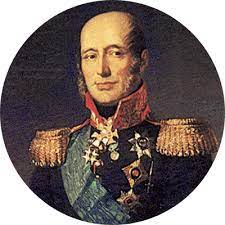
So to repeat: Peter I modeled Russian Empire after the West, his successors maintained close familial and cultural ties to Europe, the Russian elite was very much Westernized, and Westerners occupied high government/military positions in the Russian Empire.
Circling back to Kotkin, it's clear that his point that Russia has always been paranoid about the West doesn't withstand the least bit of scrutiny.
What about his claim that Russia has always been a militarized autocracy ?
What about his claim that Russia has always been a militarized autocracy ?
The correct answer to this claim is compared to what?
Plenty of European states were militarized autocracies during the 17th-18th centuries. Just think of Prussia under Frederick the Great, France under Louis XIV, or Sweden under Charles XII.
Plenty of European states were militarized autocracies during the 17th-18th centuries. Just think of Prussia under Frederick the Great, France under Louis XIV, or Sweden under Charles XII.

As you can see in the chart below, with the exception of the 1850s, the percentage of Russians serving in the army was comparable to that of the other European great powers.
So clearly the argument that Russia was uniquely militarized isn't correct.
So clearly the argument that Russia was uniquely militarized isn't correct.

What about Kotkin's idea that Russia has always been a personalist despotism? And his argument that Russia has always been driven a sense of exceptionalism?

Let's start with the second claim first. I don't think it's a secret that most rising powers try to frame themselves as exceptional, or pursuing a unique path. We can see a similar trend in both the German Empire and the United States in the 19th century. See Manifest Destiny.

But what about the uniquely autocratic/repressive claim? Let's circle back to what we discussed earlier.
Peter I modeled the Russian Empire after fellow European absolute monarchies, so politically Russia was pretty much in the norm at least in 18th century.
Peter I modeled the Russian Empire after fellow European absolute monarchies, so politically Russia was pretty much in the norm at least in 18th century.
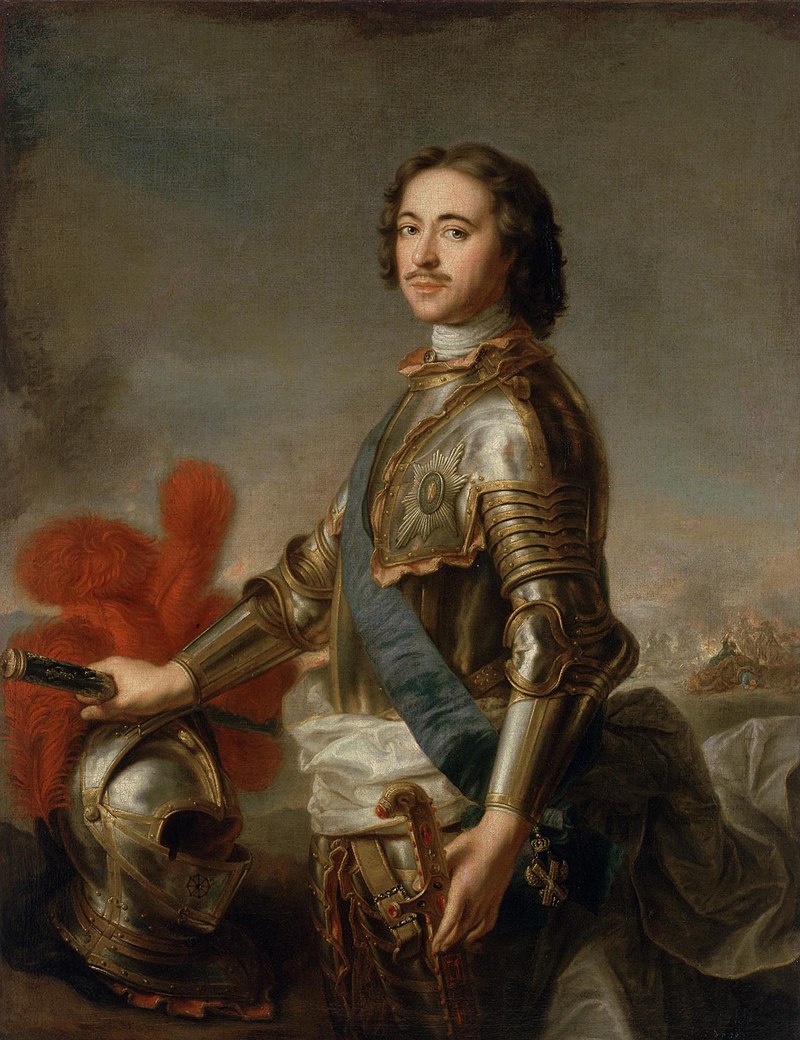
We start seeing some divergence in the 19th century, since whereas many European monarchies embrace some form of parliamentarianism, Russia holds onto the absolute monarchy model.
But there are some important nuances.
But there are some important nuances.
Namely, even though Russia was an absolute monarchy, it was also a society that had an aristocratic class with established legal and historic rights/privileges. The Tsar could not just bulldoze or purge them the way Stalin did with his high-ranking officials.
That's a major reason why Tsarist Russia had more freedom of expression than the Soviet Union.
Beyond that, however, although Russia was slow to embrace constitutional reform, it adopted various other political and socioeconomic reforms throughout the 19th century.
Beyond that, however, although Russia was slow to embrace constitutional reform, it adopted various other political and socioeconomic reforms throughout the 19th century.
Tsar Alexander II abolished serfdom, introduced elected judges, and experimented with local self government.
His son, Alexander III, rolled back some of these political reforms while simultaneously taking steps to industrialize Russia's economy.
His son, Alexander III, rolled back some of these political reforms while simultaneously taking steps to industrialize Russia's economy.
By 1913, under Tsar Nicholas II, Russia was a constitutional monarchy with a politically influential parliament, relatively free press, and active trade union movement that succeeded in winning real political concessions.
When the Bolsheviks took power in 1917, they obviously took Russia in a much more totalitarian direction.
But it's important to note that the Bolsheviks were led by Westernized intellectuals who spent a significant time abroad. See Lenin, who spent many years in Switzerland.
But it's important to note that the Bolsheviks were led by Westernized intellectuals who spent a significant time abroad. See Lenin, who spent many years in Switzerland.
That doesn't really square with Kotkin's argument that totalitarianism is an inherent Russian character trait, a sign that Russia is irrevocably alien from Europe.
After all, Karl Marx was a German philosopher who died in London.
After all, Karl Marx was a German philosopher who died in London.
So we can conclude that:
- For a big part of its history, Russian elites actively embraced the West
- Russian Empire was comparable to other European absolute monarchies
- Bolsheviks ruptured Russia's ties with the West, but they were also Westernizers
- For a big part of its history, Russian elites actively embraced the West
- Russian Empire was comparable to other European absolute monarchies
- Bolsheviks ruptured Russia's ties with the West, but they were also Westernizers
The reason I wrote this thread is because Kotkin's argument is not just historically nonsense, it also distorts our thinking about the situation today.
If we assume Russia was and always will be an anti-Western, militaristic autocracy, then conflict with her is inevitable.
If we assume Russia was and always will be an anti-Western, militaristic autocracy, then conflict with her is inevitable.
In fact, that's the argument Kotkin explicitly makes in his New Yorker interview: NATO expansion doesn't matter because Russia is Russia -- the country was going to become an enemy of the West again regardless of our actions.
Kotkin is clearly wrong. Russia doesn't have a fixed anti-Western nature. History clearly shows that Russia is very much capable of "being part of the West" or at least appreciating the merits of Western civilization.
From this we can draw the following conclusions:
- A clash of civilizations between Russia and the West is not inevitable
- Our actions do have consequences and we can't shift all the blame for the current state of Russia-West relations on Russia's shoulders
- A clash of civilizations between Russia and the West is not inevitable
- Our actions do have consequences and we can't shift all the blame for the current state of Russia-West relations on Russia's shoulders
I could go off on a separate tangent about the evolution of the Russian Federation from a pro-Western state in the 1990s to Adversary #1 in 2022, but I will save that for a future article/thread.

On a concluding note, I will say just say that is very disappointing as an American to see Kotkin, arguably our country's most Russia historians, make such caricatured readings of Russian history.
With experts like that, no wonder we struggle to understand Russia. END
With experts like that, no wonder we struggle to understand Russia. END
جاري تحميل الاقتراحات...