

Many common study habits & learning routines turn out to be counterproductive.
8 Common Learning Myths You've Always Believed as "Facts"
THREAD 🧵
8 Common Learning Myths You've Always Believed as "Facts"
THREAD 🧵
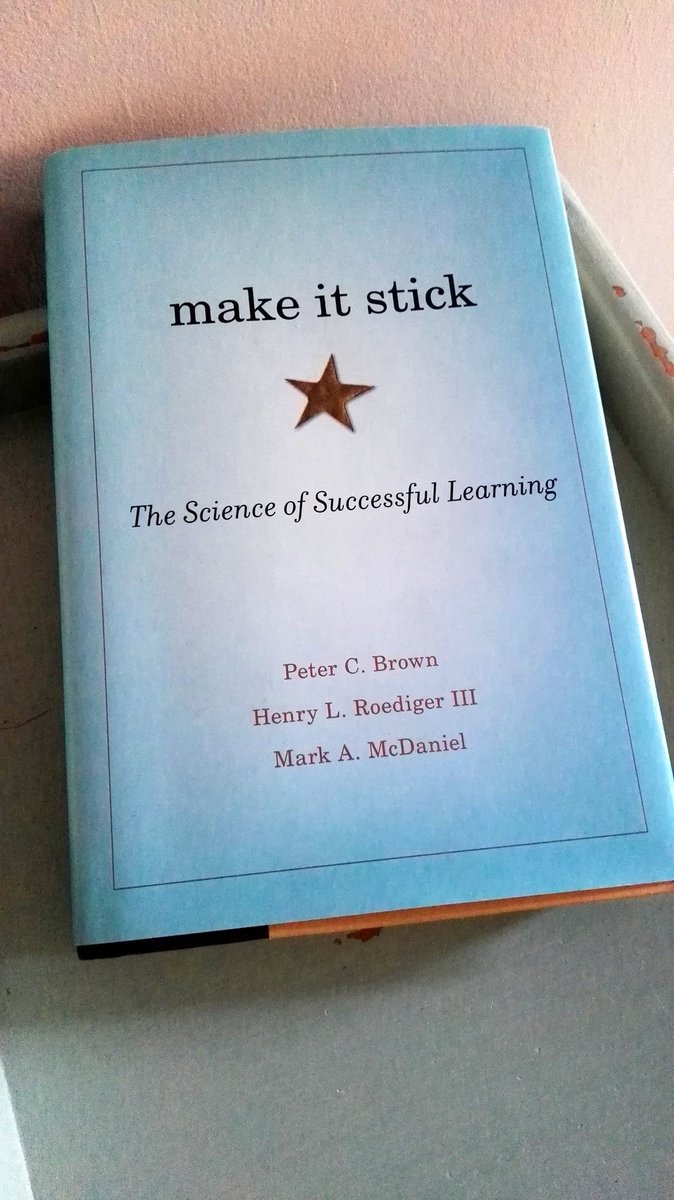
Myth 1: Repeated exposure, & speedy practices promote learning
Fact: Retrieval practice improves knowledge & retention
Rereading texts & reviewing notes are ineffective learning strategies. They increase familiarity with the text but this only feels like mastery of the material
Fact: Retrieval practice improves knowledge & retention
Rereading texts & reviewing notes are ineffective learning strategies. They increase familiarity with the text but this only feels like mastery of the material
Myth 2: Learning is best achieved when we focus on a single topic/activity.
Fact: Interleaving, spaced, varied practice improves retention.
"Cramming" for exams is an example of "massed practice". Unfortunately, massed practice only contributes to the illusion of knowing.
Fact: Interleaving, spaced, varied practice improves retention.
"Cramming" for exams is an example of "massed practice". Unfortunately, massed practice only contributes to the illusion of knowing.
Myth 3: Learning should be easy, & mistakes impede learning.
Fact: Certain "desirable difficulties" improve learning.
Students make poor choices & adopt poor study strategies when they aim for "the path of least resistance."
Fact: Certain "desirable difficulties" improve learning.
Students make poor choices & adopt poor study strategies when they aim for "the path of least resistance."
Myth 4: Reviewing, rereading, & highlighting are effective study strategies.
Fact: Elaboration, generation, & reflection are effective study strategies.
Elaborating a key idea by stating it in one's own words is more effective than memorizing a definition.
Fact: Elaboration, generation, & reflection are effective study strategies.
Elaborating a key idea by stating it in one's own words is more effective than memorizing a definition.
Myth 5: We are good judges of our abilities.
Fact: Dunning-Krugger Effect: The least competent overestimate their competence the most.
Illusion of knowing arises from ineffectual learning habits such as rereading & massed practice. Students believe they have mastered content.
Fact: Dunning-Krugger Effect: The least competent overestimate their competence the most.
Illusion of knowing arises from ineffectual learning habits such as rereading & massed practice. Students believe they have mastered content.
Myth 6: Students fall into different learning styles & learn better when instruction is adapted to it.
Fact: People may have different learning preferences, these do not reflect learning styles.
Learning styles are a myth. What is preferred does not necessarily promote learning
Fact: People may have different learning preferences, these do not reflect learning styles.
Learning styles are a myth. What is preferred does not necessarily promote learning
Myth 7: There are no cognitive differences between learners.
Fact: Structure builders & fluent readers learn better.
Students skilled at seeing patterns, recognizing operating principles, generating rules, etc. are more effective learners.
Fact: Structure builders & fluent readers learn better.
Students skilled at seeing patterns, recognizing operating principles, generating rules, etc. are more effective learners.
Myth 8: "A" students learn the most, the best, & the most easily.
Fact: Those who adopt a growth mindset are the most effective learners
A growth mindset accepts that intelligence is flexible, adopts learning goals over performance goals, & recognizes that learning takes effort
Fact: Those who adopt a growth mindset are the most effective learners
A growth mindset accepts that intelligence is flexible, adopts learning goals over performance goals, & recognizes that learning takes effort
Loading suggestions...