
This whole Brahmin, Non Brahmin division has interesting history. It was orchestrated by the British Civil servants of those time due to the insecurity brought in by reforms. They wanted a pliant ministry. Cardew in particular cultivated MDA and patronized SIPA 1/n
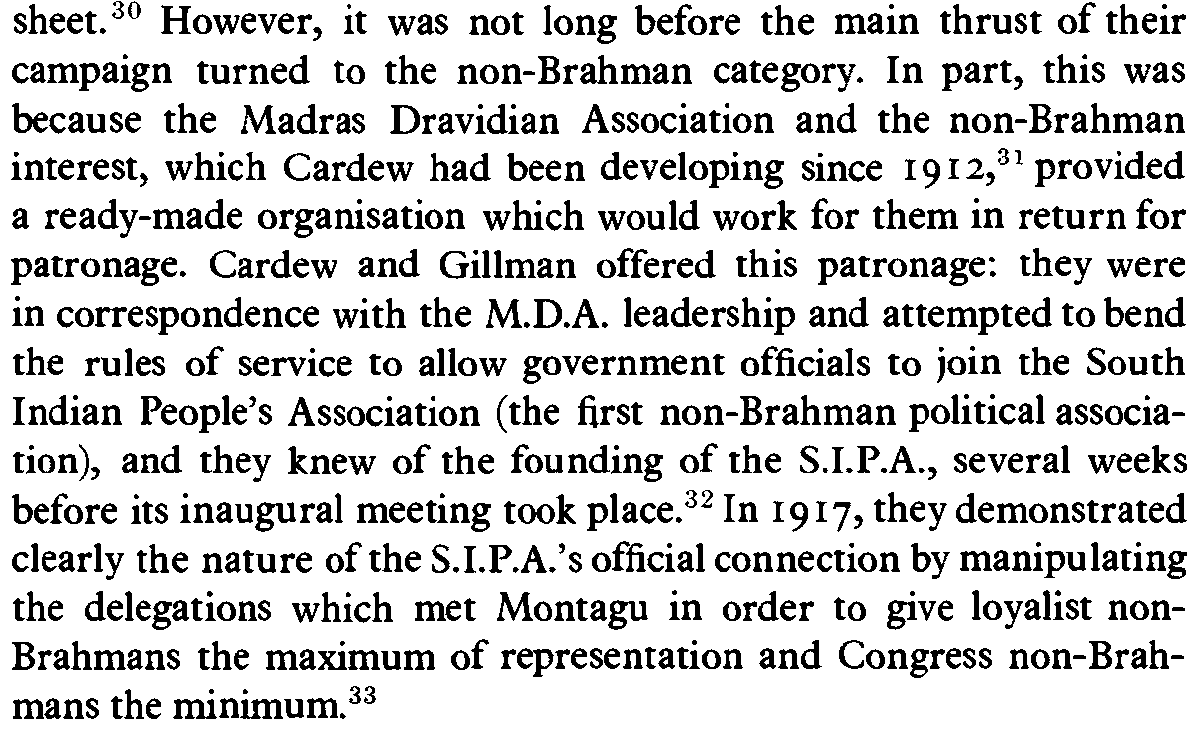
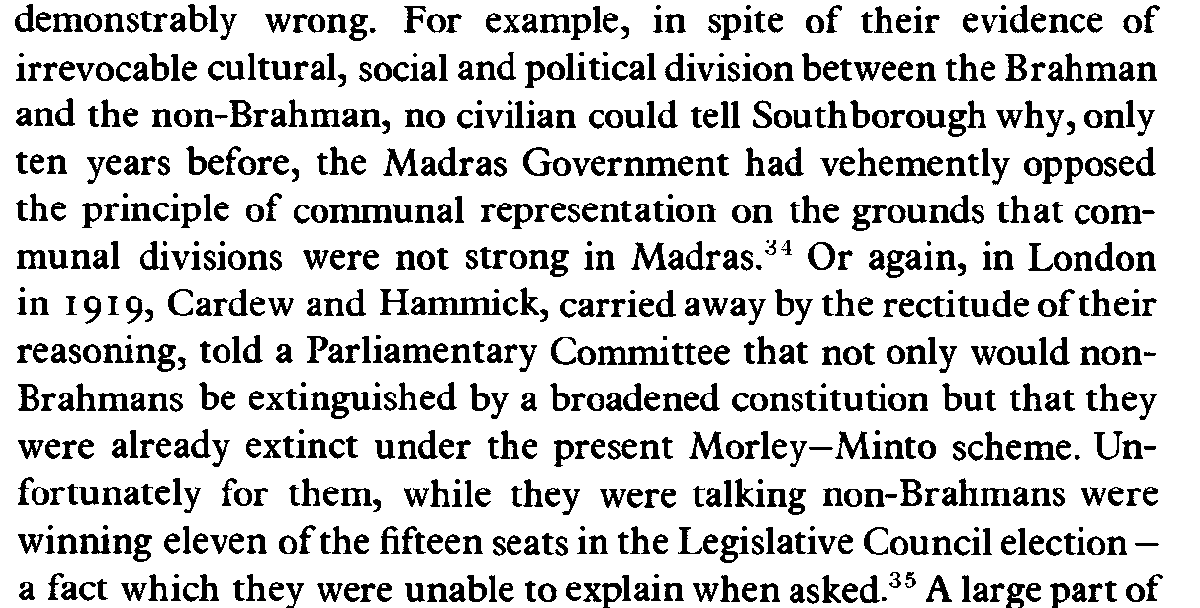
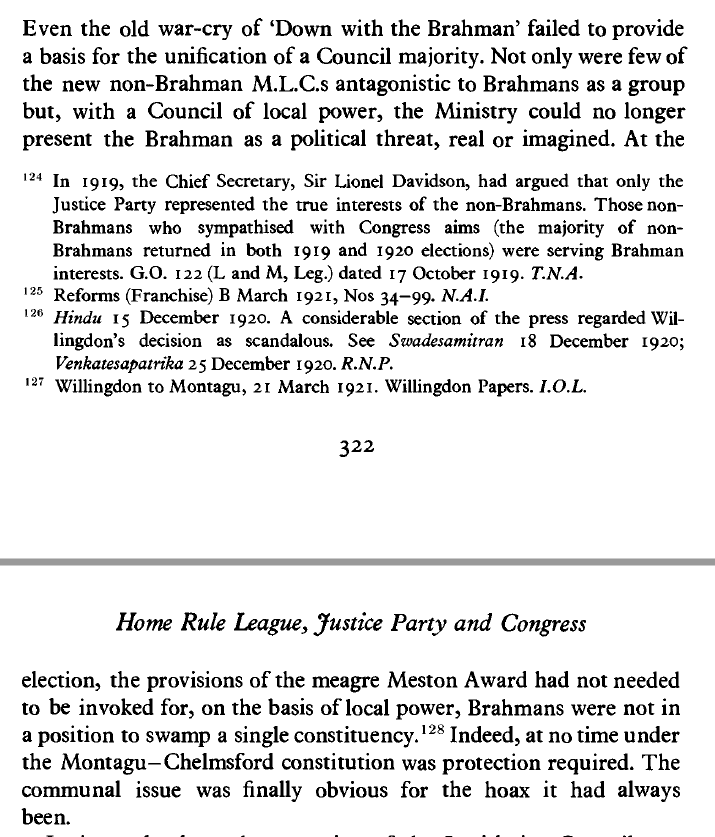
In the early 1900's the very same civil service people vehemently opposed the communal representation on grounds that communal divisions were not strong. Cardew later argued that reforms will hamper the interests of Non Brahmins, even while they were winning seats 2/n
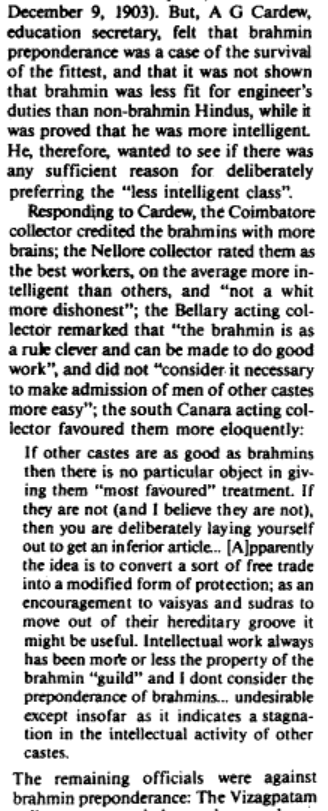
Cardew in 1903 as education secretary opined that Brahmins were intelligent & why less intelligent people be preferred for engineering education. Within a decade transformed to a saviour of Non Brahmins. It is obvious that this change was , to save his position 3/n
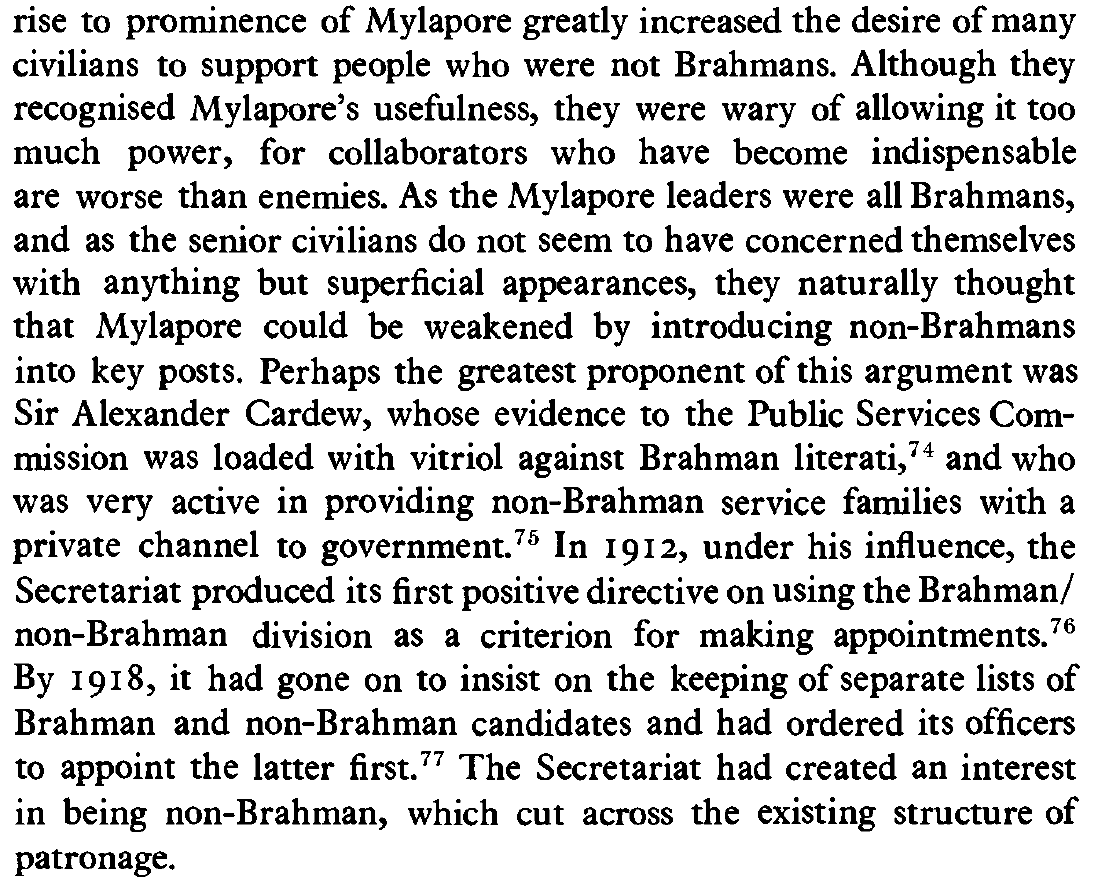
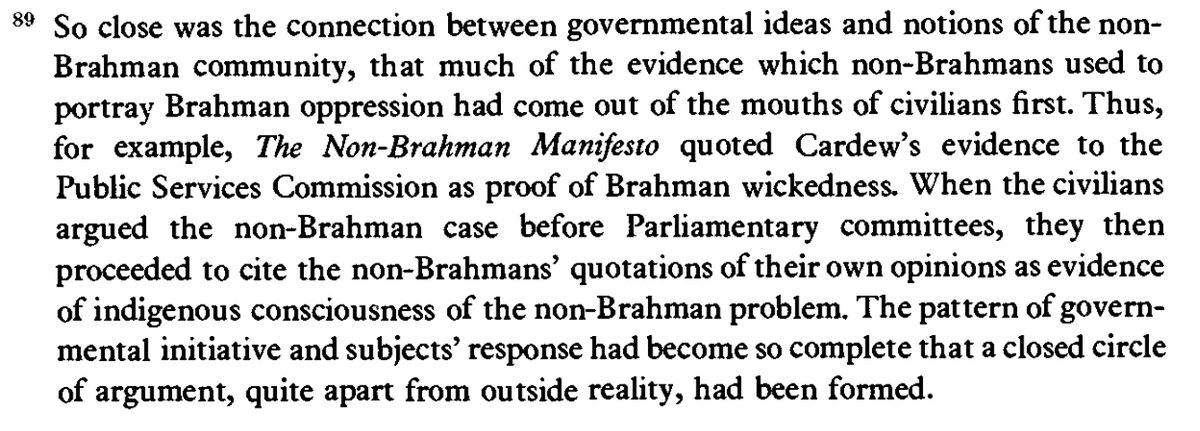
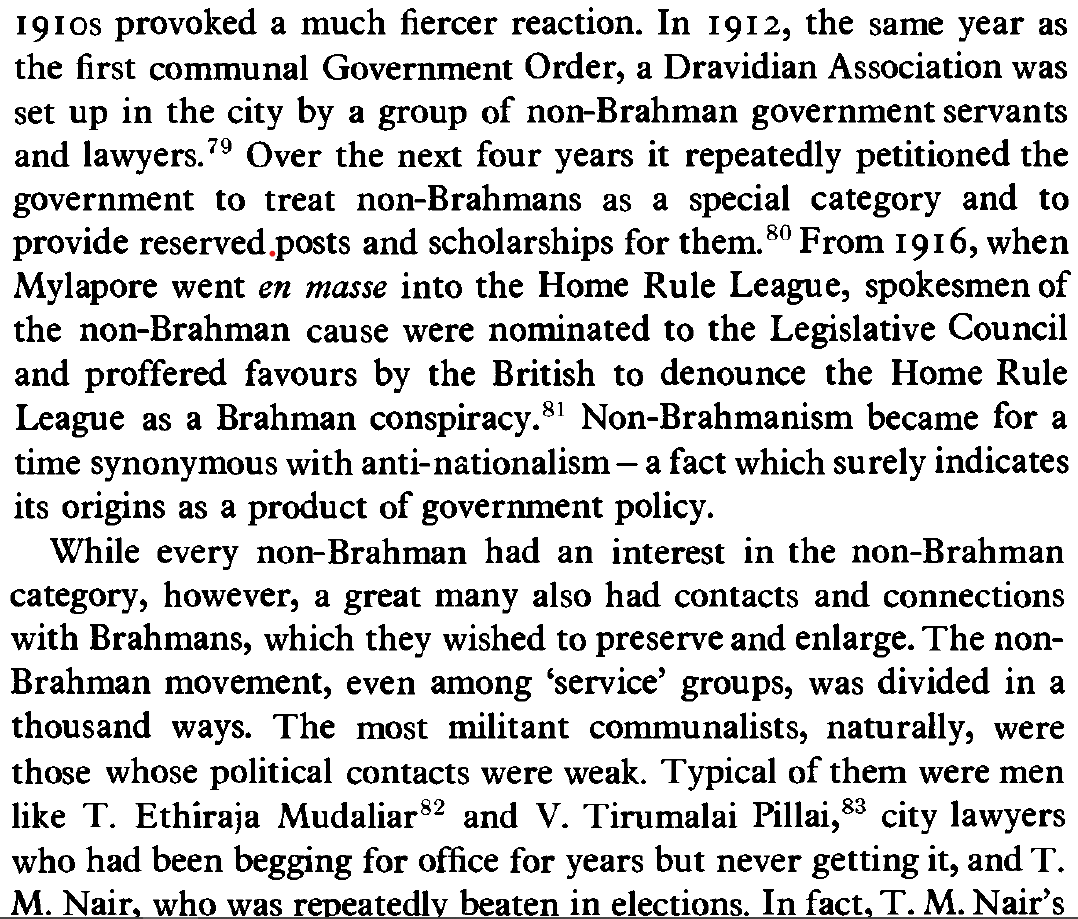
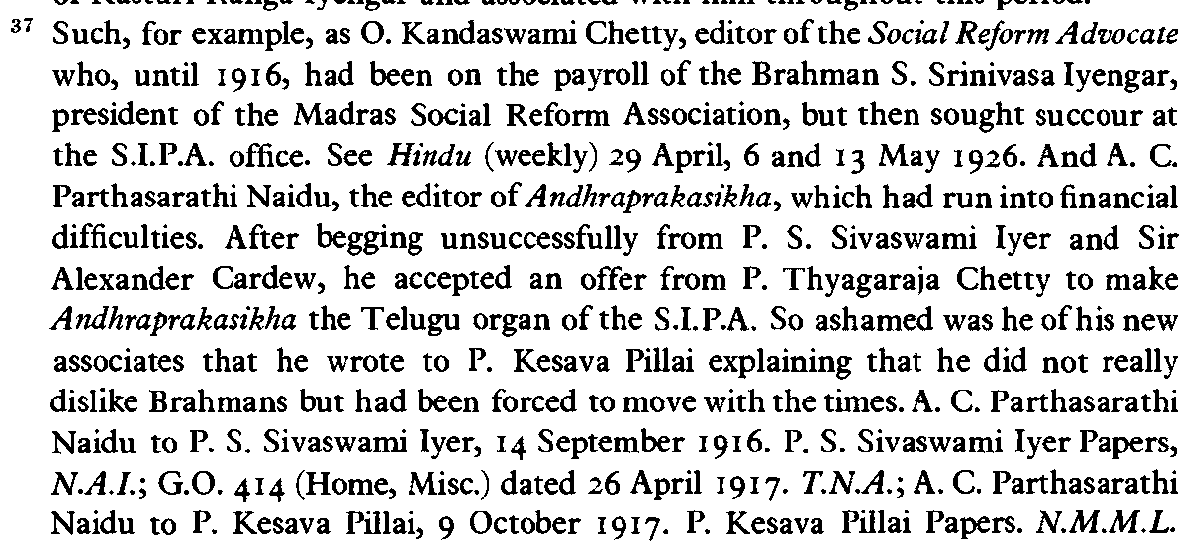
The very same Cardew gave an evidence to Public Services commission about Brahmin wickedness. This was quoted in the Non Brahmin manifesto. This manifesto was used by British Civil Services as indigenous representation of the problem faced by Non Brahmins. Circular logic. 4/n
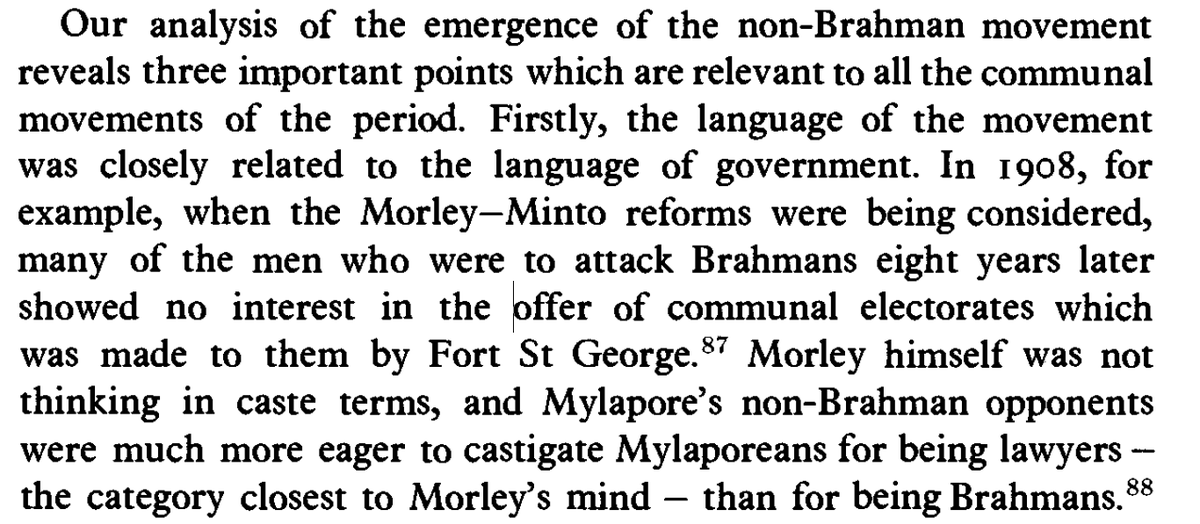
So where did the change emerge from. The civil service was perturbed by raising power of the lawyers and leaders from Mylapore, who were Brahmins. So when they participated in nationalist movements, over dependence on them was an issue and alternate power centre was needed 5/n

The "Mylapore" Brahmins supported Home Rule movement and the British civil service officers used this to grant favors to MDA in the government. This is how the divisions were engineered with active support from those who had no power base or who had lost elections 6/n

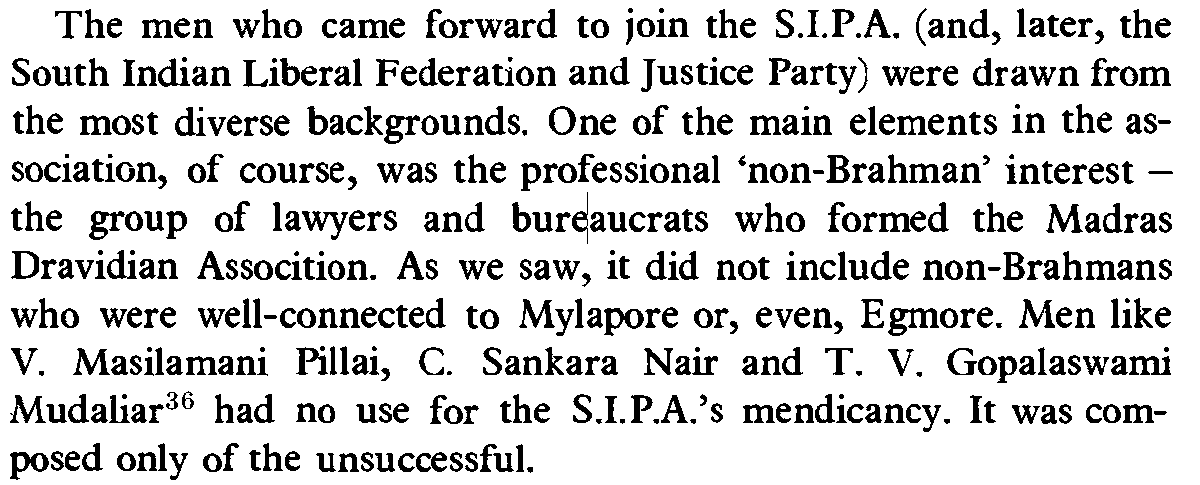
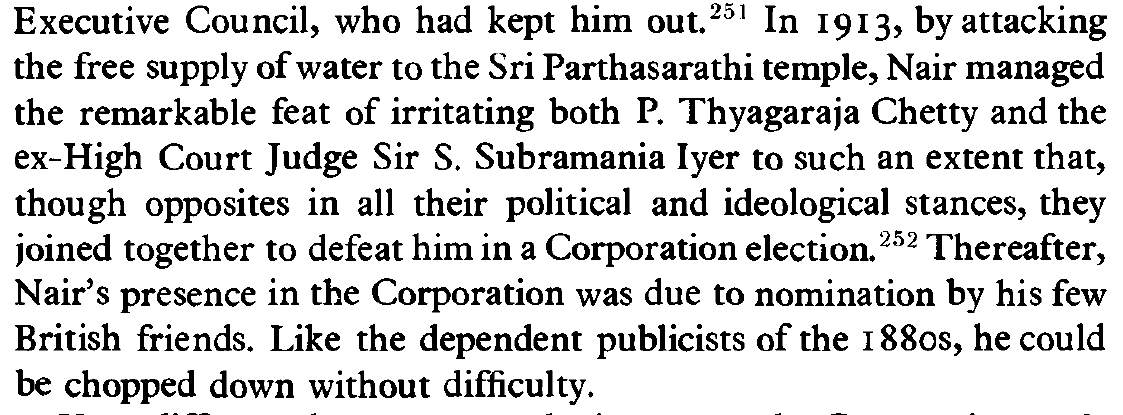
In early 20th century, leaders of SIPA too had not talked about the historical troubles faced by them because of the social injustice. For e.g. T.M.Nair, who is associated with vitriolic speeches later, did not even mention any issues to public service commision 7/n
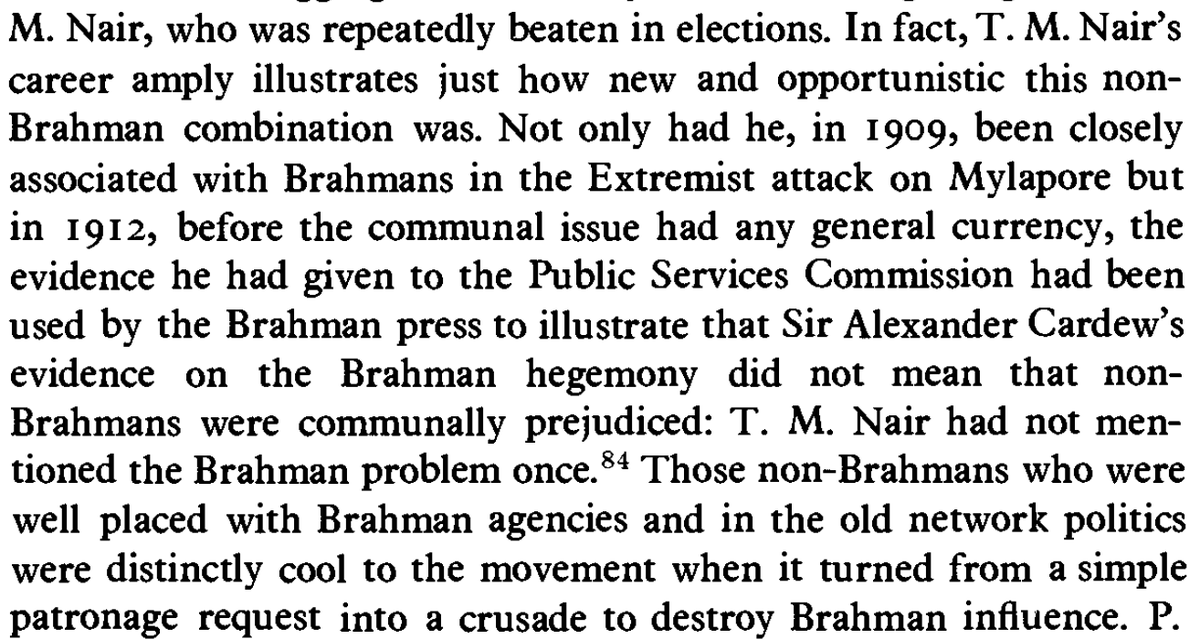
Inspite of being with Justice party, there were many who continued their relations with their erstwhile friends and did not really like to be antagonistic 8/n
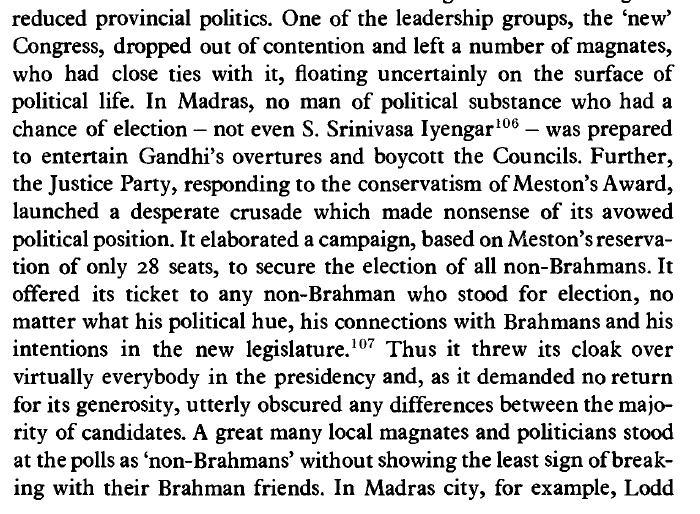
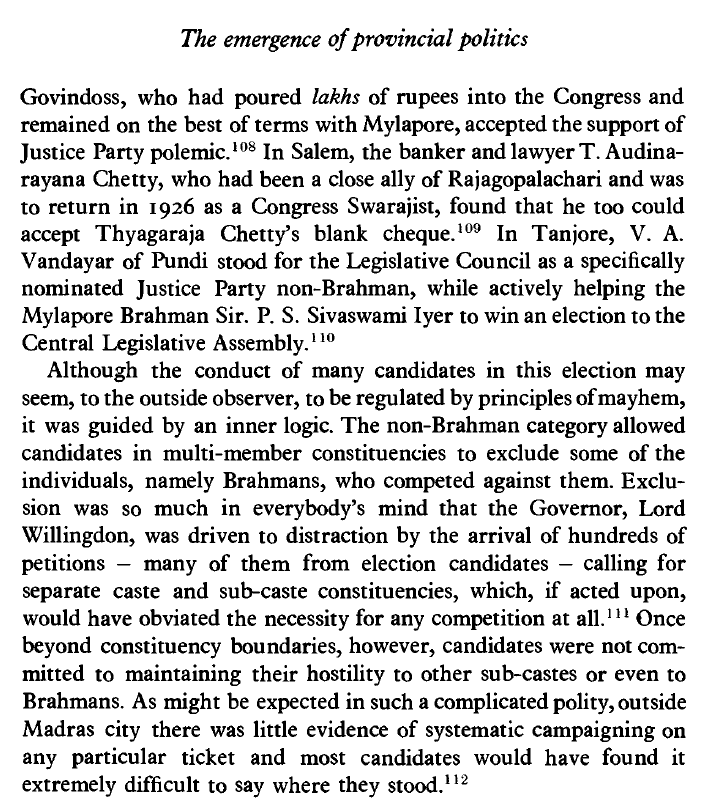
At the end of all this, it is surprising to note that Brahmins employment was more than in 1900 at the end of Justice Party rule. Willingdon who brought Justice party to power had very bad opinion about them. Civil servants were now more comfortable with "Mylapore". 9/n


So in short decisions taken for political benefit of a few people and for the sake of power are continued for political power. This may also explain the apparent incongruencies in contemporary politics. Better that normal people focus on enhancing their skills & progressing. 10/n
Loading suggestions...