
I had the opportunity to speak this morning at #ADA2021 about who (open source) closed looping is for.
My take?
It's for everyone who wants to use it, although not everyone will choose to do so. But those who choose to use it should be able to access it. Here's why:
My take?
It's for everyone who wants to use it, although not everyone will choose to do so. But those who choose to use it should be able to access it. Here's why:
There have been many studies to date to support open source closed looping, also known as automated insulin delivery. This is just the tip of the research data available and forthcoming. #ADA2021
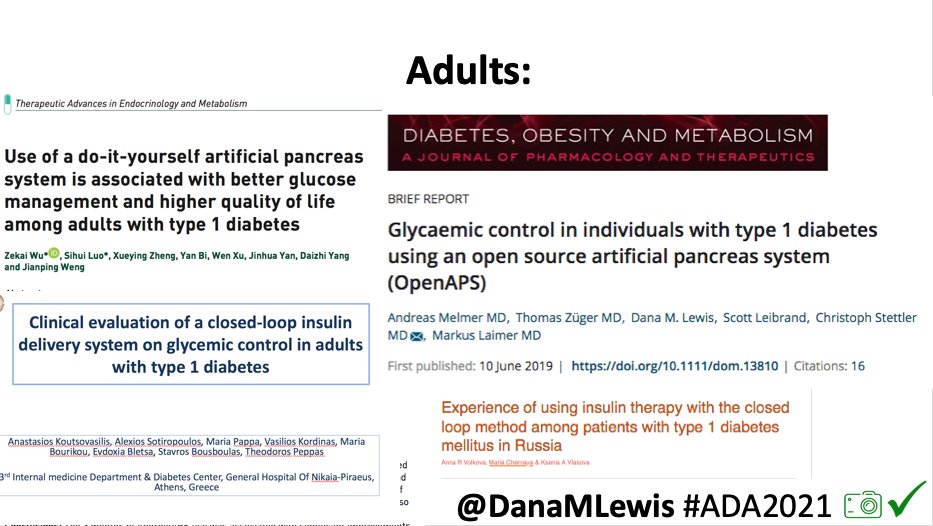
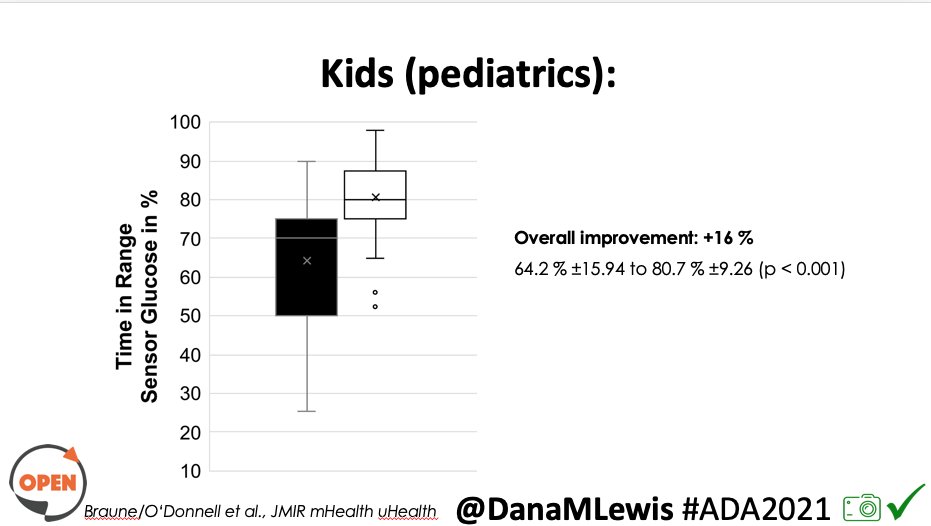
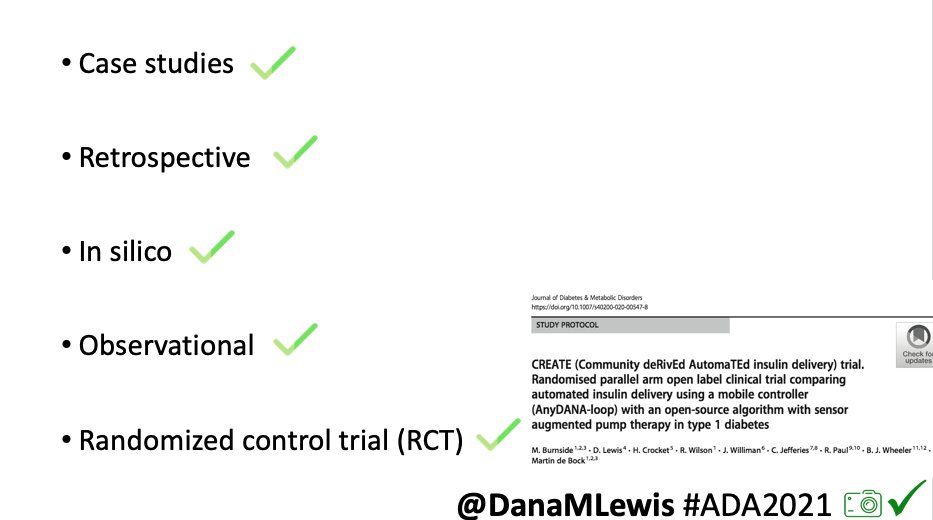
As two of the other presenters in this session, Natalie Bellini and David Maahs, also covered, it is possible for healthcare providers to support patients using the automated insulin delivery system of their choice. #ADA2021
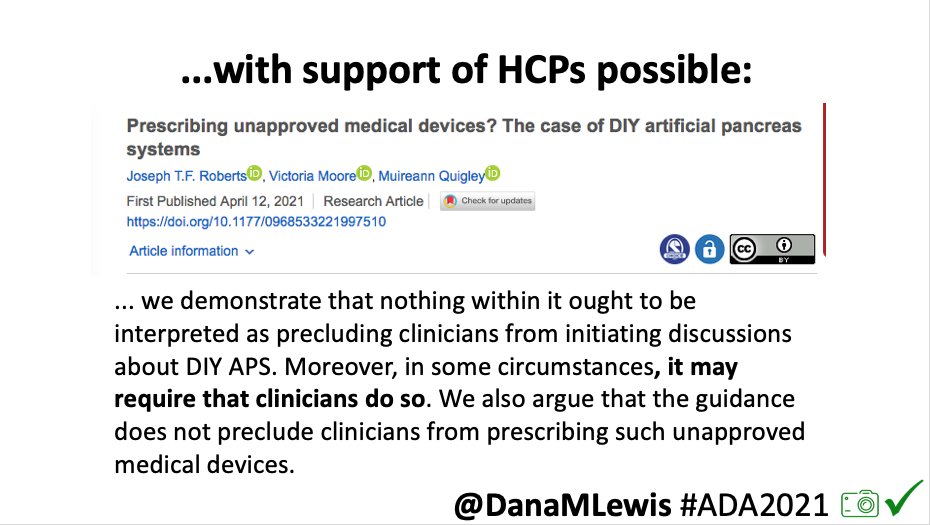
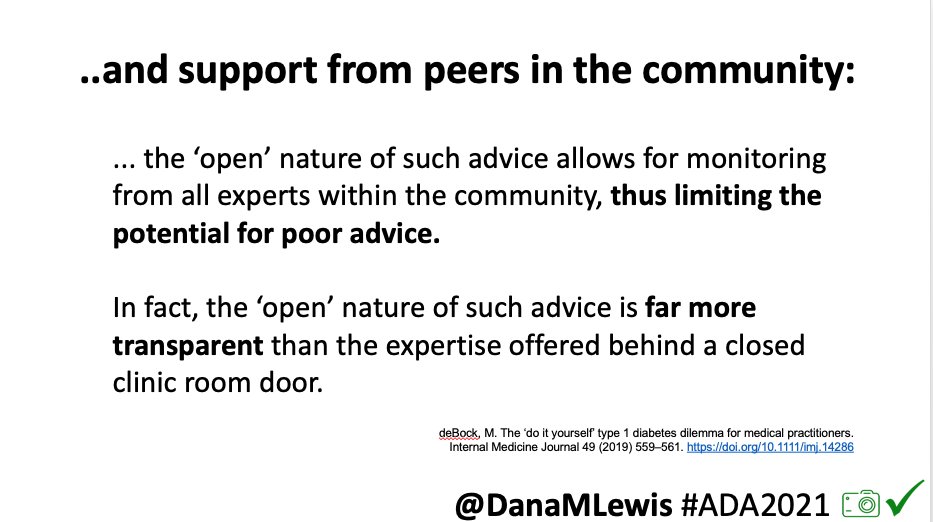
Clinicians have also acknowledged the benefits of the transparency of the open source community; not only of the code but also the transparency of advice given within the community. (h/t @DrMartindeBock1) #ADA2021
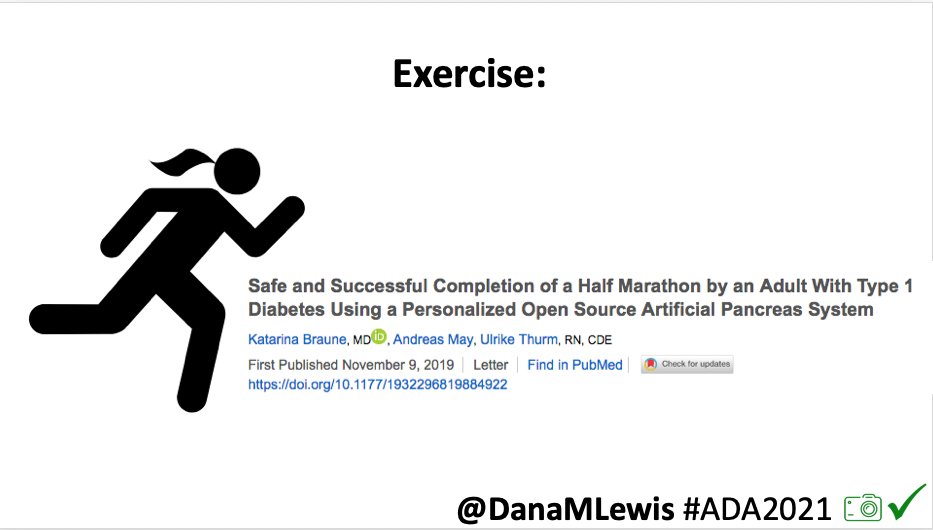
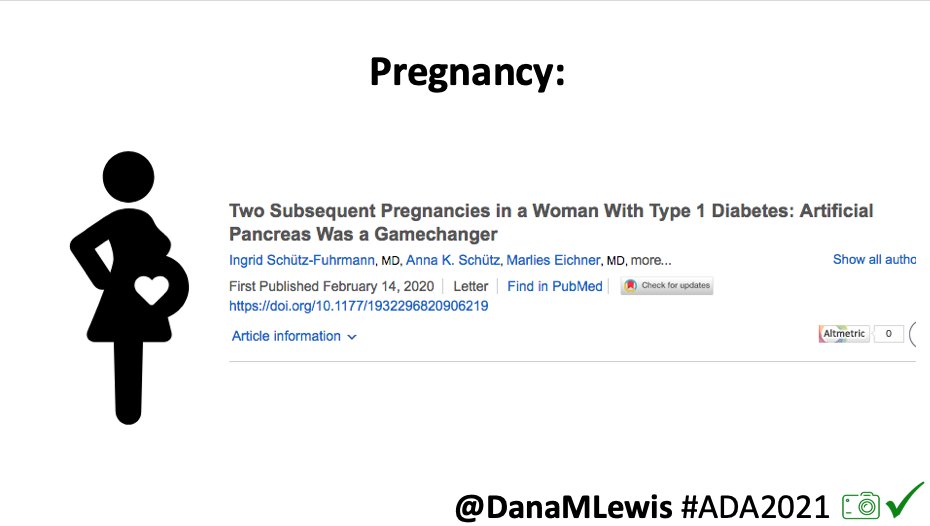
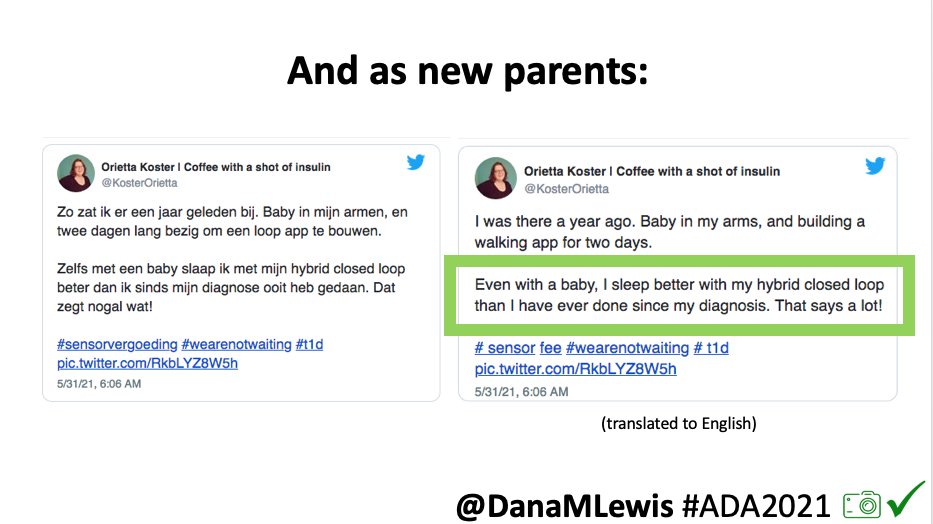
Open source automated insulin delivery has been used in the real world for more than 6 years now. It's not just used in perfect conditions, but also in exercise, for people experiencing pregnancy, new parenthood (s/o to @KosterOrietta), and more. #ADA2021
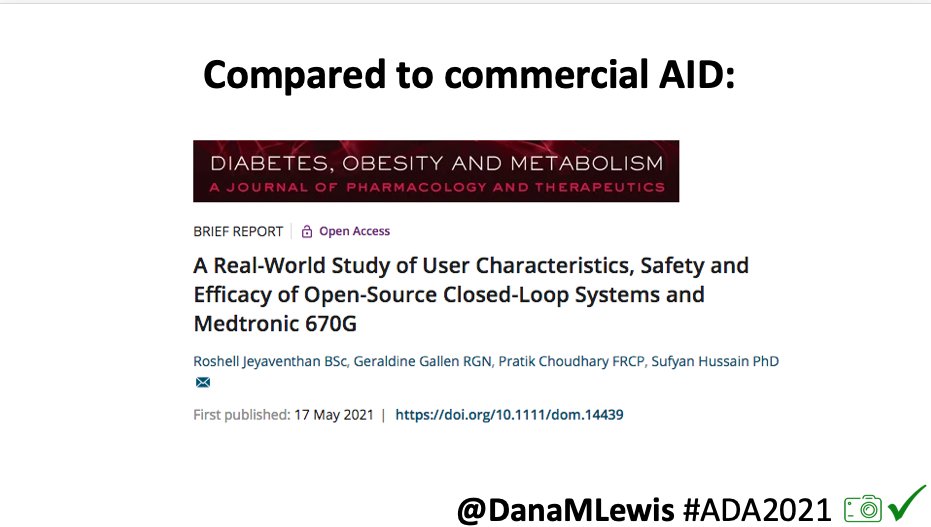
There have also been studies recently comparing real-world data of commercial systems and open source systems. They're not fully apples to apples, but they show comparative safety and efficacy. (h/t @sugarydoc) #ADA2021
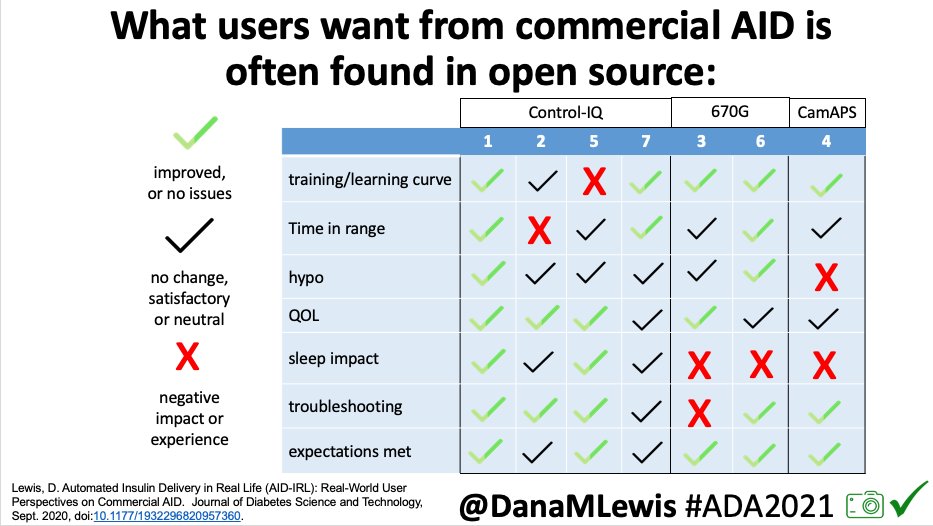
In a study I was able to do last year (funded by @DiabetesMine), looking at the learning curve of commercial AID systems, what many of the users were seeking for future generations of commercial systems is available in current open source systems. #ADA2021
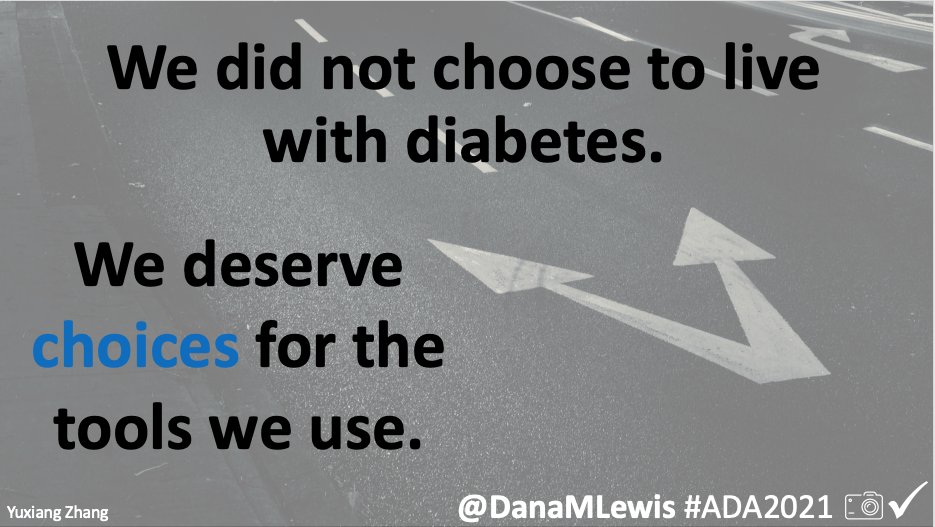
People with diabetes do not choose to live with diabetes. But we absolutely deserve choices for the tools we use, and to be supported in what we choose to use, whether open source or commercial systems or no AID at all - whatever works best for us as individuals. #ADA2021
Many individuals have chosen to share data anonymously for research. The OpenAPS Data Commons (openaps.org), can be used for research. It's a rich dataset with dozens of thousands of days' worth of glucose data as well as insulin dosing and AID decision data. #ADA2021
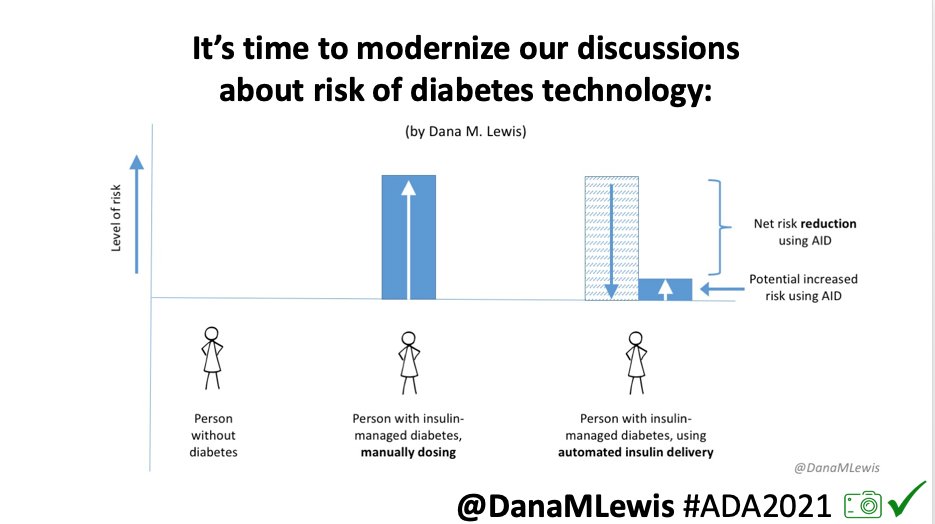
When discussing the choice of technology, the risk is often compared to people without diabetes. But manually dosing insulin has a lot of risk, whereas automation helps reduce the risk. We need to contextualize our discussions of risk accordingly. #ADA2021 (/end)
Loading suggestions...