
#HistoryKeThread: The Kamba and Mau Mau

On 14th May 1954, the British newspaper Daily Telegraph ran a headline:
“Kenya Fears Mau Mau Has Won New Tribe”.
“Kenya Fears Mau Mau Has Won New Tribe”.
Citing concerns from certain quarters in the colonial government, the newspaper expressed fears that more and more members of the Kamba community were not only growing sympathetic to the Mau Mau, but were also joining the underground freedom struggle movement.
There were reports about marauding Mau Mau gangs in Kitui and Machakos. The colonial authorities initially downplayed the threat of Mau Mau infiltrating the Kamba.
They believed that following a severe drought in the late 1940s had wiped out part of the Kamba population, the community was less inclined to take up arms.
What the colonial government was about to discover was that communities other than the GEMA ones comprising of the Gikuyu, Embu and Meru were getting involved in Mau Mau.
For example, Kurito ole Kisio, a KAR veteran who had served in Burma during WW2, had taken the Mau Mau oath and waged guerrilla warfare from Narok before he was hunted down and killed.

But let’s stick with the Kamba.
In the run up to the declaration of the Emergency in 1952, secret oathing began to take place with the covert support of the Nairobi branch of the Kenya African Union (KAU).
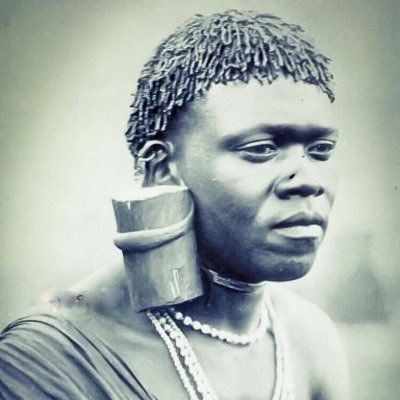
Among officials of KAU was Kamba leader Paul Ngei (pictured), who was Assistant Secretary.

Ngei, Fred Kubai and Jomo Kenyatta went on informal meet-the-people tours around Nairobi, Machakos and Kitui, urging Africans to be involved in agitating for uhuru.
At around the same time, officials in the colonial government learnt that there were oathing ceremonies taking place in Machakos and Kitui. It was also discovered that “more than usual” members of the GEMA tribes were visiting Kitui and Machakos.
As a Kamba leader, Ngei himself was a marked man. He reportedly presided over secret oathing ceremonies in Ukambani.
Intelligence officers in the colonial administration knew that he led Kamba leaders in meeting with their central Kenya counterparts at Nairobi’s Kiburi House.
Intelligence officers in the colonial administration knew that he led Kamba leaders in meeting with their central Kenya counterparts at Nairobi’s Kiburi House.

Indeed, one of the leaders from central Kenya that Ngei met was arrested in early 1952 and later executed for “consorting with gunmen”.
Rattled by the prospects of the Kamba joining the Mau Mau struggle, the colonial government employed a number of cautionary measures.
Rattled by the prospects of the Kamba joining the Mau Mau struggle, the colonial government employed a number of cautionary measures.
On 23rd September 1952, nocturnal vehicular movement between Machakos and Nairobi, Thika and Machakos and Thika and Kitui was banned.
Night patrols were intensified in Ukambani. More men from the villages were recruited to serve under Chiefs as police reservists.
In Nairobi, there was an experiment to settle Kambas in Ziwani estate. And although some Kamba families were settled there, the plan was abandoned altogether for unspecified reasons.
Colonial officers then turned their attention towards rural Ukambani.
Colonial officers then turned their attention towards rural Ukambani.
In Mbooni in mid-1952, there was a joint attack by Agikuyu and Kamba men who looted the office of the African District Council and made away with £852 in cash.
When in October of 1952 the government declared a State of Emergency and in a night operation rounded up the “Kapenguria Six” including Ngei, the undisputed leader of the Kamba, some of his tribesmen immediately associated themselves with Mau Mau.

It wasn’t long after the arrest that a number of Kamba chiefs started receiving anonymous threats.
At the same time, there were reports of oathing going on in various parts of Ukambani.
At the same time, there were reports of oathing going on in various parts of Ukambani.
In 1953, police discovered that no fewer than twenty Kamba labourers at the farm of Mrs. Davis-Evans in Ukambani had taken the oath.
A chief from Kilungu (curiously referred to as Patrisse in colonial records) received anonymous threats suspected to have come from askaris seconded to his location.
British military officers also discovered that Mau Mau stowaways from central Kenya used the Nairobi-Mombasa night train to ghost in and out of Ukambani on oathing missions.

An investigation that led to the Corfield Report detailed that when in March 1954 security forces arrested a group of Kamba Mau Mau, about half of them worked with the railways.
Curiously, Mau Mau were in the habit of sabotaging railway infrastructure elsewhere during the Emergency. But the Nairobi-Mombasa line was largely spared.
It was because it served the Ukambani logistical needs of GEMA Mau Mau members, authorities reasoned.
It was because it served the Ukambani logistical needs of GEMA Mau Mau members, authorities reasoned.
On 7th August 1953 in Machakos, a police reserve unit stumbled on an oathing ceremony presided over by Agikuyu Mau Mau.
In 1954, Government intelligence agents learnt that there was a plot to kill a chief in Konza. It turned out that the suspects were Kamba oath administrators who served in Mount Kenya forest under General China (pictured, left).

According to Sir W.R. Hinde, author of “Infiltration Of Mau Mau Into Tribes Other Than The Agikuyu”, when General China - real name Warühiü Itote - was arrested, he admitted during his 68-hour interrogation that there were “very many Kamba in the Mau Mau”.
“In time”, Waruhiu warned officials, “the Kamba will think the same way as the Agikuyu” and rise against the colonial administration.
In 1955, a Kamba Mau Mau leader, Kawa Musili was arrested. He confessed to police that there was a Kamba Mau Mau council he called “Kwasya na Kwaka” (Sp).
He told military officials that the objects of the council was to administer oaths to all Wakamba and collect money for the resistance movement.
A few weeks later, another oathing ceremony was uncovered, this time presided over by three young Kamba men. They were found in possession of a pistol, which had been stolen months earlier from Sultan Hamud railway station.
It was also during the Emergency that authorities learnt that there was a Kamba Mau Mau leader called General Kavyu (knife) who was responsible for a band of fighters in Mt Kenya forest.
Amid increased reports of Mau Mau involvement in Ukambani, authorities were wary of mounting a strong response against the Kamba for fear of antagonizing the entire community.
And they had good reason.
And they had good reason.
Majority of King’s African Rifles (KAR) members were drawn from the Kamba community.
It was the same in the police force.
It was the same in the police force.

According to the Kenya Police Annual Report of 1953, majority of members of the police force were from the Kamba community - 1,754 strong. The Luo were second, with 1,062 policemen.
Had the Kamba joined the resistance movement as solidly as the GEMA communities did, it would arguably have been difficult for the colonial authorities to enforce peace.
Still, a number of factors played out in the colonial administration’s favour.
Firstly, the colonial government was more successful in Kitui after creation of East Ukamba Police force in 1953.
Firstly, the colonial government was more successful in Kitui after creation of East Ukamba Police force in 1953.
Still in Kitui in the same year, an attempt to kill a popular Chief, Kasina wa Ndoo, dimmed Mau Mau hopes of infiltrating the area.
See, officials spun the story to their advantage, telling locals that Mau Mau were to blame for the attempted murder. The effect was that the authorities succeeded in rousing strong anti-Mau Mau sentiment in Kitui.
Secondly, Kambas were more interested in working in the city than waging guerrilla warfare in the village.
Following an anti-Mau Mau operation in Nairobi in April 1954 dubbed Operation Anvil, most members of the GEMA communities involved in blue collar work were purged from the city and herded into detention villages.

The resulting labour void in the city was filled up by members of the Kamba community.
Based on a Government report DC/KTI.2/3 of 1954 dubbed Kitui District Handing Over Report, Kambas constituted 18.6% of Nairobi’s population in 1953. Kikuyus were at 46.5%.
Based on a Government report DC/KTI.2/3 of 1954 dubbed Kitui District Handing Over Report, Kambas constituted 18.6% of Nairobi’s population in 1953. Kikuyus were at 46.5%.
By late 1954, population of the Kamba in Nairobi had grown to 28%. That of the Agikuyu dropped by more than half to 22%
Thirdly, by the end of 1956, the appetite among Africans to join resistance movements had waned.
Thirdly, by the end of 1956, the appetite among Africans to join resistance movements had waned.
Not only had authorities in London started signaling intentions to grant independence, a large number of Mau Mau leading lights were already killed or behind bars.
Do you know of other stories about Kamba or other communities’ involvement in Mau Mau? Please share them.
Image credit: @KResearcher, The Standard.
Read also:
Loading suggestions...