

1/8 Why can an infection cause hypothermia ? Great question from my MS3 last week. My reaction was " I have no idea but we can look it up "
So why does it exactly happen and why is it important not to simply brush this finding aside !
#MedTwitter #MedStudentTwitter #FOAMed
So why does it exactly happen and why is it important not to simply brush this finding aside !
#MedTwitter #MedStudentTwitter #FOAMed
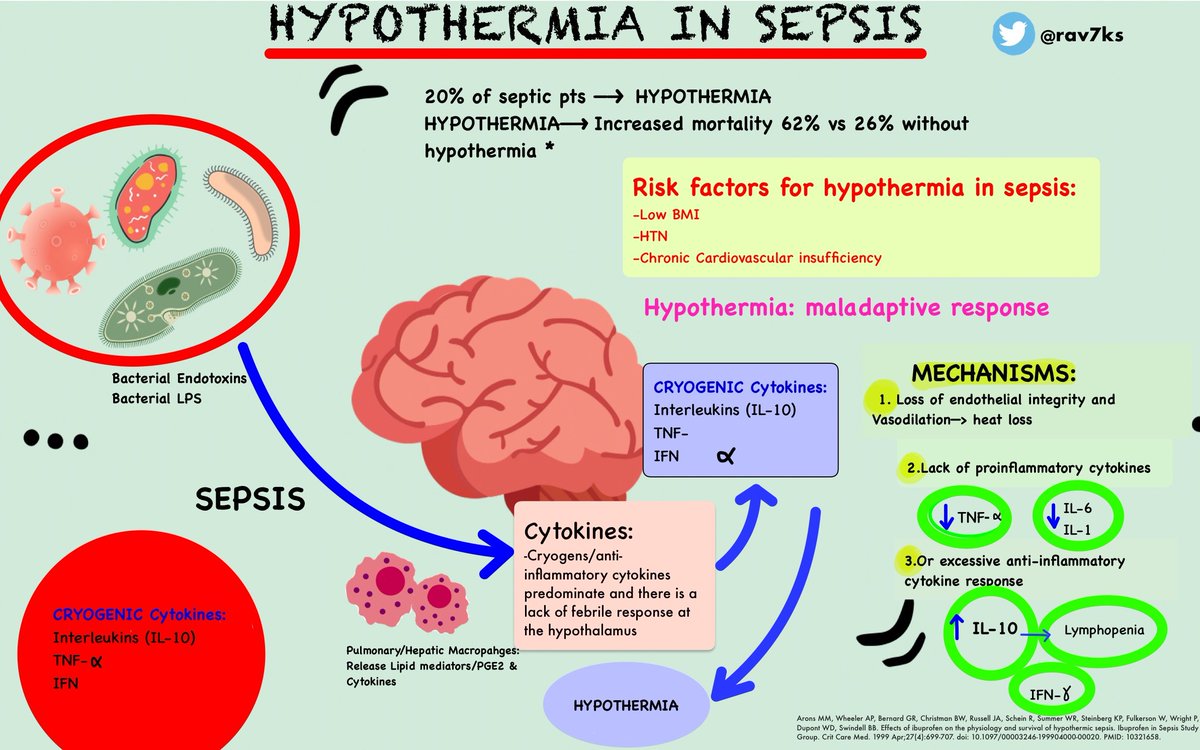
2/8 As we are taught, exogenous pyrogens stimulate a febrile response which is an adaptive response. This delicate symphony of steps occurs during exposure to bacterial products, toxins, or microbes.
Fever is mediated by the release of cytokines such as TNF, IL-6, and IFN.
Fever is mediated by the release of cytokines such as TNF, IL-6, and IFN.

3/8 Alert ! ⬇️temp ⬆️mortality.
Hypothermia is a maladaptive response as 20% of septic patients present with hypothermia. These pts have 2X mortality of febrile patients even after accounting for factors such as age, disease severity, and comorbidities.
pubmed.ncbi.nlm.nih.gov
Hypothermia is a maladaptive response as 20% of septic patients present with hypothermia. These pts have 2X mortality of febrile patients even after accounting for factors such as age, disease severity, and comorbidities.
pubmed.ncbi.nlm.nih.gov
4/8 What is responsible for this response ?
There are only theories and experiments but the answer is truly unknown.
A few of these theories are outlined below:
ccforum.biomedcentral.com
There are only theories and experiments but the answer is truly unknown.
A few of these theories are outlined below:
ccforum.biomedcentral.com
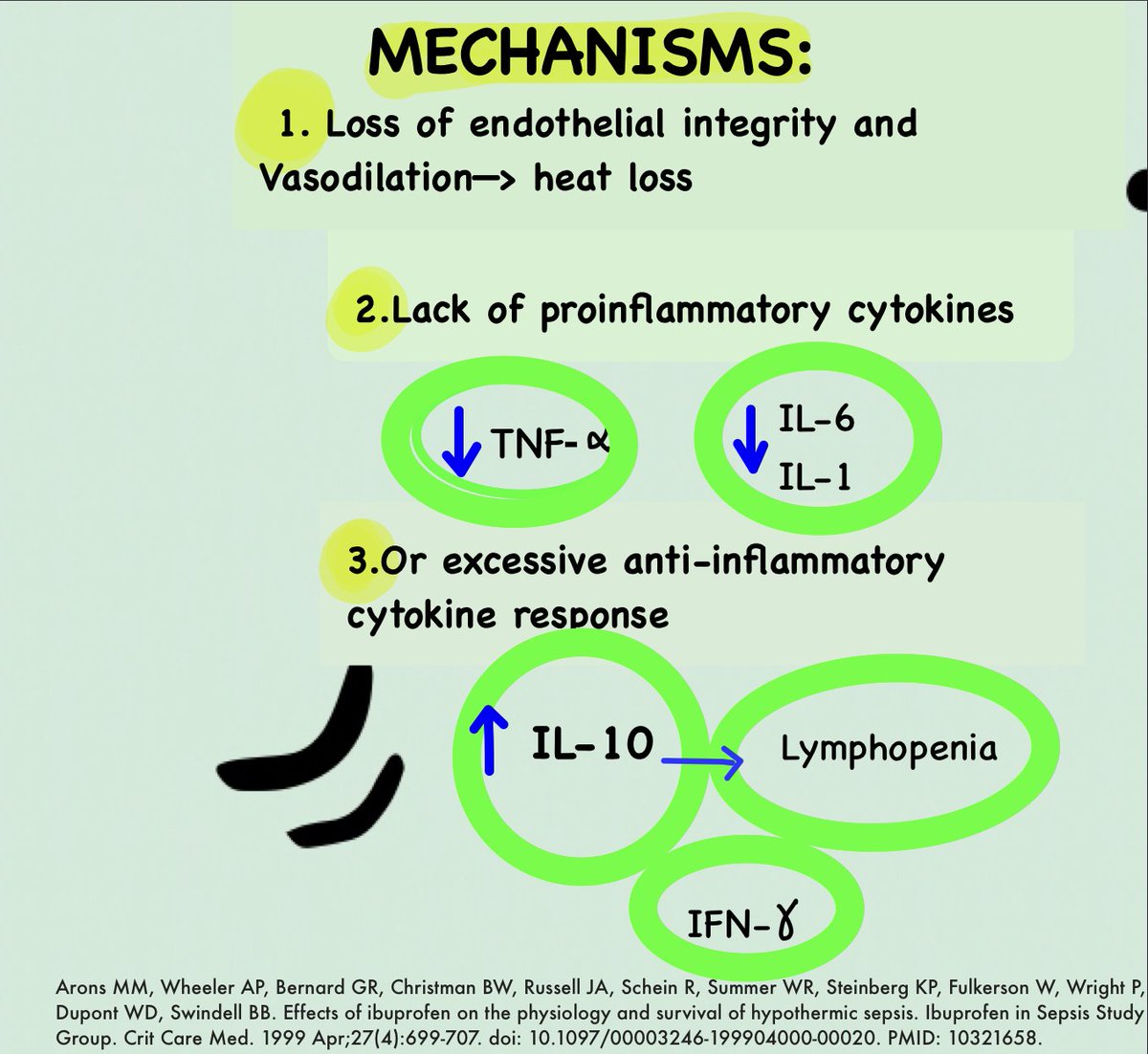
5/8 Fever is the result of a balance between pyrogenic & cryogenic cytokines/hormones. Many endogenous cryogens or antipyretics that limit fever include α-MSH, arg vasopressin, glucocorticoids, TNF and IL-10. Cryogens > pyrogens could explain hypothermia.
researchgate.net
researchgate.net
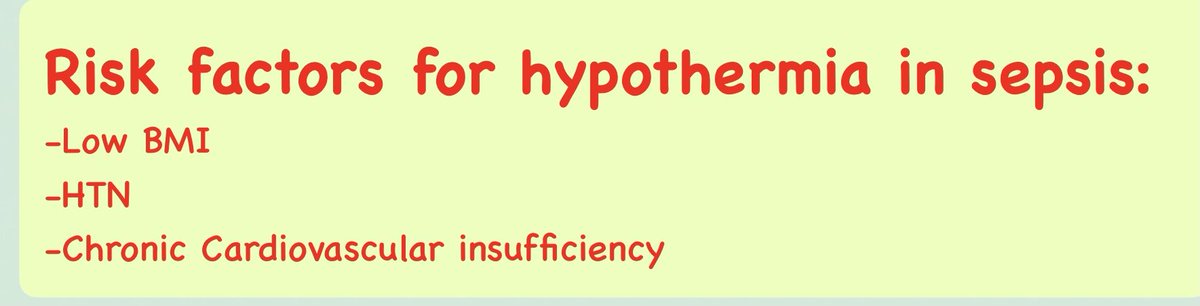
6/8 Risk factors identified in one study for developing hypothermia in sepsis were:
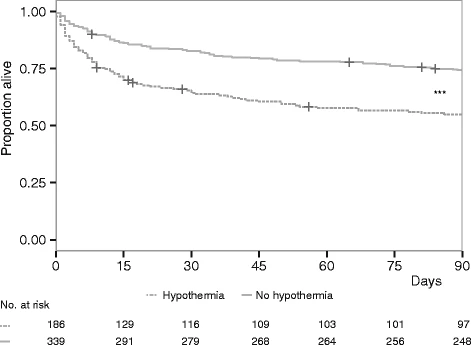
7/8 Normothermia (another maladaptive response) also carries an associated mortality risk in sepsis
Hypothermia also causes:
-Lymphopenia
-Coagulopathy (Multiple mechanisms)
which contribute to the ⬆️mortality risk as depicted here:
ccforum.biomedcentral.com
Hypothermia also causes:
-Lymphopenia
-Coagulopathy (Multiple mechanisms)
which contribute to the ⬆️mortality risk as depicted here:
ccforum.biomedcentral.com
8/8. In conclusion:
Hypothermia during sepsis can be indicative of larger immune system problems and an ominous course. Remember to highlight this and observe these patients closely for a potential increased risk of persistent lymphopenia and more catastrophic course.
Hypothermia during sepsis can be indicative of larger immune system problems and an ominous course. Remember to highlight this and observe these patients closely for a potential increased risk of persistent lymphopenia and more catastrophic course.

Loading suggestions...