
Technology
COVID-19
Health
Science
Medical Research
Medicine
Virology
Infectious Diseases
Immunology

Are you confused about the role of type I interferons (IFN) in #SARS_CoV_2 infection?
Here is my speculation on what makes IFN-I helpful vs. harmful in #COVID19 patients - it comes down to timing and dose. A short thread.
All figures made by @BioRender & @annsea_park (1/n)
Here is my speculation on what makes IFN-I helpful vs. harmful in #COVID19 patients - it comes down to timing and dose. A short thread.
All figures made by @BioRender & @annsea_park (1/n)
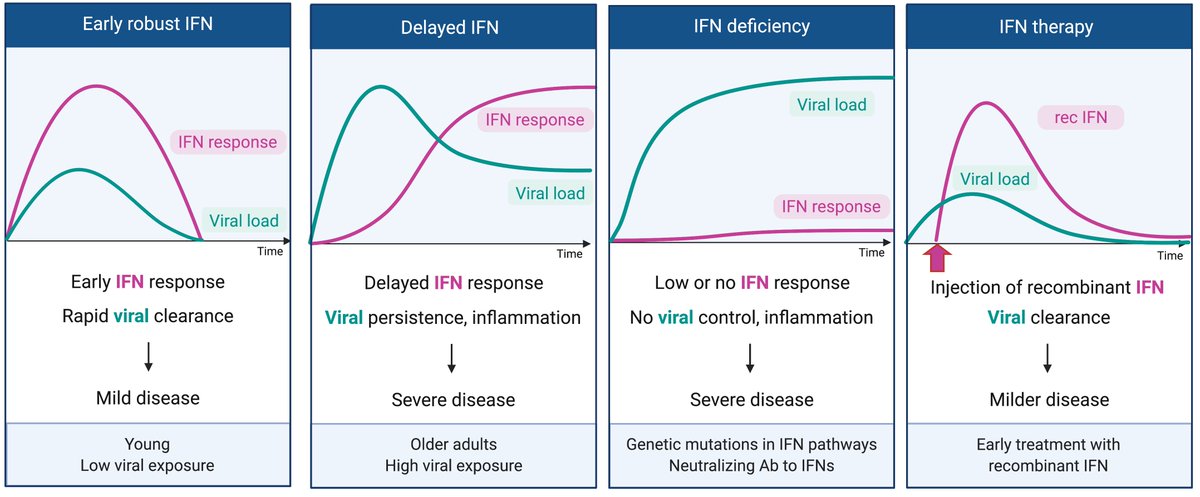
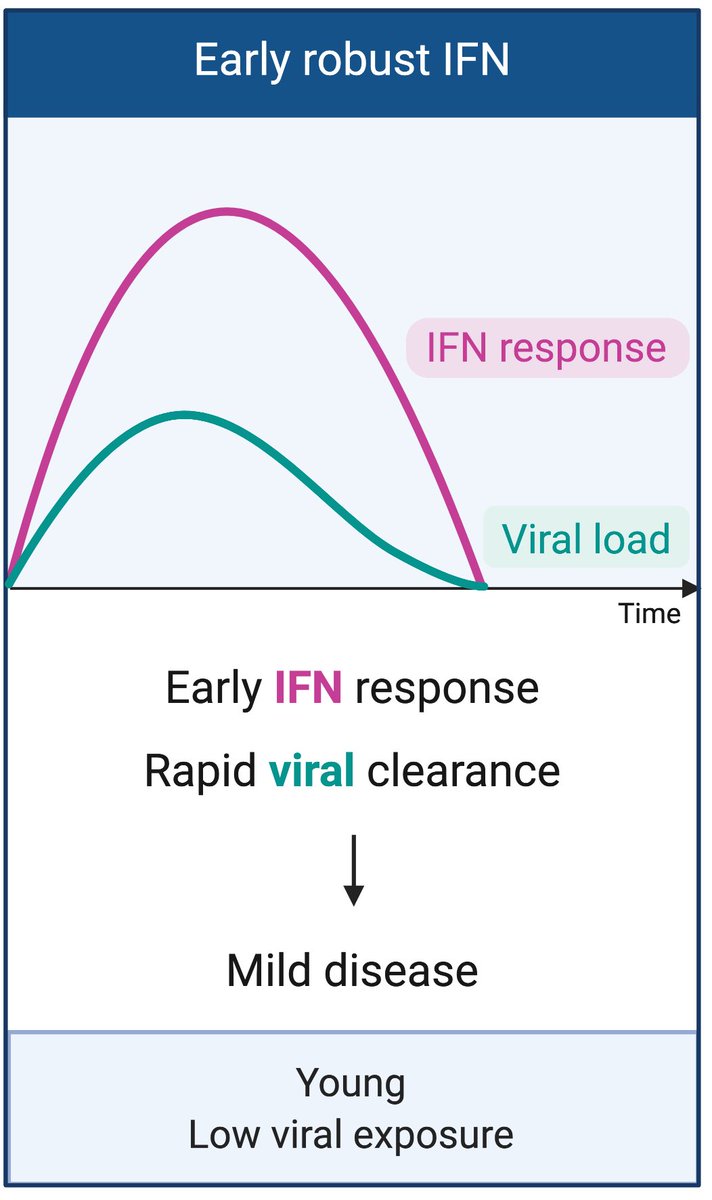
In the best case scenario, a rapid and robust induction of IFN-I should result in viral control and mild disease. This may happen in young people, or with low viral exposure settings. For a discussion we wrote, please read this.
(2/n)
cell.com
(2/n)
cell.com
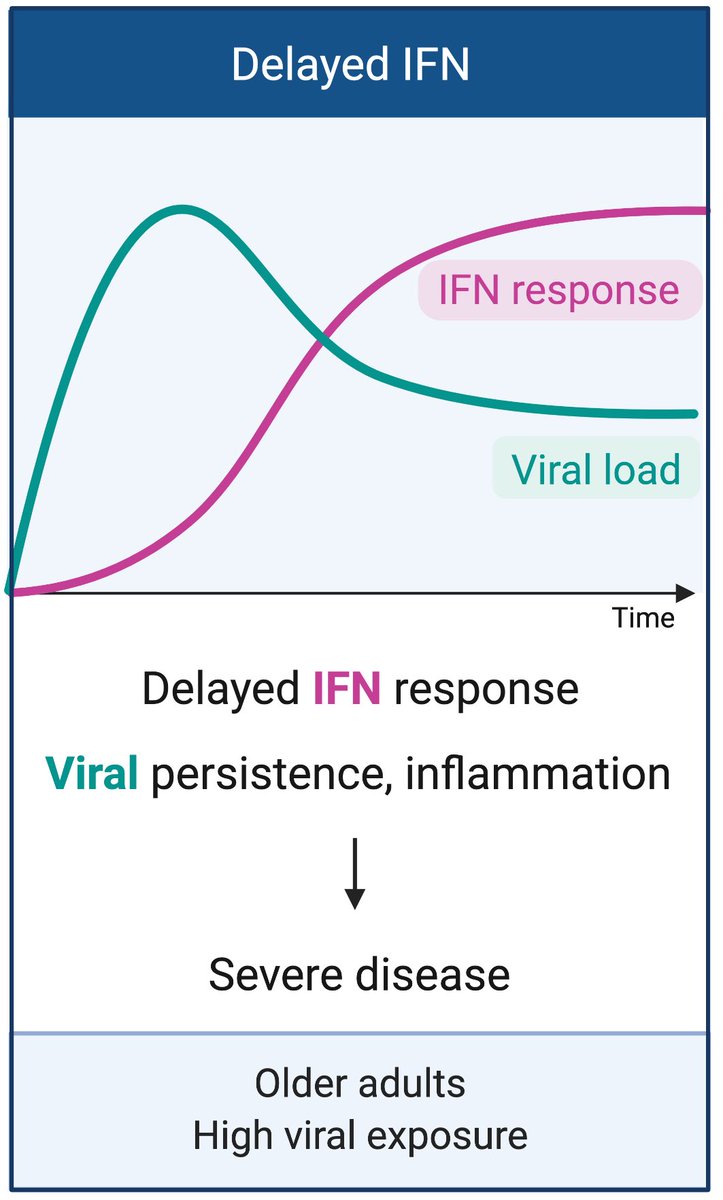
In older adults or after high dose viral exposure, impaired IFN response early during infection results in enhanced viral replication, and prolonged levels of IFN-I and IFN-III responses that could result in pathological consequences and severe disease. (3/n)
Some papers supporting this scenario can be found here. (4/n)
immunology.sciencemag.org
sciencedirect.com
rupress.org
nature.com
sciencedirect.com
science.sciencemag.org
science.sciencemag.org
stke.sciencemag.org
immunology.sciencemag.org
sciencedirect.com
rupress.org
nature.com
sciencedirect.com
science.sciencemag.org
science.sciencemag.org
stke.sciencemag.org
Not all studies show this pattern. Here is a study that showed lower IFN-I levels in more severe COVID patients. It would be interesting to understand this difference. (5/n)
science.sciencemag.org
science.sciencemag.org
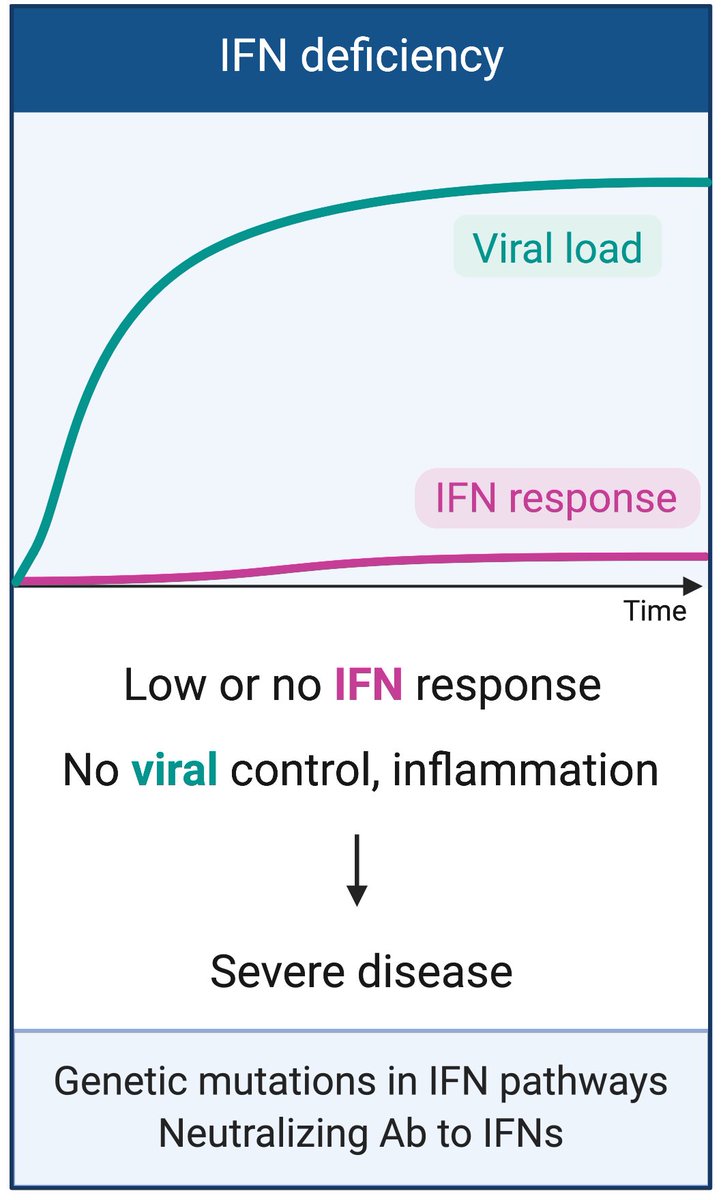
In the setting of host genetic mutations in viral sensors, signaling molecules, adaptors, transcription factors; or in older people with neutralizing antibodies to IFN-I, little to no IFN-I is available. Uncontrolled virus replication can lead to very severe COVID-19. (6/n)
Papers supporting this scenario can be found here. (7/n)
science.sciencemag.org
science.sciencemag.org
jamanetwork.com
science.sciencemag.org
science.sciencemag.org
jamanetwork.com
Finally, recombinant IFN therapy, especially given early during infection, can shut down viral replication and promote recovery. Further, prophylactic treatment with rIFN might be useful in high risk groups. (8/n)
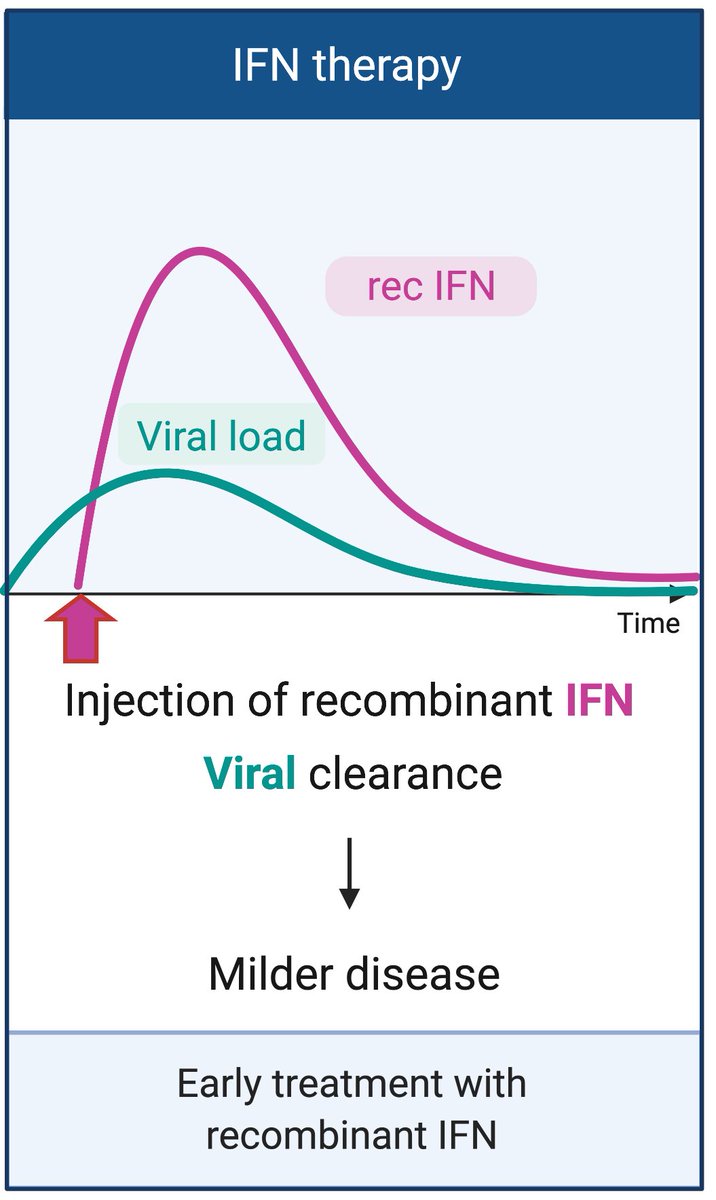
A number of clinical trials are under way to test whether IFN therapy can help #COVID-19 patients recover quickly from infection and disease. Thank you for reading! (End)
clinicaltrials.gov
sciencemag.org
covid19treatmentguidelines.nih.gov
clinicaltrials.gov
sciencemag.org
covid19treatmentguidelines.nih.gov
Loading suggestions...