

#Thread #AncientEgypt #Kemet
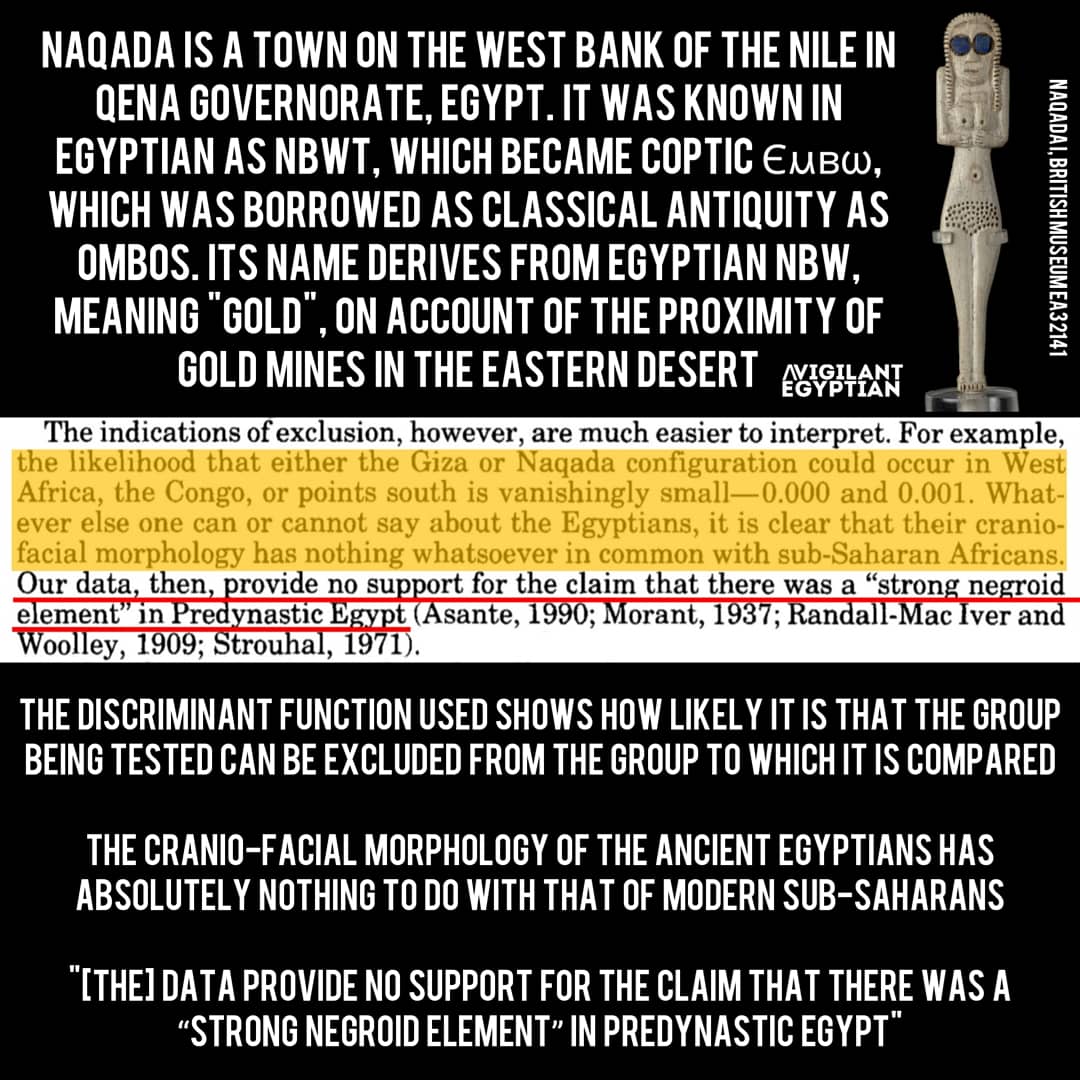
The cranio-facial morphology of the ancient #Egyptians has absolutely nothing to do with that of modern sub-saharans.
"[The] data provide no support for the claim that there was a "strong negroid element" in Predynastic Egypt" (Brace et al. 1993).
The cranio-facial morphology of the ancient #Egyptians has absolutely nothing to do with that of modern sub-saharans.
"[The] data provide no support for the claim that there was a "strong negroid element" in Predynastic Egypt" (Brace et al. 1993).
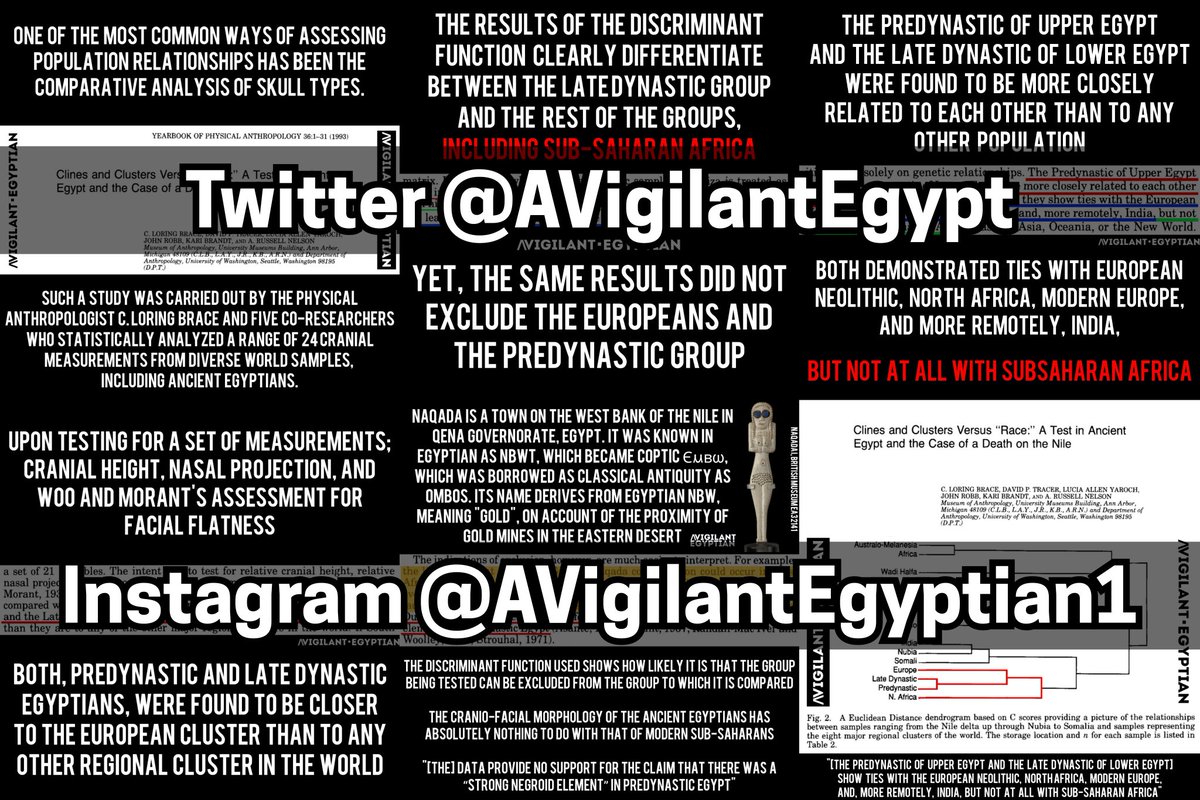
One of the most common ways of assessing population relationships has been the comparative analysis of skull types.
Such a study was carried out by the physical anthropologists C. Loring brace and 5 co-researchers who statistically analysed the range of 24 cranial measurements from diverse world samples including the ancient Egyptians.
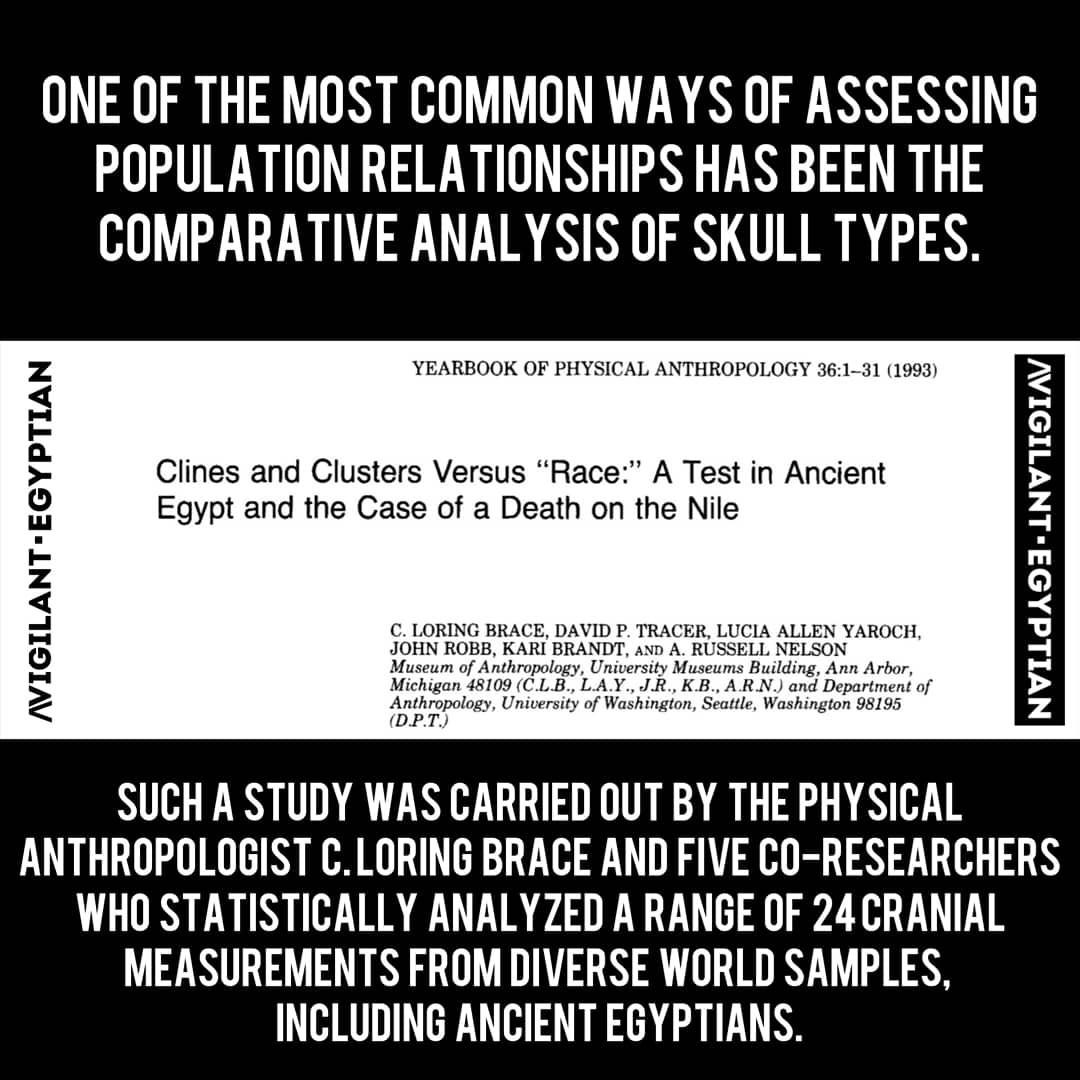
The Predynastic of Upper #Egypt and the late Dynastic of lower Egypt were found to be more closely related to each other than to any other population. Both demonstrated ties with European Neolithic, North Africa, modern Europe...; but, not at all with sub-saharan Africa.
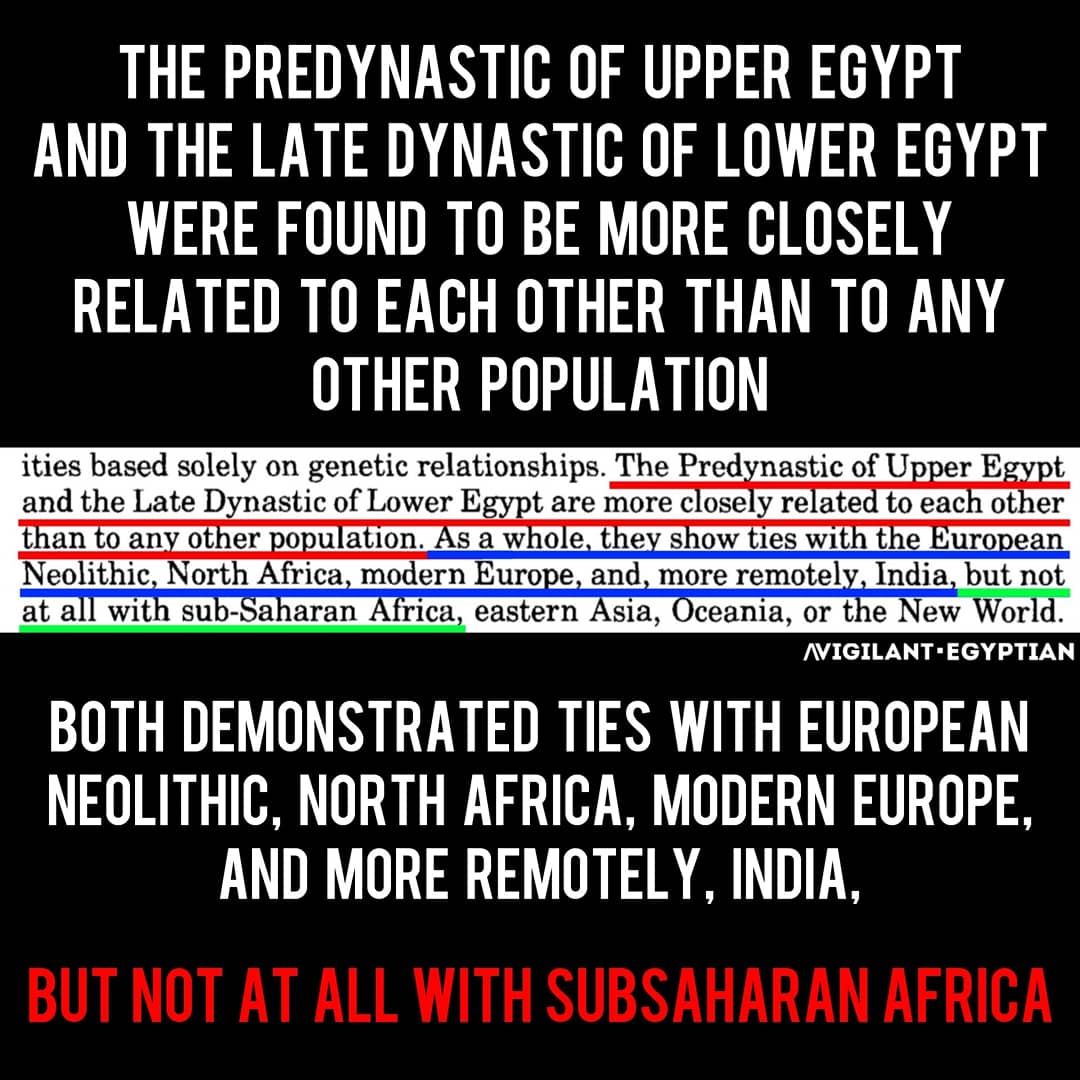
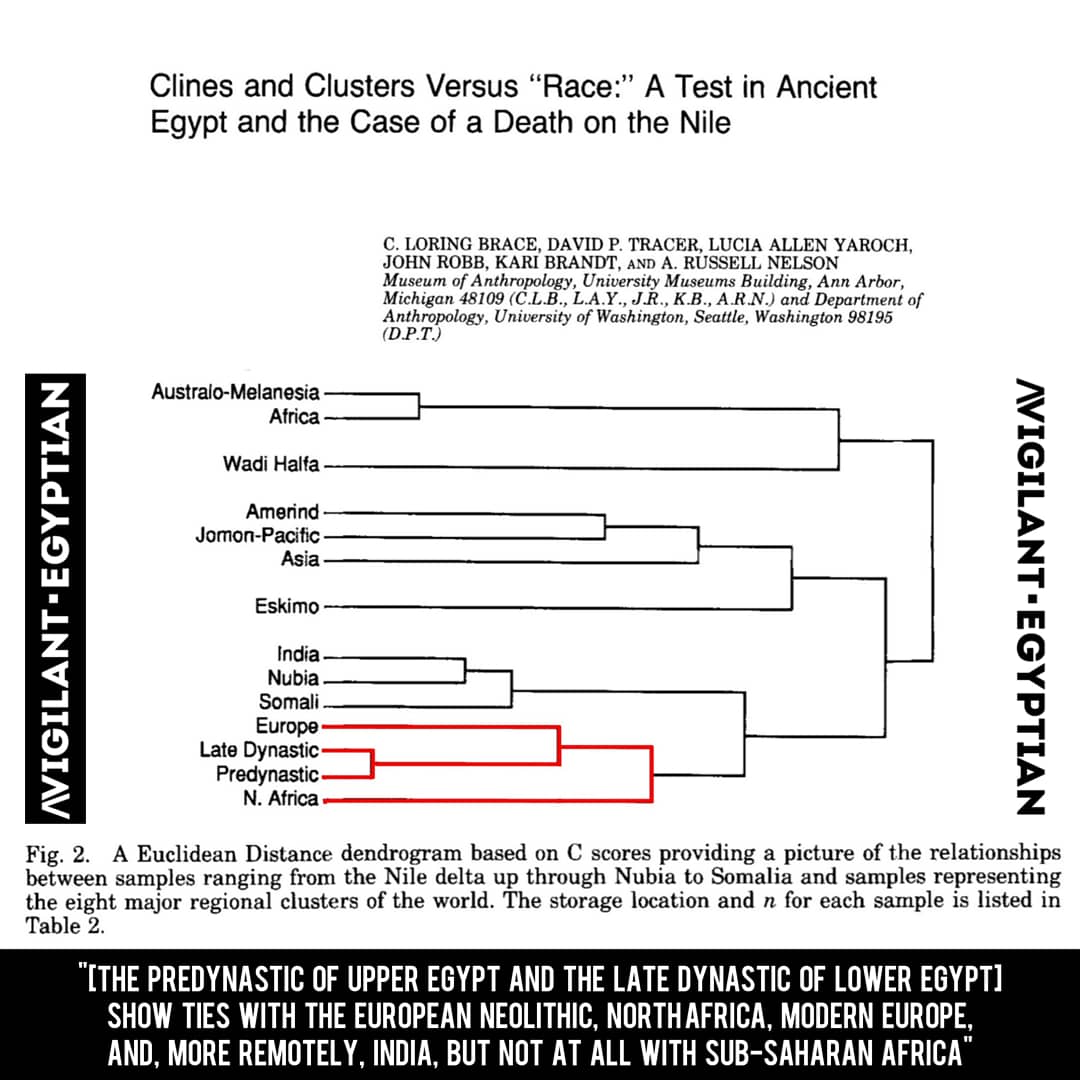
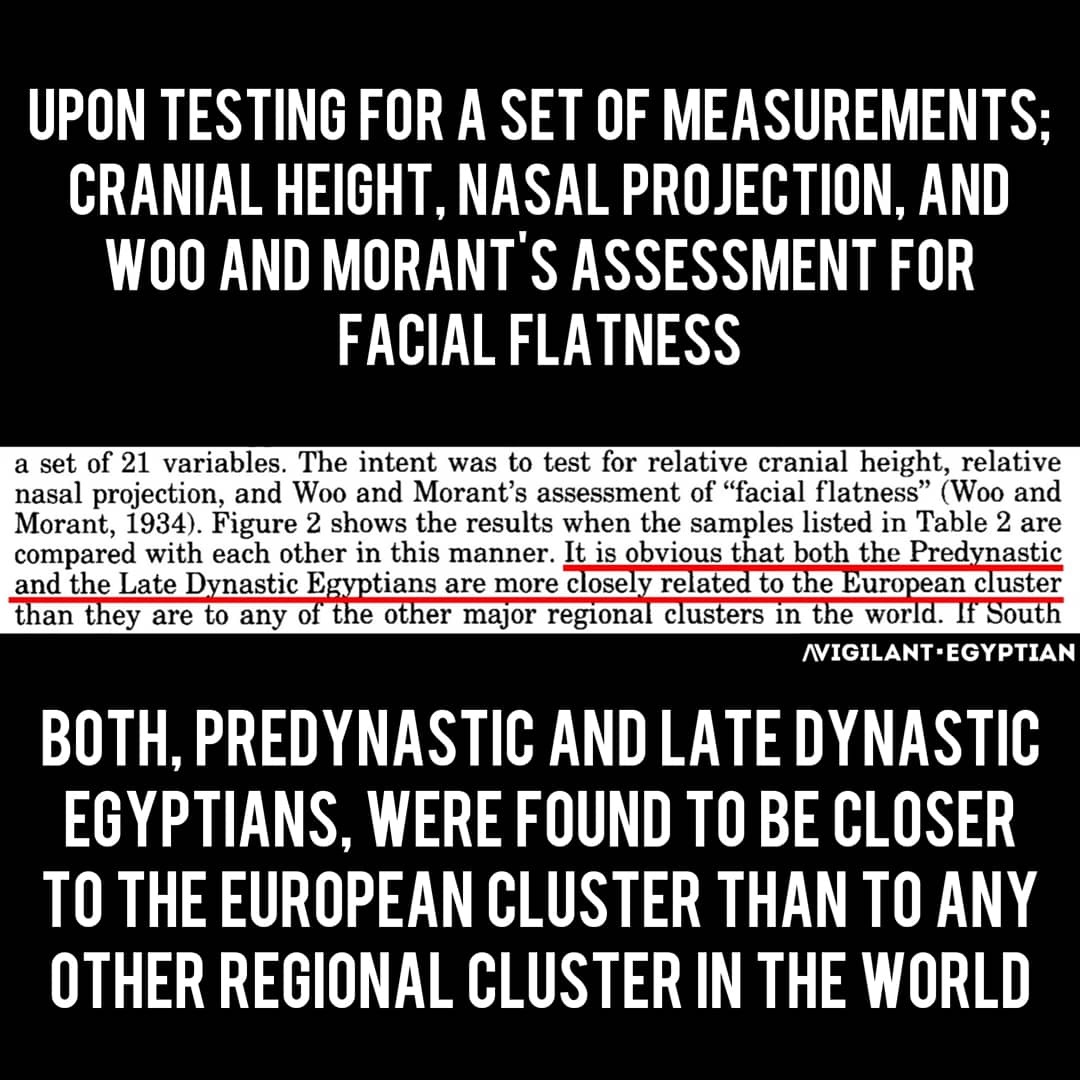
Upon testing for a set of measurements; cranial height, nasal projection and Woo & Morant's assessment for facial flatness; both the Predynastic and the late Dynastic Egyptians were found to be closer to the European cluster than to any other regional cluster in the world.
The discriminant function used shows how likely it is that the group being tested can be excluded from the group to which it is compared.
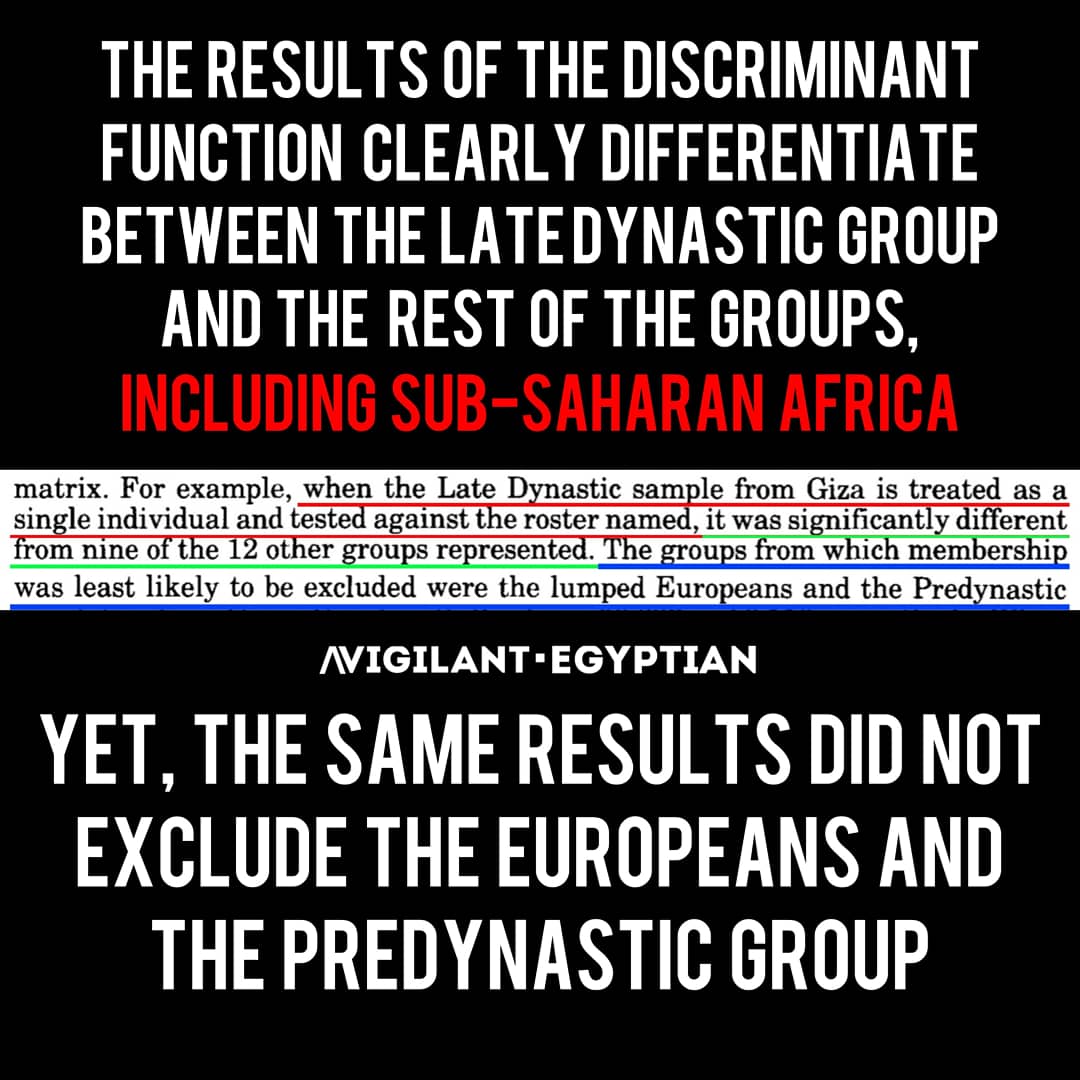
The results successfully grouped the ancient Egyptian samples together and differentiated between them and the rest of the samples. Thus, further asserting that the affinities are "real", and not a product of a statistical or illustrative method.
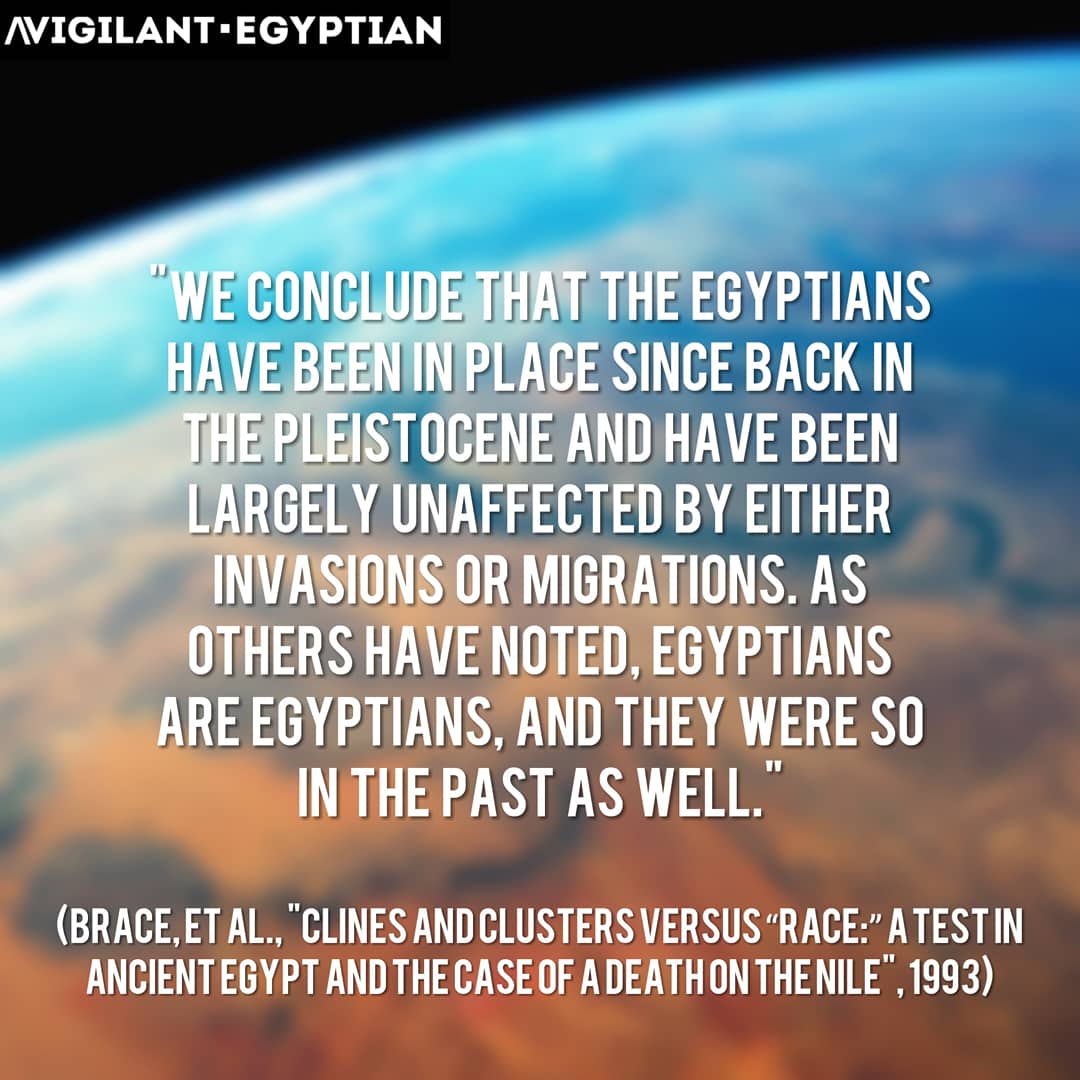
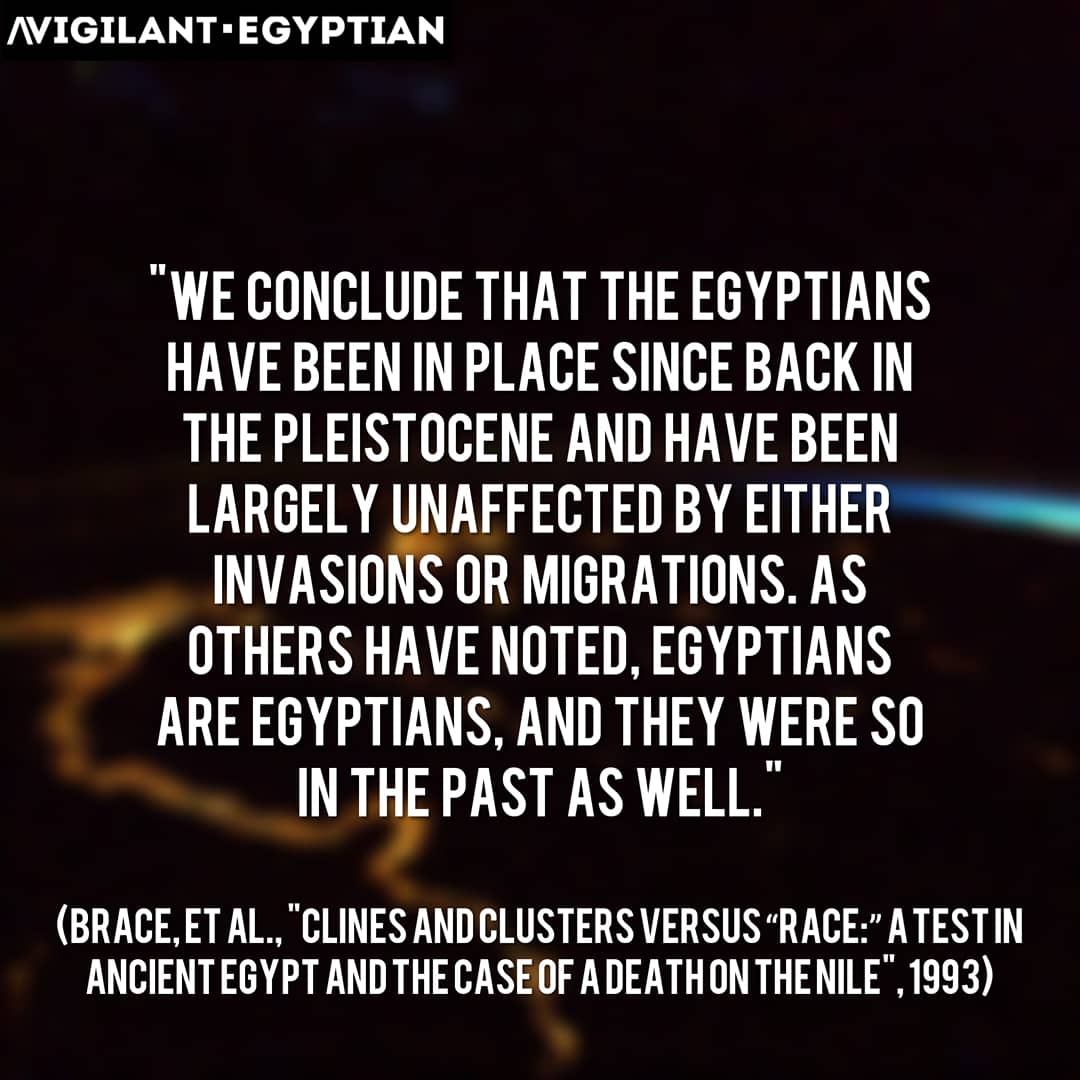
To sum up; "We conclude that the Egyptians have been in place since back in the Pleistocene and have been largely unaffected by either invasions or migrations. As others have noted, Egyptians are Egyptians, and they were so in the past as well" (Brace et al., 1993).
Brace, C. L., Tracer, D. P., Yaroch, L. A., Robb, J., Brandt, K., & Nelson, A. R. (1993). Clines and clusters versus “Race:” a test in ancient Egypt and the case of a death on the Nile. American Journal of Physical Anthropology, 36(S17), 1-31. doi:10.1002/ajpa.1330360603
جاري تحميل الاقتراحات...