

WORK & LIVELIHOODS IN THE MAHJAR: today, I will share a few stories about the Syrian diaspora's labor economy, 1890s-1934.
We will talk about peddling, factory work, and the stories we (as historians) tell about them. I'll also touch on welfare/mutual aid.
au:@SDFahrenthold
We will talk about peddling, factory work, and the stories we (as historians) tell about them. I'll also touch on welfare/mutual aid.
au:@SDFahrenthold
First, some background reading, because the mahjar's labor economy was itself an extension of that of late 19th century Syria, Mt Lebanon, and Palestine.
The first migrants abroad were building on an economy focused on silk production in the Middle East: jstor.org
The first migrants abroad were building on an economy focused on silk production in the Middle East: jstor.org
Second, Syrian women played primary roles in this migrant labor economy:
1. by working in silk factories to subsidize the emigration of male relatives,
2. by going abroad themselves to work as peddlers or in factories,
See: muse.jhu.edu
1. by working in silk factories to subsidize the emigration of male relatives,
2. by going abroad themselves to work as peddlers or in factories,
See: muse.jhu.edu
So, Syrian migrants who arrived in the Americas via steamship in the 1880s were, by then, already deeply imbricated in a globalizing labor economy that was a half-century old.
But how did they know what to do upon arrival?
But how did they know what to do upon arrival?
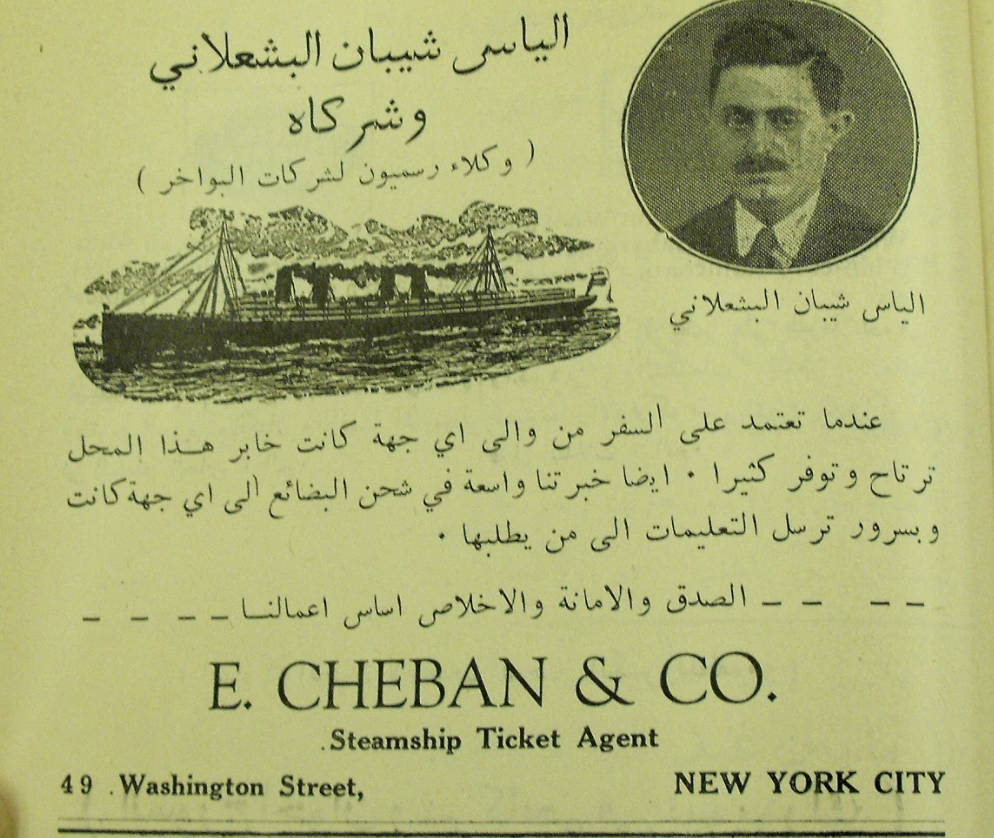
Here's where print culture again becomes important. The same presses that produced serials also made advice manuals, distributed them in the Middle East.
Here's an example, a 1909 booklet of what every Syrian emigrant must know and do, written by a Syrian immigration inspector:
Here's an example, a 1909 booklet of what every Syrian emigrant must know and do, written by a Syrian immigration inspector:
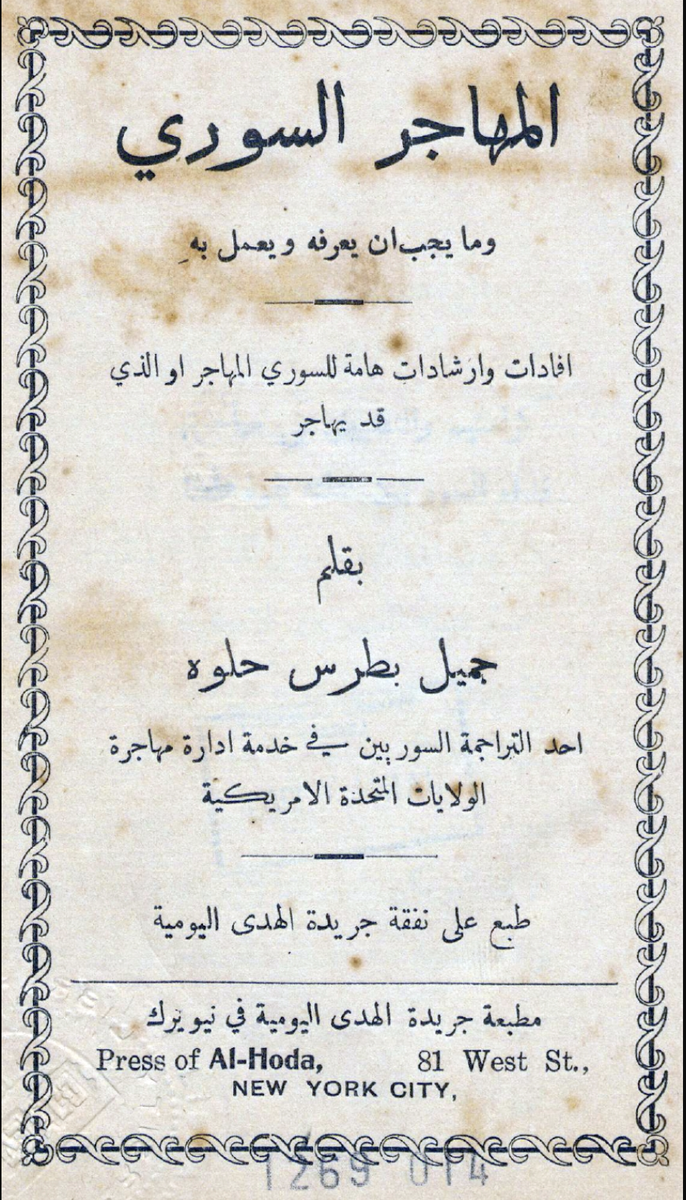
The booklet describes the immigration process, and what questions Syrians could expect. It's also a constitutional primer, arming these immigrants with the knowledge to protect themselves.
Read it here: iiif.lib.harvard.edu
Read about it here: migrantknowledge.org
Read it here: iiif.lib.harvard.edu
Read about it here: migrantknowledge.org
Anyway, in the very beginning of the Syrian migration to the Americas, most of those who went abroad were men. (Women later formed 35% of this diaspora, around 1900).
Arriving in the port, most connected directly to Syrian employment agents who helped set them up with work.
Arriving in the port, most connected directly to Syrian employment agents who helped set them up with work.
PEDDLING is the most remarked trade in this mahjar, in both original sources and historiography (more on the politics of that later).
Peddlers were outfitted with packs and carried sewing notions, bits of lace, finishing trim, household medicines, and sometimes trinkets/relics.
Peddlers were outfitted with packs and carried sewing notions, bits of lace, finishing trim, household medicines, and sometimes trinkets/relics.
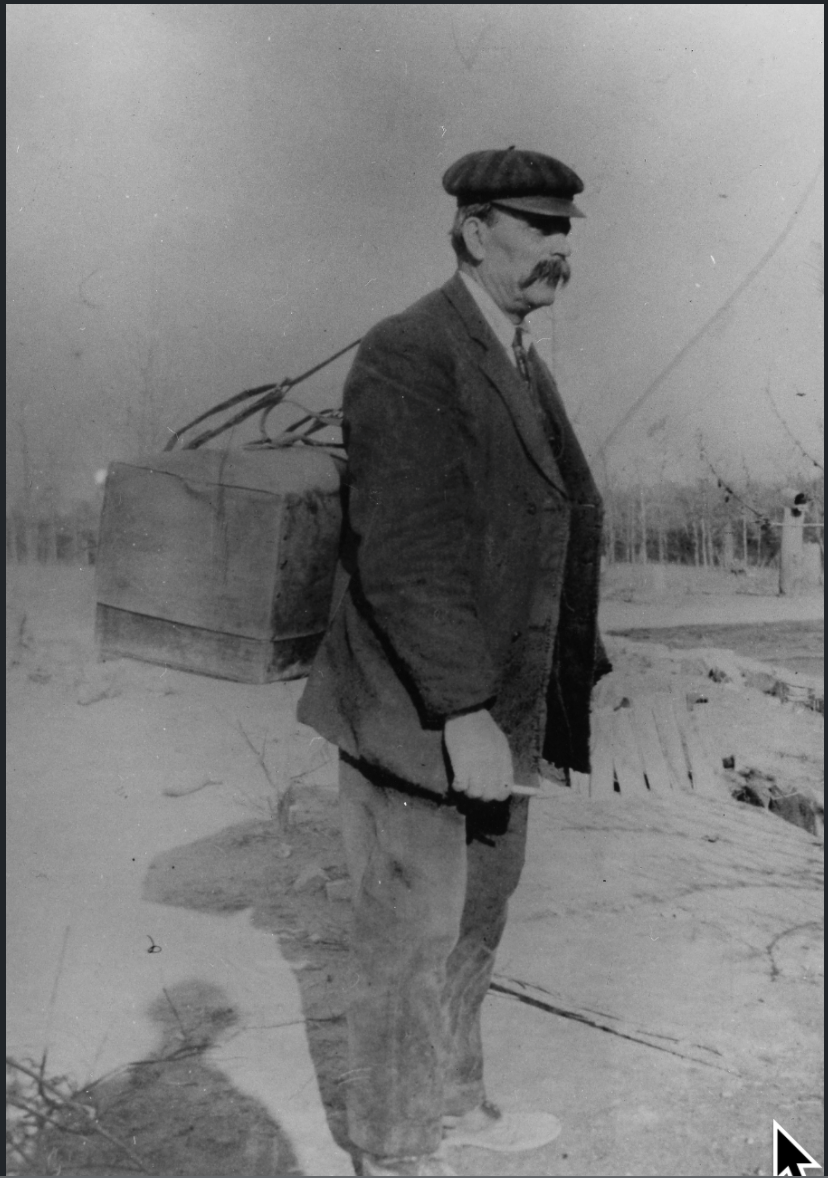
Itinerant commerce was well-suited for newly arriving Syrians, especially the "family firsts" who lacked start-up capital, local languages/cultures.
By 1900, Syrian importers in larger colonies like New York, Bueno Aires, Sao Paulo granted peddlers loans/items on consignment.
By 1900, Syrian importers in larger colonies like New York, Bueno Aires, Sao Paulo granted peddlers loans/items on consignment.
Peddling involved a variety of activities: not only selling retail goods, but food/beverage carts, small-time loans making, working as couriers/purchasers.
Syrian peddlers worked both in cities where large Arab communities already existed...
(like New York City, here):
Syrian peddlers worked both in cities where large Arab communities already existed...
(like New York City, here):
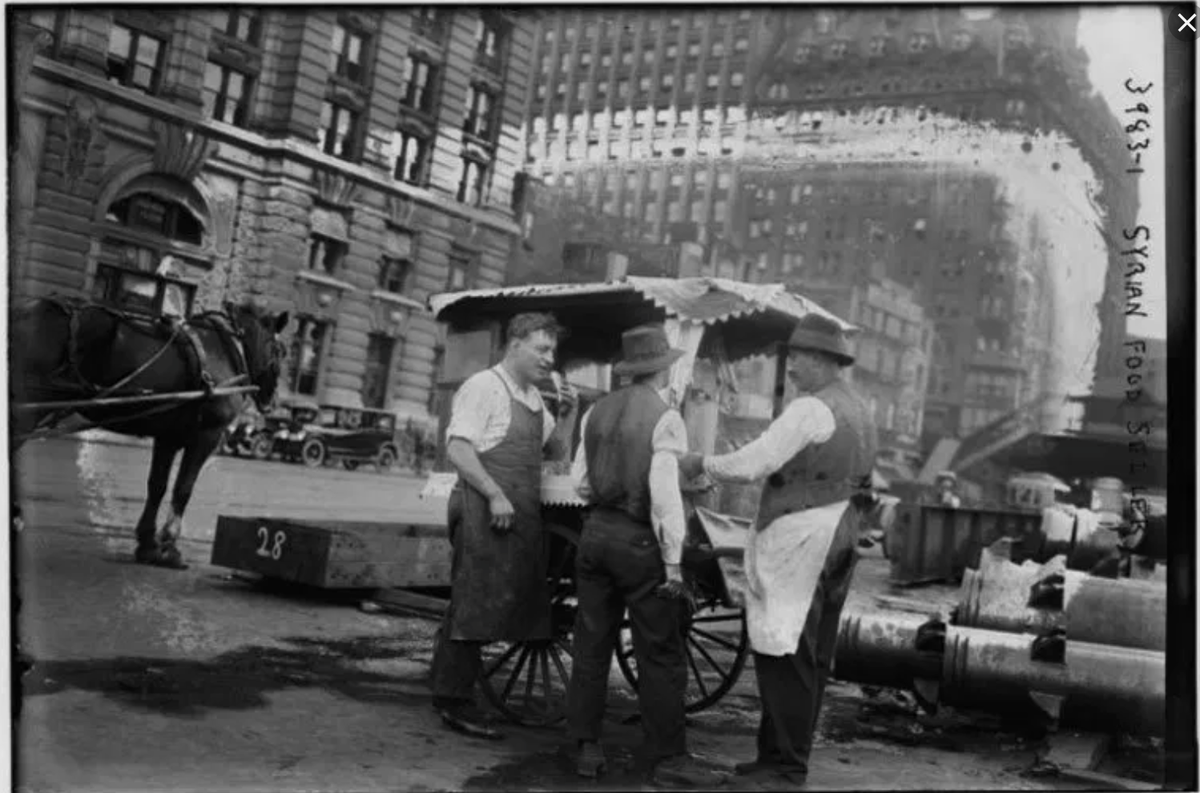
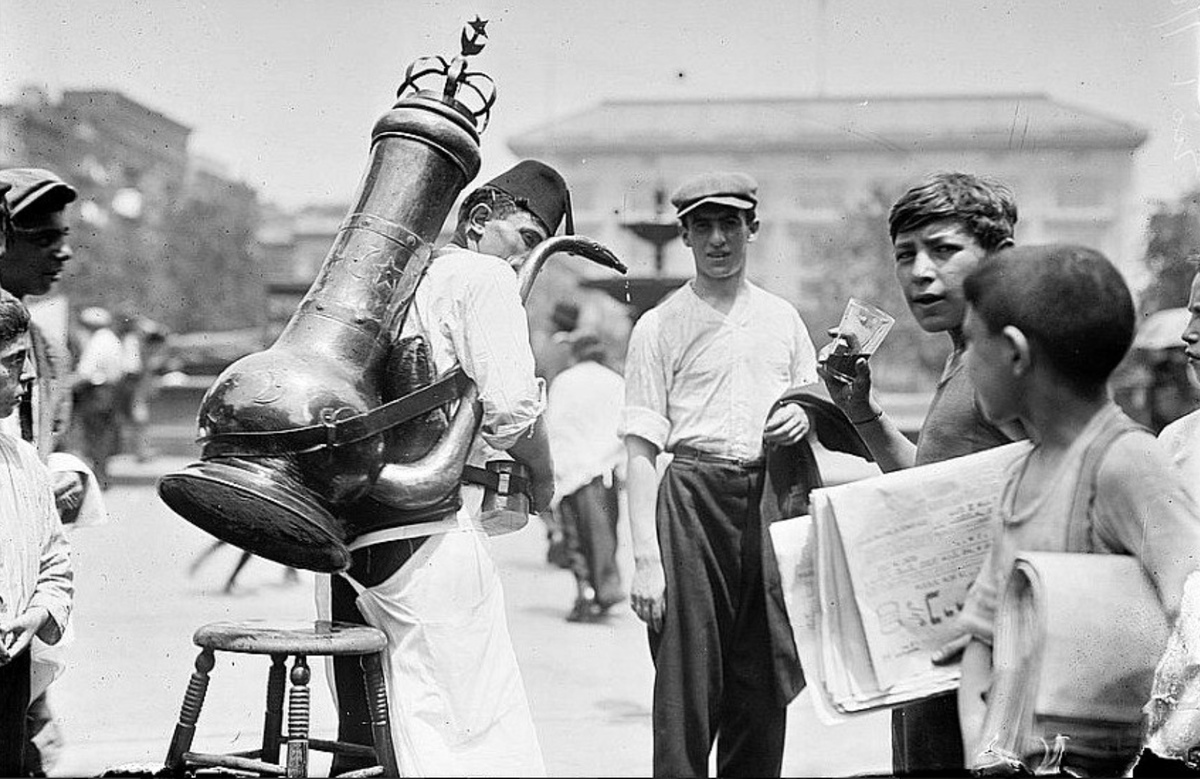
...or by carrying goods or managing small-time commerce in small towns/rural spaces beyond the cities, as illustrates by this map of "peddling routes" printed in Syrian New York:
and in the case of Argentina, in @DrPearlBallo's new book: sup.org
and in the case of Argentina, in @DrPearlBallo's new book: sup.org
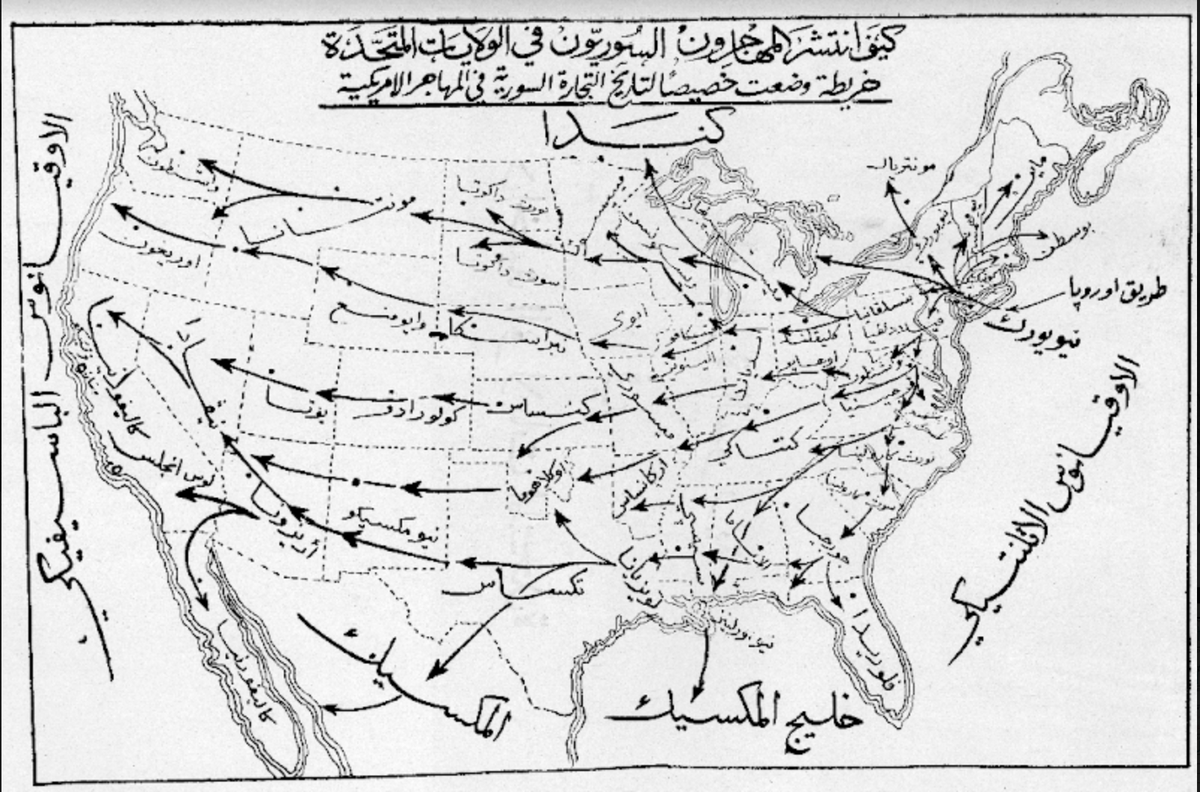
Syrian periodicals attached a romance to the Syrian peddler. He (and these serials described him as male even though Syrian women also peddled) was a force for social mobility in the mahjar.
He was evidence of the entrepreneurial spirit.
1934 Syrian World (NYC) editorial:
He was evidence of the entrepreneurial spirit.
1934 Syrian World (NYC) editorial:
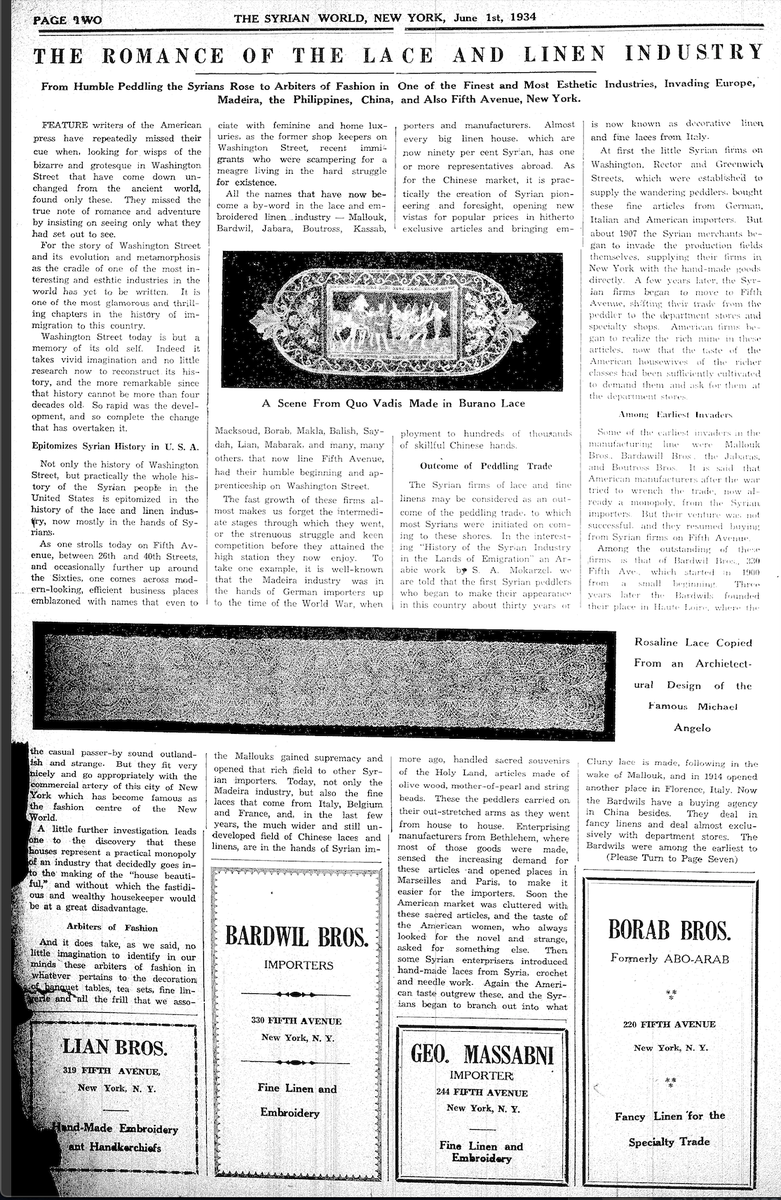
He was also part of a larger mahjari discourse on modernity, progress, and success. From "how we were, to what we became."
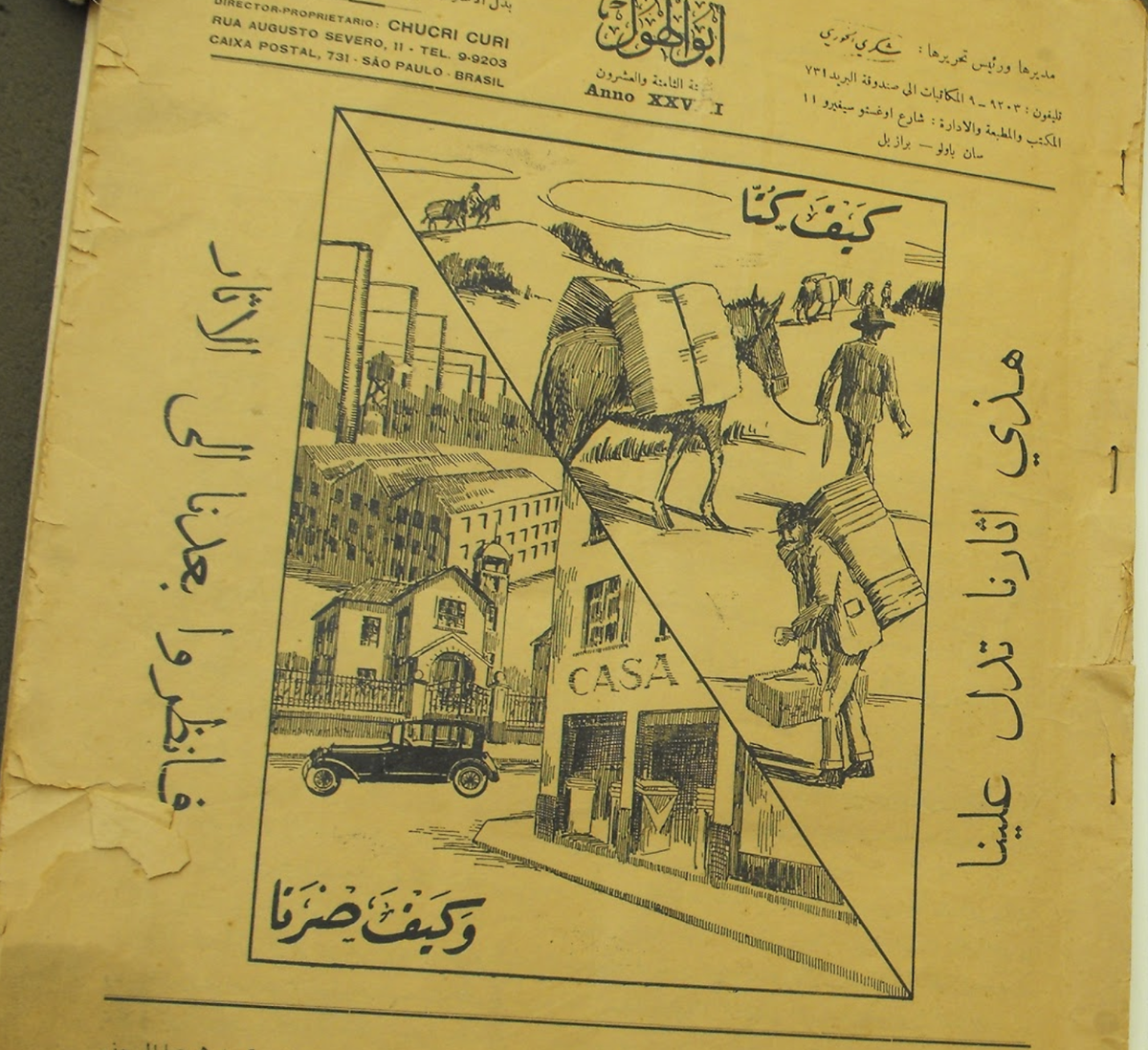
Peddling is a monument in the Syrian mahjar's historical metanarratives.
Abu al-Hawl (Sao Paulo) front page. Spot the peddler with his kashe (pack).
Peddling is a monument in the Syrian mahjar's historical metanarratives.
Abu al-Hawl (Sao Paulo) front page. Spot the peddler with his kashe (pack).
In Mexico, Syrian & Lebanese peddlers not only carried goods between cities/rural spaces, but across borders. Pack peddling and a carrying trade in textiles, laces, buttons sustained the US-Mexico borderlands by 1914.
Even as US border authorities panicked over it.
Even as US border authorities panicked over it.
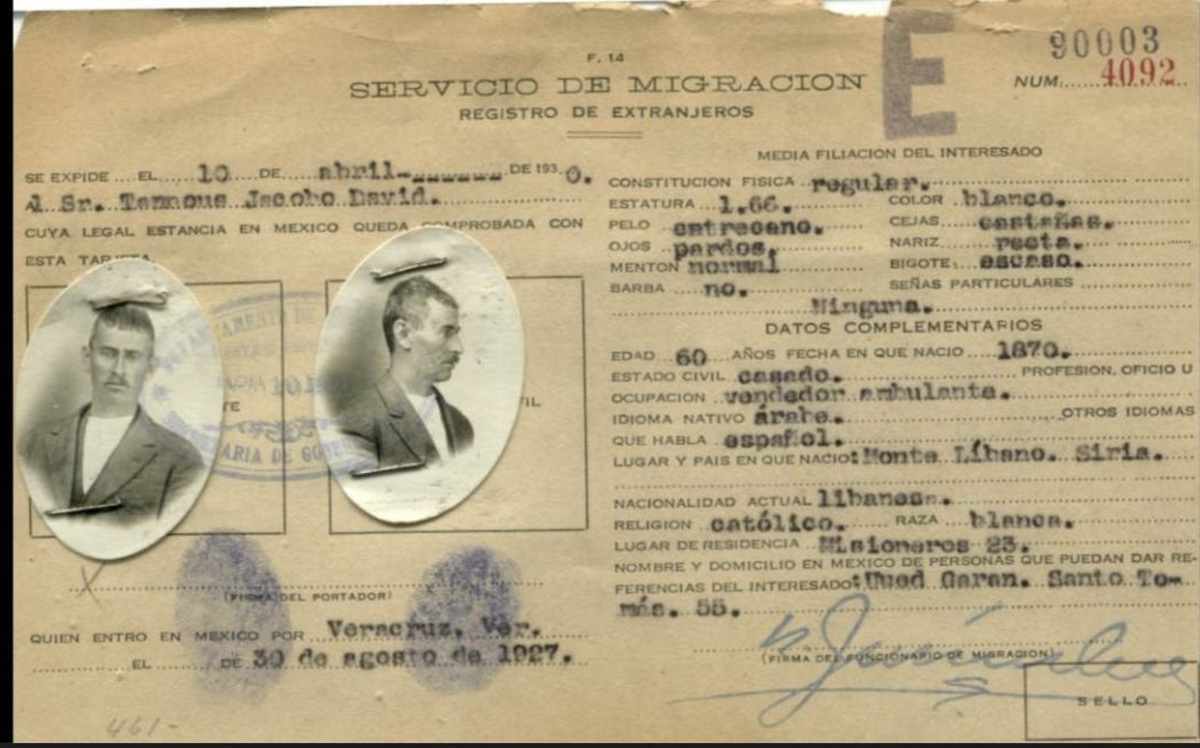
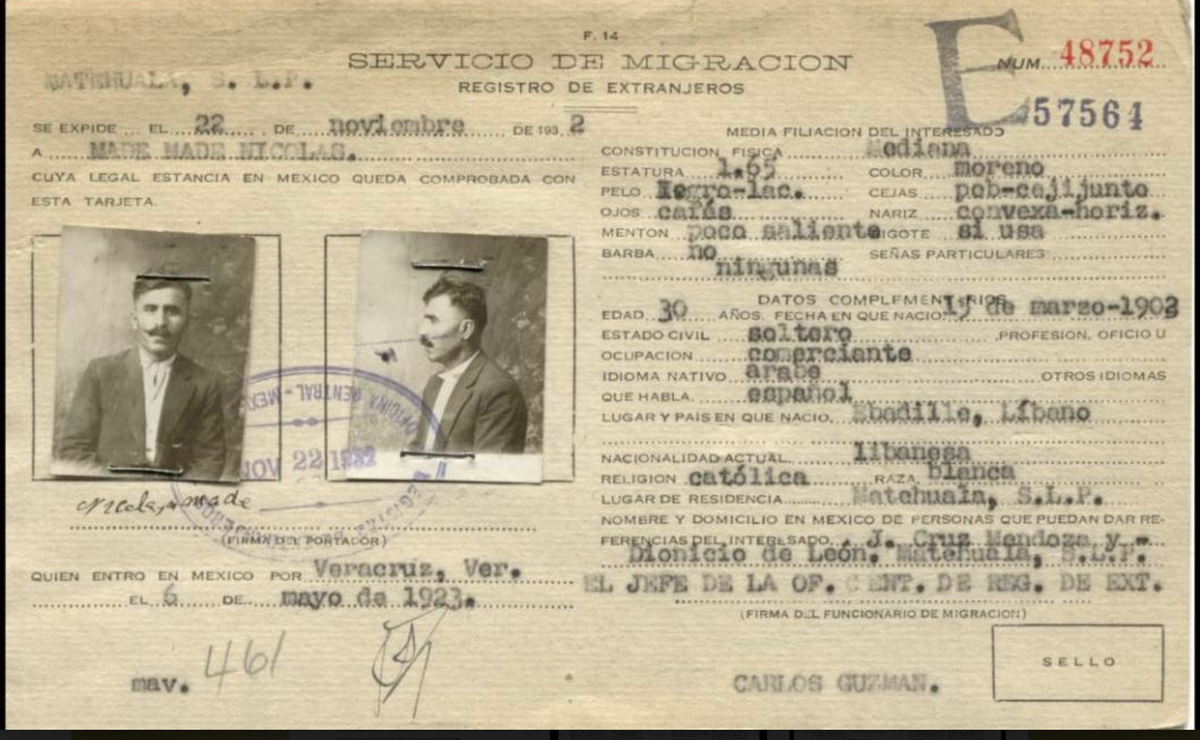
Now, one thing I think is interesting about mahjari archives is this fixation on the pack peddler.
Peddling comprised one important economic activity in this diaspora. But:
1. peddling was one facet of a larger labor economy.
2. other industries are unremarked in the sources.
Peddling comprised one important economic activity in this diaspora. But:
1. peddling was one facet of a larger labor economy.
2. other industries are unremarked in the sources.
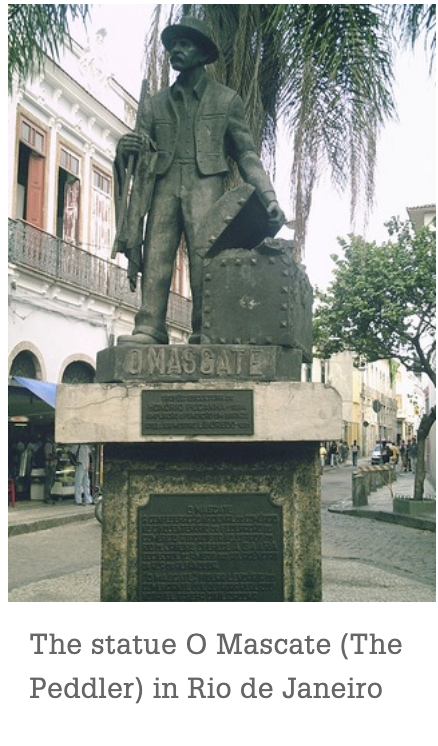
Peddlers have been literally monumentalized around the diaspora, where they are triumphalist totems of economic success.
These statues in Halifax, Canada and Rio de Janeiro, Brazil.
John Tofik Karam wrote about this memorialism here: lebanesestudies.news.chass.ncsu.edu
These statues in Halifax, Canada and Rio de Janeiro, Brazil.
John Tofik Karam wrote about this memorialism here: lebanesestudies.news.chass.ncsu.edu
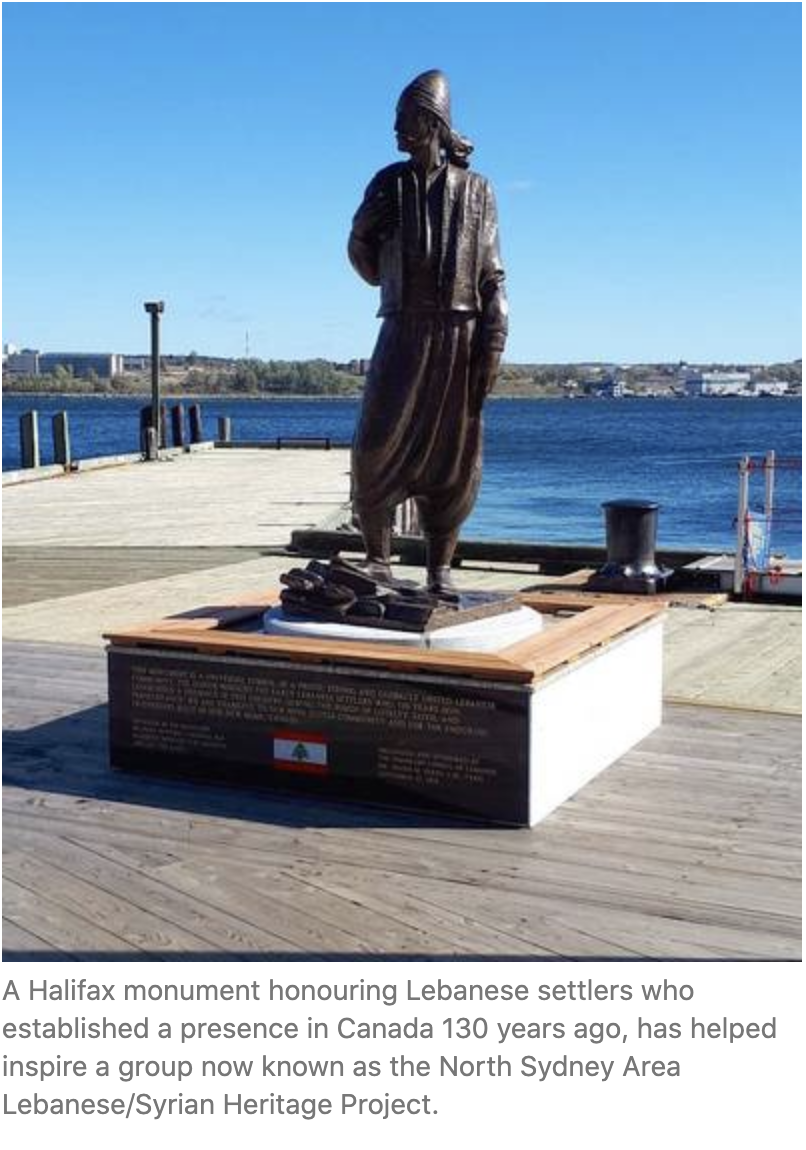
However, peddling was one side of a larger industry centered primarily on textiles and lace production. Weaving, garment-making, lace making, shipping/sales of textiles from the Middle East.
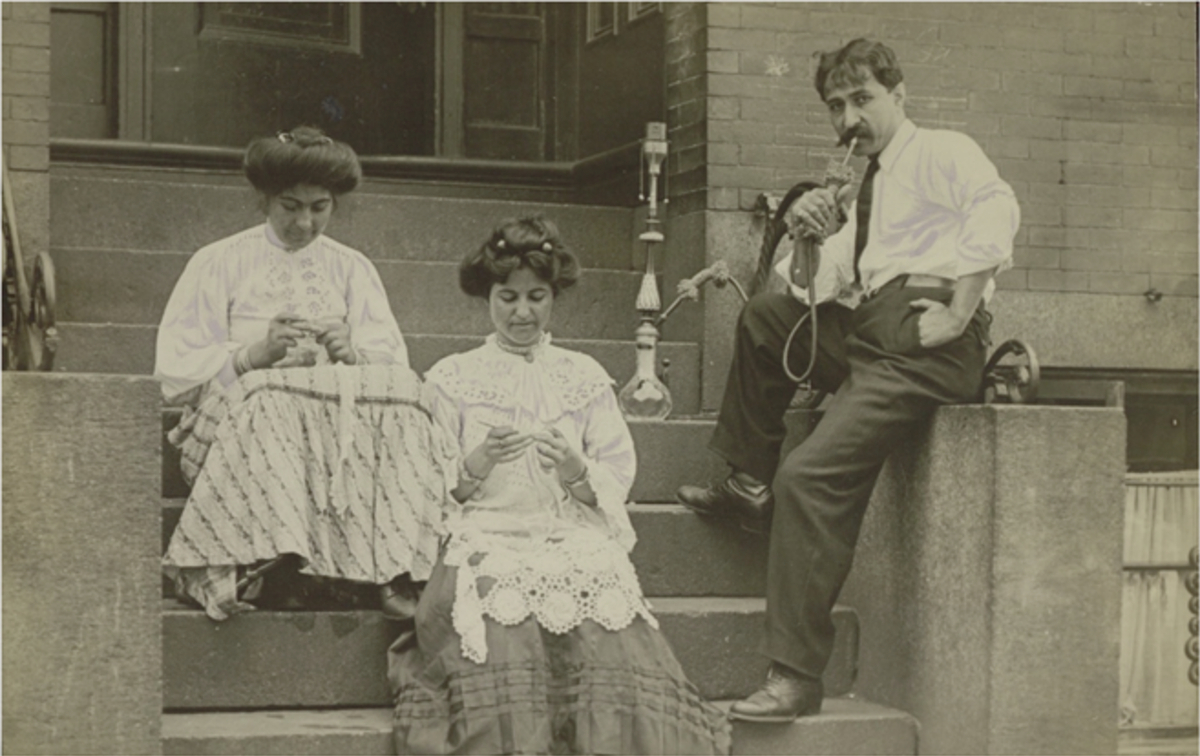
Textile work started at home. Boston, c. 1909. Women work up laces on the front stoop.
Textile work started at home. Boston, c. 1909. Women work up laces on the front stoop.
Both Syrian men & women engaged in all facets of textile work. However, this industry also trended in strictly gendered ways, too.
Syrian women were more likely doing in-home garment work (as seamstresses and laces).
Men were more likely to go into importing/wholesaling.
Syrian women were more likely doing in-home garment work (as seamstresses and laces).
Men were more likely to go into importing/wholesaling.
However, both men and women worked in the textile factories that emerged on the mahjar's Atlantic littoral. NYC/Boston; Sao Paulo; Buenos Aires hosted a growing number of textile factories under Syrian ownership.
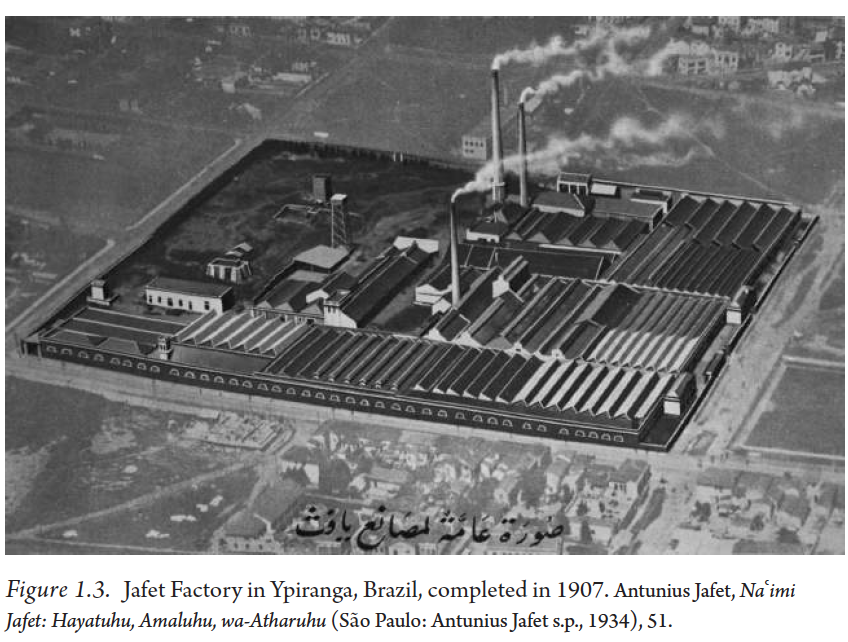
In Brazil, the Jafet weaving/stamping factory, est 1907.
In Brazil, the Jafet weaving/stamping factory, est 1907.

The Jafet factory was the largest single such factory. Owned by Nami Jafet and Bros, this factory in Ipiranga had 1,000 mechanized looms and employed Syrian women in addition to women from Brazil's Italian and Spanish colonies.
In New York City's "little Syria" neighborhood, dozens of Syrian-owned factories competed for a share of the silk, shirtwaist, and apron markets by 1910.
Syrian workers also labored in factories owned by Americans, but tended to favor jobs under Syrian immigrant proprietorship.
Syrian workers also labored in factories owned by Americans, but tended to favor jobs under Syrian immigrant proprietorship.
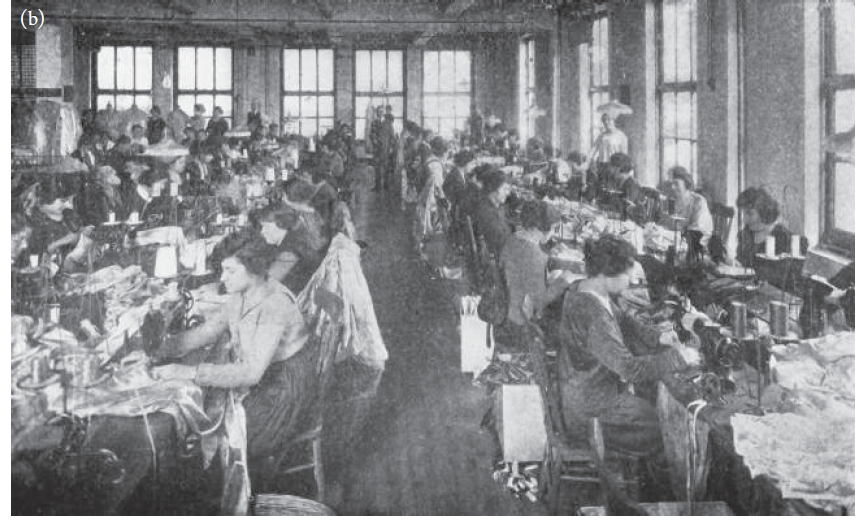
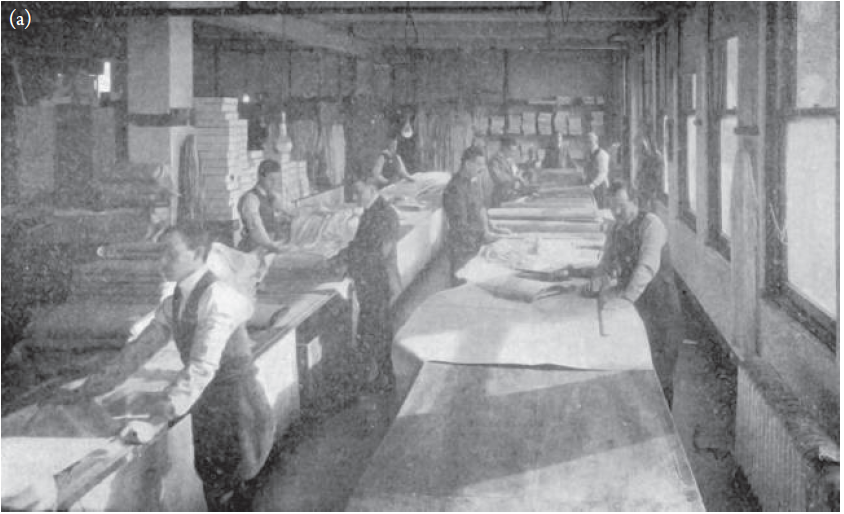
Here are two images from the Abdallah Barsa factory, New York City (1920). Both men and women worked here: men in weaving, cutting, sales; women in piecework, trim, and finishing of garments.
This pattern of strictly maintained gender separation also comes from the homeland.
This pattern of strictly maintained gender separation also comes from the homeland.
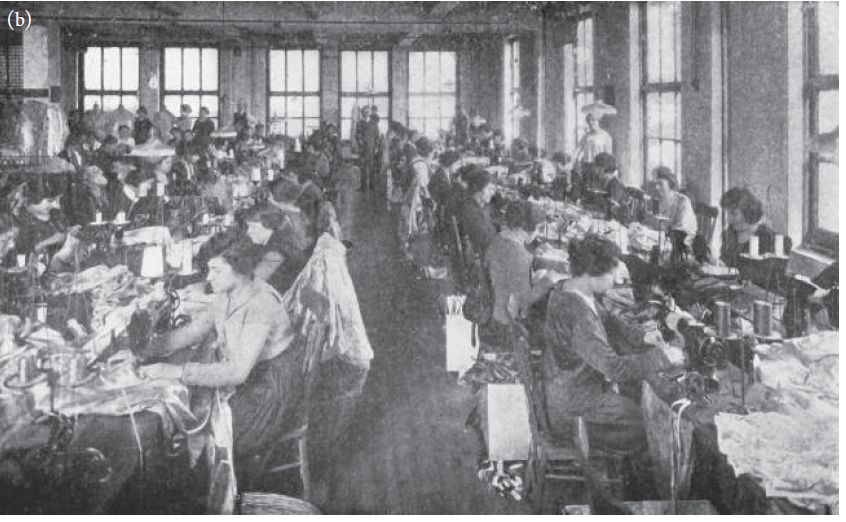
The family economy of Syrian households was also shaped by this system of complementarity in production.
Often, Syrian women were the wage-earners of their families. Their wages in textile work paid bills, and subsidized the riskier commercial ventures of male relatives.
Often, Syrian women were the wage-earners of their families. Their wages in textile work paid bills, and subsidized the riskier commercial ventures of male relatives.
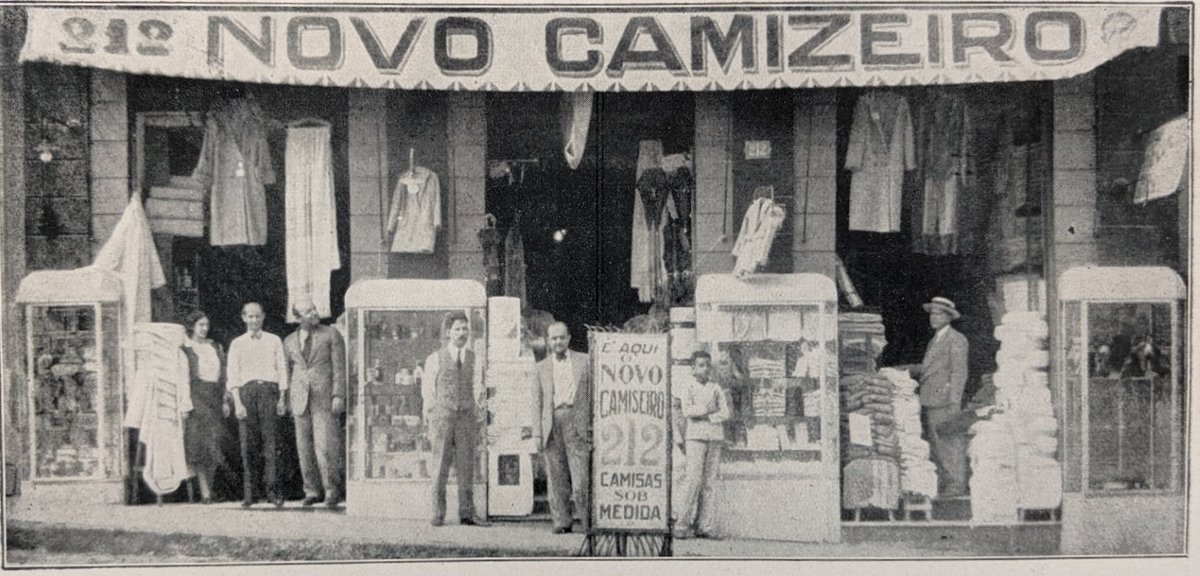
Women's work gave a stable economic base to Syrian textile families. Syrian men who may have started as peddlers soon opened stores like this one, in Sao Paulo. Wealthier Syrian emigres started importing businesses, working with cousins in Europe or the Middle East
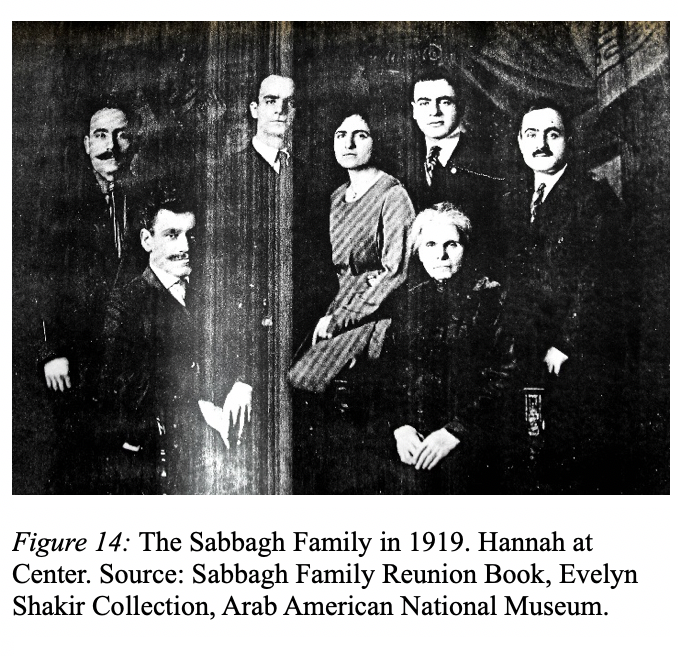
I wish I had a better version of this image. The Sabbagh family. From Mt Lebanon, the Sabbaghs lived in Boston from 1907 on. Hannah started working in a Massachusetts gingham factory at 14. Her wages freed her brothers to found the "Sabbagh Bros" trading company.
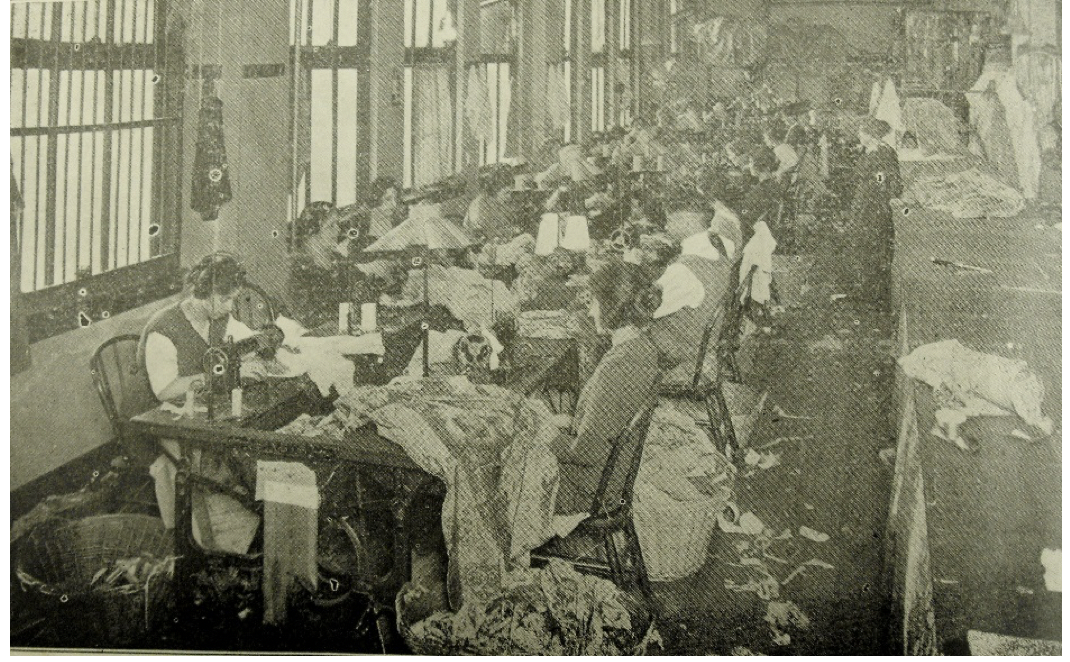
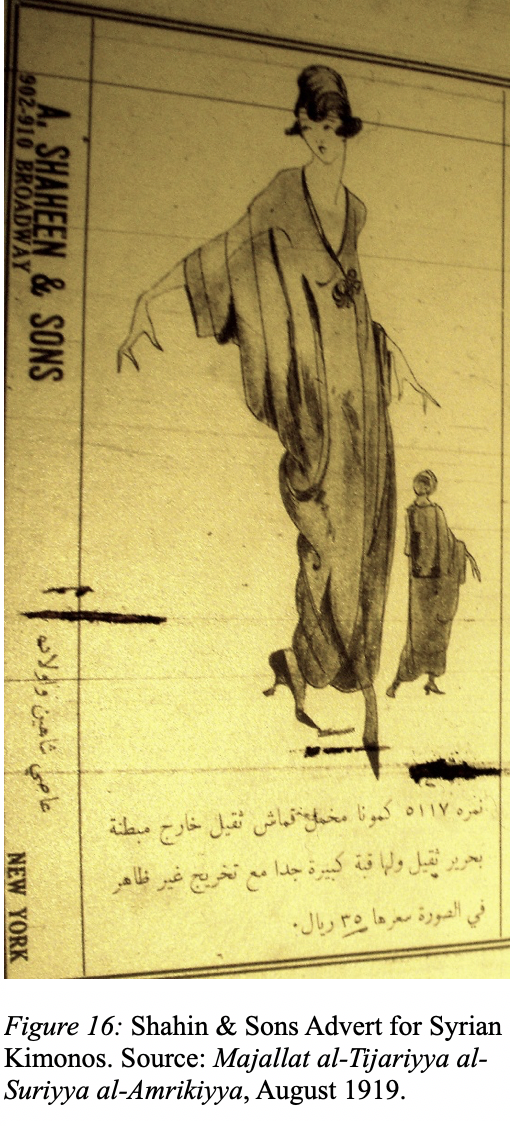
Another factory image: this one is the Michel 'Arida factory in New York City. Advertisements show that Mahal Arida was a major player in the lingerie and silk kimono markets by the 1920s (undergarments made fashionable by Syrian factories around the Atlantic!)
Here's an example of the kimono style. Shaheen and Sons advertisement from 1919.
In New York/New England, Syrian women also engaged in worker welfare organizations and mutual aid organizations centered on the provision of unemployment insurance, emergency relief, and even boarding houses for Arab workers unable to work/injured by the looms.
In New York City, the Syrian Ladies Aid Society (est 1907) worked with Syrian women garment workers to provide a baseline of care/mitigate poverty.
They gave relief, taught classes in needlework, and offered childcare for working mothers.
They gave relief, taught classes in needlework, and offered childcare for working mothers.
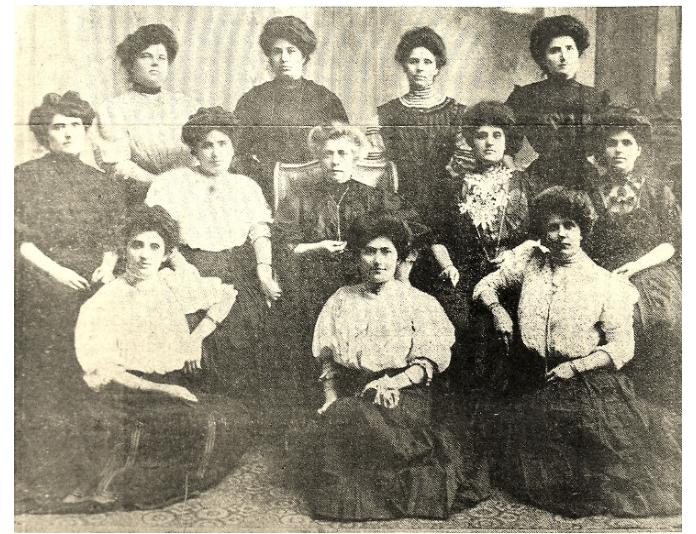
In 1917, Boston got its own Syrian Ladies Aid Society, under the leadership of (above mentioned) Hannah Sabbagh. The SLAS of Boston offered assistance and relief to Syrians across the New England region, connecting women with job training, etc.
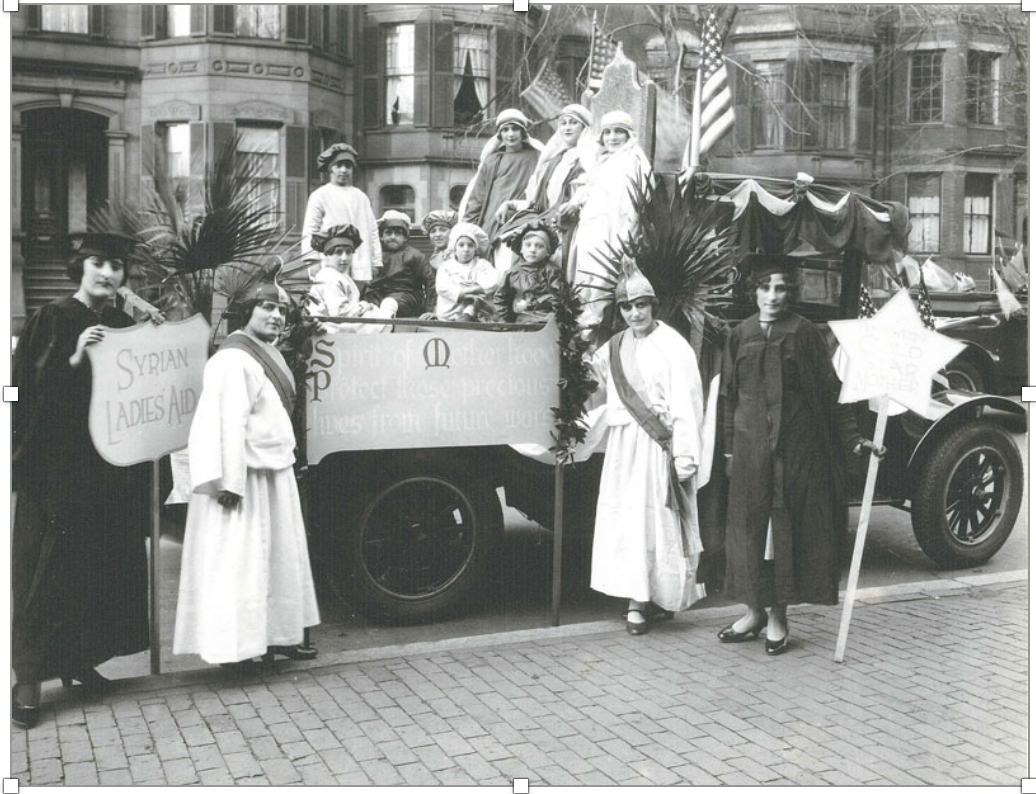
The Syrian Ladies Aid Society also played a role in the community, representing Syrian immigrants to a larger US public. It's this cultural work they are most known for, even as the org's primary work was welfare.
Hannah Sabbagh/the SLAS at Boston's 1925 Armistice Day Parade.
Hannah Sabbagh/the SLAS at Boston's 1925 Armistice Day Parade.
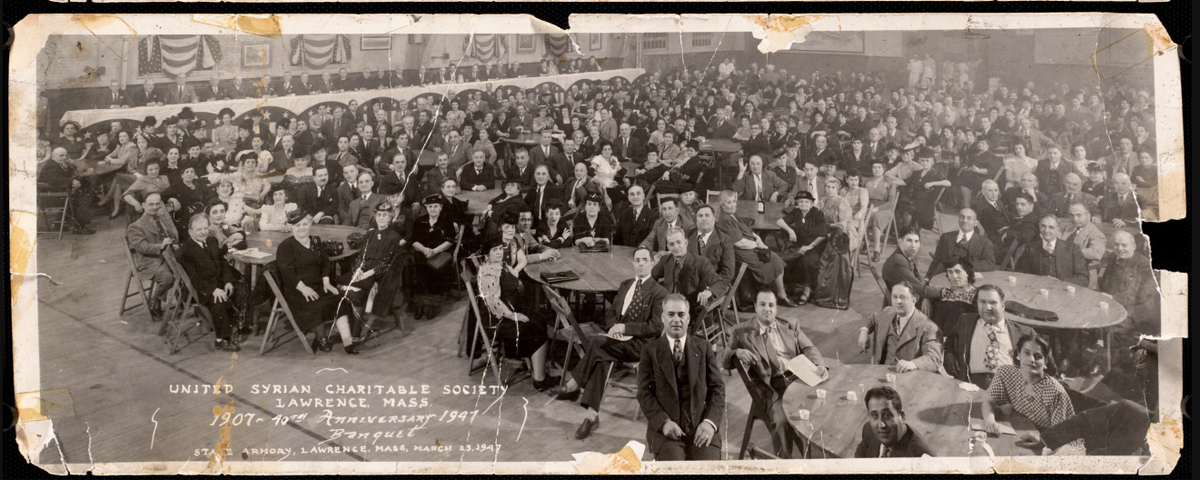
Adjacent to women's mutual aid organizations like SLAS, Syrian organizations established increasingly larger, transnational networks of philanthropy, charitable giving, and relief assistance in the 1920s.
Lawrence, MA: the United Syrian Charitable Society's 40th jubilee.
Lawrence, MA: the United Syrian Charitable Society's 40th jubilee.
These charitable networks helped the mahjar weather the Great Depression and propelled many into prosperity after World War II.
Hannah Sabbagh Shakir (married in 1931) came out of the 1940s with a small skirt factory. The @ArabAmericanMus has a couple!
arabamerican.pastperfectonline.com
Hannah Sabbagh Shakir (married in 1931) came out of the 1940s with a small skirt factory. The @ArabAmericanMus has a couple!
arabamerican.pastperfectonline.com
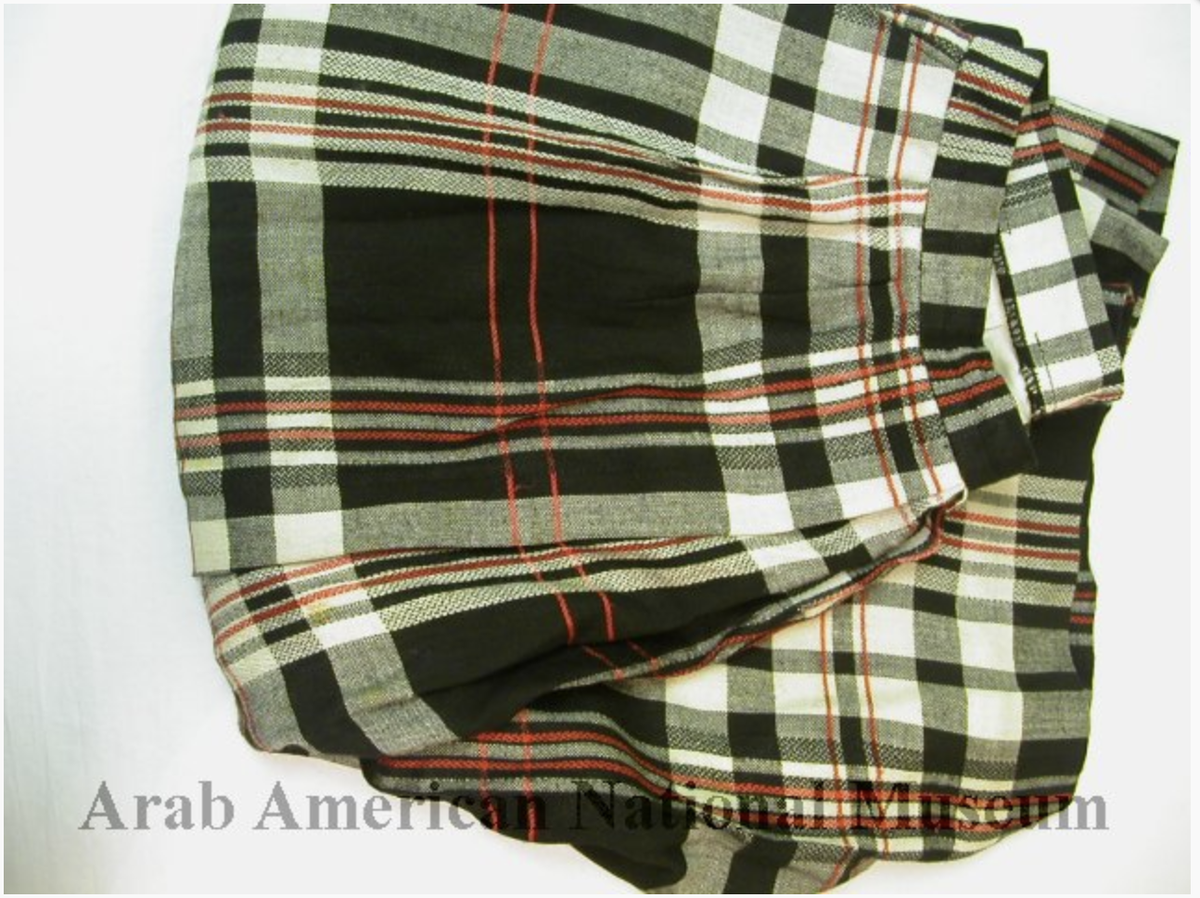
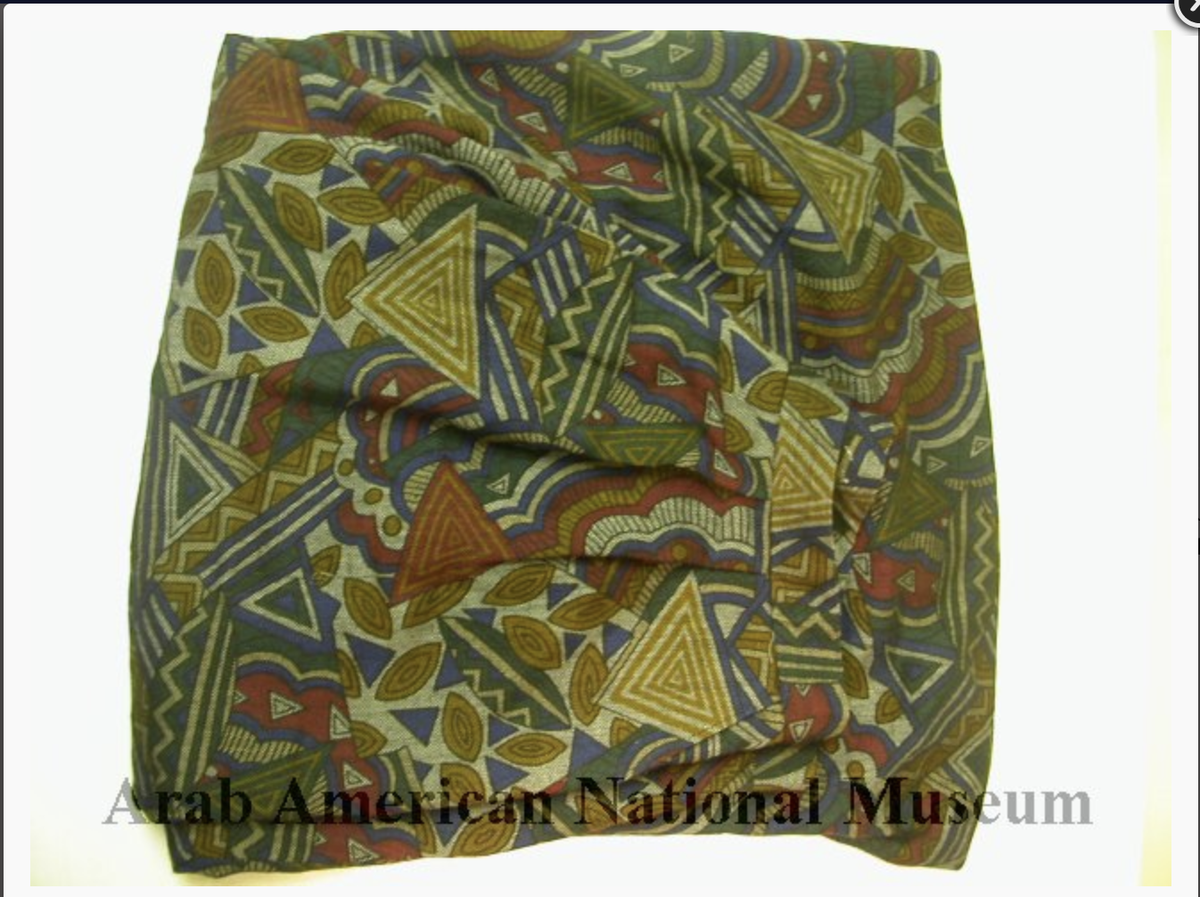
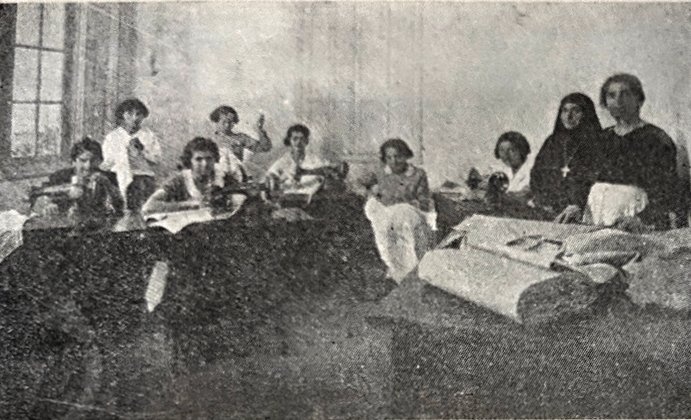
Often, newly arriving Syrian women took classes to learn the skills that afforded them a job in textile production. Here's a Syrian needlepoint class offered by an Orthodox mission in Brazil.
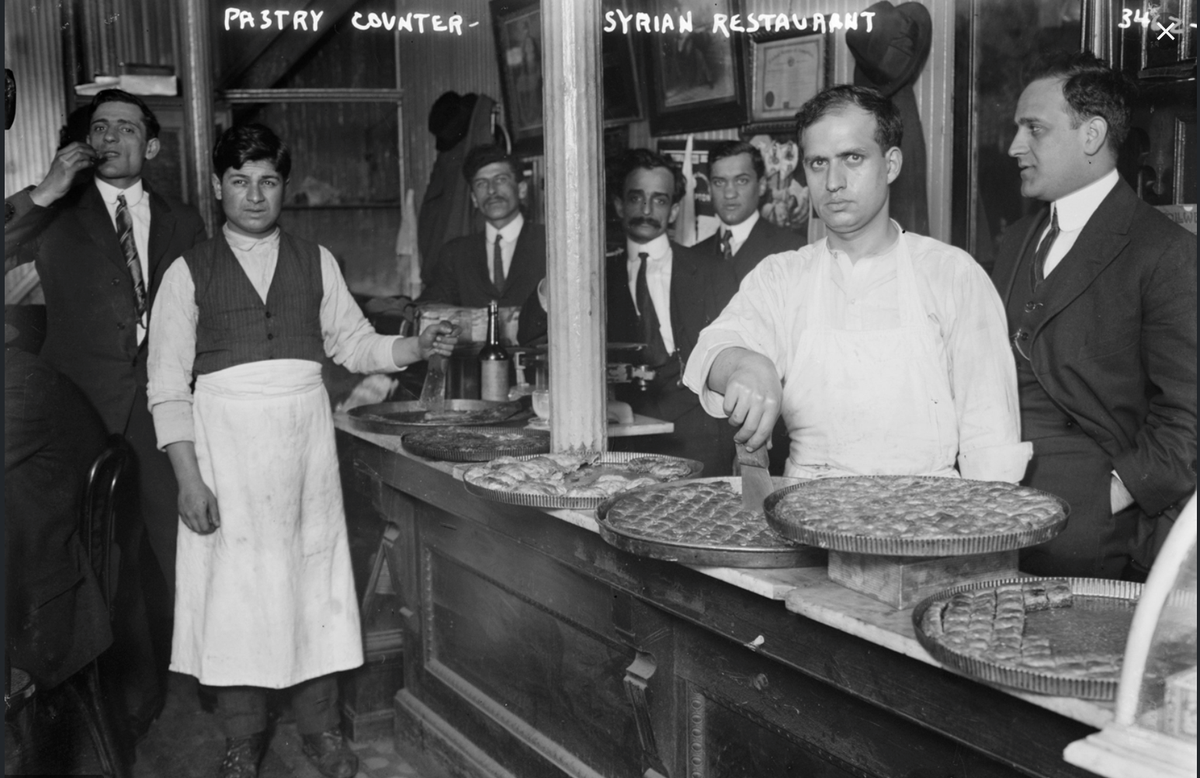
Beyond peddling and textile production, Syrians in the mahjar worked in many sectors. They were haberdashers, winemakers, owners of cafes/restaurants.
Some of the most famous images of NYC's little Syria are from @librarycongress and show a cafe:
Some of the most famous images of NYC's little Syria are from @librarycongress and show a cafe:
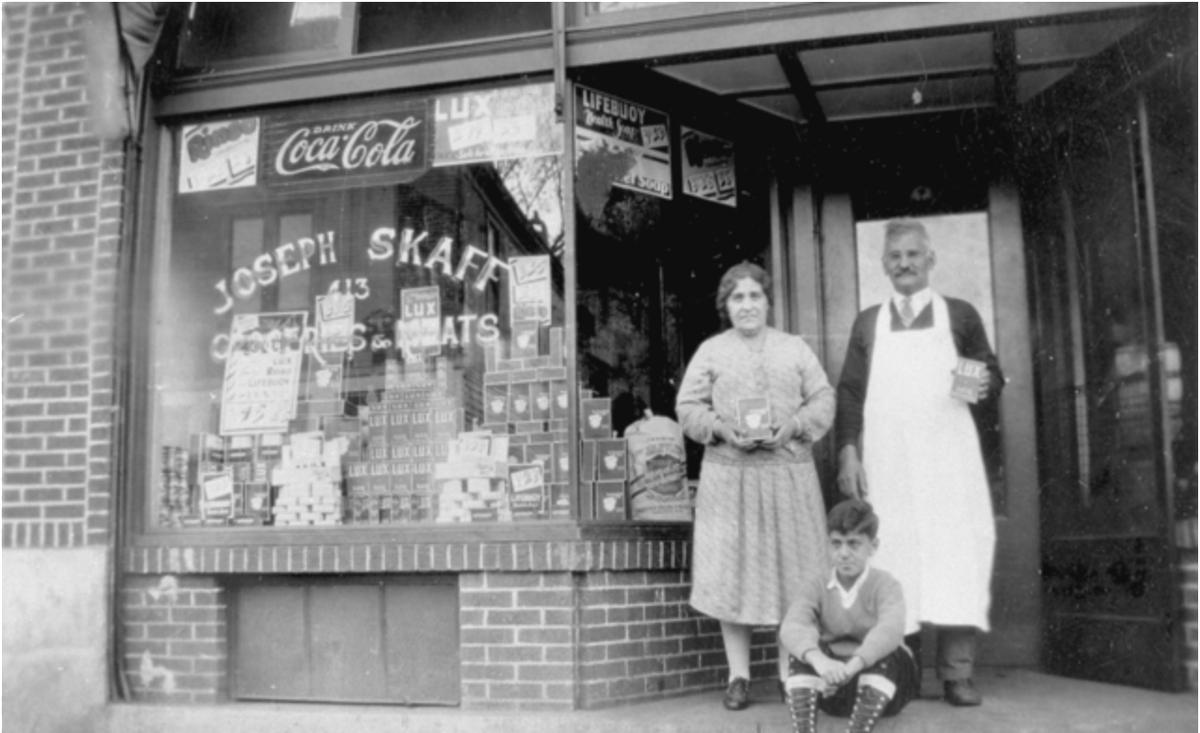
General stores and local greengroceries were also common. Here's the Joseph Skaff store in West Virginia.
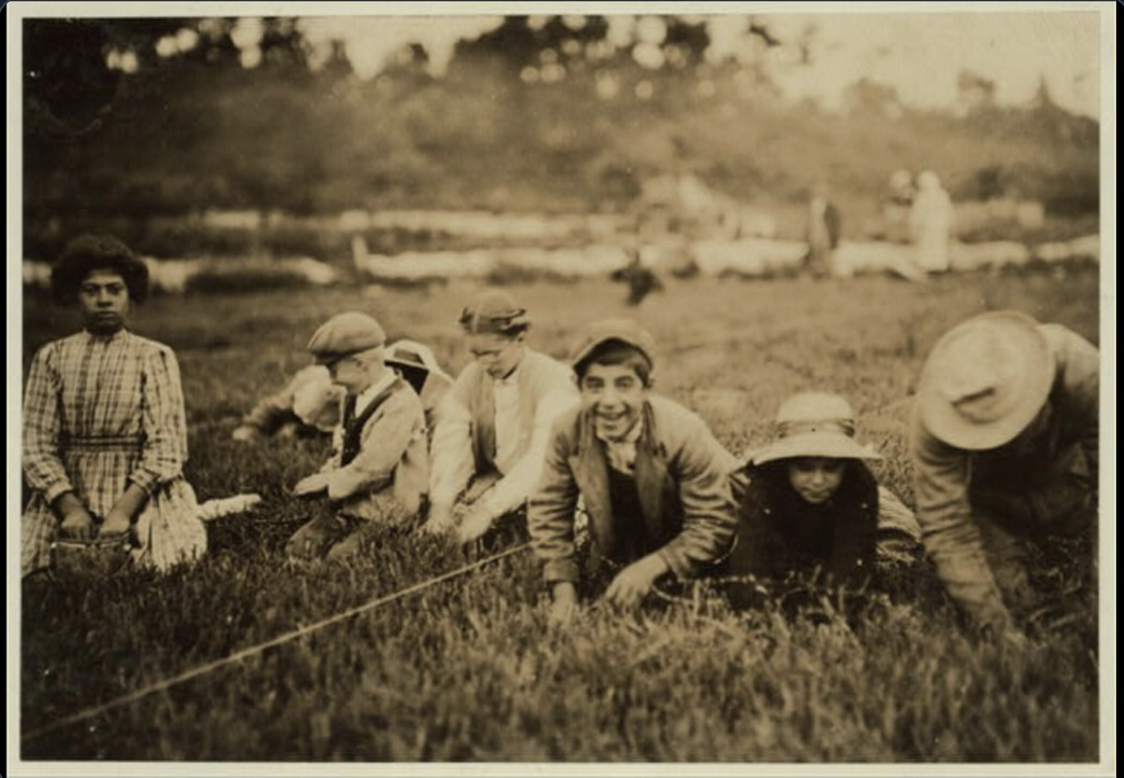
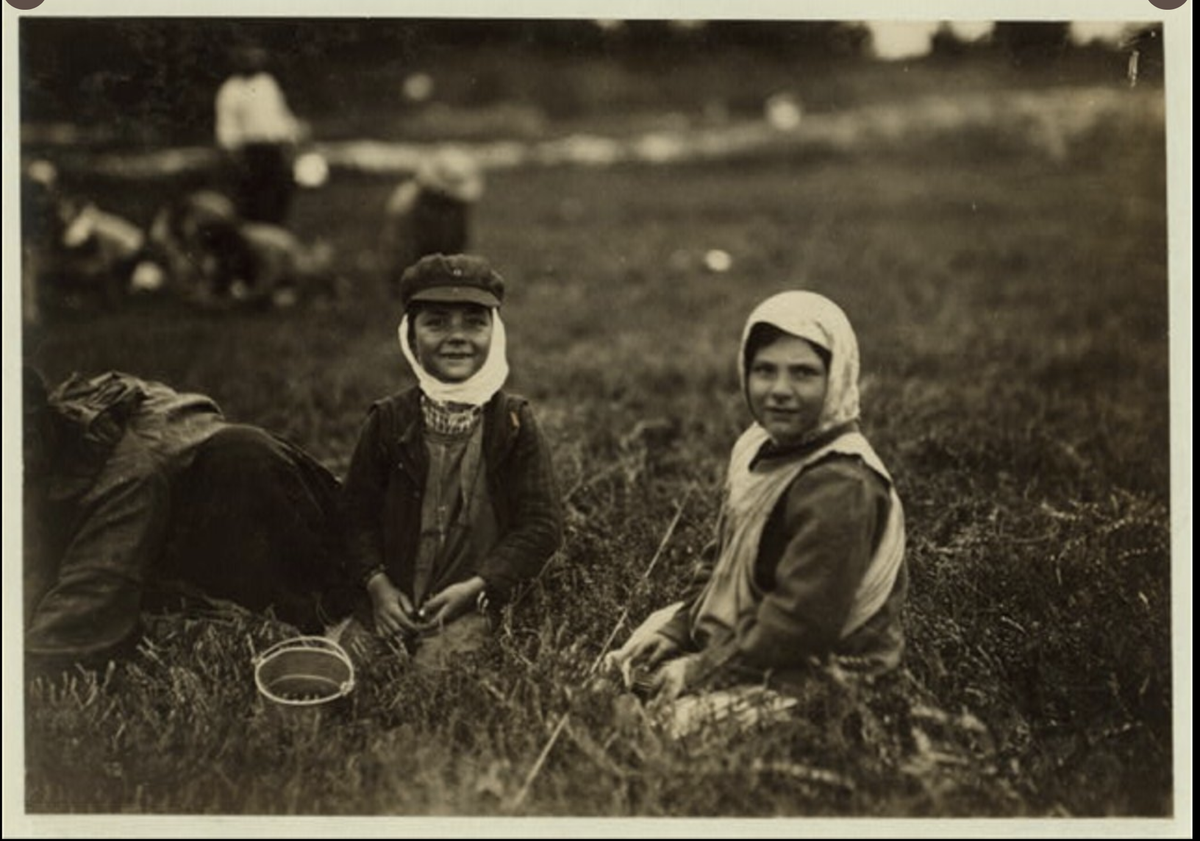
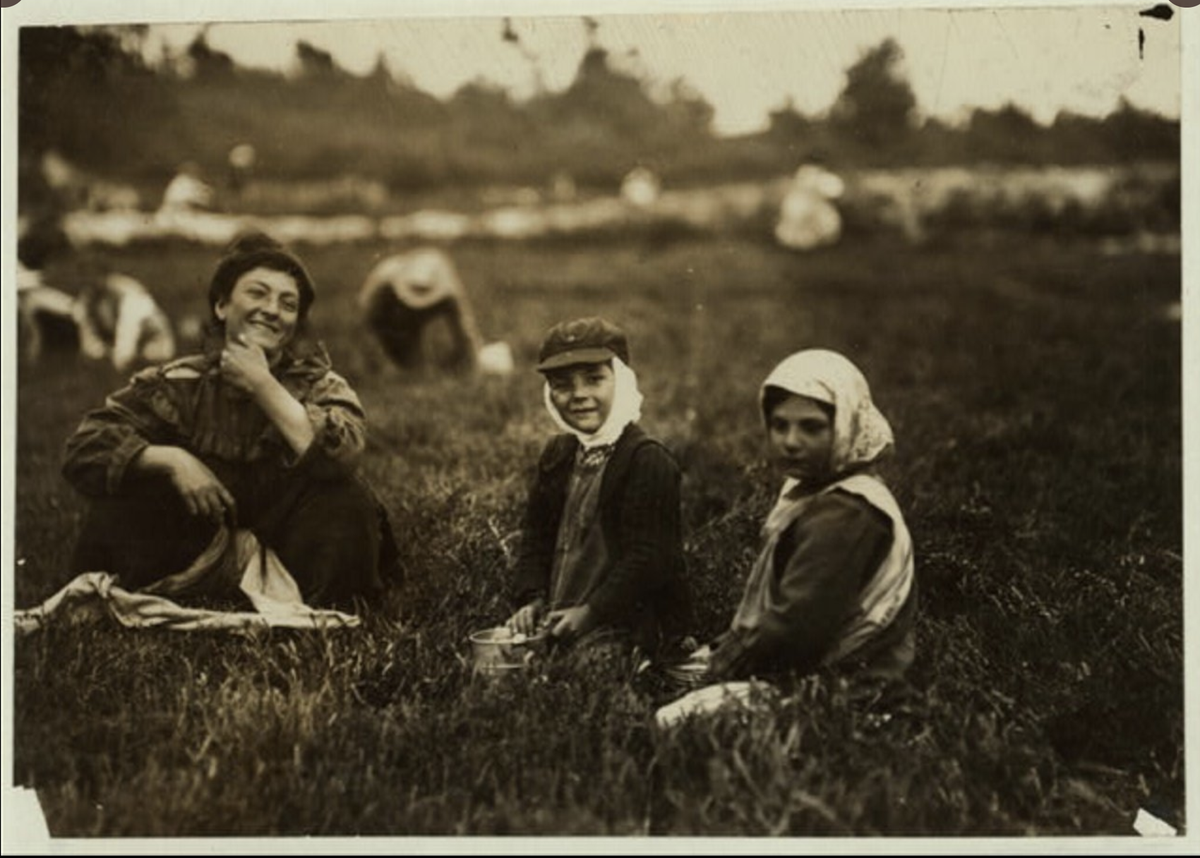
Agricultural labor was rarer among Syrians in the USA, but this work was still available.
Here are Syrian children working in a cranberry bog in Massachusetts, 1911.
Source: @librarycongress loc.gov
Here are Syrian children working in a cranberry bog in Massachusetts, 1911.
Source: @librarycongress loc.gov
This thread comes to a less firm conclusion, bc I'm writing about Syrian workers right now. But the point: the same sources we've used to tell mahjar stories "beyond the state" are also class-specific. Workers claim less space in them owing to the politics of their production.
In my final thread on @Tweetistorian, I will explore where we go from here in THE MAHJAR ONLINE.
How will #twitterstorians of the Syrian mahjar do research in this time of #Covid_19? Thankfully, though a series of digital collections that make new research possible.
Join me!
How will #twitterstorians of the Syrian mahjar do research in this time of #Covid_19? Thankfully, though a series of digital collections that make new research possible.
Join me!
جاري تحميل الاقتراحات...