

In this thread we will talk about Cardiac Monitor ( Purpose of use , Types , its function , patient assessment ) let’s start 🤩..

The purpose of using a cardiac monitor :
• To assess heart rate, rhythm and conduction .
• To detect a life threatening arrhythmias .
• To assess heart rate, rhythm and conduction .
• To detect a life threatening arrhythmias .
Types of Cardiac Monitor:
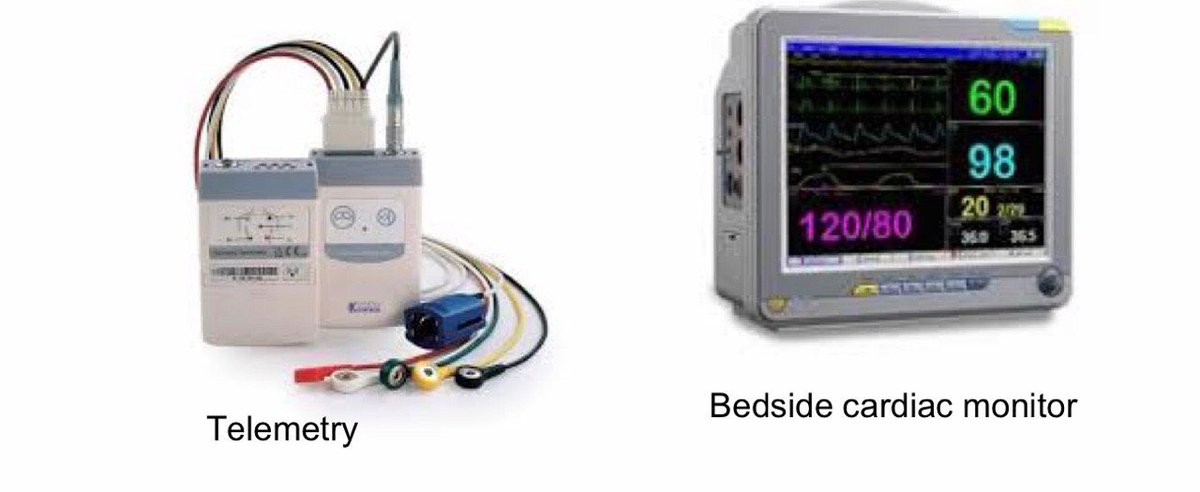
• Telemetry or bedside cardiac monitor: show a continuous heart rhythm to detect any abnormalities
• Telemetry or bedside cardiac monitor: show a continuous heart rhythm to detect any abnormalities
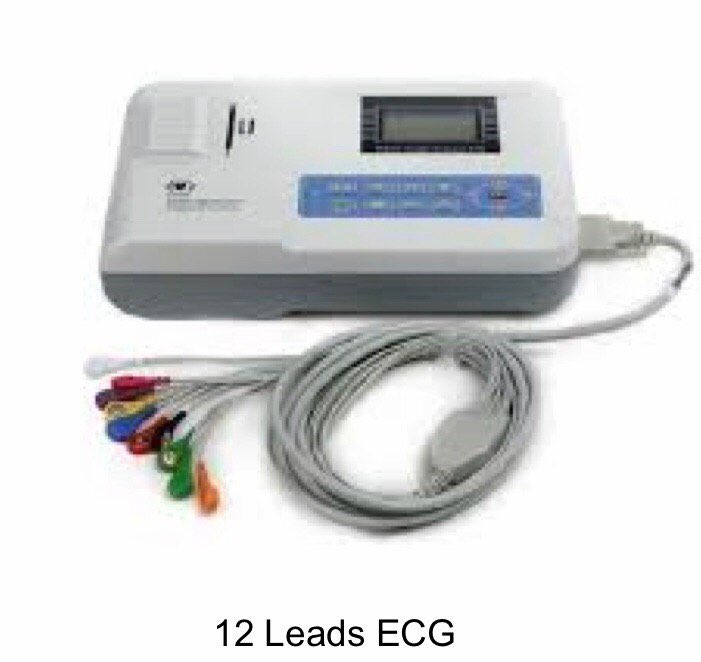
• Electrocardiogram (EKG; ECG): provides a 12-lead view of the heart .
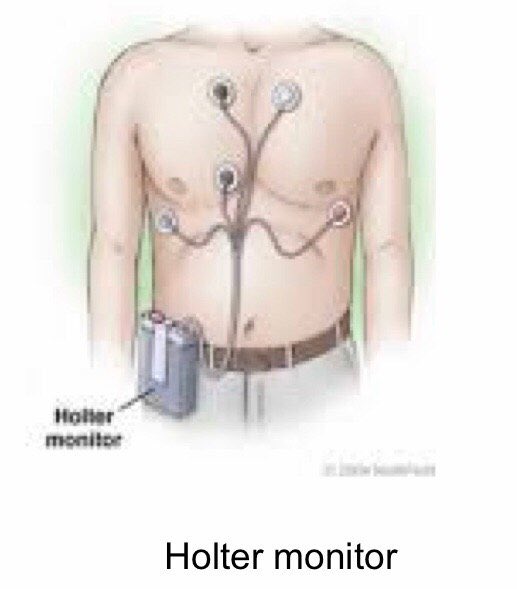
• Holter monitor: placed in a pocket or clipped to a belt while it continuously records the heart rhythm for 24-48 hours
• Event recorder: portable, small monitors that do not continuously record heart rhythm data. It usually requires the patient to push a button when he/she feels the symptoms

Monitor Function:
▶ A display of heart rate and rhythm ▶ Sound alarms above or below pre-set limits .
▶ The provision of rhythm strips to document evidence of arrhythmia .
▶ A display of heart rate and rhythm ▶ Sound alarms above or below pre-set limits .
▶ The provision of rhythm strips to document evidence of arrhythmia .

Patient assessment and preparation:
•Assess the patient’s peripheral pulses, vital signs,heart sounds, level of consciousness, lung sounds, neck vein distention, presence of chest pain or palpitations, and any peripheral circulatory disorders .
•Assess the patient’s peripheral pulses, vital signs,heart sounds, level of consciousness, lung sounds, neck vein distention, presence of chest pain or palpitations, and any peripheral circulatory disorders .
•Assess whether the patient has a history of cardiac dysrhythmias or cardiac problems.
•Assess landmarks for identification of correct placement of electrodes
• Ensure that the patient and family understand preprocedural teaching
•Assist the patient to the supine position
•Assess landmarks for identification of correct placement of electrodes
• Ensure that the patient and family understand preprocedural teaching
•Assist the patient to the supine position
Placement: 3 lead

Placement: 5 lead

12 lead ECG

جاري تحميل الاقتراحات...