

1/
It's been awhile, #medtwitter/#dermtwitter! Time for a #MedEd #FOAMEd #tweetorial!
This time, I wanted to channel @tony_breu and bring you on a journey to answer the question:
"Why does hydrochlorothiazide (HCTZ) make you react more easily to the sun?"
What do you think?
It's been awhile, #medtwitter/#dermtwitter! Time for a #MedEd #FOAMEd #tweetorial!
This time, I wanted to channel @tony_breu and bring you on a journey to answer the question:
"Why does hydrochlorothiazide (HCTZ) make you react more easily to the sun?"
What do you think?
2/
First of all, who cares?
A) If your pt on a thiazide develops a rash, it's good to know about this.
B) Thiazides have been linked with skin cancer. There's some debate in the literature about this, but check out these 2 studies!
ncbi.nlm.nih.gov
jaad.org
First of all, who cares?
A) If your pt on a thiazide develops a rash, it's good to know about this.
B) Thiazides have been linked with skin cancer. There's some debate in the literature about this, but check out these 2 studies!
ncbi.nlm.nih.gov
jaad.org
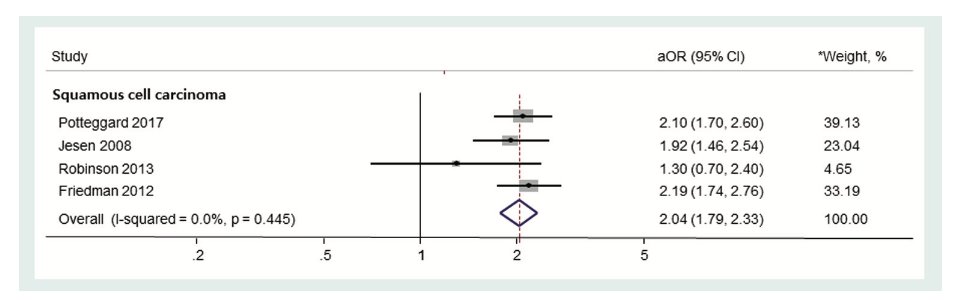
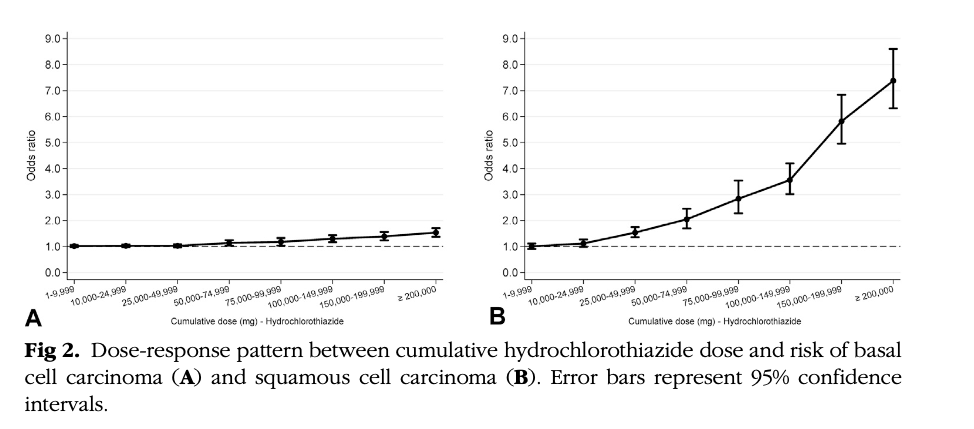
3/
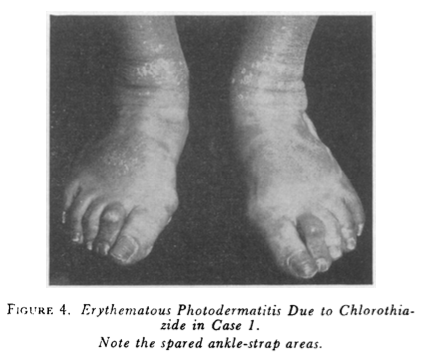
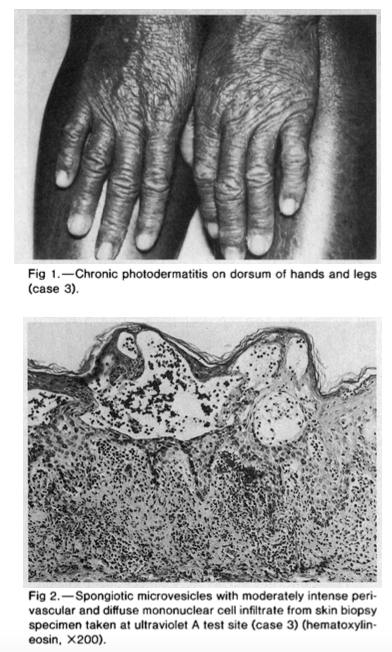
But we should also establish the whole HCTZ photosensitivity thing is a real phenomenon.
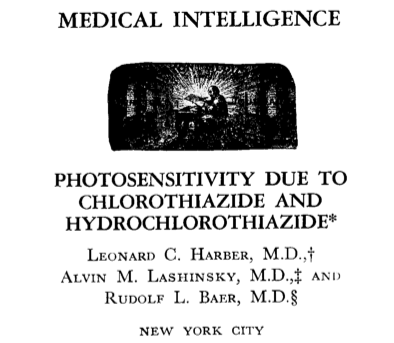
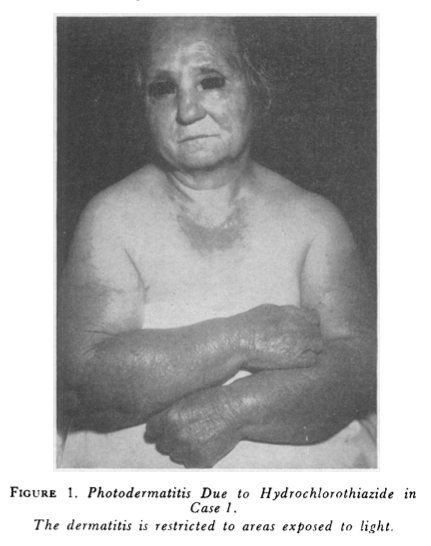
There are many photosensitizing medications. HCTZ in particular has been noted to cause a photo-dermatitis for quite some time.
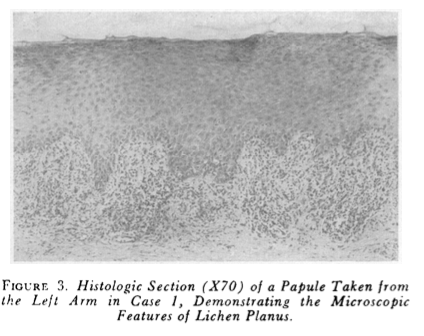
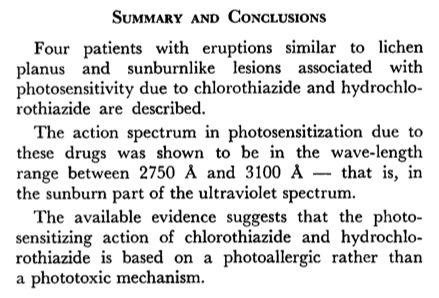
Check out these photos from a @nejm paper in 1959!
But we should also establish the whole HCTZ photosensitivity thing is a real phenomenon.
There are many photosensitizing medications. HCTZ in particular has been noted to cause a photo-dermatitis for quite some time.
Check out these photos from a @nejm paper in 1959!
4/
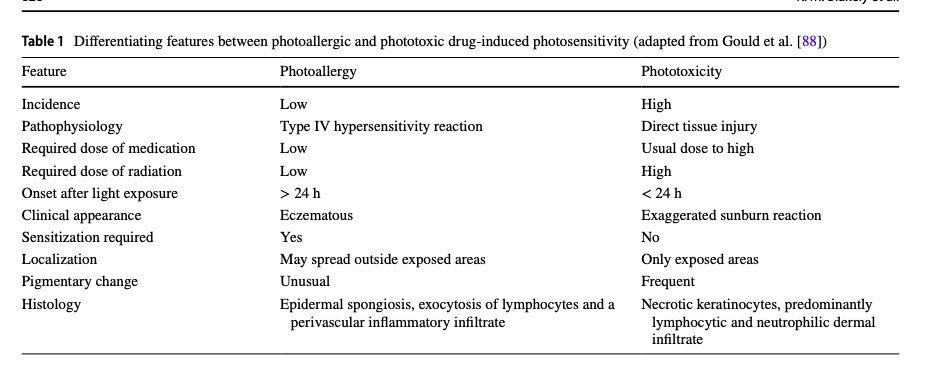
What has been debatable is the exact mechanism with which this photosensitivity occurs. Is it phototoxic, or photoallergic?
In brief, phototoxicity is from direct cellular damage.
Photoallergy is through an immunologic mechanism.
Nice table from: link.springer.com
What has been debatable is the exact mechanism with which this photosensitivity occurs. Is it phototoxic, or photoallergic?
In brief, phototoxicity is from direct cellular damage.
Photoallergy is through an immunologic mechanism.
Nice table from: link.springer.com
6/
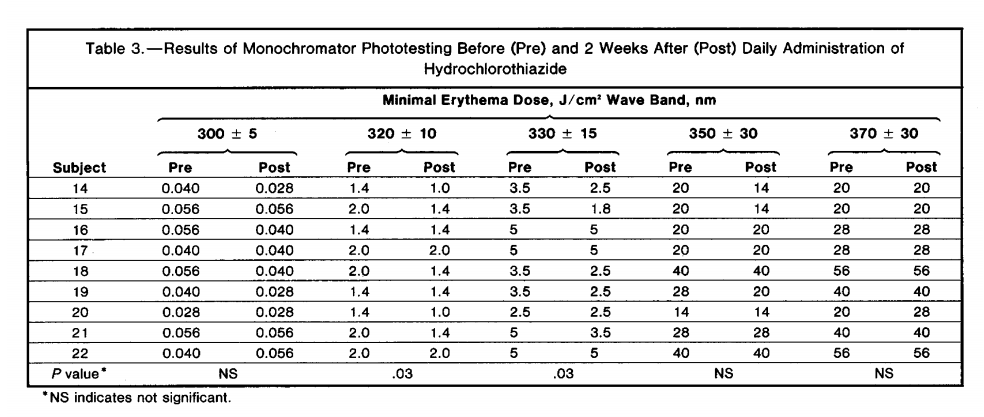
Yet, there's research to show HCTZ can decrease the minimal erythema dose (MED). For the non-dermatologist, this is the "dose" of light that the skin can tolerate before it starts to turn red. This paper argues this is proof of the phototoxic effect.
jamanetwork.com
Yet, there's research to show HCTZ can decrease the minimal erythema dose (MED). For the non-dermatologist, this is the "dose" of light that the skin can tolerate before it starts to turn red. This paper argues this is proof of the phototoxic effect.
jamanetwork.com
7/
So if we delve more into how phototoxicity actually occurs from HCTZ, we get some interesting suggestions.
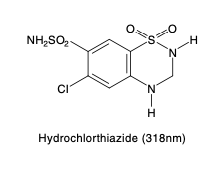
The chemical structure of HCTZ includes a sulfa AND a chlorine moiety that could both induce free-radical formation and direct cellular damage from oxidative stress.
So if we delve more into how phototoxicity actually occurs from HCTZ, we get some interesting suggestions.
The chemical structure of HCTZ includes a sulfa AND a chlorine moiety that could both induce free-radical formation and direct cellular damage from oxidative stress.
8/
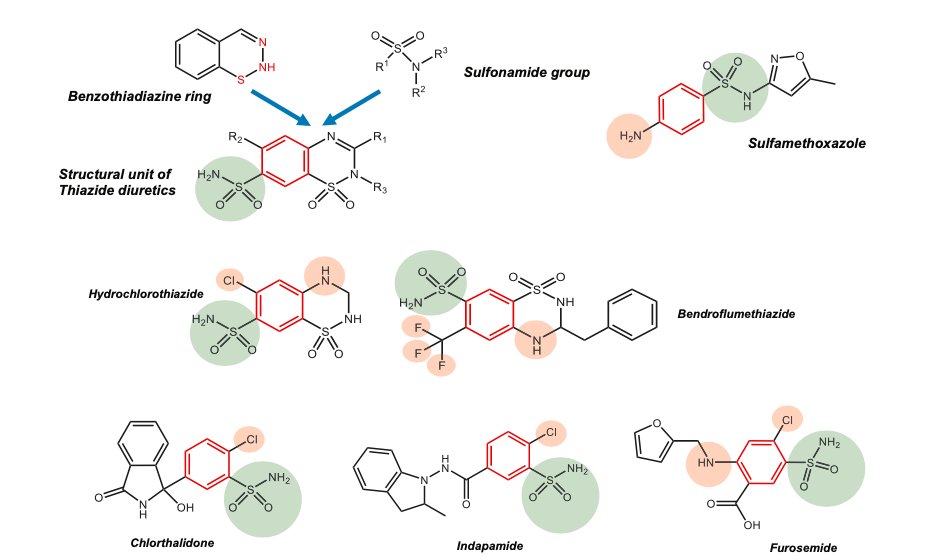
In the sulfa camp, this paper argues the sulfa group is the common thread across many photosensitizing medications, which probably leads to toxicity from the release of reactive oxygen species (ROS).
journals.lww.com
In the sulfa camp, this paper argues the sulfa group is the common thread across many photosensitizing medications, which probably leads to toxicity from the release of reactive oxygen species (ROS).
journals.lww.com
9/
Also, in both cell & animal models, sulfa & UV exposure caused a phototoxic effect.
In the 1st paper - mitochondrial swelling was noted.
onlinelibrary.wiley.com
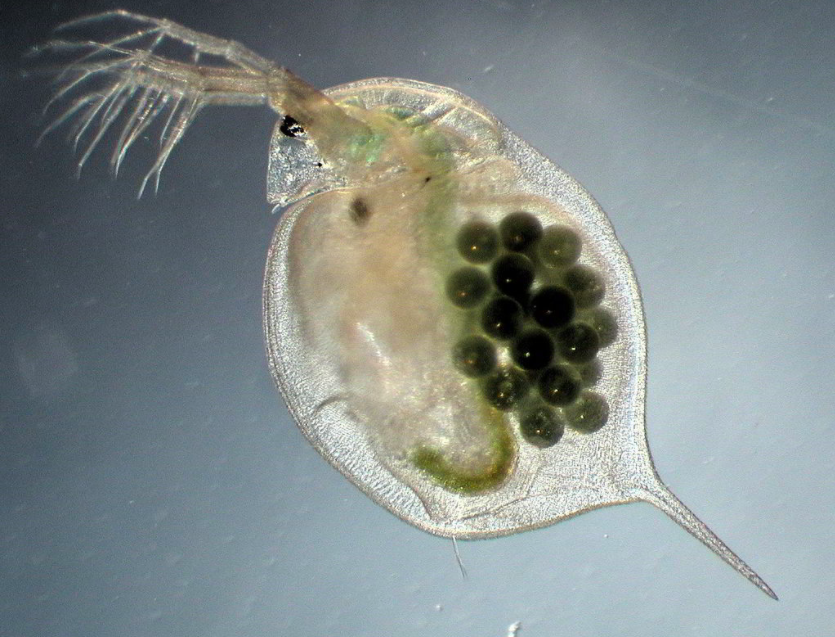
In this 2nd paper, D Magna (a mini crustacean) had increased ROS and lipid peroxidation.
sciencedirect.com
Also, in both cell & animal models, sulfa & UV exposure caused a phototoxic effect.
In the 1st paper - mitochondrial swelling was noted.
onlinelibrary.wiley.com
In this 2nd paper, D Magna (a mini crustacean) had increased ROS and lipid peroxidation.
sciencedirect.com
10/
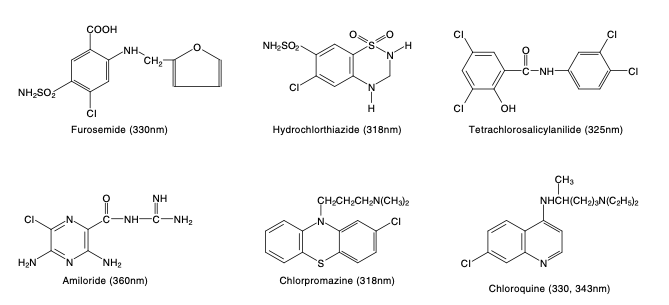
But this paper argues that the photosensitivity might arise from the chloride moiety.
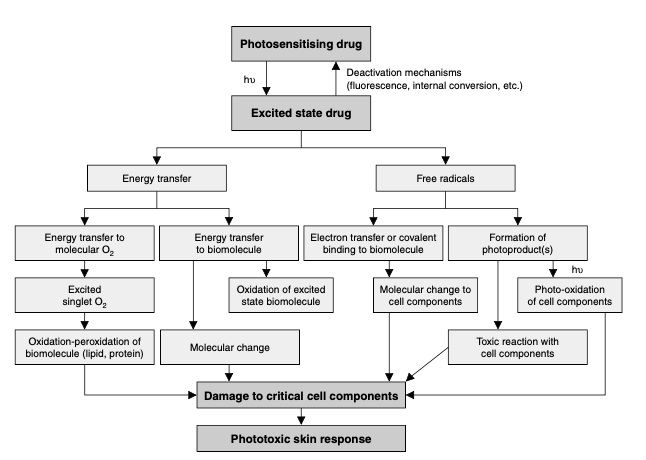
Bottom line though is in the second figure here from the paper. Regardless of what chemical structure is underlying, it leads to a phototoxic response.
link.springer.com
But this paper argues that the photosensitivity might arise from the chloride moiety.
Bottom line though is in the second figure here from the paper. Regardless of what chemical structure is underlying, it leads to a phototoxic response.
link.springer.com
11/
Mid #tweetorial recap:
➡️HCTZ has been shown for decades to cause a photosensitive reaction.
➡️There is debate about whether it's phototoxic or allergic.
➡️If phototoxic, it's from ROS damaging cell components.
➡️HCTZ has been associated with skin cancer. Maybe this is why?
Mid #tweetorial recap:
➡️HCTZ has been shown for decades to cause a photosensitive reaction.
➡️There is debate about whether it's phototoxic or allergic.
➡️If phototoxic, it's from ROS damaging cell components.
➡️HCTZ has been associated with skin cancer. Maybe this is why?

12/
So does HCTZ cause a phototoxic or allergic reaction (asked no one 😳)?
It looks like it probably does both to some extent. There is a lot more literature out there if you're interested!
So for my 1st poll, I'd choose "something w/orgo" to be the best answer😬
So does HCTZ cause a phototoxic or allergic reaction (asked no one 😳)?
It looks like it probably does both to some extent. There is a lot more literature out there if you're interested!
So for my 1st poll, I'd choose "something w/orgo" to be the best answer😬

13/
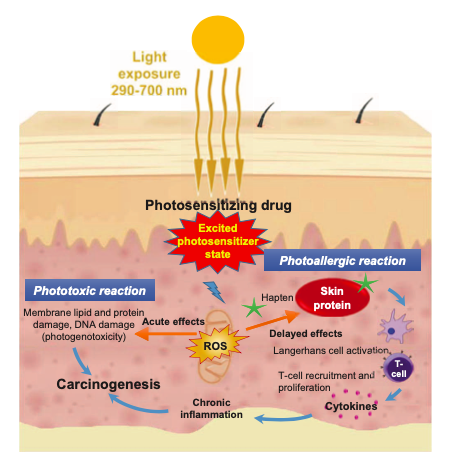
But does it matter which mechanism HCTZ causes a photosensitizing reaction? This schematic from the sulfa paper argues that ROS can be involved with both sides of the photosensitivity pathway.
This is important since they can both cause cancer!
journals.lww.com
But does it matter which mechanism HCTZ causes a photosensitizing reaction? This schematic from the sulfa paper argues that ROS can be involved with both sides of the photosensitivity pathway.
This is important since they can both cause cancer!
journals.lww.com
14/
So how does this impact you and your pts?
Well, if I'm going to start a pt on HCTZ/thiazide, I might counsel them to be very good with sunprotection to avoid all of the above.
And if my pt on a thiazide comes to me with a rash that looks photodistributed, I'd consider this.
So how does this impact you and your pts?
Well, if I'm going to start a pt on HCTZ/thiazide, I might counsel them to be very good with sunprotection to avoid all of the above.
And if my pt on a thiazide comes to me with a rash that looks photodistributed, I'd consider this.

15/
And I can't let an opportunity to teach some #dermatology go to waste.
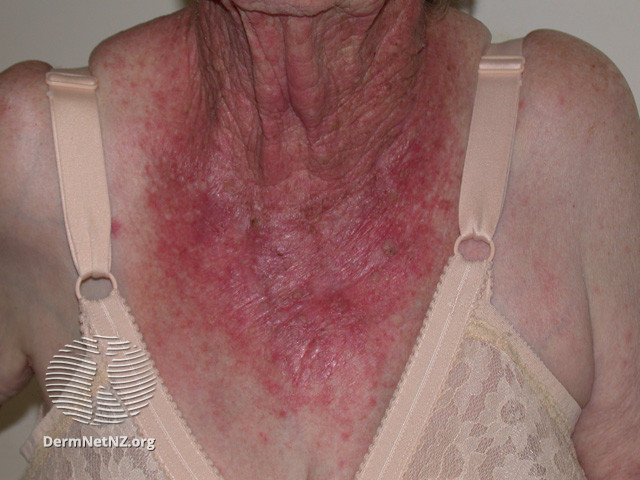
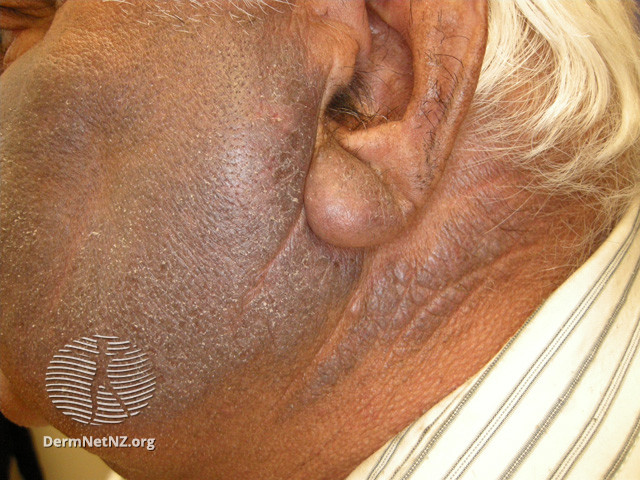
A photodistributed rash is as you might expect - think face, arms, V of the neck.
Notice in darker skin types, it isn't erythema necessarily, but rather a gray-brown hyperpigmentation.
And I can't let an opportunity to teach some #dermatology go to waste.
A photodistributed rash is as you might expect - think face, arms, V of the neck.
Notice in darker skin types, it isn't erythema necessarily, but rather a gray-brown hyperpigmentation.
16/
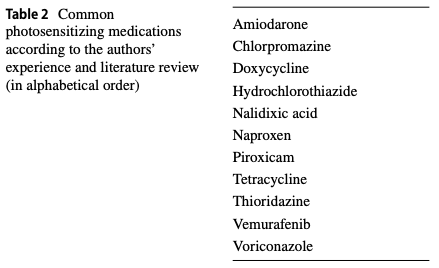
And if you have a pt with a new photodistributed rash, a great reminder to check their med list for any new drugs or even changes in dose. Don't forget about the major culprits presented in the table from this paper (co authored by @aaron_drucker)!
link.springer.com
And if you have a pt with a new photodistributed rash, a great reminder to check their med list for any new drugs or even changes in dose. Don't forget about the major culprits presented in the table from this paper (co authored by @aaron_drucker)!
link.springer.com
17/
FINAL RECAP
➡️Thiazides can cause photosensitive eruptions
➡️Counsel about sun protection for pts in whom you are starting a thiazide
➡️There is a possible link with skin cancer
➡️Check the med list if your pt has a new photosensitive rash
➡️D. magna are mini-crustaceans😬
FINAL RECAP
➡️Thiazides can cause photosensitive eruptions
➡️Counsel about sun protection for pts in whom you are starting a thiazide
➡️There is a possible link with skin cancer
➡️Check the med list if your pt has a new photosensitive rash
➡️D. magna are mini-crustaceans😬

18/
Thanks for joining me for this new format of #tweetorial! A little bit more esoteric, but I hope interesting nonetheless.
Drop a note with suggestions👇 Do you want more of these? Go back to the old type of #medthreads? Other topics you want to hear about?
Until next time!
Thanks for joining me for this new format of #tweetorial! A little bit more esoteric, but I hope interesting nonetheless.
Drop a note with suggestions👇 Do you want more of these? Go back to the old type of #medthreads? Other topics you want to hear about?
Until next time!

جاري تحميل الاقتراحات...