

The bombs: Made in America.
Their sale: Approved by U.S. officials.
The result: Fueling the world's worst humanitarian crisis.
Saudi Arabia's Yemen campaign has killed over 100,000. Here's how U.S. companies came to supply weapons that help sustain it. nyti.ms
Their sale: Approved by U.S. officials.
The result: Fueling the world's worst humanitarian crisis.
Saudi Arabia's Yemen campaign has killed over 100,000. Here's how U.S. companies came to supply weapons that help sustain it. nyti.ms
The Obama administration started the flow of U.S.-made weapons into Yemen's civil war. But under President Trump, multiple efforts have failed to persuade the White House to halt the sales.
Instead, arms deals have risen sharply. nyti.ms
Instead, arms deals have risen sharply. nyti.ms
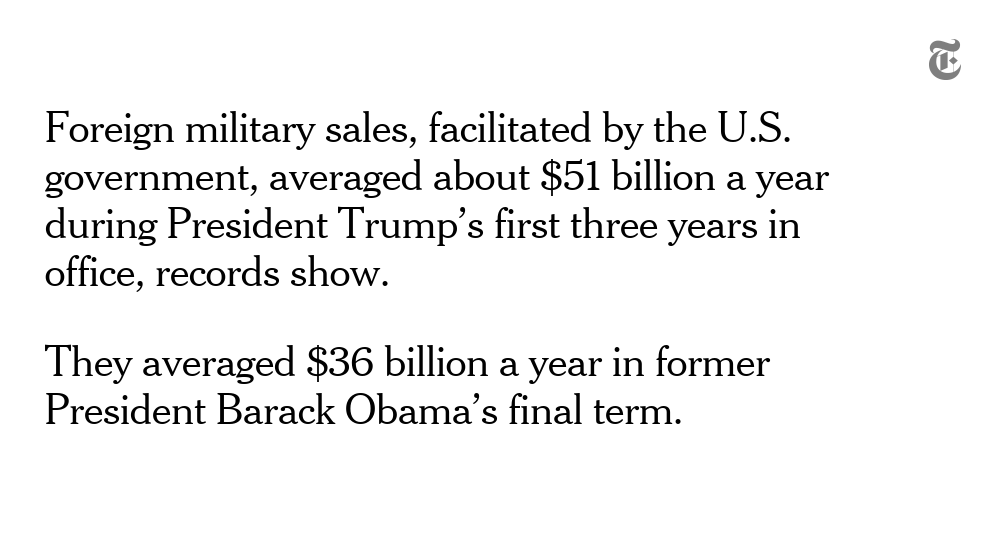
The Trump administration sees arms deals with Saudi Arabia as a source of American jobs.
Neither the mounting civilian deaths in Yemen nor the killing of the journalist and American resident Jamal Khashoggi changed the president’s mind about selling arms to the kingdom.
Neither the mounting civilian deaths in Yemen nor the killing of the journalist and American resident Jamal Khashoggi changed the president’s mind about selling arms to the kingdom.
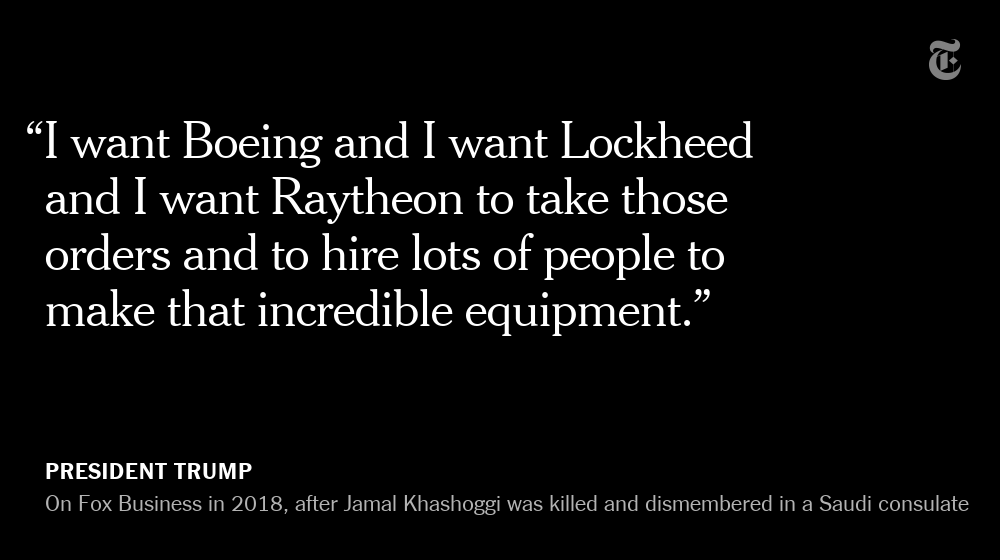
“This White House has been more open to defense industry executives than any other in living memory,” said one longtime analyst and consultant to arms manufacturers.
One aide — President Trump’s trade adviser, Peter Navarro — has been a powerful ally to the arms industry.
One aide — President Trump’s trade adviser, Peter Navarro — has been a powerful ally to the arms industry.
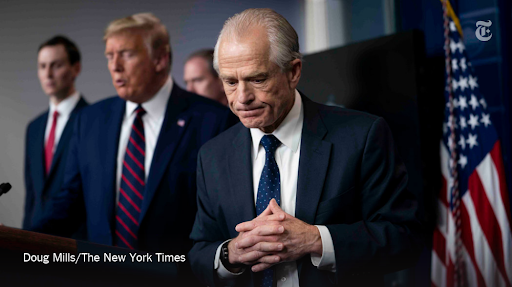
Peter Navarro stepped in when a Republican senator moved to block arms sales to Persian Gulf nations.
“Job losses imminent," he wrote in a memo to Jared Kushner and other White House officials.
Within weeks, the Saudis were free to buy U.S. weapons. nyti.ms
“Job losses imminent," he wrote in a memo to Jared Kushner and other White House officials.
Within weeks, the Saudis were free to buy U.S. weapons. nyti.ms
It wasn't the first time the U.S. faced pressure to end the sales.
On Oct. 8, 2016, the Saudis repeatedly bombed a funeral hall in Yemen's capital. At least 140 people were killed. “People were on fire, and some people were burned alive,” a survivor told human rights workers.
On Oct. 8, 2016, the Saudis repeatedly bombed a funeral hall in Yemen's capital. At least 140 people were killed. “People were on fire, and some people were burned alive,” a survivor told human rights workers.
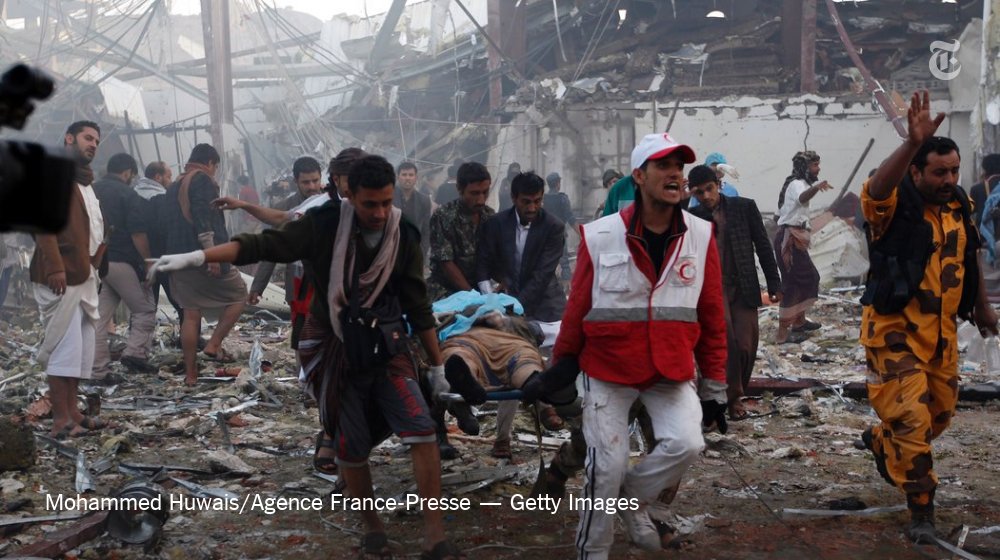
After the attack, human rights workers discovered amid the wreckage a bomb shard with the identification number of an American company: Raytheon.
It was one of at least 12 attacks on civilians between 2015 and 2016 that human rights groups tied to the company's ordnance.
It was one of at least 12 attacks on civilians between 2015 and 2016 that human rights groups tied to the company's ordnance.
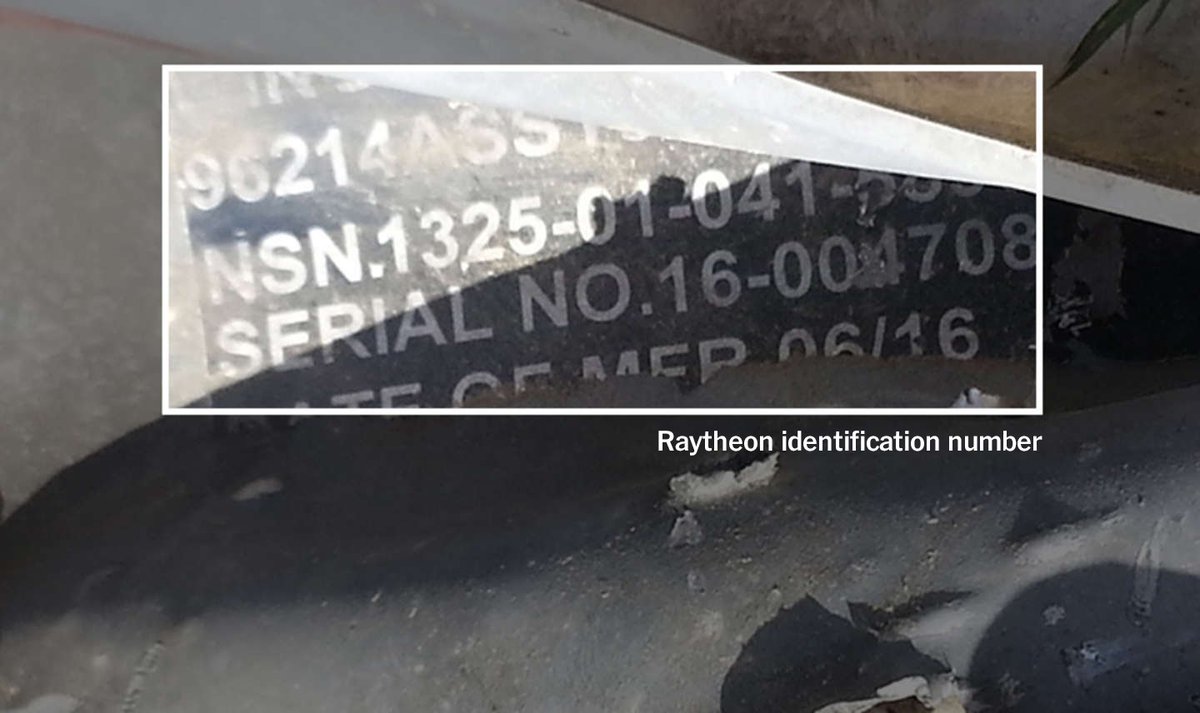
After the funeral hall bombing, the Obama administration halted the delivery of bomb parts, a decision that angered Raytheon.
But Obama was about to leave office. The company waited — and then tried to forge ties with the Trump administration as quickly as possible.
But Obama was about to leave office. The company waited — and then tried to forge ties with the Trump administration as quickly as possible.
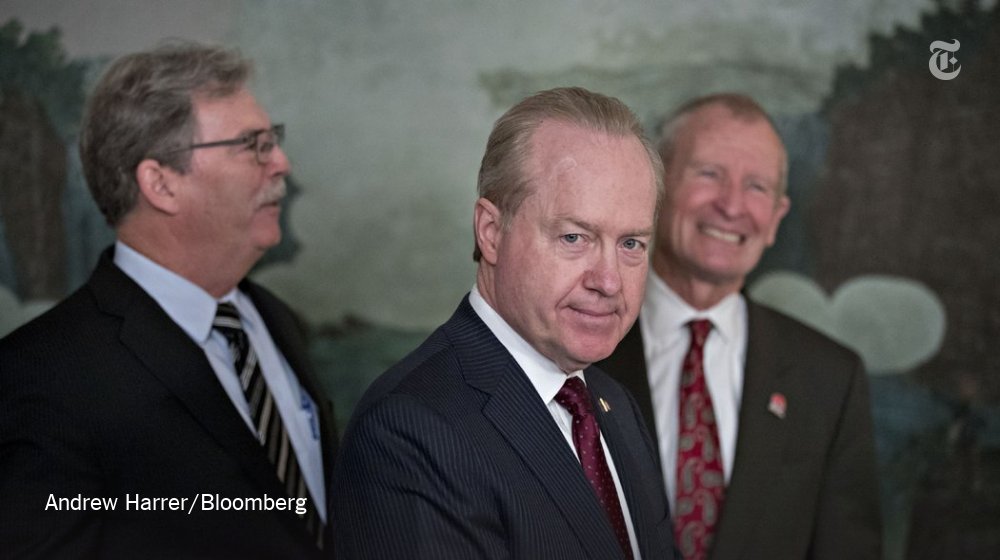
Raytheon — which booked more than $5 billion in sales since the Yemen war began — went to great lengths to influence American decision-making. Peter Navarro helped keep the pressure on. nyti.ms

The arms sales are one example of how President Trump has elevated economic considerations over diplomatic ones — a fundamental change in U.S. foreign policy.
They've also helped prolong a conflict that has killed more than 100,000 people. nyti.ms
They've also helped prolong a conflict that has killed more than 100,000 people. nyti.ms
Watch how arms sales to Middle Eastern allies that were meant to shore up American jobs are killing civilians in Yemen. The full episode of “The Weekly,” our TV show, is available to New York Times subscribers in the U.S. nyti.ms
Two New York Times reporters investigated how U.S. weapons came to kill civilians in Yemen — at funerals, in town squares, even on a school bus — in the Arab world’s poorest country.
Read 5 takeaways from the investigation. nyti.ms
Read 5 takeaways from the investigation. nyti.ms
جاري تحميل الاقتراحات...