

#tweetorial from @MedicsAcademy
Sleep and Viral Immunity
Presented by @shan663
#immunesystem #MedTwitter #SleepMedicine #Tweetorial #MedStudentCovid #MedStudent #SleepHealth
Sleep and Viral Immunity
Presented by @shan663
#immunesystem #MedTwitter #SleepMedicine #Tweetorial #MedStudentCovid #MedStudent #SleepHealth
Sleep is a major pillar to a healthy life. It's something we all do on a daily basis and can't function without. It has a wide-range of physiological functions, be it consolidation of memory or cell repair. But how exactly does it affect the immune system?
On viral exposure, APCs take up viral particles and present the antigens on their surface. T-helper cells (Th1) bind to these antigens and in turn stimulate:
1)T-killer cells (CD8+) which directly kill infected cells
2)B cells which produce antibodies
ncbi.nlm.nih.gov
1)T-killer cells (CD8+) which directly kill infected cells
2)B cells which produce antibodies
ncbi.nlm.nih.gov
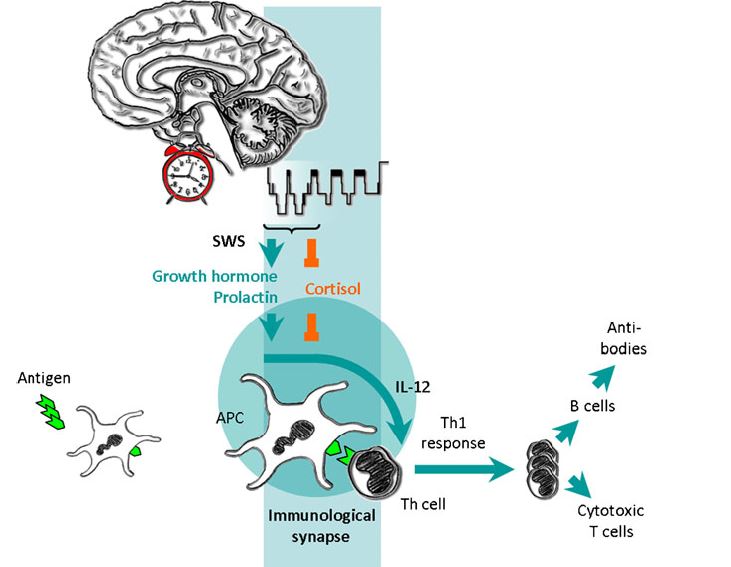
These APCs also secrete a cytokine, Interleukin-12 which enhances the Th1 response, thereby increasing the stimulation of CD8+ cells and B cells
Now if we take a closer look at how CD8+ T cells function, we see 2 main players. The first is a Gαs-coupled receptor, a receptor present on the surface of T cells and activated by isoproterenol, epinephrine, and norepinephrine (hormones of wakefulness)
rupress.org
rupress.org
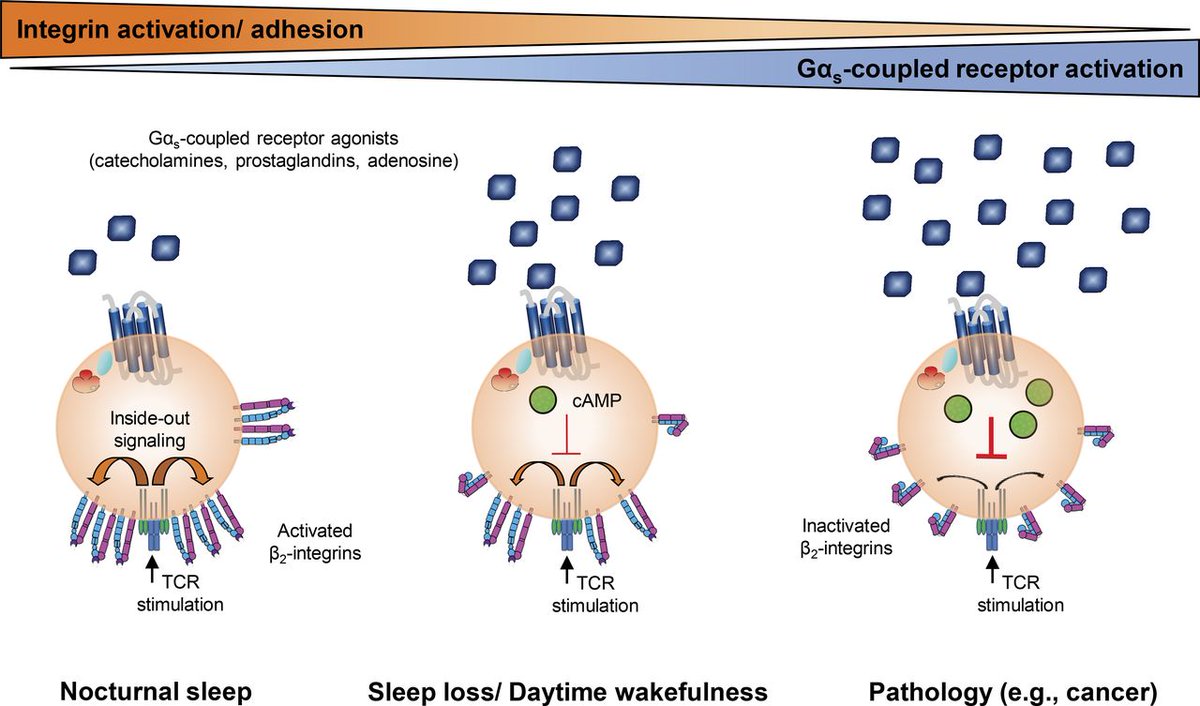
This receptor in turn inhibits T-cell Receptor (TCR)-mediated activation of beta-2 integrins. These integrins are adhesive proteins, which bind the infected cells and play a vital role in the killing of infected cells by cytotoxic T cells.
During sleep, lower catecholamine levels result in an inactivated Gαs-coupled Receptor and consequently, activated beta-2 integrins. The adhesive effect of these integrins causes better binding and better killing of infected cells.
rupress.org
rupress.org
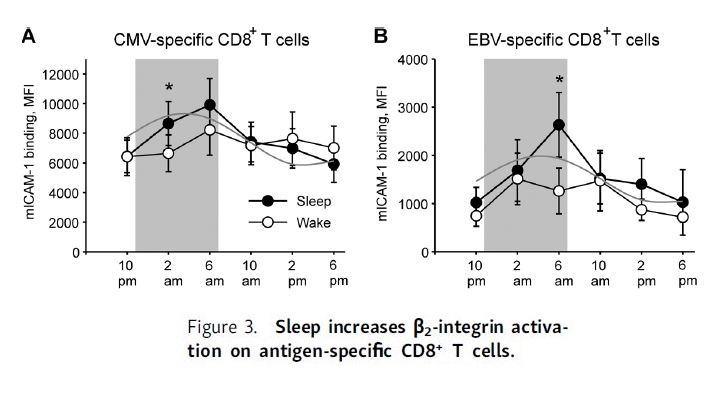
From this information, we can derive that if a person is deprived of sleep, their T cell function will be weakened as well. This claim is further supported in the article linked below.
onlinelibrary.wiley.com
onlinelibrary.wiley.com
This argument is further supported by this article investigating the susceptibility to common cold in differing sleep habits, concluding that people who sleep <7 hours a night are 💥2.94 TIMES💥 more likely to be infected than those sleeping 8+ hours
ncbi.nlm.nih.gov
ncbi.nlm.nih.gov

There are undoubtedly other factors at play here as well, as the immune system is a very broad system influenced by many variables. But we can all agree that improved sleep does confer improved immunity.
Viewing this in the light of current affairs in the midst of a global pandemic, in which it should be the utmost priority to keep our immune system strong and healthy, improving our sleep is an easy, free-of-cost way of doing so. Get sleeping, folks!

Loading suggestions...