

We are very excited to share our SHANEL method making the intact human organs transparent, just published at Cell. cell.com by @shan_heather et al.
See short tweetorial for details:
#clearing #imaging #3D #deeplearning #AI @CellCellPress
See short tweetorial for details:
#clearing #imaging #3D #deeplearning #AI @CellCellPress

Mapping the human brain or other organs is a crucial step forward deciphering how they function in health and disease.
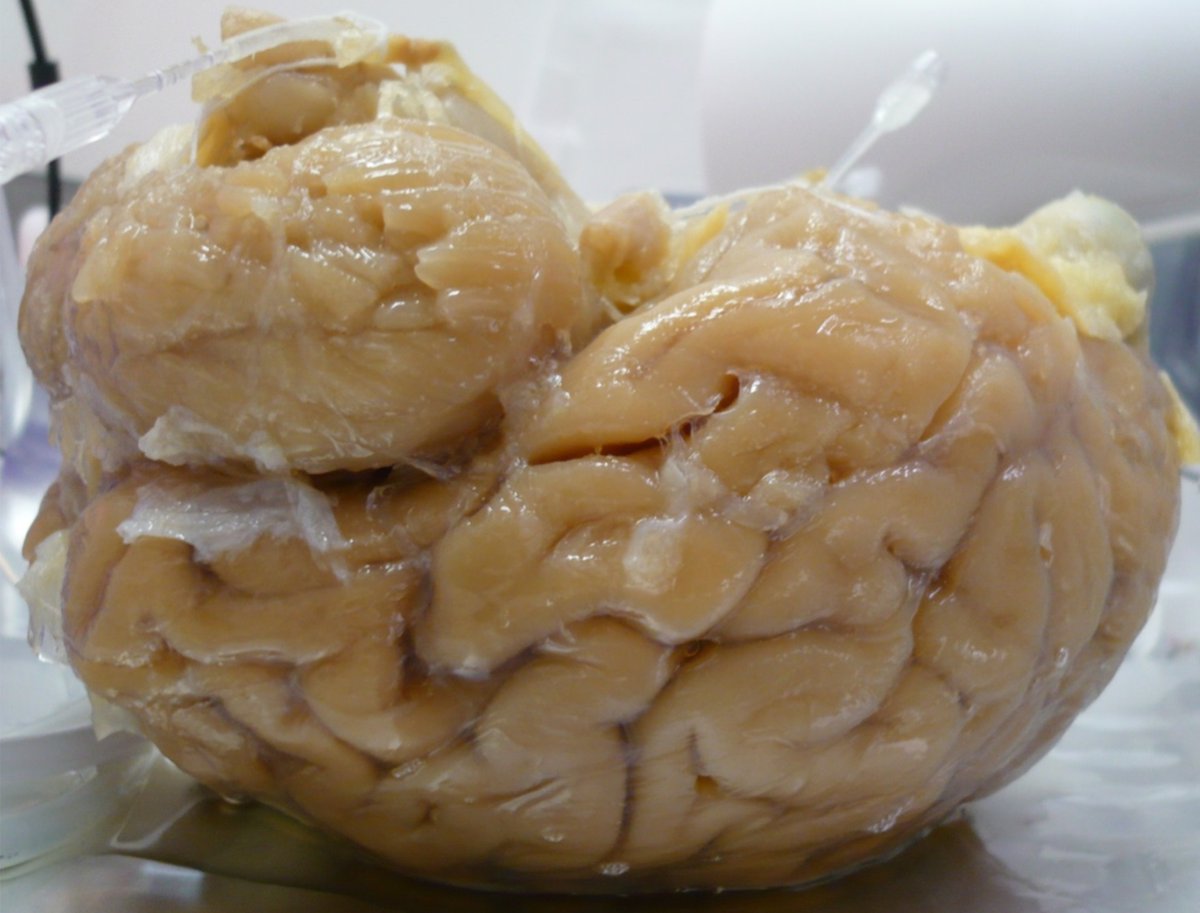
Tissue Clearing methods work well on rodent tissue but haven been poorer on stiff & aged human organs. Making the whole human organs transparent required a new approach.
We identified CHAPS, a detergent that can permeabilize the aged human organs. Further, we used Acetic Acid and Guanidine Hydrochloride to enhance the depth of molecular labeling.

Resulting SHANEL method labeled and rendered intact adult human organs transparent including the kidney, brain, thyroid, and eye.

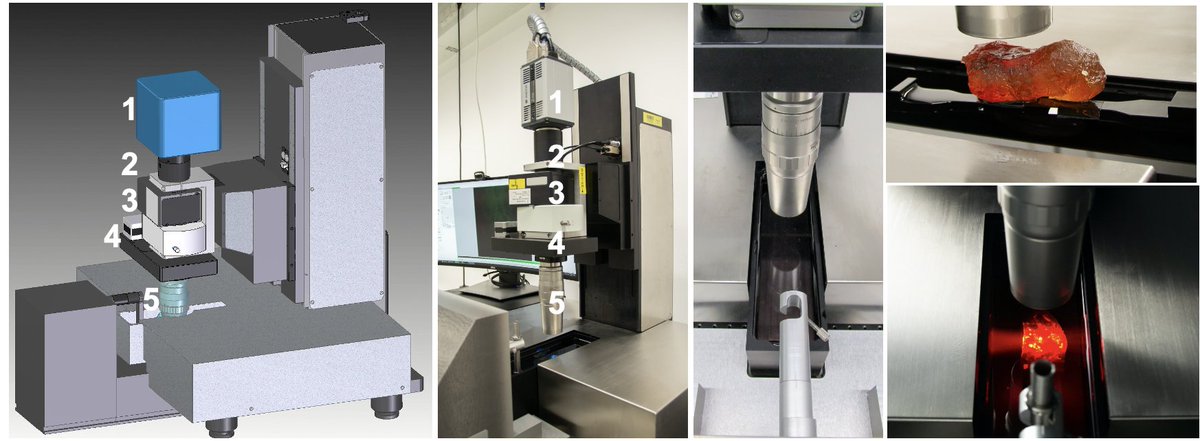
Together with @LaVision_BioTec, we made a prototype light-sheet microscope with an extended stage to image human organs as large as the kidney (size of 11.5 x 8.2 x 3.0 cm).
We also developed deep learning algorithms to analyze hundreds of millions of cells from the brain scans in a fast and accurate way.

We believe SHANEL can help to map the human brain at the molecular level and provide cellular blueprints of human organs for 3D-bioprinting technologies to make new organs on demand.
Not all great of course!
Here are some shortcomings we know and want to improve:
a-Method cannot eliminate the high autofluorescence of human tissue.
b-There are still no light-sheet microscope systems to scan the human brain.
Here are some shortcomings we know and want to improve:
a-Method cannot eliminate the high autofluorescence of human tissue.
b-There are still no light-sheet microscope systems to scan the human brain.
c-SHANEL pretreatments work with only with partial commercialized antibodies for deep tissue labeling.
d-The labeling and clearing process still takes months depending on the size of organs. We need to find ways to get this down to some days level.
d-The labeling and clearing process still takes months depending on the size of organs. We need to find ways to get this down to some days level.
e-Our machine learning algorithm is designed only for the analysis of cell bodies. New algorithms are needed for each structure e.g. vessels & neurons.
f-The best human organ mapping would require very fresh organs e.g., shortly after death, which is very difficult to access.
f-The best human organ mapping would require very fresh organs e.g., shortly after death, which is very difficult to access.
Txt to amazing collaborators: Ingo Bechmann, @MarcoDuering, Oliver Bruns, Bjoern Menze, @PuellesVictor, Jan Lipfert, and Eckhard Wolf.
And the work has been conducted at @ISD_Research, @HelmholtzMunich, @LMU_Muenchen, @TU_Muenchen and supported by @dfg_public, @nvidia
, Fritz Thyssen Stiftung, @NIH, @ERC_Research.
, Fritz Thyssen Stiftung, @NIH, @ERC_Research.
Loading suggestions...