

In the American Journal of Gastroenterology, was published a paper of Douglas Rex titled "How I Approach Colonoscopy in Anatomically Difficult Colons". #colonosopy.
journals.lww.com
I open thread.
journals.lww.com
I open thread.
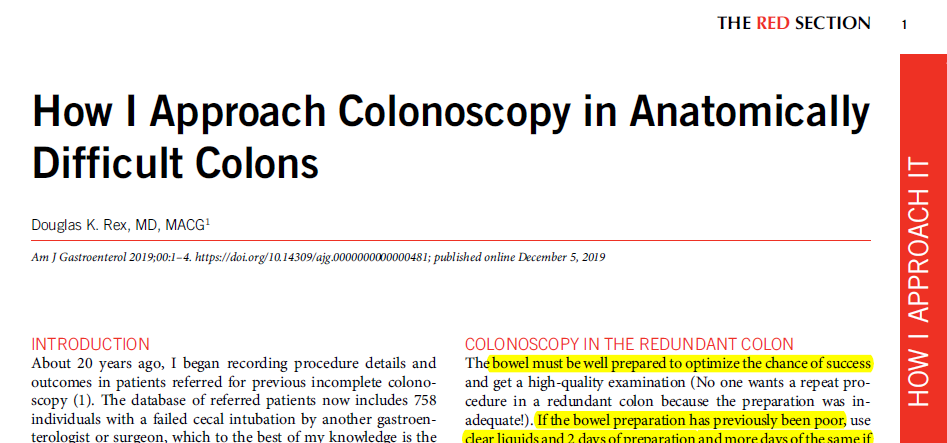
Barium enema and CT colonography after an incomplete colonoscopy are the standard of care to examine the entire colon, but they both have poor sensitivity compared with colonoscopy. For D.Rex the best action is to make a 2nd attempt of colonoscopy using the modified
technical.
technical.
There are only 3 anatomic causes of difficult cecal intubation:
1. Redundant colon (often also dilated)
2. Angulated, narrowed sigmoid
3. Abdominal wall hernia
1. Redundant colon (often also dilated)
2. Angulated, narrowed sigmoid
3. Abdominal wall hernia
In redundant colon, the most important technical step in a redundant colon is to fill the colon with water and not gas. Remove all loops as early as possible, abdominal pressure early, and position change to supine may be useful too.
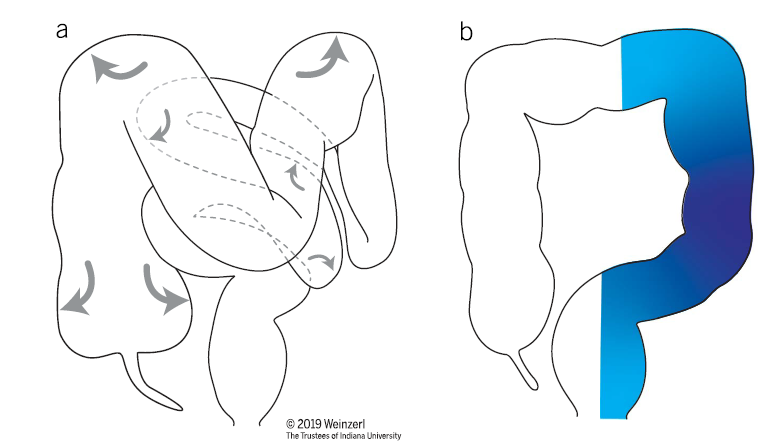
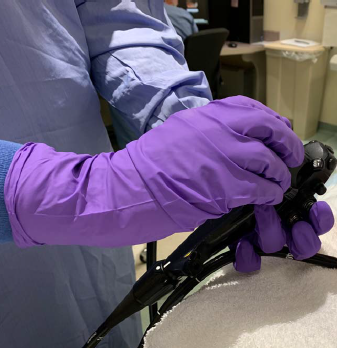
In the narrowed, angulated sigmoid, the most common cause of this anatomy is severe diverticular disease. Preference of D.Rex is to use the “left hand scope
grip”. This technique to use both hands to manipulate the directional controls.
grip”. This technique to use both hands to manipulate the directional controls.
In left inguinal hernia is easily solved by reducing the hernia manually before the procedure and keeping a hand over the hernia opening in the abdominal wall to prevent recurrence.
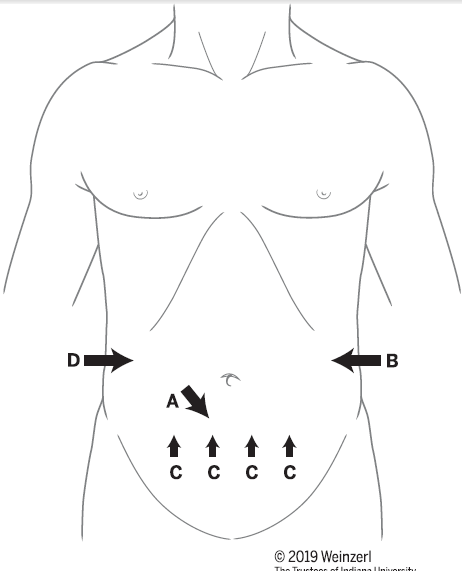
Standard locations and directions for abdominal pressure:
A. to counter sigmoid looping.
B. To assist passing the splenic flexure and transverse.
C. To counter transverse looping.
D. To pass from the ascending into the cecum.
A. to counter sigmoid looping.
B. To assist passing the splenic flexure and transverse.
C. To counter transverse looping.
D. To pass from the ascending into the cecum.
Loading suggestions...