

1/
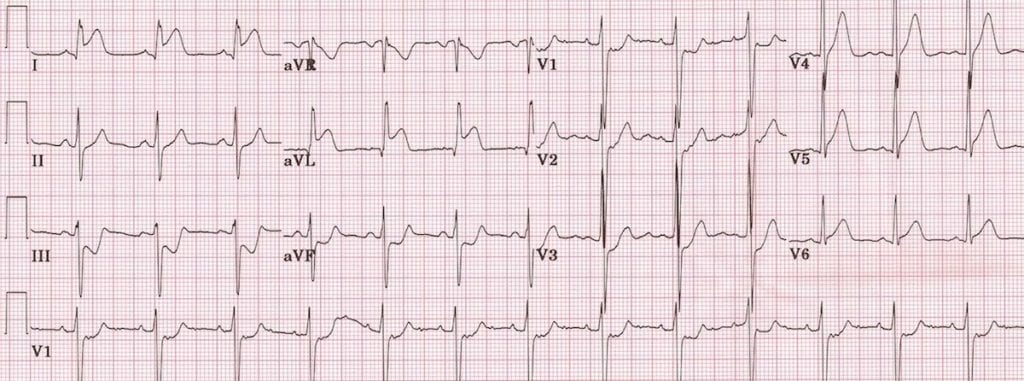
Ever wonder why a "STEMI" causes ST elevation on EKG?
The answer is mind-bending.
#medthread #tweetorial #medtwitter
Ever wonder why a "STEMI" causes ST elevation on EKG?
The answer is mind-bending.
#medthread #tweetorial #medtwitter
2/
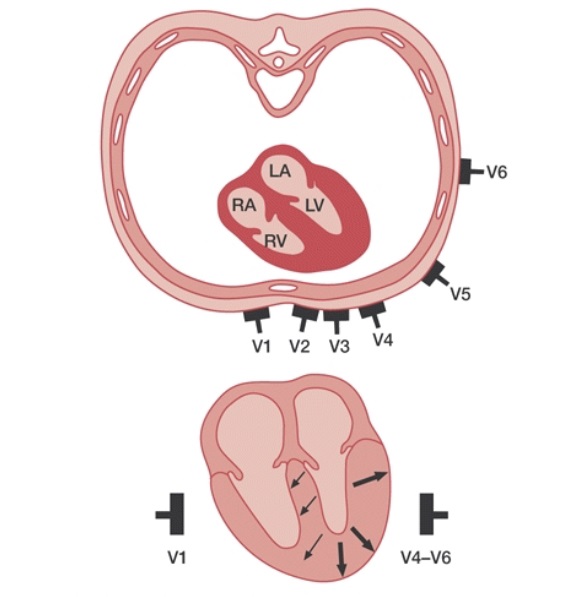
We need to review a few basic EKG facts.
First:
💡 If electrical signals travel away from an EKG lead they appear as negative deflections
💡 If electrical signals travel toward an EKG lead they appear as positive deflections
bit.ly
We need to review a few basic EKG facts.
First:
💡 If electrical signals travel away from an EKG lead they appear as negative deflections
💡 If electrical signals travel toward an EKG lead they appear as positive deflections
bit.ly
3/
Second:
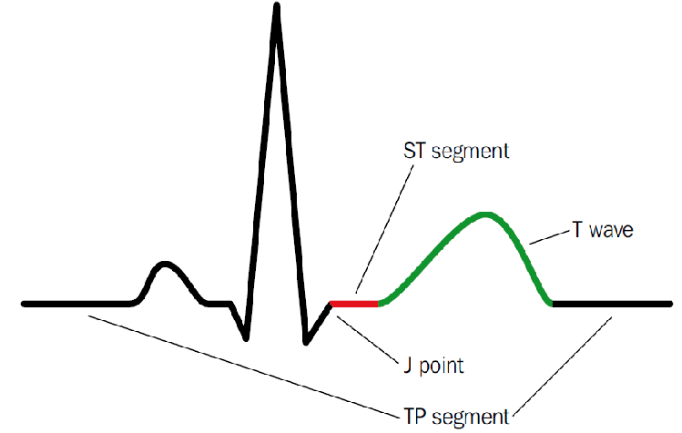
Recall that the ST segment represents electroneutrality in the cardiac cycle, between depolarization and repolarization, w/ no voltage gradient.
That's why the ST and TP baseline segments are normally flat on EKG (aka isoelectric).
bit.ly
Second:
Recall that the ST segment represents electroneutrality in the cardiac cycle, between depolarization and repolarization, w/ no voltage gradient.
That's why the ST and TP baseline segments are normally flat on EKG (aka isoelectric).
bit.ly
4/
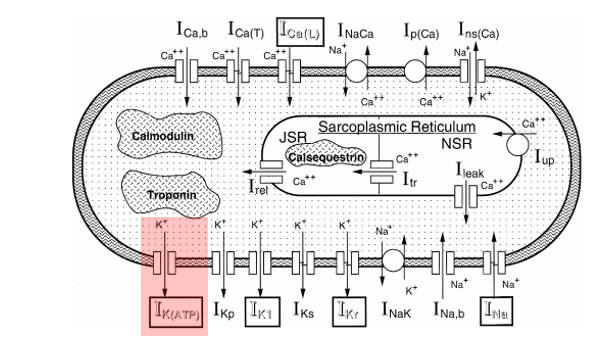
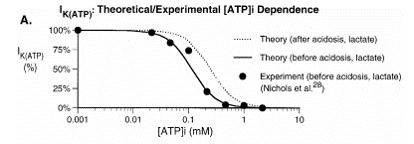
There are many channels that contribute to ventricular repolarization.
An important one is K-ATP, a potassium exporter channel that needs adequate ATP to remain closed.
Less ATP available = more potassium export from the myocardial cell.
ncbi.nlm.nih.gov
There are many channels that contribute to ventricular repolarization.
An important one is K-ATP, a potassium exporter channel that needs adequate ATP to remain closed.
Less ATP available = more potassium export from the myocardial cell.
ncbi.nlm.nih.gov
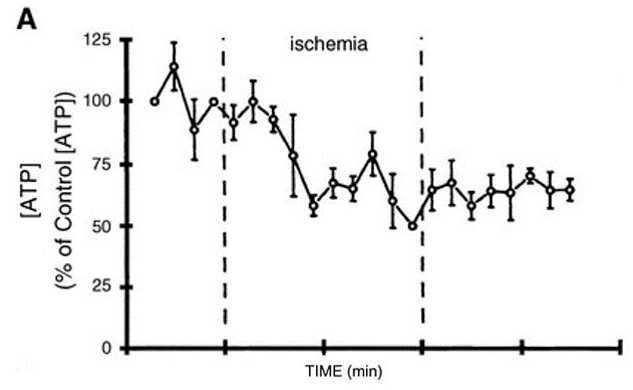
6/
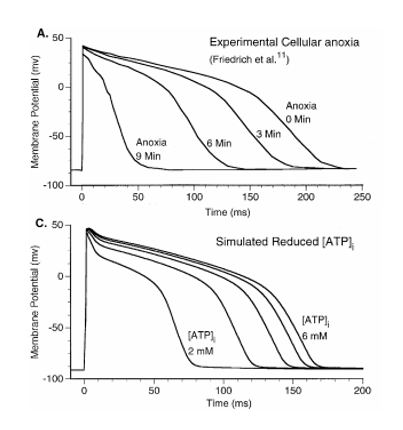
This decrease in ATP production leads to more potassium export through K-ATP ➡️ faster ventricular depolarization of ischemic cells relative to healthy ones➡️a shorter cardiac cycle.
physiology.org
This decrease in ATP production leads to more potassium export through K-ATP ➡️ faster ventricular depolarization of ischemic cells relative to healthy ones➡️a shorter cardiac cycle.
physiology.org
8/
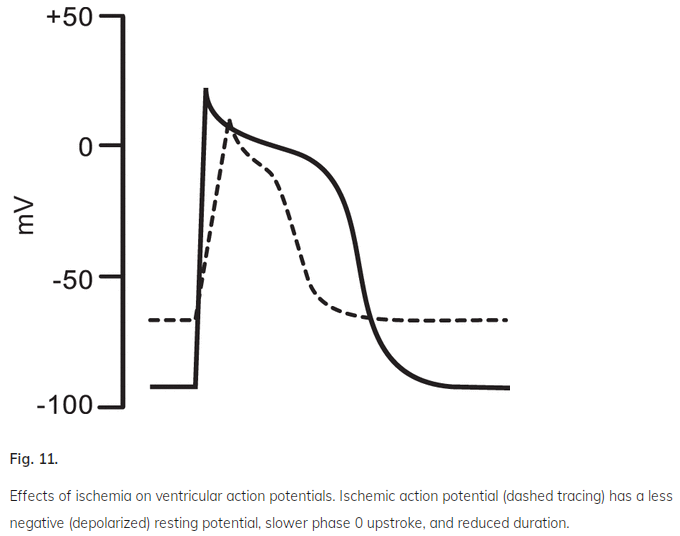
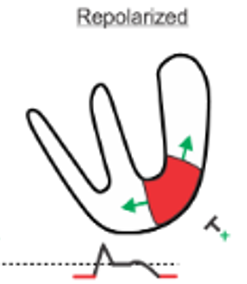
This difference in cycle speeds between ischemic and non-ischemic cells causes a relative current during repolarization:
Ischemic➡️non-ischemic, away from overlying EKG leads
This shifts the EKG baseline down, for reasons we discussed above.
bit.ly
This difference in cycle speeds between ischemic and non-ischemic cells causes a relative current during repolarization:
Ischemic➡️non-ischemic, away from overlying EKG leads
This shifts the EKG baseline down, for reasons we discussed above.
bit.ly
9/
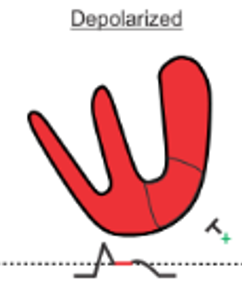
Conversely, there is little difference between ischemic/non-ischemic depolarization speeds.
Thus the voltage gradient disappears during the QRS complex and the EKG returns to isoelectric baseline in the ST segment (aka zero voltage).
bit.ly
Conversely, there is little difference between ischemic/non-ischemic depolarization speeds.
Thus the voltage gradient disappears during the QRS complex and the EKG returns to isoelectric baseline in the ST segment (aka zero voltage).
bit.ly
10/
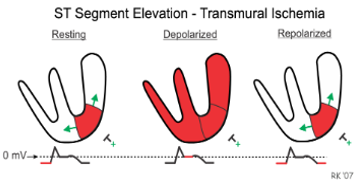
The ischemic ST segment therefore appears elevated on EKG, but only because the baseline has been shifted down.
bit.ly
👇
The ischemic ST segment therefore appears elevated on EKG, but only because the baseline has been shifted down.
bit.ly
👇
11/
Let's summarize:
💡Ischemia➡️decrease in ATP production
💡This➡️K export and faster depolarization
💡An ischemic➡️non-ischemic current is created, lowering the EKG baseline
💡W/ depolarization, the gradient stops➡️ST segment = isoelectric
💡This = appearance of ST elevation
Let's summarize:
💡Ischemia➡️decrease in ATP production
💡This➡️K export and faster depolarization
💡An ischemic➡️non-ischemic current is created, lowering the EKG baseline
💡W/ depolarization, the gradient stops➡️ST segment = isoelectric
💡This = appearance of ST elevation
جاري تحميل الاقتراحات...