

Asthma
مع فترة الشتاء ?
مع فترة الشتاء ?

Asthma is a condition in which your airways narrow and swell and produce extra mucus. This can make breathing difficult and trigger coughing, wheezing and shortness of breath.
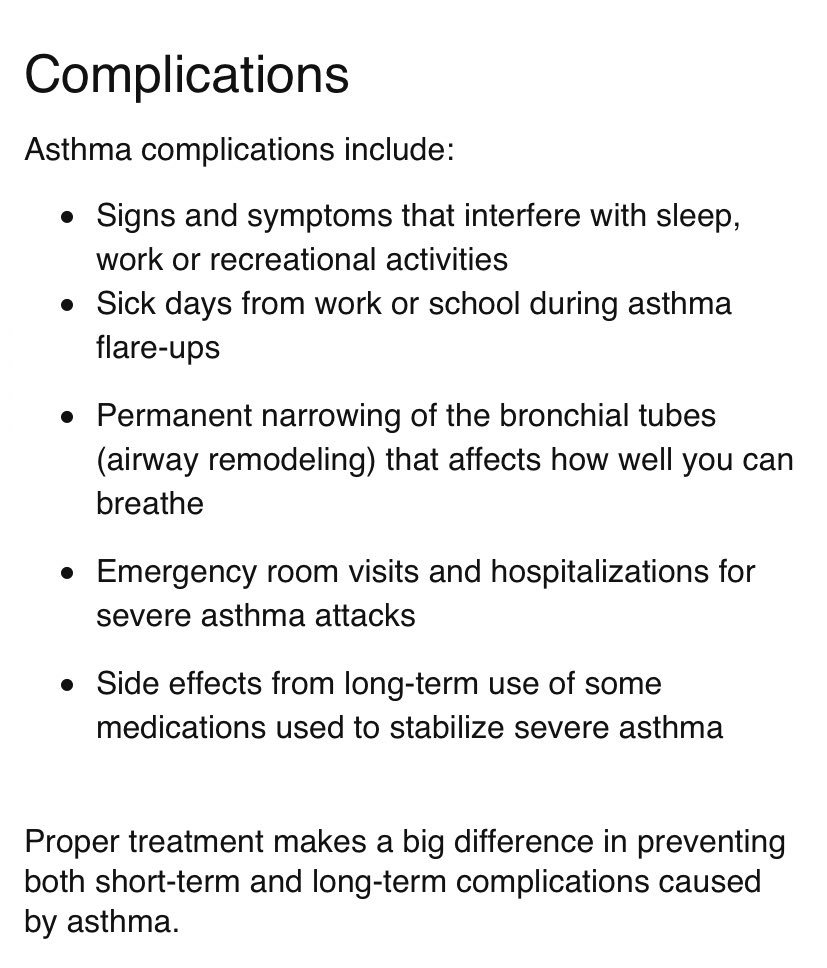
For some people, asthma is a minor nuisance. For others, it can be a major problem that interferes with daily activities and may lead to a life-threatening asthma attack.
Asthma can't be cured, but its symptoms can be controlled. Because asthma often changes over time, it's
important that you work with your doctor to track your signs and symptoms and adjust treatment as needed
important that you work with your doctor to track your signs and symptoms and adjust treatment as needed
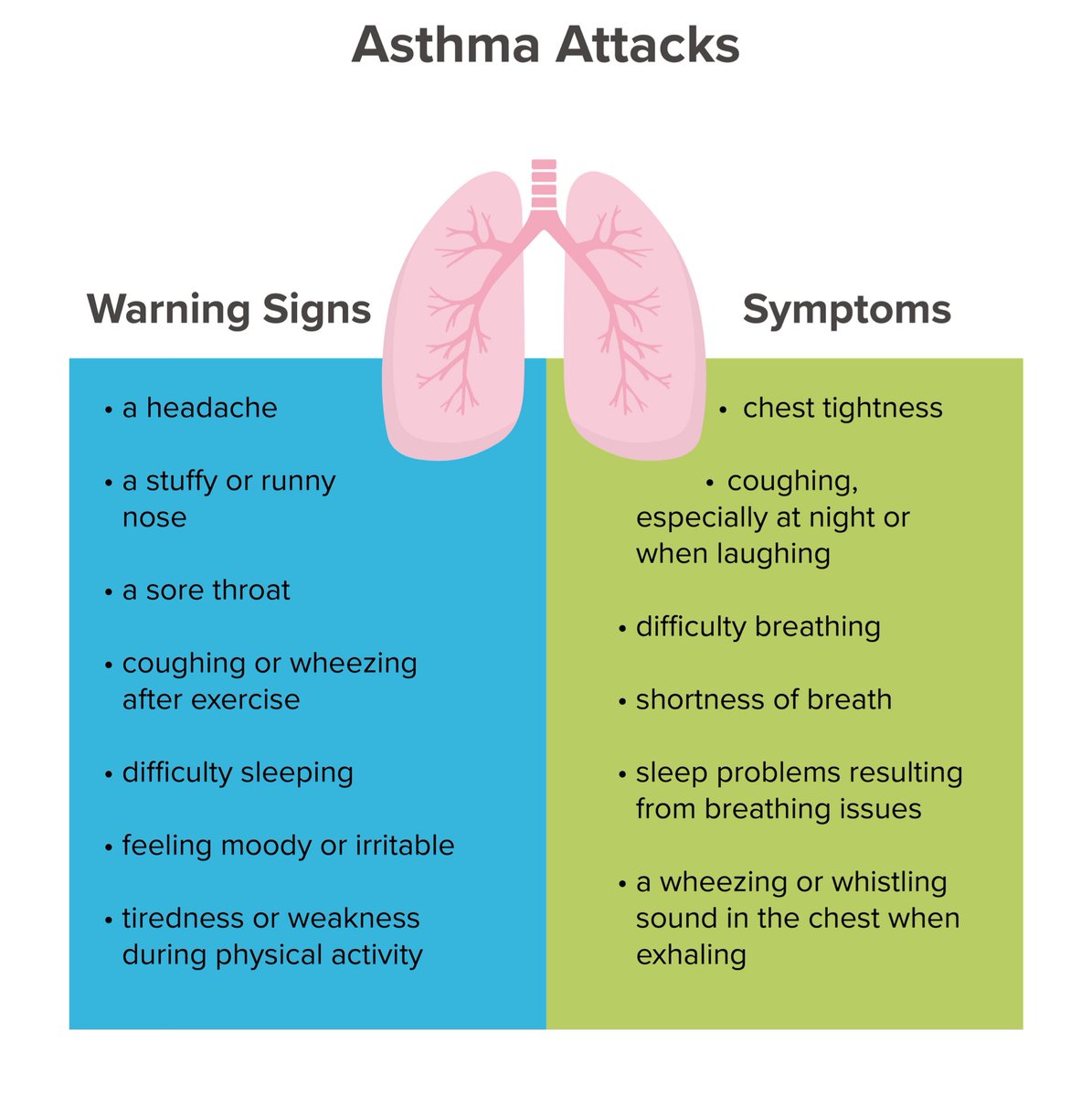
Asthma symptoms vary from person to person. You may have infrequent asthma attacks, have symptoms only at certain times — such as when exercising — or have symptoms all the time.
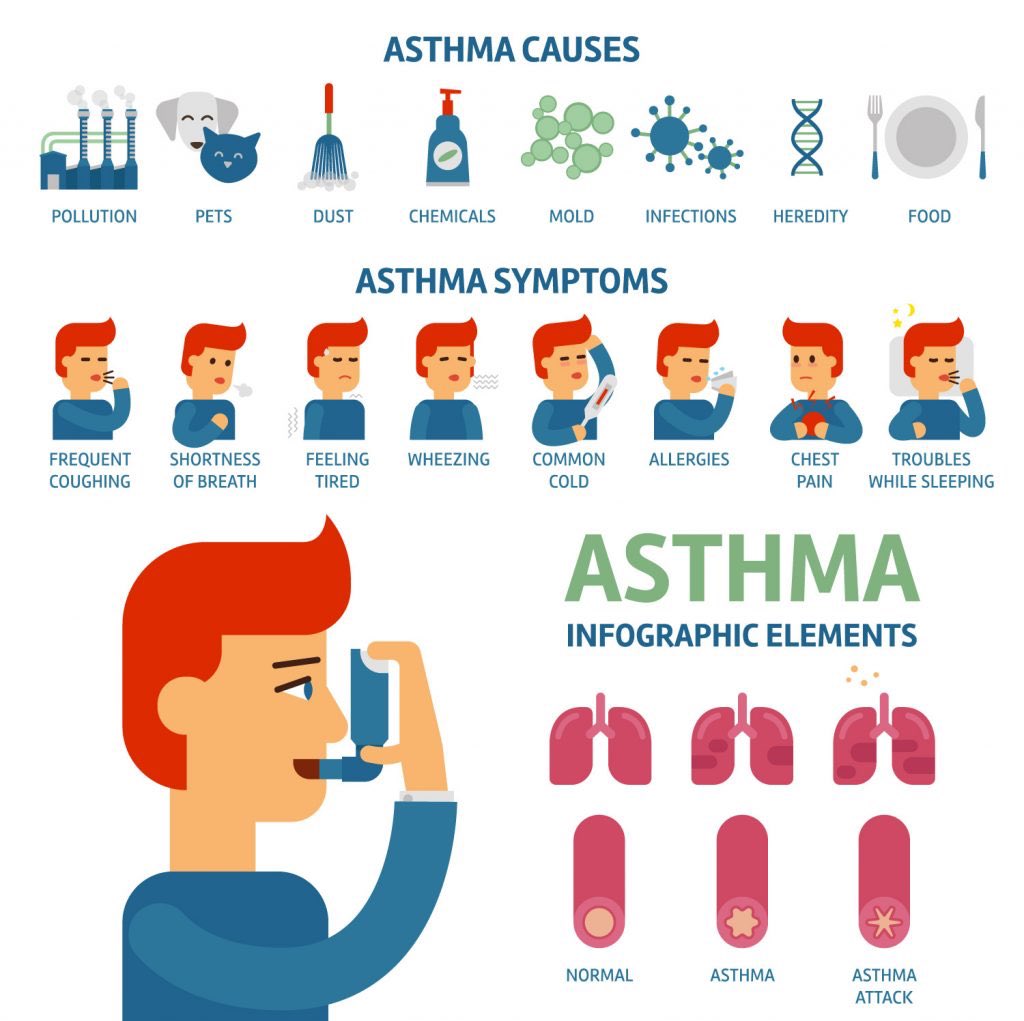
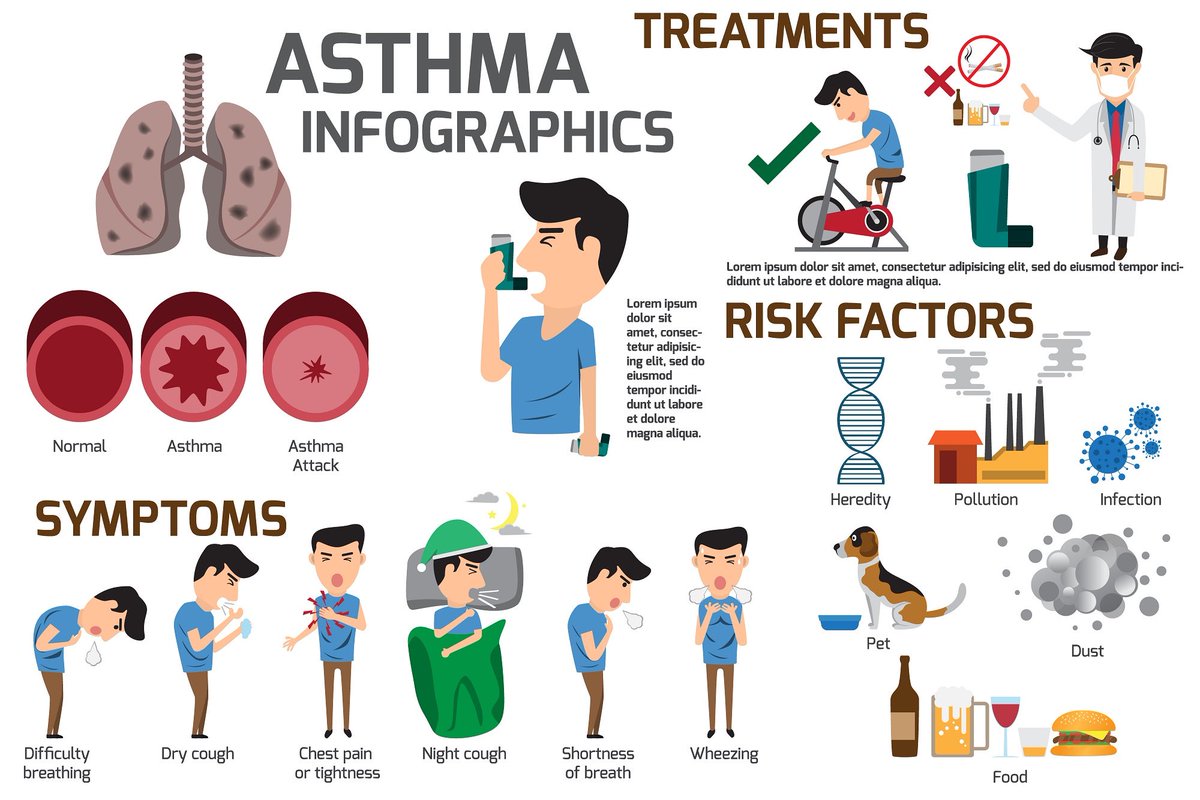
Asthma signs and symptoms include:
Shortness of breath
Chest tightness or pain
Trouble sleeping caused by shortness of breath, coughing or wheezing
A whistling or wheezing sound when exhaling (wheezing is a common sign of asthma in children)
Shortness of breath
Chest tightness or pain
Trouble sleeping caused by shortness of breath, coughing or wheezing
A whistling or wheezing sound when exhaling (wheezing is a common sign of asthma in children)
Coughing or wheezing attacks that are worsened by a respiratory virus, such as a cold or the flu
Signs that your asthma is probably worsening include:
Asthma signs and symptoms that are more frequent and bothersome
Signs that your asthma is probably worsening include:
Asthma signs and symptoms that are more frequent and bothersome
Increasing difficulty breathing (measurable with a peak flow meter, a device used to check how well your lungs are working)
The need to use a quick-relief inhaler more often
The need to use a quick-relief inhaler more often
For some people, asthma signs and symptoms flare up in certain situations:
Exercise-induced asthma, which may be worse when the air is cold and dry
Exercise-induced asthma, which may be worse when the air is cold and dry

Occupational asthma, triggered by workplace irritants such as chemical fumes, gases or dust
Allergy-induced asthma, triggered by airborne substances, such as pollen, mold spores, cockroach waste or particles of skin and dried saliva shed by pets (pet dander)
Allergy-induced asthma, triggered by airborne substances, such as pollen, mold spores, cockroach waste or particles of skin and dried saliva shed by pets (pet dander)
Seek emergency treatment
هنا الزبده
Signs of an asthma emergency include:
Rapid worsening of shortness of breath or wheezing
No improvement even after using a quick-relief inhaler, such as albuterol
Shortness of breath when you are doing minimal physical activity
هنا الزبده
Signs of an asthma emergency include:
Rapid worsening of shortness of breath or wheezing
No improvement even after using a quick-relief inhaler, such as albuterol
Shortness of breath when you are doing minimal physical activity
Asthma triggers
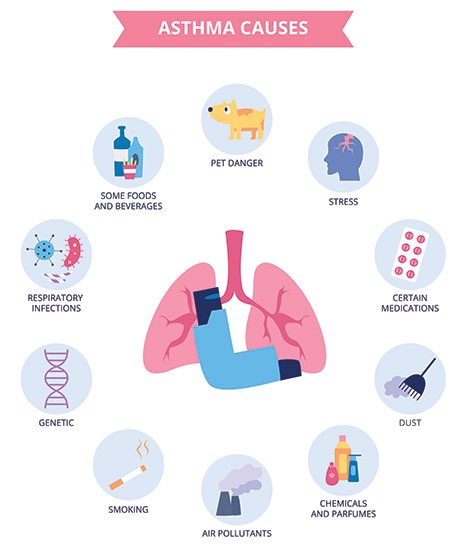
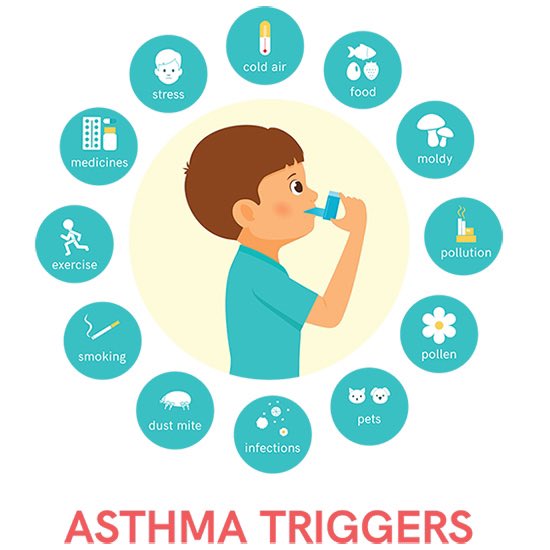
Exposure to various irritants and substances that trigger allergies (allergens) can trigger signs and symptoms of asthma. Asthma triggers are different from person to person and include:
Cold air
Air pollutants and irritants,smoke
Strong emotions and stress
Exposure to various irritants and substances that trigger allergies (allergens) can trigger signs and symptoms of asthma. Asthma triggers are different from person to person and include:
Cold air
Air pollutants and irritants,smoke
Strong emotions and stress
Airborne substances, such as pollen, dust mites, mold spores, pet dander or particles of cockroach waste
Respiratory infections, such as the common cold
Physical activity (exercise-induced asthma)
Certain medications,includin beta blockers,aspirin,ibuprofen (Advil,Motrin IB)
Respiratory infections, such as the common cold
Physical activity (exercise-induced asthma)
Certain medications,includin beta blockers,aspirin,ibuprofen (Advil,Motrin IB)
Sulfites and preservatives added to some types of foods and beverages, including shrimp, dried fruit, processed potatoes, beer and wine
Gastroesophageal reflux disease (GERD), a condition in which stomach acids back up .
Gastroesophageal reflux disease (GERD), a condition in which stomach acids back up .
Risk factors
Having a blood relative (such as a parent or sibling) with asthma
Having another allergic condition,atopic dermatitis or allergic rhinitis (hay fever)
overweight
a smoker, Exposure to secondhand smoke
Exposure to exhaust fumes or other types of pollution
Having a blood relative (such as a parent or sibling) with asthma
Having another allergic condition,atopic dermatitis or allergic rhinitis (hay fever)
overweight
a smoker, Exposure to secondhand smoke
Exposure to exhaust fumes or other types of pollution
Prevention:
no way to prevent asthma,
نقدر بس
preventing asthma attacks.
Follow your asthma action plan.
Get vaccinated for influenza and pneumonia.
Identify and avoid asthma triggers.
Monitor your breathing
Identify and treat attacks early.
no way to prevent asthma,
نقدر بس
preventing asthma attacks.
Follow your asthma action plan.
Get vaccinated for influenza and pneumonia.
Identify and avoid asthma triggers.
Monitor your breathing
Identify and treat attacks early.
Take your medication as prescribed.
Pay attention to increasing quick-relief inhaler use
Pay attention to increasing quick-relief inhaler use
Done by: @amjadalameel ?
جاري تحميل الاقتراحات...